SSD Prices Are Surging Into Black Friday 2026 as NAND Runs Short
NAND flash shortages driven by AI datacenter demand are pushing SSD prices higher through Q4 2026, here's why, and what it means if you're buying storage before Black Friday.
SSD and NAND flash prices are climbing fast again, and the latest forecasts say it isn't over. TrendForce's 4Q26 memory price outlook projects overall NAND flash contract prices up another 15–20% quarter-over-quarter in the final three months of 2026, with enterprise SSD contracts — the drives data centers buy in bulk — rising even faster, 23–28% QoQ. The root cause is AI: hyperscalers and cloud providers are buying up flash storage capacity for AI servers so aggressively that there's little left over for everyone else, and manufacturers say the squeeze will carry into 2027. For anyone shopping for a new SSD, laptop, or storage-heavy PC build before Black Friday on November 27, the practical takeaway is simple — prices are more likely to keep climbing than to fall, and the cheapest point in this cycle was probably months ago.
The short version
- TrendForce forecasts NAND flash contract prices up 15–20% quarter-over-quarter in Q4 2026, with enterprise SSDs up 23–28% QoQ — figures published directly in TrendForce's own 4Q26 Memory Price Forecast.
- The driver is AI datacenter demand: cloud providers are locking up NAND supply with long-term agreements for high-capacity enterprise SSDs, crowding out consumer supply.
- Phison's CEO said in September 2026 that NAND supply will stay tight into 2027 and called predictions of a quick return to oversupply "too naive."
- Samsung and SK hynix both posted record revenue on stronger memory prices in their most recent quarters, per TrendForce's weekly NAND bulletin, and expect the shortage to persist.
- This is a separate squeeze from the DDR5/RAM shortage also hitting PC prices in 2026 — same AI-demand root cause, different component market.
What's happening to SSD prices right now
Through the second half of 2026, SSD and NAND flash pricing has moved from "elevated" to "structurally short." TrendForce, the Taiwan-based research firm that tracks memory and storage contract pricing every quarter, now forecasts that overall NAND flash contract prices will rise another 15–20% quarter-over-quarter in the fourth quarter of 2026. That's on top of increases already booked earlier in the year. Enterprise SSDs — the high-capacity drives that data centers, not consumers, buy under negotiated contracts — are forecast to rise even more sharply, 23–28% QoQ, which TrendForce describes as moving "against the trend" of a market where consumer-facing segments are seeing only minimal compensatory increases by comparison.
That gap matters. It means the steepest price pressure right now sits in the enterprise tier, not directly in the retail SSD you'd put in a gaming PC. But NAND flash is a shared raw material — the same wafers and dies get sorted into enterprise drives, consumer SSDs, SD cards, and the embedded storage in phones and laptops. When the highest-margin, highest-volume enterprise segment pulls supply toward itself, consumer SSD and PC-storage pricing gets squeezed along with it, even where the percentage increases are smaller.
Why NAND flash is short: AI datacenters are eating the supply
The underlying cause is the same one reshaping the memory market broadly: AI infrastructure buildout. TrendForce's NAND Flash Market Bulletin, updated weekly, attributes the current pricing environment to "agentic AI" workloads that need large amounts of flash storage for two specific jobs — high-performance TLC SSDs used for KV cache (the working memory AI inference systems use to avoid redoing calculations), and high-capacity QLC SSDs for bulk AI data storage. Cloud service providers are securing that capacity years in advance through long-term agreements (LTAs) with NAND makers, which gives suppliers unusual pricing leverage: they can commit scarce capacity to whoever locks in a contract first, rather than selling into the spot market.
Kioxia's own recent product announcements illustrate the shift in demand. The company has spent 2026 rolling out enterprise SSD lines explicitly built for AI datacenters — including direct-liquid-cooled CM9 Series drives aimed at SSD context caching, and E1.L form-factor SSDs designed for hyperscale data centers alongside the density and cooling constraints of AI server racks. Those aren't consumer products; they're a signal of where NAND makers are pointing their most advanced manufacturing capacity.
Meanwhile, consumer demand for PCs, phones, and conventional storage has been comparatively soft in 2026, which is part of why TrendForce describes consumer-segment NAND pricing as rising only modestly even as enterprise contracts spike. That's a different pattern from the DRAM/RAM shortage that has already pushed RAM prices to unusual highs in 2026 and kept DDR5 module pricing climbing for months — same AI-driven root cause, but NAND flash (SSD storage) and DRAM (system memory) are separate chip markets with separate factories, separate supply chains, and separate pricing cycles. A shortage in one doesn't automatically track the other quarter to quarter, even though both are being squeezed by the same AI buildout right now.
TrendForce's Q4 2026 forecast, in its own numbers
TrendForce's 4Q26 Memory Price Forecast, published in late September 2026, is the clearest primary-source read on where NAND pricing is headed this quarter. Its headline NAND finding: contract prices for NAND flash overall are forecast to rise 15–20% quarter-over-quarter, with enterprise SSD contract prices surging 23–28% QoQ — a pace TrendForce explicitly flags as running against the broader trend of narrowing increases elsewhere in memory. The forecast credits CSP (cloud service provider) demand, led by AI, as the force keeping both DRAM and NAND prices rising in Q4, while describing consumer demand as too weak to drive similar gains in consumer-facing products.
TrendForce's more recent weekly bulletins, through late October and into November 2026, add nuance without reversing the direction: client and PC-OEM SSD contract price gains have narrowed as buyers push back and inventory remains elevated, and wafer contract prices for MLC, TLC, and QLC NAND have plateaued at a high level after their earlier run-up. But enterprise SSD — the segment with the most direct line to AI datacenter demand — is still described as leading the quarter's price increases and likely to be the first category to settle its contract price, at "notably higher" levels, because of firm AI demand and existing long-term agreements.
| When | What happened | Source |
|---|---|---|
| Sept. 24, 2026 | TrendForce's 4Q26 Memory Price Forecast projects overall NAND flash contract prices up 15–20% QoQ; enterprise SSD contracts up 23–28% QoQ | TrendForce |
| Sept. 7, 2026 | Phison CEO Pua Khein-Seng says NAND supply will stay tight into 2027, calling talk of a quick return to oversupply "too naive" | Trade press report of earnings commentary |
| Oct. 21–30, 2026 | TrendForce bulletins: client/PC-OEM SSD price gains narrow on buyer pushback and inventory; wafer contract prices plateau; enterprise SSD still leads increases | TrendForce |
| Nov. 4, 2026 | TrendForce's weekly NAND bulletin says Samsung and SK hynix both posted record revenue/profit on stronger memory prices and expect the shortage to persist | TrendForce |
| Nov. 27, 2026 | Black Friday — the next major retail test of how much of this contract-price pressure has reached consumer SSD shelf prices | — |
Enterprise SSDs vs. the drive you'd actually buy
It's worth being precise about who feels this first. Enterprise SSDs are sold under negotiated contracts to data center operators, not on store shelves, and TrendForce's 23–28% QoQ figure applies to that tier specifically. Consumer SSDs — the kind that ship in a laptop, go into a gaming PC, or get bought as an upgrade — are a different product category with different (and currently smaller) quarter-over-quarter contract increases, according to TrendForce's own reporting. But "smaller increase" is not the same as "no increase," and the relationship runs one direction: when enterprise and AI-server demand pulls NAND wafer capacity and advanced manufacturing lines toward itself, consumer SSD makers are competing for whatever capacity is left, which is the mechanism TrendForce and NAND suppliers have both pointed to as the reason consumer SSD and memory-card prices have risen through 2026 even without consumer demand driving it.
What Phison's CEO says about the supply outlook
Phison makes SSD controllers rather than NAND chips themselves, which puts its leadership in an unusually well-placed position to comment on the whole supply chain — they buy flash from Samsung, SK hynix, Kioxia, SanDisk, and Micron and build it into finished drives. Speaking in September 2026, Phison chairman and CEO Pua Khein-Seng said he expects NAND flash supply to remain tight into 2027 even as major memory makers expand capacity, and dismissed forecasts of a rapid return to oversupply as "too naive." That's a notably more cautious call than the industry's own capacity-expansion announcements might suggest on their own — Pua's point being that new fabrication lines take years to come online, while AI-driven demand is scaling in months.
It's worth flagging precisely what that does and doesn't confirm: Pua's September 2026 comments establish that NAND tightness is expected to persist into next year, but they don't themselves restate a specific price-doubling figure for 2026 — some widely circulated reporting about NAND prices "doubling" and 2026 capacity being "sold out" traces back to Phison commentary from around November 2025, a full year before this article, describing a six-month price run from mid-2025. That's an older data point describing an earlier phase of the same shortage, not a fresh 2026 figure, so it's treated here as background rather than restated as current.
What Samsung, Kioxia, and other makers are doing
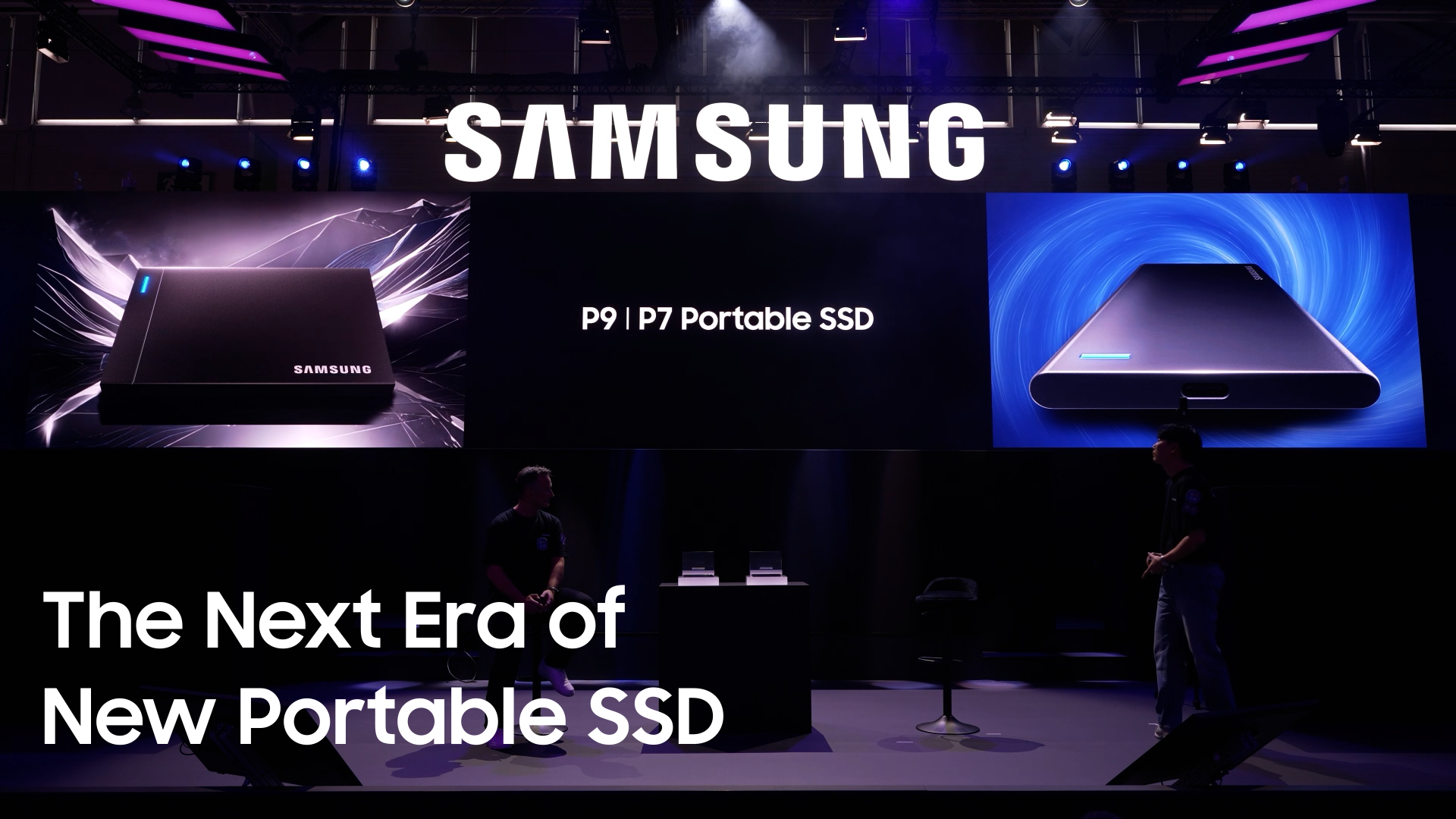
The major NAND producers — Samsung, SK hynix, Kioxia, SanDisk (Western Digital's former flash unit, now operating independently), and Micron — have spent 2026 doing two things at once: raising contract prices where they have pricing power, and steering product launches toward the AI datacenter segment that's generating that power. Samsung's Q3 2026 results, as referenced in TrendForce's November NAND bulletin, posted record revenue and profit on stronger memory pricing, with Samsung (alongside SK hynix) expecting the supply shortage to persist and responding by accelerating moves to higher-layer-count NAND processes and expanding both capex and long-term supply agreements. On the consumer side, Samsung has kept pushing new portable SSD hardware to market regardless — the company launched its P9 and P7 portable SSD line in September 2026, after first showing it at Gamescom, positioning the drives around capacity and performance rather than price.
Kioxia's 2026 product slate tells a similar story from the supplier side: new direct-liquid-cooled enterprise SSDs, high-density E1.L drives for hyperscale data centers, and SSDs explicitly marketed for "AI GPU-initiated workloads" and near-GPU IOPS performance. None of that is consumer hardware, but it's a direct look at where NAND makers are putting their newest manufacturing capacity and R&D attention in 2026 — toward the AI-datacenter buyers who are both driving and absorbing the shortage.
Should you buy an SSD now, or wait?
This is the live question, and neither TrendForce's forecast nor the manufacturers' public comments point toward near-term relief. The pattern across TrendForce's 2026 reporting has been consistent: each quarter's NAND contract prices have mostly risen rather than fallen, enterprise SSD demand shows no sign of easing, and Phison's CEO is on record expecting tightness to extend into 2027, with new fabrication capacity not expected to meaningfully arrive until then at the earliest. None of the primary sources reviewed here forecast a price drop in the near term; the most optimistic signal is TrendForce's own note that client/PC-OEM SSD price increases have been narrowing — rising more slowly, not reversing.
Practically, that points toward buying sooner rather than later if you need storage now — for a new PC build, a console with a storage shortfall, or a laptop upgrade — rather than waiting for a Black Friday dip that the current contract-pricing trend doesn't support. That doesn't mean there will be no Black Friday deals at all; retailers often discount from list price regardless of the underlying component market, and promotional pricing can still undercut whatever the "fair value" of a drive should be given wafer costs. But the deals this year are competing against a rising cost floor, not a falling one, which is a different situation than SSD shoppers have mostly experienced in prior years. If your purchase can wait into 2027 without hardship, it's reasonable to watch Phison, Samsung, and SK hynix's early-2027 commentary for the first sign that new capacity is actually easing prices — but nothing in the current forecasts puts that clearly in Q4 2026 or early Q1 2027.
What this means for Black Friday PC and console shopping
For shoppers specifically eyeing Black Friday (November 27, 2026), the storage line item in any PC, laptop, or console bundle is worth budgeting for accordingly. Prebuilt gaming PCs, laptops, and storage upgrade kits that include SSDs are exposed to the same contract-price pressure described above, even if the sticker price on a finished system doesn't break out the storage cost separately. Shoppers comparing two otherwise-similar machines may find that the one with more SSD capacity carries a larger-than-expected premium this year, simply because the underlying NAND got more expensive to source between when a retailer priced the deal and when it goes live. Buying based on actual storage need — rather than maximizing capacity "just in case" — is a reasonable way to manage that exposure without overpaying into a rising market.
What's next
The next concrete checkpoints are earnings season and TrendForce's ongoing weekly bulletins. Phison, Samsung, SK hynix, Kioxia's parent companies, and SanDisk all report results on their usual quarterly cadence, and each call is likely to include fresh commentary on 2027 NAND supply and pricing. TrendForce's weekly NAND Flash Market Bulletin — the same series cited throughout this piece — is the most current line on where contract negotiations for 1Q27 land, including whether enterprise SSD demand keeps accelerating or whether the narrowing seen in consumer/PC-OEM segments spreads to enterprise contracts too. Watch for any signal that new fabrication capacity, which multiple manufacturers have flagged as arriving no earlier than late 2027, starts showing up in forward pricing — that's the point at which this shortage would plausibly start to ease rather than just slow its rate of worsening.
Frequently asked questions
Why are SSD and NAND flash prices rising in late 2026?
AI datacenter demand is the main driver. Cloud providers are locking up NAND flash supply with long-term contracts for high-capacity enterprise SSDs used in AI servers, which leaves less manufacturing capacity for consumer SSDs and pushes contract prices higher across the board. TrendForce forecasts overall NAND flash contract prices up 15-20% quarter-over-quarter in Q4 2026.
Is this the same shortage as the RAM/DDR5 price spike?
No. Both are being squeezed by AI datacenter demand, but NAND flash (used in SSDs) and DRAM (used in RAM) are separate chip markets made in separate factories with separate supply and pricing cycles. A shortage or price move in one doesn't automatically match the other quarter to quarter.
How much are NAND flash prices expected to rise in Q4 2026?
TrendForce's 4Q26 Memory Price Forecast projects overall NAND flash contract prices up 15-20% quarter-over-quarter, with enterprise SSD contracts rising faster still, 23-28% QoQ, while consumer segments see smaller increases.
What has Phison's CEO said about NAND supply?
In September 2026, Phison chairman and CEO Pua Khein-Seng said he expects NAND flash supply to stay tight into 2027 even as major memory makers expand capacity, calling predictions of a quick return to oversupply "too naive." An earlier, widely cited claim that NAND prices had doubled and 2026 capacity was sold out traces back to Phison commentary from November 2025, a year before this report.
Should I buy an SSD now or wait for Black Friday deals?
Current forecasts from TrendForce and comments from manufacturers point to continued price pressure rather than relief, so buying sooner rather than later is the more supported choice if you need storage now. Retailers may still offer Black Friday discounts off list price, but those deals are competing against a rising underlying cost, not a falling one, unlike in past years.
When might SSD prices start to come down?
Manufacturers including Phison have said new NAND fabrication capacity isn't expected to meaningfully arrive until late 2027 at the earliest, so none of the primary forecasts reviewed point to relief within Q4 2026 or early 2027. TrendForce's weekly bulletins and upcoming earnings calls from Samsung, SK hynix, Kioxia, and Phison are the clearest near-term signals to watch.
Sources
- TrendForce: 4Q26 Memory Price Forecasttrendforce.com
- TrendForce: NAND Flash Market Bulletin, Nov. 4, 2026trendforce.com
- TrendForce: NAND Flash research and reportstrendforce.com
- Samsung Semiconductor Newsroom: P9 and P7 Portable SSDsnews.samsungsemiconductor.com
- KIOXIA: E1.L QLC-Based SSD for Hyperscale Data Centersamericas.kioxia.com
- Wikipedia: Flash memoryen.wikipedia.org
Mara Lindqvist edits the hardware desk. She covers graphics cards, processors, memory and storage, the foundries and chip designers behind them, and what the numbers on a spec sheet mean for people choosing a PC. Specifications in her stories come from manufacturer spec pages and datasheets.