RTX 5090 Discontinued? What Nvidia Has and Hasn’t Confirmed
Reports claim Nvidia has stopped making the RTX 5090 to feed AI demand. Nvidia hasn't confirmed it, but its own SEC filings admit gaming supply is tight.
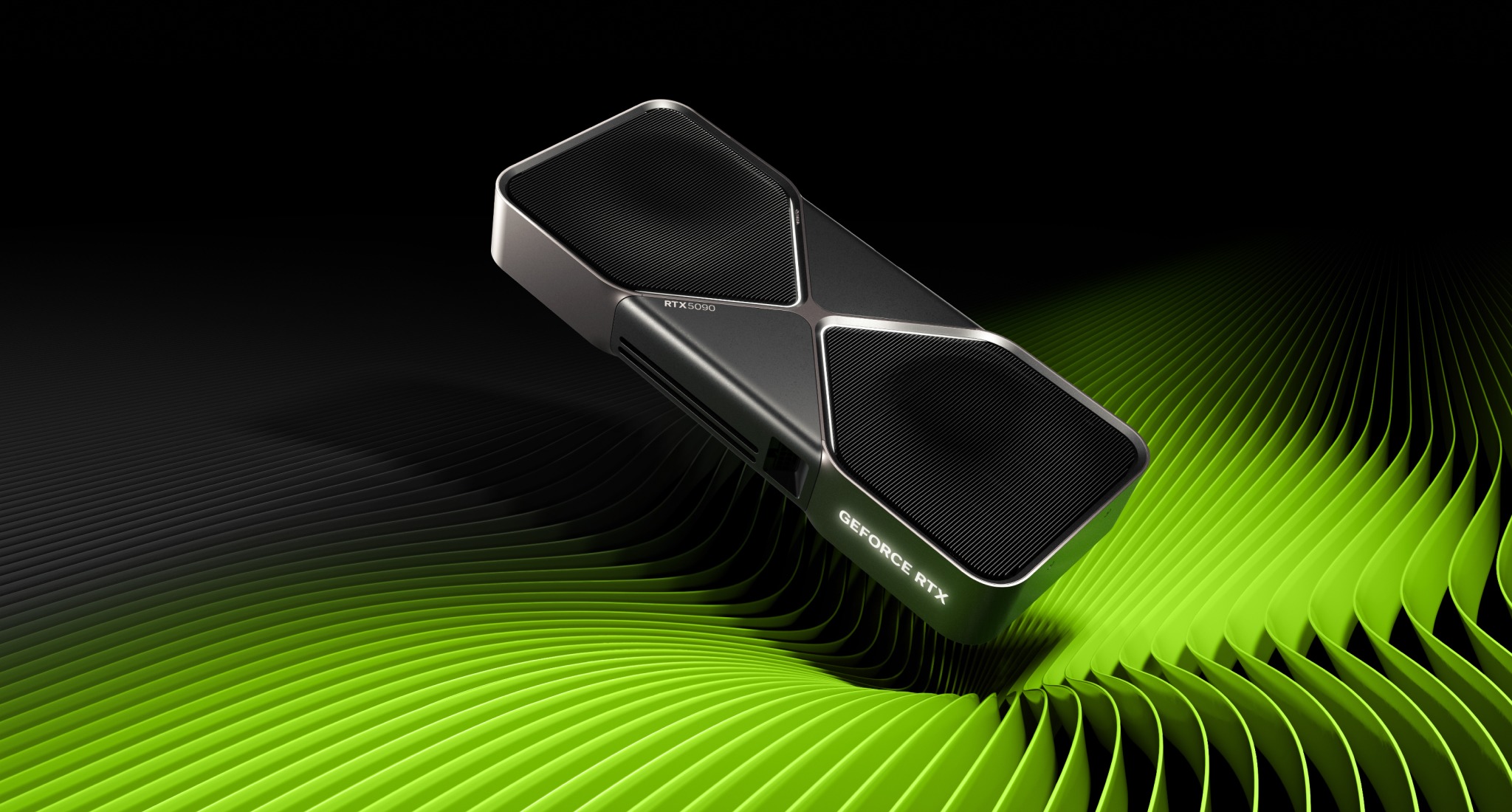
Nvidia has reportedly stopped making the GeForce RTX 5090 to free up Blackwell GB202 chip capacity for AI data-center and professional GPUs, according to hardware-supply-chain leaks dated around October 10, 2026. Nvidia has not confirmed or denied the specific claim, and its own RTX 5090 product page was still live as of October 15, 2026. What Nvidia has confirmed, in SEC filings, is that it expects gaming GPU supply to stay constrained into fiscal 2027 while data-center revenue dwarfs gaming revenue by more than 16 to 1.
Key facts
- Reports of a GeForce RTX 5090 production halt (including the China-market RTX 5090 D) surfaced around October 10, 2026; Nvidia has issued no public statement confirming or denying it.
- Nvidia's own RTX 5090 product page on nvidia.com remained published and reachable as of October 15, 2026 — the card has not been pulled from Nvidia's own marketing site.
- In its most recent SEC filing commentary, Nvidia's CFO said supply constraints would be "a headwind to Gaming" in fiscal Q1 2027 "and beyond."
- Nvidia's Data Center segment generated $62.3 billion in its last reported quarter versus $3.7 billion for Gaming — a revenue gap that explains the incentive to redirect chip capacity.
- Retail listings show RTX 5090 cards selling well above the $1,999 launch MSRP and going out of stock, consistent with a tightening supply picture rather than a confirmed discontinuation.
What is actually being reported
Starting around October 10, 2026, hardware-supply-chain leakers began circulating claims that Nvidia had issued an internal notice to board partners to stop building the GeForce RTX 5090, Nvidia's current flagship consumer graphics card, and redirect the underlying GB202 Blackwell silicon toward AI accelerators and professional workstation GPUs instead. The reports also claimed the halt covers the RTX 5090 D, the compliance-restricted variant Nvidia sells in China.
That is the claim. It is important to be precise about what it is not: it is not an Nvidia press release, an SEC filing, a driver release note, or a statement from Nvidia's investor relations team. It originates with supply-chain leakers whose track record on GPU production claims is mixed, and Nvidia has a documented history of denying similar "discontinuation" rumors about Founders Edition cards in the past. As of this writing, Nvidia has not addressed the October 2026 report in any on-the-record statement.
That distinction matters for anyone trying to decide whether to buy an RTX 5090 now, wait, or shop for a replacement — so the rest of this article separates what Nvidia has actually confirmed from what remains an unverified report.
What Nvidia's own site shows
The clearest way to check whether a GPU has actually been discontinued is to look at the manufacturer's own product listing. As of October 15, 2026, Nvidia's official RTX 5090 product page is still live on nvidia.com, with specifications, Founders Edition imagery, and purchase links intact. A delisting or discontinuation of this magnitude would typically be reflected first on Nvidia's own domain, and at the time of publication it was not.
That is a meaningful, verifiable data point, but it is not proof the rumor is false. Nvidia has previously kept product pages live for cards that were effectively winding down in availability, and a formal page takedown often lags the actual supply decision by weeks. The honest reading is: Nvidia's own site neither confirms nor refutes the specific halt claim — it simply shows the card has not been formally pulled from Nvidia's marketing presence yet.
What Nvidia has actually confirmed, in its own words
While Nvidia hasn't commented on the specific RTX 5090 halt report, it has made relevant statements in a different, more authoritative venue: its own regulatory filings. In CFO commentary accompanying Nvidia's fourth-quarter fiscal 2026 results, filed with the SEC, Nvidia stated plainly that "we expect supply constraints to be a headwind to Gaming in the first quarter of fiscal 2027 and beyond." That is Nvidia, on the record, telling investors that gaming GPU supply — the category that includes the RTX 5090 — would stay tight well into the period the October 2026 report falls within.
The same filing quantifies why a company might choose to redirect scarce Blackwell-generation chip capacity away from gaming cards. Nvidia reported Gaming segment revenue of $3,727 million for the quarter, against Data Center segment revenue of $62,314 million — Data Center outweighs Gaming by more than 16 to 1. Every GB202-class die Nvidia routes to a data-center or professional SKU instead of a GeForce card goes toward the much larger, much faster-growing side of the business. None of that confirms a specific production halt order was issued, but it does confirm the underlying financial incentive the rumor describes is real and is something Nvidia itself has acknowledged to investors.
| Data point | Figure | Source |
|---|---|---|
| RTX 5090 launch MSRP (Jan 2025) | $1,999 | Nvidia |
| Gaming segment revenue, Q4 FY2026 | $3,727 million | Nvidia SEC filing |
| Data Center segment revenue, Q4 FY2026 | $62,314 million | Nvidia SEC filing |
| Nvidia's stated outlook on gaming supply | "Headwind... in Q1 FY2027 and beyond" | Nvidia SEC filing (CFO commentary) |
| RTX 5090 (ASUS ROG Astral 32GB) retail listing checked Oct 2026 | $5,499.99, listed as sold out | Best Buy |
| Reported production-halt date | ~October 10, 2026 | Unconfirmed supply-chain reports |
What retailers are showing
Retail listings offer a second, independent data point. A search of Best Buy's current listings turned up an ASUS ROG Astral GeForce RTX 5090 32GB card priced at $5,499.99 — nearly triple the card's $1,999 launch MSRP — and marked as sold out at the time it was checked. That is consistent with an already-constrained supply chain getting tighter, though a single sold-out listing on one retailer is not, by itself, evidence of a formal production halt. Cards do sell out for ordinary reasons, including limited allocation and high demand, without a manufacturer stopping production altogether.
This pattern lines up with Pandromeda's own recent reporting on RTX 5090 street pricing, which found street prices running as high as $9,200 on some listings — far above MSRP even before this latest report surfaced. If Nvidia is in fact reducing RTX 5090 output, it would show up first exactly where that earlier pricing analysis already found strain: rising street prices and vanishing stock, rather than an official announcement.
Where the capacity would reportedly go
The leaked claims say redirected GB202 capacity would go toward Nvidia's AI data-center and professional-GPU lines rather than consumer gaming cards. Nvidia's current flagship professional GPU family built on the same Blackwell generation is the RTX PRO 6000 Blackwell series, which Nvidia sells in three editions: a passively cooled Server Edition for multi-GPU data-center deployments, a Workstation Edition for single-GPU desktop workstations, and a power-efficient Max-Q Workstation Edition for dense, up-to-four-GPU setups. According to Nvidia's own product page, all three editions pack 96GB of ECC GDDR7 memory, fifth-generation Tensor Cores, fourth-generation RT Cores, and PCIe Gen 5 connectivity, and Nvidia markets them for agentic AI, large-scale inference and fine-tuning, scientific computing, and photorealistic rendering — exactly the workloads driving the Data Center segment's growth.
Those parts carry far higher margins per die than a consumer GeForce card and feed directly into the Data Center segment that produced $62.3 billion in quarterly revenue versus $3.7 billion for Gaming — the same gap Nvidia cited in its SEC filing. Shifting constrained Blackwell wafer capacity toward that line is a plausible business decision even without an official confirmation of the specific GeForce RTX 5090 halt claim. It would also fit a pattern Nvidia has effectively already described to its own shareholders: that gaming-segment supply would be constrained "beyond" the first quarter of fiscal 2027, a window that covers the exact month the halt reports surfaced in.
So, is the RTX 5090 discontinued?
Based on everything that can currently be verified against primary sources, the honest answer is: not officially, not yet, and not according to Nvidia. The RTX 5090 has not been removed from Nvidia's own product pages. Nvidia has not issued a statement declaring the card discontinued. No driver release notes have dropped RTX 5090 support. What has happened is a combination of an unconfirmed leak claiming a production halt, and a set of real, Nvidia-acknowledged facts — tight gaming GPU supply, a huge revenue skew toward data center, and visibly strained retail stock — that make the rumor plausible without making it confirmed. Readers searching for a definitive "RTX 5090 discontinued" answer should treat this as an open, developing story rather than settled fact until Nvidia says otherwise on the record.
A pattern of unconfirmed supply rumors
This is not the first time supply-chain chatter has gotten ahead of an official Nvidia statement on the RTX 50-series. Earlier reports throughout 2025 and 2026 claimed Nvidia's Founders Edition cards were being quietly discontinued after disappearing from regional storefronts, only for the pattern to repeat: a card vanishes from stock, speculation builds, and Nvidia either stays silent or pushes back on the discontinuation framing specifically, while broader supply constraints continue in the background. The October 2026 RTX 5090 report fits that same shape. That doesn't make it wrong — Nvidia's own SEC language about persistent gaming supply headwinds shows the underlying pressure is real — but it is a reason to wait for an on-the-record Nvidia statement before treating "halted" as confirmed fact rather than a leak with plausible financial motive behind it.
How the RTX 5090 fits the current lineup
For readers deciding whether to chase a GeForce RTX 5090 right now or look elsewhere, it's worth remembering this isn't the first supply-driven pricing story around this card. Pandromeda's RTX 5080 Super vs. RTX 5090 comparison already lays out how the two cards stack up on specs and price for buyers trying to decide between them, and that calculus shifts further if RTX 5090 supply keeps tightening. According to Wikipedia's entry on the GeForce RTX 50 series, the RTX 5090 launched in January 2025 as the top consumer card in the Blackwell generation, built on the GB202 die — the same die family reportedly being redirected toward professional and data-center parts.
None of this is a reason to panic-buy. It is a reason to treat the specific "production halted" headline as unverified while treating the broader "gaming GPU supply is constrained" story as something Nvidia itself has already told investors to expect.
What this means if you're shopping for an RTX 5090
Practically, nothing has changed for a shopper today versus a week ago: the RTX 5090 remains Nvidia's listed flagship consumer GPU, it is still shown on Nvidia's own site, and it is still available in limited quantities at well above MSRP through retail channels when stock appears. If the halt report proves accurate over the coming weeks, expect the signs to show up as: fewer board-partner SKUs restocking, Nvidia quietly removing the card from its own shop and product pages, and driver release notes eventually dropping new-card language for the RTX 5090 the way Nvidia has done for genuinely end-of-life GPU generations in the past. None of those signs have appeared yet as of publication.
What's next
Nvidia's next scheduled financial disclosure will give the clearest signal either way: if Gaming segment revenue or commentary shows a sharp drop tied explicitly to GB202 reallocation, that would support the reported halt; if Gaming revenue holds up or Nvidia explicitly addresses the rumor, that would undercut it. Readers should also watch Nvidia's own RTX 5090 product and shop pages, since a formal discontinuation would typically show up there before anywhere else, and watch board-partner (ASUS, MSI, Gigabyte, etc.) listings for new-SKU activity rather than relying on restock trackers alone. Pandromeda will update this story if Nvidia issues an on-the-record statement.
Frequently asked questions
Has Nvidia confirmed it stopped making the RTX 5090?
No. As of October 15, 2026, Nvidia has not issued any statement confirming or denying reports that it halted RTX 5090 production. The claim originates from hardware-supply-chain leakers, not Nvidia.
Is the RTX 5090 still listed on Nvidia's website?
Yes. Nvidia's official RTX 5090 product page was still live and reachable on nvidia.com as of October 15, 2026, with specifications and purchase links intact.
Why would Nvidia reduce RTX 5090 production?
Nvidia's own SEC filing shows Data Center segment revenue of $62.3 billion versus $3.7 billion for Gaming in its most recent reported quarter. Redirecting scarce Blackwell GB202 chip capacity toward higher-margin AI and professional GPUs, like the RTX PRO 6000 Blackwell family, is financially incentivized even without a confirmed halt order.
Has Nvidia said anything about gaming GPU supply?
Yes. In CFO commentary filed with the SEC for Q4 fiscal 2026, Nvidia stated it expects supply constraints to be a headwind to its Gaming segment in fiscal Q1 2027 and beyond.
Is the RTX 5090 still available to buy?
It remains available in limited quantities through retailers, but often at prices well above the $1,999 MSRP and frequently out of stock, consistent with constrained supply rather than a confirmed discontinuation.
What would confirm the production halt is real?
An on-the-record Nvidia statement, the RTX 5090 being pulled from Nvidia's own product and shop pages, or driver release notes dropping new-card support for the RTX 5090 would all be stronger confirmation signals than the current leak-based reports.
Sources
- Nvidia GeForce RTX 5090 product pagenvidia.com
- Nvidia Q4 FY2026 CFO Commentary (SEC filing)sec.gov
- Nvidia RTX PRO 6000 Blackwell family product pagenvidia.com
- Best Buy RTX 5090 listingsbestbuy.com
- Wikipedia: GeForce RTX 50 seriesen.wikipedia.org
Mara Lindqvist edits the hardware desk. She covers graphics cards, processors, memory and storage, the foundries and chip designers behind them, and what the numbers on a spec sheet mean for people choosing a PC. Specifications in her stories come from manufacturer spec pages and datasheets.