iPad Mini 8 vs iPad Mini 7: What Actually Changed
Apple's new iPad mini jumps to OLED, the A20 Pro chip, and $699, a $200 increase. Here is every spec and price change versus the previous model.
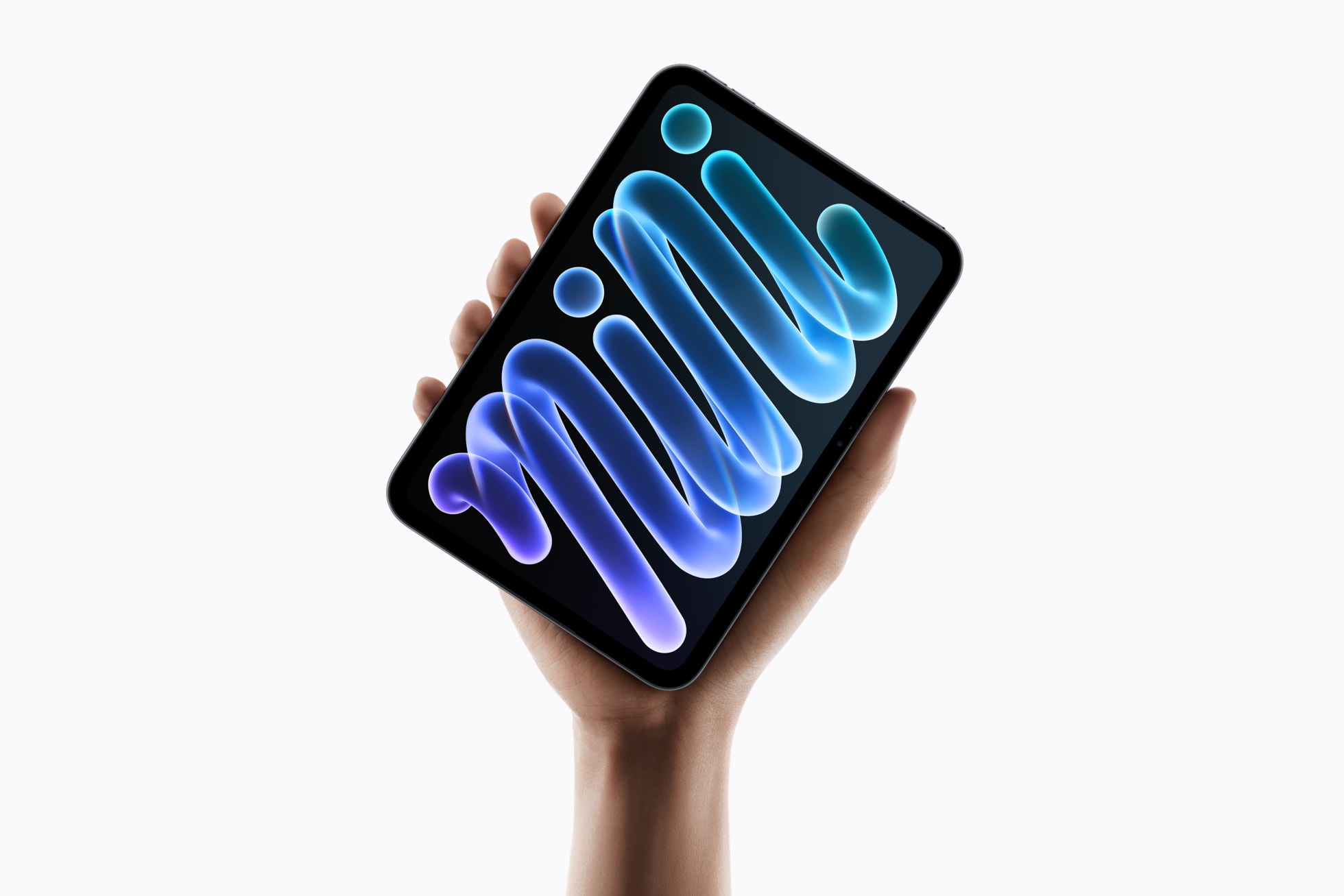
The new iPad mini costs $699, has an 8.5-inch OLED display, and runs on Apple's A20 Pro chip - a $200 jump and a complete screen-technology change from the previous model, which launched at $499 with an 8.3-inch LCD and an A17 Pro chip. Apple announced the new tablet on October 26, 2026, calling it "the biggest update ever" for the iPad mini line. Below is a full breakdown of what changed, what stayed the same, and whether upgrading from the previous-generation model actually makes sense.
A quick note on the name: Apple does not call it "iPad mini 8"
Before anything else, a correction search engines won't give you: Apple's own marketing never uses the phrase "iPad mini 8." On Apple's own iPad mini product page and in Apple's October 26, 2026 newsroom release, the product is simply called "iPad mini." When Apple needs to distinguish it from the older model, it refers to the two by chip, as "iPad mini (A20 Pro)" and "iPad mini (A17 Pro)," the same pattern it used when the 2024 model replaced the "iPad mini (6th generation)."
"iPad mini 8" and "iPad mini 7" are shorthand that press coverage and search traffic have settled on because this is, informally, the eighth and seventh entries in the iPad mini family. We use that shorthand in this piece because it's how most readers search for this comparison - but it's worth knowing it isn't how Apple itself labels the product.
What Apple actually announced on October 26, 2026
Apple's press release, published at apple.com/newsroom, frames this as the most significant redesign of the iPad mini since Apple introduced the flat-edged, USB-C version in 2021. The headline changes are a switch from LCD to OLED on the display, a new A20 Pro chip built on a 2-nanometer process, Apple's own N1 wireless chip and C2 cellular modem, and an IP67 water- and dust-resistance rating - a first for the iPad mini line. Pre-orders opened Wednesday, October 28, 2026, in 36 countries and regions, with the device arriving in stores on Friday, November 6, 2026.
The previous model, announced on October 15, 2024 via Apple's own newsroom release, was itself a meaningful update at the time - it brought the A17 Pro chip and Apple Pencil Pro support to the mini line for the first time. Two years later, that model is the baseline this new release is measured against.
Chip and performance: A20 Pro vs A17 Pro
The new iPad mini runs Apple's A20 Pro chip, built on a 2-nanometer process. According to Apple, the 128GB and 256GB configurations get a 5-core CPU (two "super" cores plus three efficiency cores) and a 7-core GPU with a Neural Accelerator built into each core; the 512GB configuration steps up to a 6-core CPU (two super cores, four efficiency cores) and a dual 16-core Neural Engine. Apple's newsroom release credits the chip with up to 60% faster multithreaded CPU performance, up to 2.7x faster graphics with hardware-accelerated mesh shading and ray tracing, more than double the memory bandwidth, and up to 4.5x faster on-device AI performance versus the outgoing model.
The outgoing iPad mini runs the A17 Pro - the same chip Apple first shipped in the iPhone 15 Pro - with a 6-core CPU (two performance cores, four efficiency cores), a 5-core GPU, and a 16-core Neural Engine. At launch in 2024, Apple said that chip delivered roughly 30% faster CPU performance and 25% faster GPU performance than the A15 Bionic it replaced, plus hardware-accelerated ray tracing that Apple claimed was 4x faster than doing ray tracing in software.
In practical terms: both chips are genuinely fast for a tablet this size, but the A20 Pro is a full two Apple silicon generations newer, with real headroom gains in graphics and on-device AI work rather than an incremental bump.
Display: OLED Super Retina XDR vs Liquid Retina LCD
This is the single biggest change in the lineup. Per Apple's tech specs page for the new model, the new iPad mini has an 8.5-inch Super Retina XDR OLED display at 2316 x 1512 resolution (326 ppi), with up to 1,200 nits of peak brightness, 600 nits of full-screen SDR/HDR brightness, a 2,000,000:1 contrast ratio, P3 wide color, and a brightness floor as low as 1 nit for comfortable use in the dark. Apple also offers an optional nano-texture glass finish (on the 256GB and 512GB configurations) to cut glare, and says the bezels are 24% thinner than before while keeping the same overall footprint as the previous model.
The previous-generation iPad mini uses an 8.3-inch Liquid Retina display - a backlit IPS LCD panel, not OLED - at 2266 x 1488 resolution (also 326 ppi), topping out at 500 nits of brightness, per Apple's own tech-specs page. It supports P3 wide color and True Tone, with an antireflective coating, but it cannot match OLED's per-pixel black levels, contrast, or peak brightness.
| Spec | New iPad mini ("iPad mini 8" / A20 Pro) | Previous iPad mini ("iPad mini 7" / A17 Pro) |
|---|---|---|
| Chip | A20 Pro (2nm), up to 6-core CPU, 7-core GPU | A17 Pro, 6-core CPU, 5-core GPU |
| Display | 8.5-in Super Retina XDR OLED, 1,200 nits peak | 8.3-in Liquid Retina LCD, 500 nits |
| Starting price (Wi-Fi, US) | $699 | $499 |
| Wi-Fi + Cellular price (US) | $849 | $649 |
| Storage options | 128GB / 256GB / 512GB | 128GB / 256GB / 512GB |
| Rear camera | 12MP Wide, Smart HDR 4, 4K up to 60fps | 12MP Wide (f/1.8), 4K up to 60fps |
| Front camera | 12MP Center Stage, landscape edge | 12MP Center Stage (f/2.4), portrait edge |
| Wireless | Apple N1 chip: Wi-Fi 7, Bluetooth 6, Thread | Wi-Fi 6E, Bluetooth 5.3 |
| Cellular modem | Apple C2 (up to 50% faster than prior gen) | 5G sub-6GHz, Gigabit LTE |
| Water resistance | IP67 | None listed |
| Weight (Wi-Fi) | 0.56 lb (255g) | 0.65 lb (293g) |
| Colors | Midnight, Starlight | Blue, Purple, Starlight, Space Gray |
Design, build and durability
The new model is 5.4mm thick and weighs 0.56 lb (255g) in its Wi-Fi configuration, which Apple says makes it the thinnest and lightest iPad mini yet. It comes in two colors, Midnight and Starlight, and carries an IP67 rating - the first time Apple has given the iPad mini a formal water- and dust-resistance rating. Apple's enclosure is now made from 100% recycled aluminum, and the release notes 35% recycled content overall and a battery built with 100% recycled cobalt.
The outgoing model is 6.3mm thick and noticeably heavier at 0.65 lb (293g) for Wi-Fi models, per Apple's own tech-specs page for that model, and ships in four colors: Blue, Purple, Starlight, and Space Gray. That page lists no IP water-resistance rating at all, which lines up with Apple's framing of IP67 as new to this generation.
Cameras, audio and connectivity
Camera hardware is similar on paper - both generations use a 12MP rear Wide camera and a 12MP Center Stage front camera capable of 4K video - but the new model moves the front camera to the landscape edge of the tablet (rather than the portrait edge on the outgoing model), which matters for anyone using it mainly in landscape for video calls. Apple also added Acoustic Display audio on the new model: woofers paired through the display itself plus custom tweeters hidden between the glass and the aluminum enclosure.
Connectivity is where Apple's custom silicon shows up most clearly. The new iPad mini uses Apple's own N1 chip for Wi-Fi 7 (where supported), Bluetooth 6, and Thread, plus Apple's C2 modem on cellular models, which Apple says delivers up to 50% faster cellular data than the previous generation. The outgoing model relies on Wi-Fi 6E with 2x2 MIMO and Bluetooth 5.3, with 5G sub-6GHz and Gigabit LTE on cellular configurations - still capable hardware, just a generation behind on wireless standards. Both generations are eSIM-only; neither supports a physical nano-SIM tray.
Pricing, storage and accessory costs
Storage tiers are identical across generations - 128GB, 256GB, and 512GB - so the real difference is price. The new iPad mini starts at $699 for Wi-Fi and $849 for Wi-Fi + Cellular, with education pricing at $649 for Wi-Fi. Apple is also offering it through its Apple Upgrade Program at $14.99/month over 36 months for Wi-Fi models, or $18.21/month for cellular. The previous generation launched at $499 for Wi-Fi (128GB) and $649 for Wi-Fi + Cellular, with education pricing from $449 - meaning the new base price is $200 higher than the outgoing model's launch price.
Accessory pricing has stayed essentially flat across both generations: Apple Pencil Pro is $129 ($119 with education pricing) and Apple Pencil (USB-C) is $79 ($69 with education pricing) for both models. The Smart Folio case did go up, from $59 at the 2024 launch to $79 for the new TechWoven fabric Smart Folio, now offered in navy blue and taupe.
The short version: you're paying $200 more for an OLED display, a newer chip with a real graphics and AI jump, Apple's own Wi-Fi/cellular silicon, and an IP67 rating. Storage tiers, Apple Pencil support, and accessory pricing (apart from the Smart Folio) are otherwise unchanged.
Software and availability
The new iPad mini ships running iPadOS 27. Apple's release notes that a Siri-related AI feature set arrives as a beta in iPadOS 27.2, available in English, French, Japanese, Korean, Portuguese, and Spanish - but not currently in the EU or for users under 13 - and that iPadOS 27.2 also adds an extended-display mode for use with an external monitor. Pre-orders for the new model opened October 28, 2026, through apple.com and the Apple Store app in 36 countries and regions, with general availability on November 6, 2026.
The previous-generation iPad mini launched running iPadOS 18, with Apple Intelligence features arriving in US English through the free iPadOS 18.1 update. It went up for pre-order on October 15, 2024, in 29 countries and regions, and reached stores on October 23, 2024.
Should you upgrade from the previous iPad mini?
If you already own the A17 Pro iPad mini, the case for upgrading comes down to how much you value the display. The jump from LCD to OLED is the kind of change you notice immediately - deeper blacks, far higher peak brightness, and genuinely better contrast for reading, video, and Apple Pencil work. If you spend a lot of time reading in bed, editing photos, or sketching with the Pencil, that alone may justify the $200 price increase. The A20 Pro's graphics and AI gains are real, but most everyday tasks - browsing, email, note-taking, video calls - were already comfortable on the A17 Pro.
If you're coming from an older iPad mini (the 6th generation or earlier, with Touch ID and a USB-C-less Lightning port on the oldest models), this is a far easier call: you get a vastly faster chip, a modern display, better cameras, current wireless standards, and official water resistance all at once.
The new iPad mini arrives in the same week as other Apple hardware updates; Pandromeda has also covered the new touchscreen MacBook Pro's price and release date and the redesigned iMac with the M6 chip, both part of the same October 2026 Apple refresh cycle.
What's next for the iPad mini
With pre-orders already open and shipments beginning November 6, 2026, the near-term story is availability and real-world reviews once units reach customers. Longer term, the bigger question is software: whether iPadOS 27.2's Siri-related AI features expand beyond the current language list and age restriction, and whether Apple extends the external-display mode introduced alongside this release to older iPad mini hardware. If you're also weighing a bigger-screen alternative, it's worth comparing the chip choice against Apple's larger tablets - a decision that overlaps with how Apple positions its Pro-tier silicon, a topic we cover in our comparison of Apple's M6 and M5 Pro chips. We'll update this piece as hands-on reviews and benchmarks of the new iPad mini become available.
Frequently asked questions
Is the new iPad mini actually called "iPad mini 8"?
No. Apple's own marketing calls it simply "iPad mini," distinguishing it from the previous model only by chip, as "iPad mini (A20 Pro)" versus "iPad mini (A17 Pro)." "iPad mini 8" is common shorthand used in search and press coverage, not an official Apple name.
What's the single biggest upgrade over the previous iPad mini?
The display. The new model switches from an 8.3-inch LCD to an 8.5-inch Super Retina XDR OLED panel with far higher peak brightness and contrast, alongside the new A20 Pro chip.
How much more expensive is the new iPad mini?
$200 more at launch. The Wi-Fi model starts at $699, versus $499 for the previous generation's Wi-Fi model at its October 2024 launch.
Does the new iPad mini still support Apple Pencil Pro?
Yes. Both the new and previous iPad mini support Apple Pencil Pro ($129) and Apple Pencil (USB-C) ($79), with no change in accessory compatibility or pricing.
When can I actually buy the new iPad mini?
Pre-orders opened October 28, 2026, in 36 countries and regions; it reaches stores and ships to customers starting November 6, 2026.
Is the IP67 water-resistance rating new to this generation?
Yes, based on Apple's own materials. The new iPad mini is the first in the line to carry a formal IP67 rating; Apple's tech-specs page for the previous A17 Pro model lists no IP rating at all.
Sources
- Apple Newsroom: Apple gives iPad mini its biggest update ever (Oct 26, 2026)apple.com
- Apple: iPad mini Tech Specs (A20 Pro model)apple.com
- Apple Newsroom: Apple introduces powerful new iPad mini built for Apple Intelligence (Oct 15, 2024)apple.com
- Apple Support: iPad mini (A17 Pro) Technical Specificationssupport.apple.com
- Apple: iPad mini product pageapple.com
Mara Lindqvist edits the hardware desk. She covers graphics cards, processors, memory and storage, the foundries and chip designers behind them, and what the numbers on a spec sheet mean for people choosing a PC. Specifications in her stories come from manufacturer spec pages and datasheets.