Touchscreen MacBook Pro: Price, Release Date and Specs
Apple has officially confirmed its first touchscreen Mac: a redesigned MacBook Pro with an OLED PROLED XDR display, M5 Pro or M5 Max chips, and prices starting at $2,899.
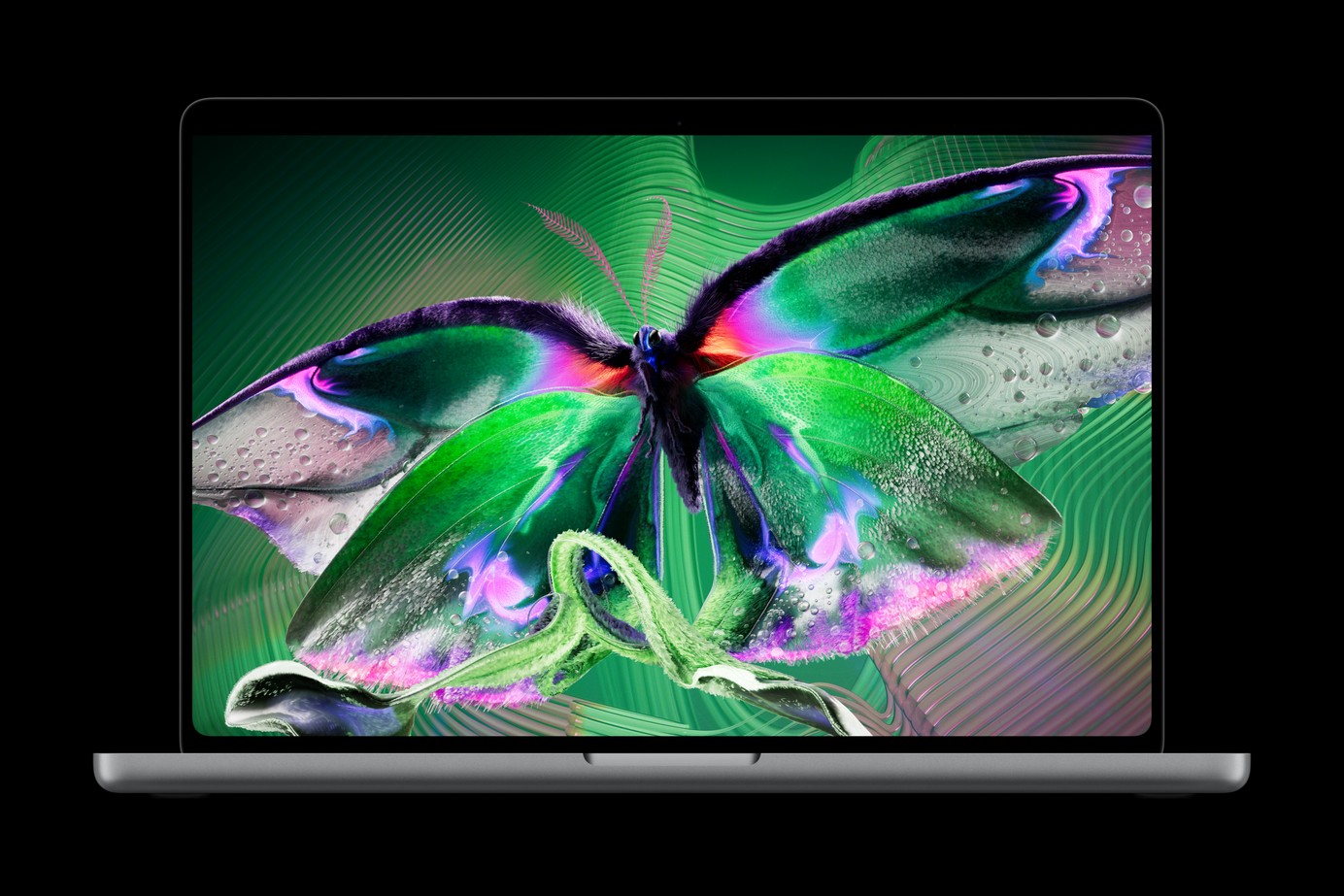
Apple has officially confirmed its first touchscreen Mac. At "Pro and Tell," the company's media event in Los Angeles on October 28, 2026, Apple unveiled a redesigned MacBook Pro built around a new OLED panel it calls PROLED XDR, available in 14.2-inch and 16.3-inch sizes with M5 Pro or M5 Max chips. Pricing starts at $2,899 for the 14-inch model and $3,399 for the 16-inch model, pre-orders opened the same day, and the laptops begin shipping and arrive in stores on Friday, November 6, 2026.
This is not a rumor roundup — it's what Apple actually announced, confirmed in Apple's own newsroom release and on its product pages, after weeks of pre-event reporting that correctly called the touchscreen and the OLED switch but got some of the finer details — including the exact pre-order timing — not quite right. Here's everything that's now confirmed: pricing, release date, specs, and how this new model differs from the standard MacBook Pro Apple also updated this month.
- Name: MacBook Pro with PROLED XDR Display
- Sizes: 14.2-inch and 16.3-inch, both touch-enabled
- Chips: Apple M5 Pro or M5 Max
- Starting price: $2,899 (14-inch), $3,399 (16-inch)
- Pre-orders: opened October 28, 2026
- Ships / in stores: Friday, November 6, 2026
What Apple Announced on October 28
Apple's press release, headlined "Apple unveils the MacBook Pro with PROLED XDR Display and Touch," calls the new laptop the company's first Mac with touchscreen support. It's a genuinely new product line sitting alongside — not replacing — the standard MacBook Pro that Apple refreshed with the M6 chip just one day earlier, on October 27. That means Apple is now selling two distinct MacBook Pro families at once: one with the familiar mini-LED Liquid Retina XDR display and no touch, and this new one with an OLED PROLED XDR display that you can tap, pinch, and draw on directly.
Johny Srouji, Apple's chief hardware officer, is quoted in the release saying "PROLED XDR is the world's best laptop display," positioning the screen — not just the touch input — as the centerpiece of the announcement. The new model keeps the MacBook Pro name and the same general silhouette, but almost everything behind the glass has changed: a new OLED stack, a touch digitizer, a lighter enclosure, and a chip lineup that, for now, stops at M5 rather than jumping to M6.
Apple is framing the touch layer as an addition to the existing trackpad-and-keyboard workflow rather than a replacement for it — the company's materials describe using a finger or Apple Pencil-style input alongside, not instead of, the trackpad for things like scrubbing timelines, marking up PDFs, or selecting objects directly in creative apps. That distinction matters, because it signals macOS itself hasn't been redesigned around touch the way iPadOS was; touch is layered on top of the same desktop interface, aside from the new Dynamic Island.
How Much the Touchscreen MacBook Pro Costs
Apple's official U.S. starting prices for the PROLED XDR MacBook Pro, by chip and size, are below. Education pricing is also listed where Apple provided it.
| Configuration | Starting price | Education price |
|---|---|---|
| 14-inch, M5 Pro | $2,899 | $2,749 |
| 16-inch, M5 Pro | $3,399 | $3,199 |
| 14-inch, M5 Max | $4,499 | $4,199 |
| 16-inch, M5 Max | $4,799 | $4,499 |
Those entry prices are several hundred dollars above the equivalent non-touch models in Apple's standard MacBook Pro line, which is sold separately with M6, M5 Pro, or M5 Max chips. If you're trying to decide whether the touch premium is worth it, our breakdown of how the M6 and M5 Pro chips compare is a useful starting point before you add the OLED touchscreen into the equation.
As with every recent MacBook Pro generation, those headline numbers are the floor, not the ceiling. Apple's configurator lets buyers step up memory and storage well beyond the base 24GB/512GB-class configurations, and each jump in RAM or SSD capacity adds to the final price — a fully loaded 16-inch M5 Max with 128GB of memory and 16TB of storage will cost considerably more than the $3,399 and $4,799 starting figures quoted above. Apple also continues to offer education discounts (listed in the table), trade-in credit toward an eligible Mac, and 0% APR financing options through Apple Card in the U.S., any of which can meaningfully change the out-of-pocket cost.
Release Date: When You Can Actually Buy It
Apple's newsroom post states plainly that the MacBook Pro with PROLED XDR Display "is available to pre-order starting today, October 28, with availability beginning Friday, November 6." Pre-event reporting — including our own coverage of Apple's October event lineup ahead of the announcement — had speculated about a slightly later pre-order window, but Apple's own page is the source of record: ordering opened the same day as the announcement, and the laptops ship and land in Apple Stores on November 6, 2026.
The PROLED XDR Display, Explained
PROLED XDR is Apple's name for a tandem OLED panel, a design that layers two OLED emissive layers to boost brightness and longevity beyond what a single-layer OLED screen can manage. According to Apple's specifications, the display reaches up to 2,000 nits of peak HDR and SDR brightness with a 10,000,000:1 contrast ratio, supports a 120Hz refresh rate with ProMotion scaling as low as 10Hz, and covers the P3 and Adobe RGB color spaces plus more than 80% of Rec. 2020. An optional nano-texture glass finish is available for glare reduction, continuing a feature Apple first brought to its Studio Display and Pro Display XDR monitors.
The touch sensor is built directly into the panel rather than bolted on as a separate layer, which is part of why Apple is treating this as a ground-up redesign rather than a feature added to the existing chassis. For background on the OLED technology underpinning the panel, Wikipedia's overview of OLED displays is a useful primer on how the tandem structure differs from the mini-LED backlighting used in the standard MacBook Pro.
Apple's framing leans heavily on color accuracy and brightness for creative work — the press release calls out Adobe Photoshop, Pixelmator Pro, Cinema 4D, and Nuke by name as apps that benefit from the wider color gamut, alongside developer and technical tools like MATLAB and the on-device AI app LM Studio. That app lineup signals who Apple expects to actually buy the touch model first: colorists, illustrators, and other visual professionals who already work on a Mac with a stylus or tablet nearby, rather than general consumers moving over from an iPad.
M5 Pro and M5 Max: What's Powering It
The touchscreen MacBook Pro ships exclusively with Apple's M5 Pro or M5 Max chips — there is no M6 option in this line, at least for now. Apple's configurator lists up to 128GB of unified memory and up to 16TB of storage across the two chip tiers, matching the ceiling on the non-touch M5 Max models. Apple hasn't published fresh CPU or GPU benchmark figures specific to the touchscreen chassis in its release, so for raw performance expectations the underlying M5 Pro and M5 Max silicon should behave the same as it does in the standard MacBook Pro configurations already on sale.
That chip ceiling is worth sitting with for a moment, because it's the clearest sign that touch and chip generation are separate decisions in Apple's lineup right now rather than bundled together. Someone who wants the newest silicon has to buy the non-touch M6 MacBook Pro; someone who wants the touchscreen and the OLED panel has to accept M5 Pro or M5 Max instead. Apple hasn't said whether a future PROLED XDR revision will adopt M6-class chips, and its release doesn't address the question at all.
Design, Weight and Battery Life
The new chassis is lighter than you might expect for a laptop that just gained a touch-enabled OLED panel: Apple lists the 14-inch starting weight at 3 pounds and the 16-inch at 4 pounds — notably lighter than the 3.5-pound starting weight Apple quotes for the equivalent 14-inch non-touch MacBook Pro. Battery life is rated at up to 24 hours, based on Apple's own September 2026 testing, matching the figure Apple quotes for the standard MacBook Pro, so the OLED panel and touch layer don't appear to have cost any runtime on paper. Fast charging gets the battery to 50% in about 30 minutes, according to the same release. Apple's materials also show off an anti-reflective coating on the new display, aimed at keeping screen glare down even with glossier OLED glass, and the laptop is offered in the now-familiar Silver and Space Black finishes.
Ports, Camera and Audio
Connectivity carries over Apple's recent Pro-line standards: three Thunderbolt 5 ports, an HDMI port, an SDXC card slot, MagSafe charging, and a headphone jack. The M5 Pro configuration can drive up to three external displays in addition to the built-in screen, while M5 Max steps that up to four. Wireless networking moves to Wi-Fi 7 and Bluetooth 6, and Touch ID remains the biometric login method — there's no Face ID on this Mac. On the media side, Apple specifies a 12-megapixel Center Stage camera, studio-quality microphones, and a six-speaker system Apple says delivers 50% deeper bass with Dolby Atmos support.
None of that is a dramatic departure from the non-touch MacBook Pro's port selection — Apple hasn't used the redesign as an excuse to drop ports the way some past MacBook generations did — which suggests the engineering effort went almost entirely into the display and chassis rather than into connectivity.
macOS 27 and the Dynamic Island on Mac
The new MacBook Pro ships with macOS 27, which brings Apple Intelligence and the Siri AI assistant to the Mac, and — notably — brings the Dynamic Island interface element to macOS for the first time, appearing for things like Live Activities, Spotlight, and Apple Music playback. Importantly, macOS 27 and the Dynamic Island aren't exclusive to the touch model; they ship on every Mac that supports the update. What's exclusive to the PROLED XDR MacBook Pro is the ability to tap, swipe, or interact with those elements directly on the screen rather than only through the trackpad and keyboard. Full details on what's new across Apple's current software lineup are on Apple's own MacBook Pro product page, which lists the touch and non-touch lines side by side.
How It Compares to the Standard MacBook Pro
It's worth being precise about what launched when, because Apple put out two different MacBook Pro press releases within 24 hours of each other. On October 27, Apple introduced the 14-inch MacBook Pro with M6, a conventional update to the existing mini-LED, non-touch design. On October 28, it followed with the PROLED XDR model covered here — a separate, touch-enabled line using M5 Pro and M5 Max rather than M6. The two are sold side by side in Apple's lineup, not as a direct replacement for one another, so chip generation (M6 vs. M5 Pro/M5 Max) is now a genuine trade-off against touch and the OLED panel, not just a speed bump. The same event also brought a new iPad mini; if you're shopping that side of Apple's lineup too, see our coverage of the iPad mini's release date and pricing.
Where to Buy and What to Check Before Ordering
Apple is selling the new MacBook Pro through its own online store and retail locations, with the same configurator options — memory, storage, and finish (Silver or Space Black) — that apply to the rest of the MacBook Pro line. Apple's buy page for MacBook Pro is the place to build a specific configuration and see current ship estimates, which may slip past November 6 for higher-end configurations as demand plays out during the pre-order window. Because the touch and non-touch MacBook Pro lines are both active at once, it's worth double-checking on that page which display and chip combination you're actually selecting before paying — "MacBook Pro" alone no longer specifies a single product the way it did a week ago.
AppleCare+ coverage is available on the new model at the same tiers Apple offers for the rest of the MacBook Pro lineup, and trade-in values for an existing Mac are calculated through the same online trade-in tool used across Apple's store. Apple's release does not mention any region-specific pricing beyond the U.S. figures above, so buyers outside the U.S. should expect local pricing to be confirmed on their country's Apple Store once pre-orders open there.
| Spec | 14-inch PROLED XDR | 16-inch PROLED XDR |
|---|---|---|
| Display | 14.2-inch tandem OLED, touch | 16.3-inch tandem OLED, touch |
| Chip options | M5 Pro, M5 Max | M5 Pro, M5 Max |
| Weight (starting) | 3 lb | 4 lb |
| Max memory / storage | 128GB / 16TB | 128GB / 16TB |
| Battery life | Up to 24 hours | Up to 24 hours |
| Starting price | $2,899 | $3,399 |
What's Next
With pre-orders already live and the first units landing November 6, the near-term story shifts from "what will Apple announce" to "how does it actually perform." Expect independent reviews to focus on two open questions Apple's own materials don't fully answer: how macOS's pointer-and-keyboard-first interface actually feels to use with touch day to day, and whether the tandem OLED panel shows any of the burn-in or color-shift concerns long associated with OLED displays over years of use. We'll continue following both the real-world reviews and any follow-up software updates tuning macOS 27 for touch as they land.
Frequently asked questions
How much does the touchscreen MacBook Pro cost?
Apple's official U.S. starting prices are $2,899 for the 14-inch M5 Pro model and $3,399 for the 16-inch M5 Pro model, rising to $4,499 and $4,799 for the M5 Max configurations, per Apple's October 28, 2026 announcement.
When is the touchscreen MacBook Pro release date?
Pre-orders opened October 28, 2026, the same day Apple announced it, with shipping and in-store availability beginning Friday, November 6, 2026.
Is the touchscreen MacBook Pro the same product as the M6 MacBook Pro?
No. Apple sells them as two separate lines: the M6 MacBook Pro announced October 27 keeps the existing mini-LED, non-touch display, while the PROLED XDR MacBook Pro announced October 28 adds an OLED touchscreen and uses M5 Pro or M5 Max chips instead of M6.
What chips does the touchscreen MacBook Pro use?
M5 Pro or M5 Max only, with up to 128GB of unified memory and 16TB of storage, according to Apple's specifications.
Does the touchscreen MacBook Pro run macOS or iPadOS?
It runs macOS 27, the same operating system as other Macs, with touch added as an additional input method rather than a shift to a touch-first interface like iPadOS.
What display technology is PROLED XDR?
PROLED XDR is Apple's name for a tandem OLED panel capable of up to 2,000 nits peak brightness and a 10,000,000:1 contrast ratio, with a touch digitizer built into the panel.
Sources
Mara Lindqvist edits the hardware desk. She covers graphics cards, processors, memory and storage, the foundries and chip designers behind them, and what the numbers on a spec sheet mean for people choosing a PC. Specifications in her stories come from manufacturer spec pages and datasheets.