Intel Q3 2026 Earnings: Revenue Up 21% as AI Chips Surge
Intel beat on revenue as AI and data-center chips surged, but client PC sales fell and Foundry stayed unprofitable.
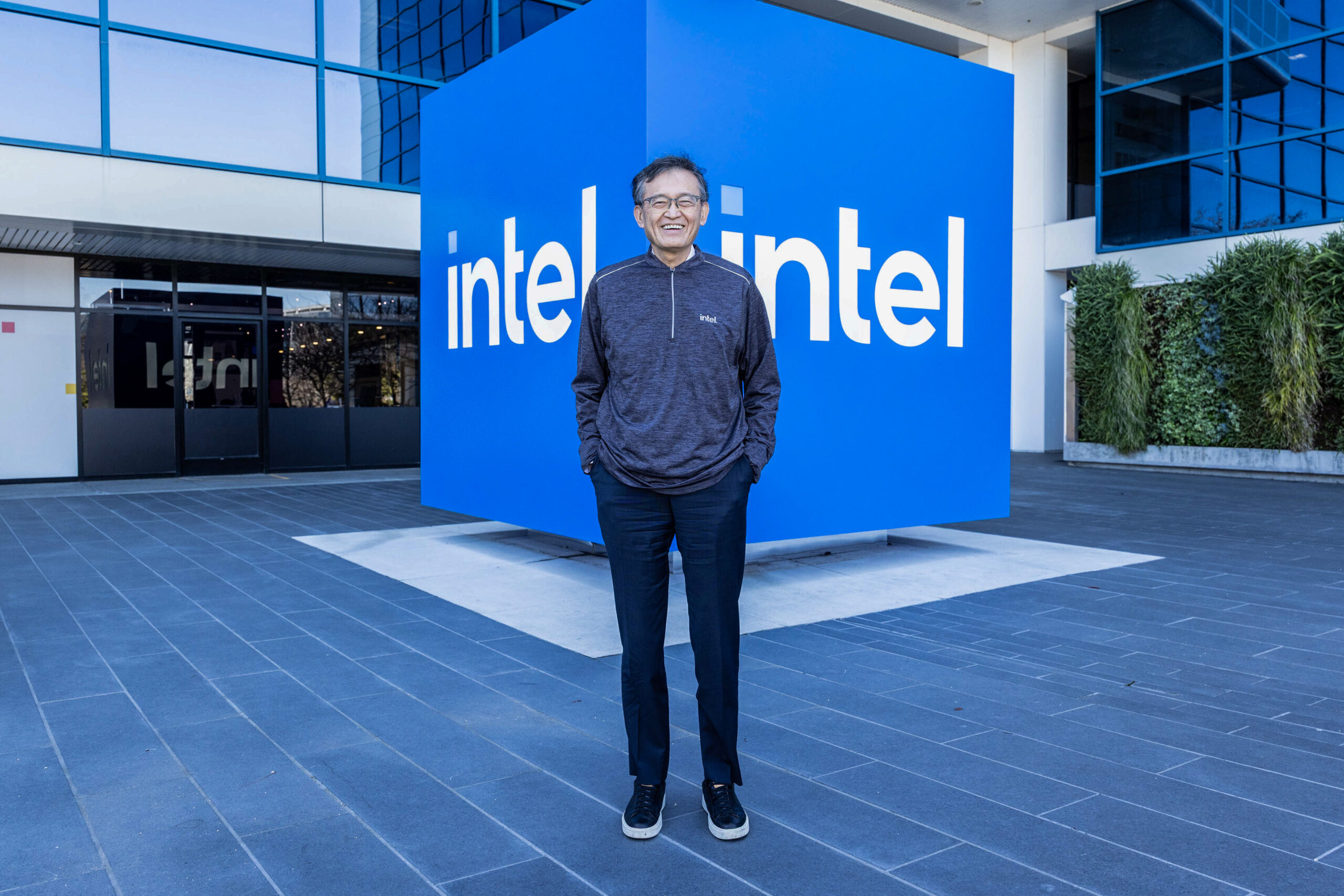
Intel's data-center and AI chips are growing fast enough to cover for a shrinking PC business, but the company's foundry arm is still losing money by the billions as it tries to catch up on manufacturing. That is the short version of Intel's third-quarter 2026 results, reported October 29, 2026: revenue of $16.5 billion, up 21% year over year, with GAAP diluted earnings per share of $0.60 (down from $0.90 a year ago) and non-GAAP diluted EPS of $0.52 (up from $0.23).
- Revenue: $16.5B, up 21% year over year
- GAAP diluted EPS: $0.60 (down from $0.90 in Q3 2025)
- Non-GAAP diluted EPS: $0.52 (up from $0.23 in Q3 2025)
- Data Center and AI (DCAI) revenue: $7.3B, up 78%
- Client Computing and Physical AI (CCPG) revenue: $8.1B, down 5%
- Intel Foundry revenue: $6.7B, up 58%, still operating at a loss
- Q4 2026 guidance: $15.0B–$16.0B revenue, non-GAAP EPS of $0.25
Intel's Q3 2026 headline numbers
Intel's quarter ended September 26, 2026. Total revenue came in at $16.5 billion, up from $13.7 billion a year earlier, according to the company's investor-relations press release and the matching 8-K filing with the SEC. GAAP gross margin rose to 43.0% from 38.2% a year ago, and non-GAAP gross margin rose to 44.1% from 40.0%.
The split between GAAP and non-GAAP profit lines is where the quarter gets interesting. GAAP diluted EPS fell 33% year over year to $0.60, while non-GAAP diluted EPS more than doubled to $0.52. That gap points to one-time items — restructuring, impairments, and other charges — weighing on the GAAP figure even as the underlying, adjusted business improved sharply. GAAP net income attributable to Intel was $3.3 billion for the quarter; non-GAAP net income attributable to Intel was $2.8 billion, up 169% from a year earlier. Operating cash flow was $5.1 billion for the quarter and $13.2 billion for the first nine months of 2026.
Segment breakdown: AI strength, client softness, foundry losses
Intel now reports results across four main lines: Client Computing and Physical AI Group (CCPG), Data Center and AI (DCAI), the combined Intel Products total, and Intel Foundry. The segment table below, drawn from the SEC filing, shows exactly where the quarter's growth — and its weak spot — came from.
| Segment | Q3 2026 revenue | YoY change | Operating income |
|---|---|---|---|
| Client Computing & Physical AI Group (CCPG) | $8.1B | -5% | $2,285M |
| Data Center & AI (DCAI) | $7.3B | +78% | $3,039M |
| Total Intel Products | $15.4B | +22% | $5,324M |
| Intel Foundry | $6.7B | +58% | -$1,853M |
DCAI's 78% jump is the clearest sign that Intel is finally capturing some of the AI-driven data-center spending that has lifted rivals like Nvidia all year. CEO Lip-Bu Tan said demand for the company's CPUs "remains robust," and specifically pointed to extraordinary demand for the Xeon server-processor family — the product line most directly tied to the AI buildout, since AI servers still need host CPUs alongside their accelerators even when Nvidia or AMD GPUs are doing the heavy lifting.
CCPG, the group that bundles traditional client PCs with Intel's newer physical-AI and robotics-adjacent silicon, fell 5% year over year. CFO David Zinsner said he expects the PC slowdown to continue at least through the first half of next year, a cautious note that stands in contrast to the DCAI number. It is the same pattern this desk has tracked across the chip industry's Q3 2026 earnings season: AI and data-center demand is absorbing capital and capacity that would otherwise go toward consumer and client products, and Intel's own numbers now show that tension running right through its own product lines.
Intel Foundry — the contract manufacturing business built around the company's push to make chips for outside customers — grew revenue 58% to $6.7 billion, but still posted an operating loss of roughly $1.9 billion. That loss is smaller, proportionally, than in past quarters, and the revenue growth suggests Intel is landing more external wafer volume as it ramps newer process nodes. But foundry remaining unprofitable at this scale is the central swing factor in whether Intel's turnaround sticks: the segment needs to reach breakeven for the rest of the business's margin gains to show up cleanly in the bottom line.
Cash, capital spending and the balance sheet
Behind the headline revenue and EPS lines, Intel's balance sheet shows a company still spending heavily to build out manufacturing capacity while trying to hold onto cash. As of September 26, 2026, Intel reported $21.8 billion in cash and cash equivalents and another $32.2 billion in short-term investments, against $3.8 billion in short-term debt and $46.3 billion in long-term debt, per the SEC filing. Total assets stood at $228.6 billion, and total Intel stockholders' equity was $114.9 billion ($131.6 billion including non-controlling interests — a reference to the external investors now holding stakes in parts of Intel's foundry and other units).
Gross capital expenditures were $4.2 billion in the third quarter alone and $10.2 billion over the first nine months of 2026, reflecting continued spending on fab construction and tooling even as Intel works to bring in outside capital partners to share that cost. Adjusted free cash flow for the quarter was $1.6 billion — positive, but still a fraction of the capital Intel is deploying into its manufacturing buildout. Operating cash flow, by contrast, was a healthier $5.1 billion for the quarter, underscoring that the gap between operating cash generation and free cash flow is almost entirely a function of how much Intel is still pouring into capex.
That spending pattern matters for reading the rest of the quarter: Intel's profitability metrics are improving, but the company is still in a heavy investment phase on the manufacturing side, which is the same dynamic weighing on Intel Foundry's operating loss described above.
Why the DCAI number is the one to watch
Data Center and AI revenue growing 78% year over year, to $7.3 billion, is the single number in this report most likely to shape how Wall Street and the rest of the chip industry read Intel's quarter. It is the clearest evidence yet that Intel is capturing a meaningful slice of the AI infrastructure buildout that has driven blockbuster results elsewhere in the memory and chip industry this earnings season. Nvidia, whose GPUs remain the dominant AI accelerator, continues to set the pace for AI data-center spending that companies like Intel are now also benefiting from on the CPU and server side.
Intel's DCAI segment captures server CPUs (the Xeon family), AI accelerators, and related data-center silicon — products that attach to, rather than compete head-on with, the GPU-centric AI buildout. Lip-Bu Tan's comment about "extraordinary demand" for Xeon suggests hyperscalers and cloud providers are still buying large volumes of Intel server CPUs to pair with GPU clusters, even as those same customers diversify their AI accelerator purchases away from any single supplier. Whether DCAI's growth rate holds up, accelerates, or cools will be one of the clearest signals of how durable Intel's AI-adjacent demand really is, separate from the health of the PC market reflected in CCPG.
Q4 2026 guidance: a step down from Q3
Intel guided Q4 2026 revenue to a range of $15.0 billion to $16.0 billion — below Q3's actual $16.5 billion. The company's guidance also pointed to GAAP gross margin of 37.1% and non-GAAP gross margin of 38.0%, both materially below Q3's actual margins. On earnings, Intel guided to GAAP diluted EPS of $0.10 and non-GAAP diluted EPS of $0.25 for the quarter, alongside a GAAP tax rate of 31% and a non-GAAP tax rate of 11%. Intel said the margin and EPS outlooks are based on the midpoint of the revenue range.
The sequential step-down in both revenue and margin guidance lines up with Zinsner's comment about PC demand staying soft into next year, and it suggests Intel isn't yet ready to call the client slowdown over even as its data-center business accelerates.
What the results mean for Intel's turnaround
Put together, the quarter tells a fairly consistent story: Intel's AI and data-center chip business is now growing at a pace that rivals, in percentage terms, what SK Hynix, Samsung, and Micron have all reported from AI-driven memory and chip demand this earnings season, while its client PC business lags the broader market softness. Foundry, meanwhile, is growing revenue quickly but is still burning cash — a reminder that Intel's bet on becoming a major contract manufacturer for other chip designers remains a multi-year project rather than a near-term profit driver.
The GAAP-versus-non-GAAP gap is also worth watching going forward. A 33% drop in GAAP EPS against a 126% jump in non-GAAP EPS in the same quarter means the headline "profit fell" framing and the "profit more than doubled" framing are both technically accurate, depending on which number is being cited — investors and other outlets reporting on this quarter will likely emphasize one or the other depending on their angle.
It's worth being precise about what drives that gap, since Intel's own release separates the two cleanly rather than leaving it to interpretation. The GAAP figures include restructuring charges, impairments and other one-time items that the non-GAAP figures strip out; that is a standard practice across the chip industry's reporting, but it means the "real" trajectory of Intel's underlying business is arguably closer to the non-GAAP line — where EPS more than doubled — than to the GAAP line, which captures the one-time costs of the company's ongoing restructuring and foundry buildout. Readers comparing Intel's results to peers like Micron, Samsung, or SK Hynix should keep in mind that not every company breaks out GAAP and non-GAAP figures with the same level of separation, which can make raw EPS comparisons across companies misleading.
The segment mix also says something about where Intel's identity is heading. Total Intel Products — the combination of CCPG and DCAI — grew 22% to $15.4 billion, meaning the core chip-design business as a whole is expanding even with the PC segment in decline, purely on the strength of the data-center and AI side. That is a meaningfully different growth profile than the Intel of a few years ago, when PC chips were the dominant and most reliable earner. If DCAI keeps growing at anything close to its current rate while CCPG stabilizes, Intel Products as a combined unit could keep posting double-digit growth well into 2027, even without any help from the foundry turnaround.
What's next
Intel's full filing history, including this quarter's 8-K and all exhibits, is available on SEC EDGAR's filing browser for Intel Corporation. Intel's Q4 2026 results, covering the holiday-quarter period, are expected in late January 2027, and will show whether the DCAI momentum continues into a seasonally stronger quarter for data-center spending, whether the CCPG softness persists as Zinsner warned, and whether Intel Foundry narrows its operating loss further as external customer volume builds. Investors will also be watching whether Q4 actually lands within the guided $15.0–$16.0 billion range or surprises in either direction, given how far above its own Q3 guidance the company's prior quarter apparently ran.
Frequently asked questions
See the FAQ section below for quick answers on Intel's Q3 2026 numbers, guidance, and segment performance.
Frequently asked questions
What was Intel's Q3 2026 revenue?
Intel reported $16.5 billion in revenue for the third quarter of 2026, up 21% from $13.7 billion a year earlier, according to Intel's investor-relations press release and its SEC 8-K filing.
Why did Intel's GAAP EPS fall while non-GAAP EPS rose?
GAAP diluted EPS fell 33% to $0.60 because of restructuring, impairments and other one-time charges. Non-GAAP diluted EPS, which excludes those items, rose 126% to $0.52 from $0.23, reflecting stronger underlying operating performance.
How much did Intel's data center and AI business grow?
Intel's Data Center and AI (DCAI) segment generated $7.3 billion in revenue, up 78% year over year, making it the fastest-growing part of Intel's business in Q3 2026.
Is Intel Foundry profitable yet?
No. Intel Foundry revenue grew 58% year over year to $6.7 billion in Q3 2026, but the segment still posted an operating loss of roughly $1.9 billion.
What is Intel's guidance for Q4 2026?
Intel guided to Q4 2026 revenue of $15.0 billion to $16.0 billion, non-GAAP gross margin of 38.0%, and non-GAAP diluted EPS of $0.25, with GAAP diluted EPS guided at $0.10.
Why did Intel's Client Computing segment decline?
CCPG (Client Computing and Physical AI Group) revenue fell 5% year over year to $8.1 billion as the broader PC market stayed soft. Intel's CFO said he expects that softness to continue into at least the first half of next year.
Sources
Mara Lindqvist edits the hardware desk. She covers graphics cards, processors, memory and storage, the foundries and chip designers behind them, and what the numbers on a spec sheet mean for people choosing a PC. Specifications in her stories come from manufacturer spec pages and datasheets.