Ratatan vs. Patapon: Every Difference Compared
Ratata Arts built Ratatan as Patapon's spiritual successor. Here is exactly what the rhythm roguelite keeps, changes and charges across PC, PS5, Xbox Series and Switch 2.
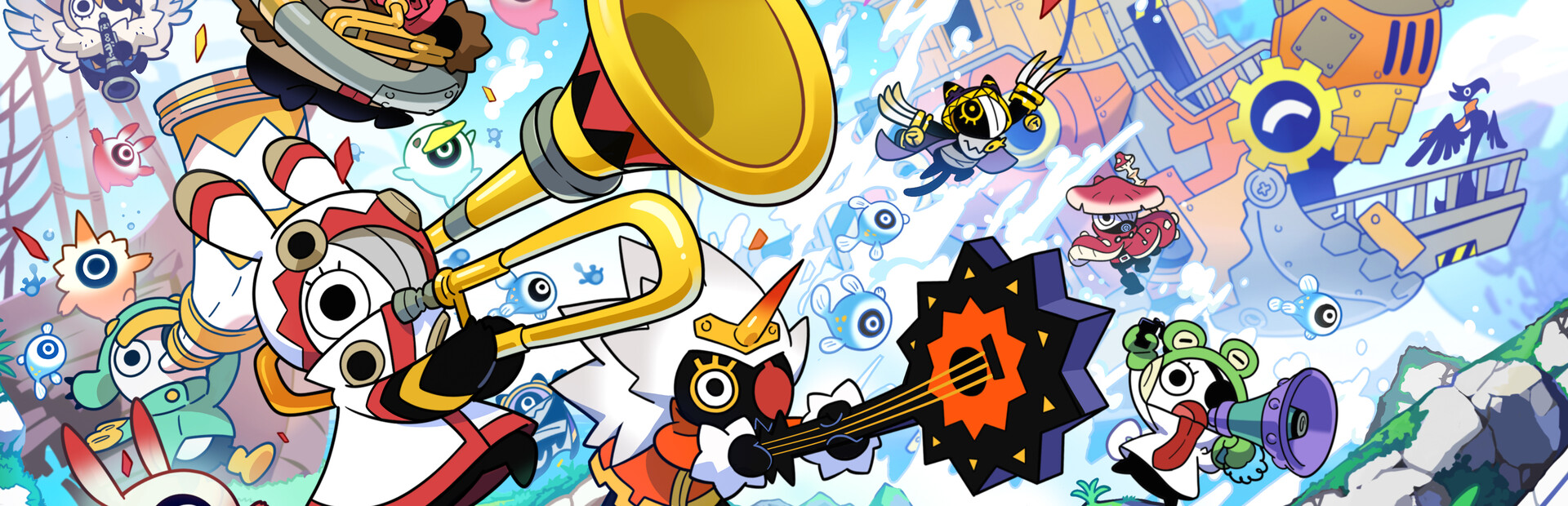
Ratatan is Patapon's spiritual successor, not a remake of it. Built by Ratata Arts with original Patapon director and designer Hiroyuki Kotani, Ratatan keeps the beat-driven command system and Fever mechanic that made the PSP series famous, but rebuilds everything around it: a roguelite run structure instead of a mission campaign, direct control of a playable Ratatan character instead of unseen-deity squad command, a simplified three-sound input pattern instead of the original four-drum Pata/Pon system, and a persistent card-and-hub upgrade loop that Patapon never had. The game left Steam Early Access and arrived at version 1.0 on PC, PlayStation 5, Xbox Series X|S and Nintendo Switch 2 on October 15, 2026.
The quick version:
- What it is: A rhythm roguelite action game from Ratata Arts, built by former members of the Patapon team.
- Release: Steam Early Access since September 2025; 1.0 launched October 15, 2026 on PC, PS5, Xbox Series X|S and Switch 2.
- Price: $34.99 for the standard edition on Steam.
- Same as Patapon: Rhythm-command input, the Fever combo state, and the chibi-tribal art lineage.
- Different from Patapon: Roguelite runs instead of a linear campaign, direct character control instead of deity squad command, three-sound inputs instead of four-drum commands, and permanent hub upgrades plus Ratakaruta cards.
What is Ratatan, exactly?
Ratatan is a "rhythm roguelike action game," in the words of its own Steam store page, developed by Ratata Arts in collaboration with Tokyo-based studio TVT and published by Game Source Entertainment. The project is led by Hiroyuki Kotani, who directed and designed the original Patapon games for Japan Studio, and it was unveiled at BitSummit in 2023 before a successful Kickstarter campaign funded its development. It entered Steam Early Access in September 2025, then spent roughly a year in public testing before its full 1.0 release.
The pitch is simple to state and harder to execute: command an army of small creatures called Cobuns by hitting rhythm inputs in time with the game's music, pushing them across the fantasy world of Redo. That's the same elevator pitch Patapon used in 2007. What changed is almost everything underneath it.
Ratatan also supports online co-op for up to four players, something the original PSP trilogy never offered. Multiple players can bring their own Ratatan and Cobun army into the same run, which is part of why Game Source Entertainment's post-Early-Access patches have focused so heavily on multiplayer stability ahead of the console launch.
What Patapon established first
Patapon launched on PSP in Japan in December 2007 and in the West in early 2008, developed by Pyramid and Japan Studio and published by Sony Computer Entertainment, according to Wikipedia's account of the series. Players acted as an unseen deity guiding a tribe of one-eyed creatures through a side-scrolling campaign, issuing commands by tapping four face buttons in four-beat rhythms synced to a pulsing on-screen cue. Different four-button sequences built from the drums Pata, Pon, Chaka and Don triggered marching, attacking, defending, retreating and, eventually, weather-altering "Miracles." Chaining commands in perfect time built toward Fever, a temporary state that boosted the tribe's attack and defense. The formula spawned two PSP sequels, a PS4 remaster in 2017, and a mobile spin-off, and it's still being kept alive today: Bandai Namco and developer sAs released Patapon 1+2 Replay for PlayStation 5, Nintendo Switch and PC in 2025, bundling the first two games with adjustable input timing and difficulty options for new players.
What Ratatan keeps from Patapon
Ratatan is explicit about its lineage, and the overlap is real in three places:
- Rhythm-command input. You still issue orders by playing short musical phrases in time with the beat rather than through a traditional menu or stick-and-button combo, and the game still tracks your timing precisely enough to reward near-perfect play.
- The Fever mechanic. Chaining commands successfully still escalates into a heightened state — in Ratatan the backing track shifts into a call-and-response duet between the player's Ratatan and their Cobuns, functionally the same payoff as Patapon's Fever boost to attack and defense.
- Visual and tonal lineage. The chibi-proportioned, tribal-patterned character design and the drum-and-chant musical identity both trace directly back to Patapon's art direction, and Kotani's continued involvement keeps that throughline intentional rather than coincidental.
Game Source Entertainment's own promotional materials have leaned into this directly, describing Ratatan to press as coming from the creators of Patapon, while also stressing — after some early fan confusion — that it isn't a sequel or remake of that series.
Roguelite runs replace the mission campaign
This is the single biggest structural change. Patapon was a linear, mission-based campaign: you cleared a set world map one stage at a time, unlocking new drum commands and equipment as the story advanced, with permanent progress tied to story completion.
Ratatan restarts that loop entirely. Each run pushes through a sequence of stages toward a final destination the community has nicknamed Everafter, and each stage is broken into sections that end in a choice — usually one of three Ratakaruta ability cards, but sometimes a health boost, a larger army cap, food, or shop currency instead. Altars scattered through runs let you trade a permanent-feeling cost, like max HP, for an in-run benefit. Die or finish, and you return to the hub island of Rataport, where currency earned during the run — Candy and Donuts — buys permanent upgrades that persist into your next attempt. It's the genre structure popularized by games like Hades or Dead Cells, applied to a rhythm-command framework that has no real precedent for it.
Direct control and simplified inputs
Two more changes follow from that structural shift, and both lower the floor of entry compared to the original series.
In Patapon, you never controlled a character directly — you played a deity giving orders to an entire squad from outside the action. In Ratatan, you directly control one of several playable Ratatan characters on the field, moving and acting while also calling in your Cobun army's support through rhythm commands. It's a hybrid of direct action control and squad command rather than pure squad command.
The input pattern has also been trimmed down. Patapon's commands were four-beat sequences built from four distinct drum sounds (Pata, Pon, Chaka, Don). Ratatan instead uses a three-sound vocabulary — RATA, ZUN-TAKA and YA-HOI — arranged across a four-beat measure that includes a rest beat, producing six total commands covering attacks, guard, jump and a "Fall In" repositioning move. The developers have also added adjustable timing windows and an easier assist mode for players who find the original's rhythm demands daunting, a concession Patapon veterans will recognize from the Patapon 1+2 Replay remaster's own accessibility options.
Ratakaruta cards and permanent hub upgrades
Patapon's only persistent progression was story-gated: finish a mission, keep your unlocked drums and gear, move on. Ratatan layers a second, roguelite-style progression system on top of the campaign-style world of Redo. Ratakaruta cards, drawn from in-run powerup choices, shape how a single attempt plays out and reset when the run ends. Rataport-based upgrades, bought with resources carried out of runs, persist across every future attempt and gradually make the player stronger regardless of how any individual run goes. A post-launch update even added a reroll option for card draws, giving players more control over which Ratakaruta they end up building a run around.
Ratatan vs. Patapon, feature by feature
| Feature | Patapon (2007-2011) | Ratatan (2025-2026) |
|---|---|---|
| Developer | Pyramid / Japan Studio | Ratata Arts / TVT |
| Core input | Four-beat sequences, 4 drum sounds (Pata, Pon, Chaka, Don) | Four-beat measure with rest, 3 sounds (RATA, ZUN-TAKA, YA-HOI) |
| Player perspective | Unseen deity commanding a full squad | Direct control of a playable Ratatan, plus squad commands |
| Structure | Linear, mission-based campaign | Roguelite runs toward a final destination |
| Progression | Story-gated drum and gear unlocks | In-run Ratakaruta cards + permanent Rataport hub upgrades |
| Fever mechanic | Combo-triggered attack/defense boost | Combo-triggered musical duet with boosted stats |
| Platforms (current) | PS5, Switch, PC (1+2 Replay remaster) | PC, PS5, Xbox Series X|S, Switch 2 |
| Launch price | Varies by edition/remaster | $34.99 (standard, Steam) |
Platforms, pricing and availability
Ratatan's PC version has been available on Steam since its September 2025 Early Access launch, priced at $34.99 for the standard edition at 1.0 (the Early Access price was lower). A Deluxe Edition bundle including extra content is also sold on Steam. Console versions were originally planned for PS4, Xbox One and the original Switch alongside current-generation hardware, but publisher Game Source Entertainment later confirmed those older-platform versions were dropped in favor of focusing on PC, PlayStation 5, Xbox Series X|S and Nintendo Switch 2, according to the publisher's own release announcement. That same announcement confirmed the 1.0 launch slipped from an originally planned July 2026 date to October 15, 2026, with the extra months spent on multiplayer stability and bug fixes informed by Early Access feedback.
For anyone deciding whether to play Ratatan docked or on the go, the Switch 2's hardware profile against a Steam Deck OLED is worth a look before buying a console copy versus playing on PC.
Critical reception so far
Reception has been mixed-to-positive rather than uniformly glowing. Ratatan's own Steam page shows an overall "Very Positive" rating from its Early Access audience, sitting at 89% positive across more than 900 English-language reviews as of its 1.0 launch, but its most recent review bucket — covering 1.0-era feedback — sits lower, around "Mixed," with some players flagging the roguelite upgrade loop as underwhelming compared to the depth of Patapon's campaign progression, and others praising the combat feel and the music. That split roughly tracks the game's biggest departures from Patapon: players who came in for a direct Patapon sequel have had the most friction with the roguelite reframing, while players approaching Ratatan as its own rhythm-action game have generally responded better to it.
Game Source Entertainment has acknowledged this gap directly in its own promotional materials, noting that some fans expecting a one-to-one Patapon-style experience were disappointed by the roguelite reframing, and apologizing for not explaining the game's direction clearly enough ahead of launch. The publisher has stressed that producer Hiroyuki Kotani worked on the original Patapon games but that Ratata Arts does not own that IP and built Ratatan as a new game rather than attempting to reproduce Patapon's structure.
How Ratatan fits the current console landscape
Ratatan's Switch 2 debut adds it to a growing lineup of October 2026 releases for Nintendo's newer hardware, alongside other current console ports and new releases such as Castlevania: Belmont's Curse.
What's next for Ratatan
With 1.0 now out across PC, PS5, Xbox Series X|S and Switch 2, the near-term roadmap Game Source Entertainment and Ratata Arts have described publicly centers on post-launch content updates, continued multiplayer tuning, and card-system adjustments like the reroll feature added during Early Access. Whether Ratatan builds a Patapon-sized following of its own will likely depend on how the 1.0-era reviews settle over the coming months, and on whether the developers keep iterating on the roguelite loop that's drawn the most mixed feedback. For now, it stands as a genuine spiritual successor rather than a safe retread: same drum-driven DNA, structurally a different game.
Frequently asked questions
Is Ratatan a sequel to Patapon?
No. Ratatan is a spiritual successor made by Ratata Arts with original Patapon director and designer Hiroyuki Kotani involved, but it is a new, separate game and not a licensed Patapon sequel.
What platforms is Ratatan on?
Ratatan is on PC via Steam, PlayStation 5, Xbox Series X|S, and Nintendo Switch 2. Earlier plans for PS4, Xbox One and the original Switch were dropped.
When did Ratatan's 1.0 version release?
Ratatan's 1.0 version released on October 15, 2026, after being delayed from an originally planned July 16, 2026 date so the developers could work on multiplayer stability and bug fixes.
How much does Ratatan cost?
Ratatan's standard edition is priced at $34.99 on Steam at 1.0, with a Deluxe Edition bundle also available.
What is the Fever mechanic in Ratatan and Patapon?
In both games, chaining rhythm commands successfully builds toward a Fever state that boosts the player's forces. In Patapon it boosts attack and defense; in Ratatan it also shifts the music into a call-and-response duet between the Ratatan and the Cobuns.
Does Ratatan have co-op multiplayer?
Yes. Ratatan supports online co-op for up to four players, a feature the original Patapon trilogy did not have.
Sources
- Ratatan on Steam (official store page)store.steampowered.com
- Game Source Entertainment: Ratatan release date updateasia.gamesource-ent.com
- Wikipedia: Pataponen.wikipedia.org
- PlayStation: Patapon 1+2 Replay (official product page)playstation.com
Jonah Reyes leads Pandromeda's gaming coverage: console and handheld hardware, release dates, pricing changes, patch notes and the business moves behind the biggest franchises. He sources every date and price from the platform holders and publishers themselves, and says plainly when something is still only a rumour.