What Is a Battle Pass? Tokens, Tiers and Free vs. Premium
Battle passes explained: free vs. premium tiers, how tokens and XP progression work, and how it compares in Black Ops 7 and Fortnite.
A battle pass is a seasonal reward track that you level up by playing a game, unlocking cosmetic items, in-game currency, and other bonuses as you go. Most battle passes have a free track open to everyone and a premium track you buy for a season, and some shooters — including Call of Duty: Black Ops 7 — add a token system on top, where the XP you earn converts into tokens you spend to unlock individual tiers rather than simply leveling up in order. Here's how the free and premium tiers work, how token and XP progression differs from older season passes and DLC, and how it plays out in Black Ops 7 and Fortnite right now.
Quick facts
- A battle pass has two tracks: a free pass everyone can level up, and a premium pass you buy for extra, usually better, rewards on the same track.
- In Black Ops 7, XP earned in multiplayer, Zombies, Campaign co-op and Warzone converts into Battle Pass Tokens, which you spend to unlock tiers in any order you like.
- Free Black Ops 7 Battle Pass players don't get tokens at all — only owners of the paid Battle Pass Bundle or BlackCell do, per Activision Support.
- Fortnite's Battle Pass uses simple XP-based levels instead of a token economy, and that XP is shared with the LEGO Pass, OG Pass and Music Pass.
- A battle pass is not the same thing as a season pass or DLC — it resets every season and never grants new maps, modes or gameplay-affecting content.
What Is a Battle Pass, Exactly?
A battle pass is a temporary, usually seasonal, progression system layered on top of a live-service game. You earn experience points (XP) by playing, and that XP fills a meter of tiers or levels. Each tier you clear hands you a reward — a skin, a weapon blueprint, an emote, in-game currency, or a crafting material — and the whole track typically expires when the season ends, replaced by a new pass with new rewards.
According to Wikipedia's entry on the format, battle passes grew into their modern shape through games like Dota 2's Compendiums and PUBG, and the model exploded in popularity after Epic Games added one to Fortnite Battle Royale in 2018. Since then, the battle pass has become the default seasonal monetization model across shooters, battle royales and mobile games — Call of Duty, Apex Legends, Overwatch 2, PUBG Mobile, Clash Royale and Brawl Stars all run some version of it.
The core idea never really changes: play the game, earn XP, climb the track, get rewards. What changes from game to game is how that XP turns into unlocks — straight leveling in order (Fortnite), or a token economy that lets you unlock tiers out of order (Black Ops 7).
Free vs. Premium Battle Pass Tiers
Almost every modern battle pass is split into two tracks that run side by side on the same tier ladder:
- Free tier: Open to anyone who owns the game, no extra purchase required. You still have to earn XP and climb tiers, but the rewards are more limited — often just in-game currency, a handful of cosmetics, and lower-value crafting items.
- Premium tier: Unlocked with a one-time purchase (real money or an in-game currency like V-Bucks or Call of Duty Points) for that season only. It runs on the same XP track as the free pass but adds extra, usually higher-value, rewards at every tier — operator skins, weapon blueprints, finishing moves, and bundled currency that can offset the cost of buying the next pass.
Buying the premium pass partway through a season isn't wasted either. In Black Ops 7, upgrading mid-season immediately retroactively unlocks every premium reward up to the page and tier you've already reached for free — you don't have to restart your progress, according to Activision's official Battle Pass support article.
How Battle Pass Tokens and XP Progression Work
In the simplest battle passes, XP and tiers are the same thing: once you earn enough XP, you automatically unlock the next tier in line, and you can't skip ahead to a reward further down the track no matter how much you'd rather have it right now.
A token system changes that relationship. XP still accumulates from playing, but instead of auto-unlocking the next tier, it converts into a currency — a token — that sits in a bank until you choose to spend it. You can then spend tokens on whichever tier you want, in whatever order you want, as long as it's unlocked and available. That's the model Black Ops 7 uses, and it's also why searches for "battle pass token" spike whenever a new Call of Duty season launches — the token layer is less intuitive than straightforward leveling, and newer players often don't realize the free pass doesn't include it at all.
Black Ops 7's Battle Pass Token System, Explained
Black Ops 7 and Warzone share one Battle Pass Token economy. Per Activision Support's official Black Ops 7 Battle Pass article, here's how it actually works:
- Earning tokens: XP earned across all public game modes in Black Ops 7 and Warzone — multiplayer, Zombies, Campaign co-op Endgame, and Warzone matches — contributes toward earning Battle Pass Tokens.
- Spending tokens: Tokens unlock tiers on the Battle Pass's pages. Tiers can be unlocked in any order, and once all five tiers on a page are cleared, the page's High-Value Target (HVT) reward and the next page both become available.
- Buying tokens directly: If you'd rather skip the grind on a specific tier, tokens can also be purchased using Call of Duty Points.
- Who gets tokens: This is the part that trips people up most — the free Battle Pass does not give you Battle Pass Tokens at all. Free-tier rewards unlock in numerical order purely through XP. Only the paid Base Battle Pass tier adds a small set of extras, and the Battle Pass Bundle (2,400 Call of Duty Points) and BlackCell upgrade are what actually hand you a starting allotment of 20 tokens, on top of what you earn through play.
- Auto-unlock option: There's a setting that automatically spends tokens on tiers in numerical order as you earn them, for anyone who doesn't want to manage the bank manually.
- End of season: Any tokens you haven't spent by the time a season ends are automatically applied to your remaining tiers along a pre-set path, and Activision's support article confirms that any tokens left over after that carry into the next season.
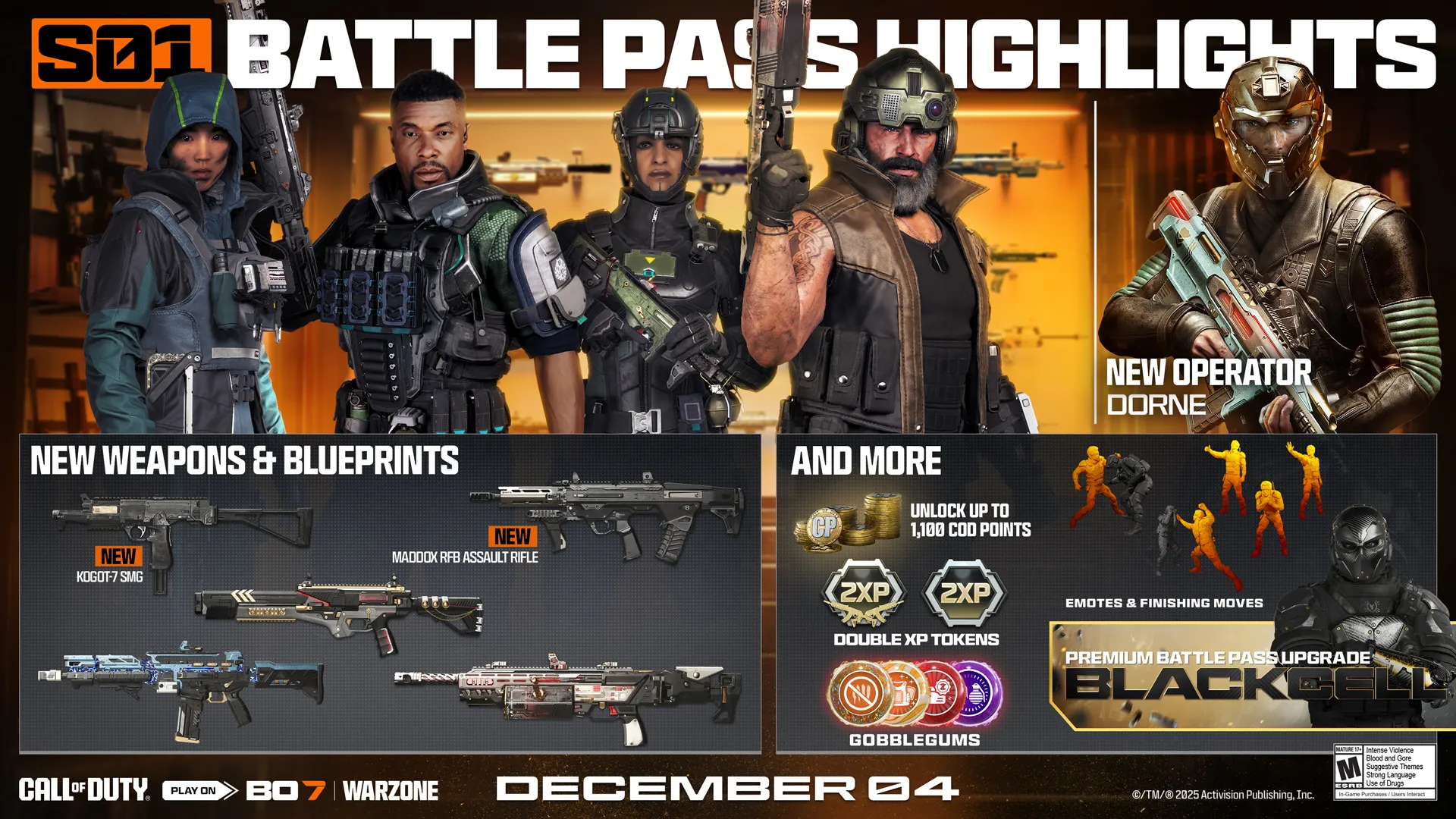
BlackCell, the premium upgrade tier above the standard Battle Pass, bundles in 20 Battle Pass Tokens, exclusive operator skins and weapon blueprints, 1,100 Call of Duty Points (enough to cover most of a future pass), a BlackCell-exclusive Instant Rewards page, and a 10% Battle Pass XP boost, according to the official Call of Duty blog post detailing the Season 01 Battle Pass and BlackCell bundles. Owning multiple Vault Edition copies of the game across platforms can stack additional 20-token allotments onto a single Activision account, though only one BlackCell can be active per account per season. For a closer look at how that first season rolled out, see our Black Ops 7 Season 1 release date breakdown.
Fortnite's Battle Pass: How It Works
Fortnite's Battle Pass is the game that made the format mainstream, and it still runs closer to the "pure XP" end of the spectrum than Black Ops 7's token system. Per Epic Games' own help center, the Battle Pass is described as pages of in-game rewards you earn as you progress through it, and XP toward that progress can come from playing Battle Royale matches, user-made Creative islands, LEGO Fortnite, or Fortnite Festival — all feeding one shared pool. Fortnite currently also runs a LEGO Pass, OG Pass and Music Pass alongside the main Battle Pass, and all of them last one season and level up together off the same XP.
Fortnite's Battle Pass is purchased with V-Bucks, Epic's in-game currency, directly inside Fortnite — Epic's help documentation notes it isn't sold through the web-based Item Shop, only in-game. Like the free/premium split described above, Fortnite's free track gives you a thinner set of rewards, while buying the pass unlocks the full cosmetic line and, in many seasons, enough bonus V-Bucks back at higher levels to largely offset the cost of the next one.
Fortnite also offers Fortnite Crew, a monthly subscription that includes that month's current-season Battle Pass as one of its perks, alongside a monthly V-Bucks allotment and an exclusive outfit bundle. Per Epic's support page on the Fortnite Crew subscription, subscribers keep access to the season's pass as long as their subscription stays active, though for accounts that subscribed after December 1, 2024, claiming premium Battle Pass rewards specifically requires an active subscription at the time of claiming. If you want to see how a recent Fortnite season's content shook out, check our breakdown of the Chapter 7 Season 4: Override update.
| Format | Lasts | How you unlock it | What it contains | Example |
|---|---|---|---|---|
| Battle Pass | One season (weeks to a few months) | XP/tokens earned by playing, or bought outright | Cosmetics, currency, XP boosts — no new maps or gameplay content | Black Ops 7 Battle Pass, Fortnite Battle Pass |
| Season Pass | Across a game's full roadmap of seasons | Bought once, upfront | Often early or guaranteed access to upcoming DLC, maps or expansions over time | Classic shooter "season passes" bundling multiple content drops |
| DLC (downloadable content) | Permanent, added to the base game | Bought individually or as part of a bundle/edition | New maps, campaigns, characters or modes that expand what the game can do | A new multiplayer map pack or campaign expansion |
Battle Pass vs. Season Pass vs. DLC: What's the Difference?
These three terms get used almost interchangeably by players, but they describe different things:
A battle pass is a cosmetic-only progression track tied to one season. It doesn't add new maps, weapons with gameplay advantages, or modes — it's a reward ladder for content that already exists in the game, and it typically expires and is replaced when the next season begins.
A season pass, in the older, more traditional sense, is a single upfront purchase that guarantees access to a bundle of future content drops — think a pass that unlocks every map pack or expansion a game will release over its lifecycle, paid for once instead of piece by piece.
DLC (downloadable content) is additional content added to a game after launch — new campaigns, maps, operators, weapons or modes — that becomes a permanent part of the game once purchased or unlocked, rather than resetting every season.
The overlap that confuses people: some games bundle all three together. A Vault Edition or deluxe edition of a Call of Duty title, for instance, can include a season of BlackCell (a premium Battle Pass upgrade) and other bonus content in one purchase, which is why "battle pass" and "season pass" get used loosely as synonyms even though they're structurally different systems.
How Much Does a Battle Pass Cost?
Pricing varies by game and by season, and it's worth checking the in-game store for the current number before buying, but as reference points from the two games covered here:
- Black Ops 7: The Base Battle Pass is priced at 1,100 Call of Duty Points, while the Battle Pass Bundle (which adds 20 Battle Pass Tokens) runs 2,400 Call of Duty Points, per Activision Support. BlackCell, the top premium tier, is a separate, higher-priced purchase that layers in its own Battle Pass, tokens and Instant Rewards page.
- Fortnite: The Battle Pass is bought with V-Bucks in-game; Epic has adjusted V-Bucks pricing and Battle Pass costs more than once, so the exact figure shifts season to season — check the in-game Battle Pass tab for the current price before buying.
In both games, finishing the pass can hand back a chunk of the premium currency you spent, which is how committed players often fund the next season's pass without paying full price twice in a row.
Do Unused Tokens or Levels Carry Over Between Seasons?
This is one of the most-searched questions around Black Ops 7's token system, and Activision's support article answers it directly: any Battle Pass Tokens you haven't spent by the time a season ends are first auto-applied to your remaining tiers along a pre-set path, and whatever is left after that carries over into the next season. What doesn't carry over is the pass itself — once a season's Battle Pass is gone, Activision's support page notes you can't go back and purchase a previous season's pass retroactively.
Fortnite works differently because it doesn't use a token bank — XP simply stops applying to a season's pass once that pass is retired, and a new pass starts fresh with the next season.
Tips for Getting the Most Out of Your Battle Pass
- Check daily and weekly challenges first. In most battle pass systems, including Black Ops 7's, challenges are a faster XP (and in Black Ops 7's case, token) source than simply playing matches passively.
- Decide free vs. premium before you grind. If you're not planning to buy the premium track, there's no bonus for over-leveling past the free tiers you actually want.
- In Black Ops 7, prioritize pages with HVT rewards you actually want. Since tokens can be spent on any tier on an unlocked page, you can rush toward a specific skin or blueprint instead of unlocking tiers in strict numerical order — unless you've turned on auto-unlock.
- In Fortnite, remember XP is shared. Time spent in Creative, LEGO Fortnite or Fortnite Festival still counts toward your Battle Pass level, so it's not only a Battle Royale grind.
- Don't let tokens or levels go to waste at season's end. Spend down what you can before the season closes, since post-season purchases of that specific pass usually aren't possible.
What's Next
Battle passes are now the default way shooters and battle royales keep players coming back season after season, and the token-based spin Black Ops 7 uses is becoming more common as studios look for ways to let players control their own unlock order rather than grinding in a straight line. Expect Call of Duty to keep refining BlackCell and its token economy each new season, and expect Fortnite to keep layering additional passes (LEGO, OG, Music) onto the same shared XP system. If you're tracking either game's season-to-season changes, our guides on Black Ops 7's Season 1 rollout and Fortnite's Chapter 7 Season 4: Override are good places to pick up the thread, and if subscription-style access interests you more than one-off passes, our Xbox Game Pass tiers breakdown covers a different, subscription-based model for getting games and content.
Frequently asked questions
What is a battle pass?
A battle pass is a seasonal reward track in a video game that you level up by earning XP through play. It's usually split into a free tier anyone can access and a paid premium tier with extra rewards, and it resets with each new season.
What is a Battle Pass Token in Call of Duty: Black Ops 7?
A Battle Pass Token is Black Ops 7's in-game currency for unlocking Battle Pass tiers. XP earned across Black Ops 7 and Warzone's public modes converts into tokens, which you then spend to unlock tiers in any order. Only paid Battle Pass tiers (the Battle Pass Bundle or BlackCell) include a starting allotment of tokens; the free Battle Pass does not provide tokens at all, per Activision Support.
Do Black Ops 7 Battle Pass Tokens carry over to the next season?
Yes. According to Activision's official Battle Pass support article, unspent tokens are first auto-applied to your remaining tiers at season's end, and whatever is left after that carries over into the following season. The Battle Pass itself does not carry over, though — you can't buy a previous season's pass after it ends.
What's the difference between a battle pass and a season pass?
A battle pass is a cosmetic reward track tied to a single season that resets when the season ends. A season pass, in the traditional sense, is a one-time purchase that grants access to a bundle of future content drops, like new maps or expansions, over a game's lifecycle. DLC refers to that additional content itself.
How much does the Fortnite Battle Pass cost?
Fortnite's Battle Pass is purchased with V-Bucks directly in-game, and Epic has changed V-Bucks and Battle Pass pricing more than once, so the exact cost varies by season. Check the in-game Battle Pass tab for the current price before buying.
Can you buy individual battle pass rewards without unlocking tiers?
In Black Ops 7, no — aside from purchasing Call of Duty Points or tokens themselves, individual rewards can only be obtained by unlocking the tier they're attached to with Battle Pass Tokens, per Activision Support.
Sources
- Activision Support: Black Ops 7 Battle Passsupport.activision.com
- Call of Duty Blog: Black Ops 7/Warzone Season 01 Battle Pass & BlackCell Bundlescallofduty.com
- Epic Games Help: Understanding the Fortnite Battle Pass, LEGO Pass, OG Pass, and Music Passepicgames.com
- Epic Games Help: What Is Included in the Fortnite Crew Subscription?epicgames.com
- Epic Games Help: What Is the Battle Pass? Where Can I Learn More?epicgames.com
- Wikipedia: Battle passen.wikipedia.org
Jonah Reyes leads Pandromeda's gaming coverage: console and handheld hardware, release dates, pricing changes, patch notes and the business moves behind the biggest franchises. He sources every date and price from the platform holders and publishers themselves, and says plainly when something is still only a rumour.