Nintendo Switch 2 vs Steam Deck OLED: Specs, Price, Verdict
A console built for Nintendo games versus a PC handheld that runs your Steam library - how Switch 2 and Steam Deck OLED compare on specs, price and value in 2026.
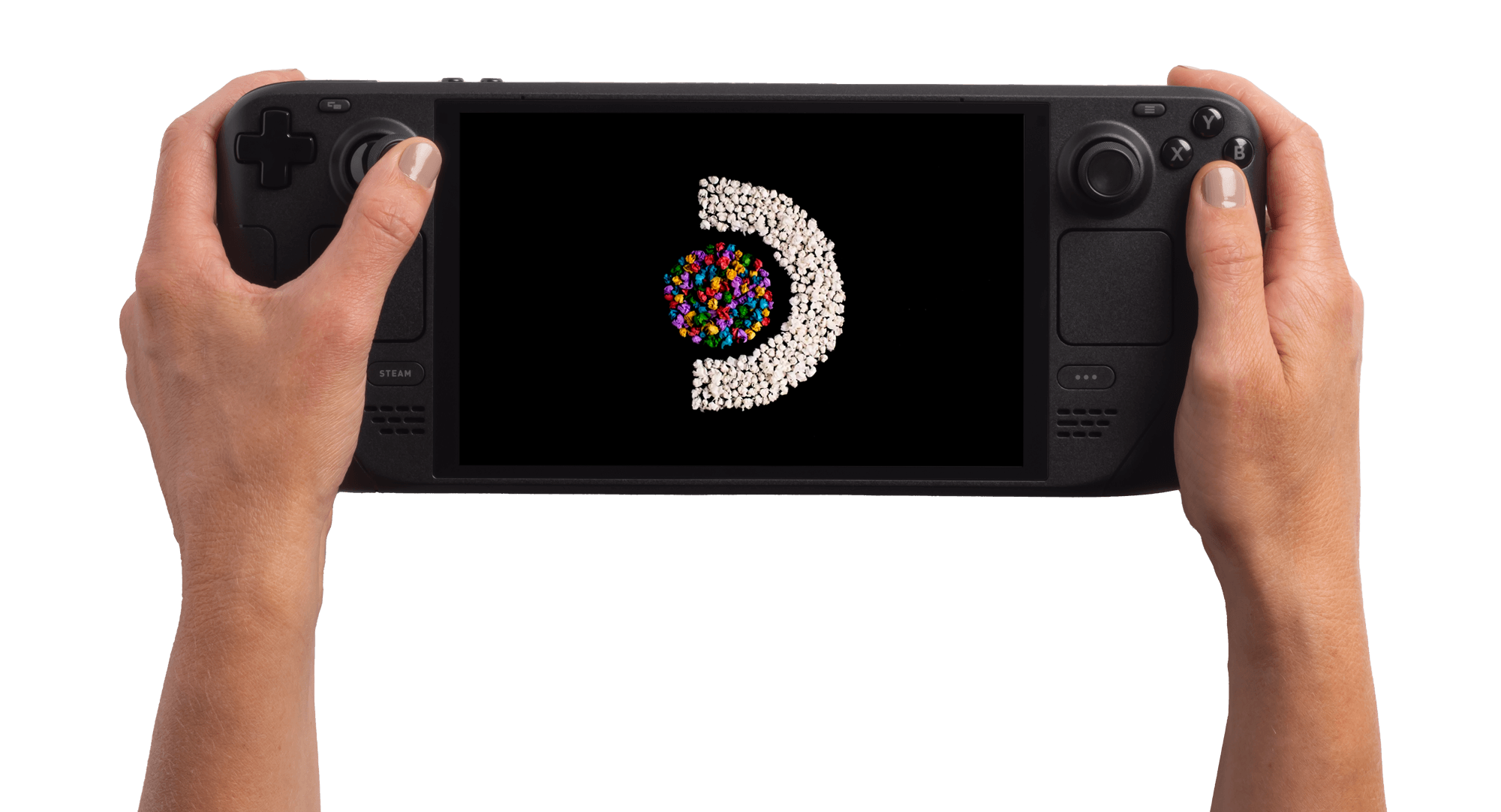
Nintendo Switch 2 and Steam Deck OLED are both excellent handhelds, but they are not really competing for the same job: the $499.99 Switch 2 is a hybrid console built around Nintendo's first-party games and a simple, closed ecosystem, while the Steam Deck OLED (from $789) is a full PC that runs your existing Steam library through SteamOS. If you want Mario, Zelda, Pokemon and easy couch co-op with a TV dock, buy the Switch 2. If you already own PC games, want mod support, emulation or the ability to install Windows, the Steam Deck OLED is the better machine - it's just a lot more expensive than it used to be.
- Nintendo Switch 2: $499.99, 7.9-inch 1920x1080 LCD, up to 120Hz VRR, 256GB storage, releases plug into Nintendo's own game library.
- Steam Deck OLED: $789 (512GB) / $949 (1TB), 7.4-inch 1280x800 HDR OLED, up to 90Hz, 16GB RAM, runs SteamOS and the full Steam catalog.
- Both prices rose in 2026: Switch 2 from $449.99 to $499.99 on September 1, and Steam Deck OLED from $549/$649 to $789/$949 in late May.
Nintendo Switch 2 vs Steam Deck OLED: the short answer
These two handhelds solve different problems. The Nintendo Switch 2 is a console first: it is cheaper, lighter to get started with, docks to a TV out of the box, and its entire library is curated and optimized by Nintendo and its partners. The Steam Deck OLED is a Linux-based PC in a controller shell: it costs more, has a smaller and lower-resolution screen, but it can run essentially anything in your Steam library (subject to per-game compatibility), supports mods, emulation, and even a dual-boot into Windows if you want Xbox Game Pass or Battle.net. Neither one replaces the other - plenty of enthusiasts own both.
Price: Switch 2 at $499.99, Steam Deck OLED from $789
Both devices got more expensive in 2026. Nintendo raised the Nintendo Switch 2's U.S. price from $449.99 to $499.99 effective September 1, 2026, citing "changes in market conditions." Valve made a larger jump in late May 2026, raising the Steam Deck OLED 512GB from $549 to $789 and the 1TB model from $649 to $949, attributing the increase to rising memory and storage costs. Both company pages confirm these are the current, live prices as of this writing - there has been no further change since those increases took effect.
That means the cheapest way into a Steam Deck OLED now costs $290 more than a Switch 2, and the 1TB model costs nearly double. If budget is the deciding factor, Switch 2 is the clear winner before you even look at the hardware.
It's also worth factoring in what each price gets you beyond the base hardware. Switch 2's $499.99 includes the console, the detachable Joy-Con 2 controllers, a dock for TV play, and a kickstand - everything needed to get started, though a dock-and-TV setup still requires your own HDMI-capable television. Steam Deck OLED's price includes a carrying case and a Steam profile bundle but not a dock; Valve sells docking accessories separately if you want to output to a TV or monitor. Neither price includes a game beyond what Nintendo bundles into some Switch 2 packages, like the Mario Kart World bundle, which currently runs $549.99 on Nintendo's own store.
Switch 2 vs Steam Deck OLED: full spec comparison
Here is how the official specifications compare, pulled directly from Nintendo's and Valve's own tech-spec pages.
| Spec | Nintendo Switch 2 | Steam Deck OLED |
|---|---|---|
| Price | $499.99 | $789 (512GB) / $949 (1TB) |
| Display | 7.9" LCD, 1920x1080 | 7.4" HDR OLED, 1280x800 |
| Refresh rate | Up to 120Hz (VRR), HDR10 | Up to 90Hz, 1,000 nits peak HDR |
| Chip | Custom processor made by NVIDIA (undisclosed model) | 6nm AMD APU: Zen 2 CPU (4c/8t) + RDNA 2 GPU (8 CUs) |
| RAM | Not officially disclosed by Nintendo | 16GB LPDDR5 (6400 MT/s) |
| Storage | 256GB UFS + microSD Express (up to 2TB) | 512GB or 1TB NVMe SSD + microSD (UHS-I) |
| Battery | 5,220mAh; approx. 2-6.5 hours | 50Whr; approx. 3-12 hours |
| Weight | 0.88 lbs console only; 1.18 lbs with Joy-Con 2 | Approx. 640g (1.41 lbs) |
| Dimensions | Approx. 4.5" x 10.7" x 0.55" | 298mm x 117mm x 49mm |
| Connectivity | Wi-Fi 6, Bluetooth, wired LAN via dock | Wi-Fi 6E, Bluetooth 5.3 |
| Operating system | Nintendo's custom OS (closed ecosystem) | SteamOS 3 (Arch Linux-based), dual-boot capable |
Source for Switch 2 figures: Nintendo's official tech specs page. Source for Steam Deck OLED figures: Valve's official Steam Deck tech specs page.
Performance: who's actually faster?
On paper the Steam Deck OLED's AMD APU is a known quantity - a Zen 2 CPU paired with an 8-compute-unit RDNA 2 GPU, independently benchmarked for years across thousands of PC games, running at up to 1.6 TFLOPS FP32 in the GPU alone. Nintendo has never disclosed the exact silicon inside Switch 2 beyond describing it as "a custom processor made by NVIDIA," and Nintendo's spec sheet lists no RAM figure at all, so any numeric comparison of raw compute is guesswork until Nintendo or NVIDIA publish real numbers. What is verifiable is how each system is used: Switch 2 games are built and optimized specifically for Switch 2's fixed hardware, docked up to 4K/60fps and handheld up to 1080p/120fps per Nintendo's own specs, while Steam Deck OLED performance varies game to game because it's running full PC titles that were never built with a handheld's thermal and battery budget in mind. In practice this means Nintendo-published Switch 2 games tend to run exactly as advertised, while Steam Deck OLED results range from excellent (for games Valve has tuned and rated "Verified") to rough (for demanding, unoptimized PC releases).
Display and design
Switch 2 has the bigger, sharper panel on paper: a 7.9-inch LCD at a full 1920x1080, with HDR10 support and variable refresh rate up to 120Hz. Steam Deck OLED's 7.4-inch screen is lower resolution at 1280x800, but it's an OLED panel with true blacks, a 1,000-nit HDR peak, 110% DCI-P3 color coverage and a sub-0.1ms response time - qualities an LCD panel like Switch 2's can't match regardless of resolution. Which looks "better" depends on what you value: sharper, brighter overall picture (Switch 2) versus contrast and color accuracy (Steam Deck OLED).
Switch 2 is the lighter and more pocketable device at 0.88 lbs for the console alone (1.18 lbs with both Joy-Con 2 controllers attached), and it's built to detach into a TV console via its dock - something Steam Deck OLED can only approximate using a separate USB-C dock sold by Valve or a third party. Steam Deck OLED weighs about 1.41 lbs (640 grams) and is a single fixed unit with a larger, more traditional gamepad shape, built-in trackpads, and no detachable controllers.
Battery life and charging
Valve's own battery estimate for Steam Deck OLED is 3 to 12 hours depending on the game, powered by a 50Whr battery - the wide range reflects how differently a 2D indie game and a demanding 3D title drain the pack. Nintendo quotes 2 to 6.5 hours for Switch 2 from its 5,220mAh battery, with full charging taking about 3 hours. Neither company publishes a single "real world" number, so treat both ranges as best-case-to-worst-case rather than a number you'll consistently hit; heavier, more demanding games push both devices toward the low end of their respective ranges.
Game libraries: Nintendo's catalog vs. your entire Steam library
This is the biggest practical difference between the two devices. Switch 2 plays Nintendo's first-party lineup (Mario Kart World, Donkey Kong Bananza, and the rest of Nintendo's 2025-2026 slate) plus backward-compatible original Switch games, third-party ports, and Game-Key Card titles that download most of their data rather than storing it on the cartridge. It's a closed, curated storefront - everything is vetted by Nintendo, and you cannot install anything outside the Nintendo eShop.
Steam Deck OLED runs the Steam catalog: tens of thousands of PC games spanning every genre and era, rated by Valve's own compatibility system (Verified, Playable, Unsupported) so you know before buying whether a given title works well on the handheld. Because SteamOS is Linux-based, some Windows-only games and anti-cheat-protected multiplayer titles don't run at all, and others need Valve's Proton compatibility layer to work - but the sheer size of the library, plus support for non-Steam launchers and even a dual-boot into Windows, makes it vastly more open than Switch 2's ecosystem. If you're deciding between the two primarily as a way to keep playing games you already own, the Steam Deck OLED is the only one of the pair that can do that for an existing PC library; if your library is already Nintendo-native, pairing a Switch 2 with a service like Nintendo Switch Online is the simpler path. For more on how Nintendo's cartridge-free game format works, see our breakdown of Nintendo's virtual Game-Key Cards.
Ecosystem, controls and extras
Switch 2 ships with detachable Joy-Con 2 controllers that magnetically snap to the console and can be used separately for local multiplayer, plus new mouse-style controls Nintendo has built into several launch games. It also supports GameShare, Nintendo's feature for streaming a game to a second Switch console without that second player owning a copy - we've covered how GameShare works and which games support it in more detail. Steam Deck OLED instead leans on PC conventions: two trackpads for mouse-style aiming, a desktop mode that drops into a full KDE Plasma Linux desktop, and support for most USB and Bluetooth peripherals. If you want a device that also functions as a basic PC - browsing, emulation, productivity apps - Steam Deck OLED can do that in a way Switch 2 fundamentally cannot. For a sense of how Switch 2 stacks up against full living-room consoles rather than another handheld, our Switch 2 vs. PS5 vs. Xbox Series X comparison covers that ground.
Which should you buy?
Buy the Nintendo Switch 2 if: you want Nintendo's own games, you want the lowest entry price, you want a device that docks to a TV with zero setup, or you're buying for a household that will share the console and controllers. Buy the Steam Deck OLED if: you already have a PC game library on Steam, you want the better screen technology (even at lower resolution), you want the flexibility to mod, emulate, or dual-boot Windows, or raw backward compatibility with your existing purchases matters more than first-party exclusives. Budget-conscious buyers who don't already own PC games should lean Switch 2; existing PC gamers who want portability without replacing their library should lean Steam Deck OLED, accepting the higher 2026 price as the cost of that flexibility.
What to do next
Check current stock and exact pricing directly before buying: Nintendo's official Switch 2 page for the console, and Valve's Steam Deck OLED page for both storage tiers. Prices and bundles can change, and both companies have adjusted pricing at least once in 2026, so it's worth confirming the number on the official page before you check out. If you're still undecided, consider your existing game library first - that single factor, more than any spec in the table above, usually settles which of these two handhelds is the right buy.
Frequently asked questions
How much does the Nintendo Switch 2 cost?
$499.99 as of September 1, 2026, up from its $449.99 launch price, according to Nintendo's official price revision announcement.
How much does the Steam Deck OLED cost?
$789 for the 512GB model and $949 for the 1TB model, per Valve's official Steam Deck page. Both prices increased from $549 and $649 respectively in a May 2026 price revision.
Which has better battery life?
Valve quotes 3 to 12 hours for Steam Deck OLED and Nintendo quotes 2 to 6.5 hours for Switch 2. Both ranges depend heavily on which game is being played.
Can the Steam Deck OLED play Nintendo games?
No. Steam Deck OLED runs SteamOS and the Steam library plus other PC software; it cannot play Nintendo Switch or Switch 2 cartridges or digital titles.
Does the Nintendo Switch 2 come with a TV dock?
Yes, a dock for TV play is included with Switch 2 out of the box. Steam Deck OLED needs a separately purchased USB-C dock to output to a TV or monitor.
Which handheld has the better screen?
Switch 2's LCD is larger and higher resolution at 7.9 inches and 1920x1080. Steam Deck OLED's 7.4-inch screen is lower resolution but uses OLED technology for better contrast, HDR brightness and color coverage.
Sources
- Nintendo Switch 2 Official Tech Specsnintendo.com
- Nintendo Corporate: Price Revision for Nintendo Switch 2 (press release)nintendo.co.jp
- Steam Deck OLED Official Tech Specs (Valve)steamdeck.com
- Steam Deck OLED Buy Page and Pricing (Valve)steamdeck.com
- Nintendo Switch 2 Official Product Pagenintendo.com
- Steam Deck - Wikipediaen.wikipedia.org
Jonah Reyes leads Pandromeda's gaming coverage: console and handheld hardware, release dates, pricing changes, patch notes and the business moves behind the biggest franchises. He sources every date and price from the platform holders and publishers themselves, and says plainly when something is still only a rumour.