Switch 2 vs PS5 vs Xbox Series X: Price, Specs and Games Compared
Switch 2 is $499.99, PS5 is $599.99-$649.99 and Xbox Series X is $799.99 in September 2026. Here is how their specs, storage and game libraries actually compare.
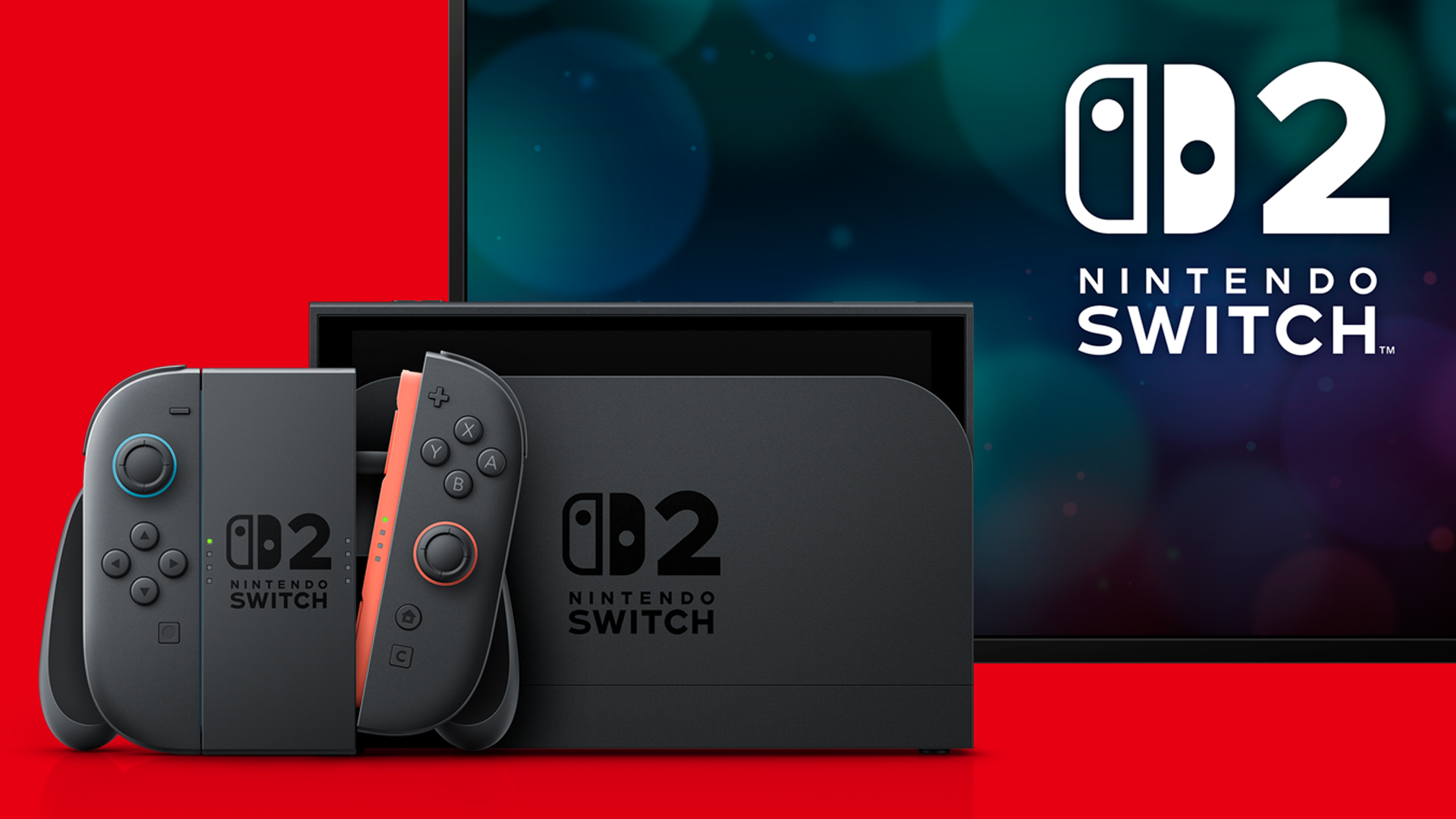
If you're choosing one console this fall, here's the short version: the Nintendo Switch 2 ($499.99) is the pick if you want to play in bed, on a plane, or on the couch and care about Mario, Zelda and Nintendo's own library; the PlayStation 5 ($649.99 disc, $599.99 Digital Edition) is the best all-round choice for the biggest, best-looking third-party games and Sony's exclusives; and the Xbox Series X ($799.99) makes the most sense if you already have a large Xbox or PC games library and want everything backed by Game Pass. All three prices moved during 2026, so what you remember from launch is out of date — here's what each company is actually charging right now, and how the hardware compares on paper.
- Nintendo Switch 2: $499.99 — 256GB storage, hybrid handheld/TV console
- PlayStation 5: $649.99 (disc edition, 1TB) / $599.99 (Digital Edition, 825GB)
- Xbox Series X: $799.99 — 1TB storage, home console only
Switch 2 vs PS5 vs Xbox Series X: the short answer
These three machines aren't really competing for the exact same buyer. The Switch 2 is a hybrid — it's the only one of the three you can pull off the dock and play on a bus. The PS5 and Xbox Series X are both fixed home consoles built around raw horsepower, 4K TVs and, increasingly, backward-compatible libraries going back multiple generations. If portability isn't a factor for you, the choice between PS5 and Series X mostly comes down to which exclusives and subscription service you already prefer, plus how much the current price gap — $150 in Sony's favor — matters to your budget.
Price in September 2026: what each console actually costs
All three companies raised prices at least once in 2026, largely citing memory-chip and component costs. Nintendo's increase is the most recent: as of September 1, 2026, Nintendo of America raised the Switch 2's U.S. MSRP from $449.99 to $499.99, a change it attributed to "changes in market conditions" expected to persist over the medium to long term.
Sony moved first, in the spring. Since April 2, 2026, the PlayStation 5 disc edition has listed for $649.99 and the PS5 Digital Edition for $599.99, with the PS5 Pro rising to $899.99 in the same update — prices you can also confirm directly on Sony's own PlayStation Direct storefront. Microsoft followed in the summer: since August 1, 2026, the 1TB Xbox Series X has listed for $799.99 on the Microsoft Store, part of a wider price increase Microsoft detailed on Xbox Wire that added $100 to the Series S and led Microsoft to discontinue its 2TB Series X model entirely.
Line them up and the Switch 2 is now the cheapest way into current-generation gaming by a wide margin, the PS5 sits in the middle with two price points depending on whether you want a disc drive, and the Xbox Series X is the most expensive of the three at full retail price.
Specs and performance compared
On paper, the Xbox Series X is still the most powerful box of the three. Microsoft's own console spec sheet lists an 8-core custom Zen 2 CPU at up to 3.8GHz and a custom RDNA 2 GPU rated at 12 teraflops across 52 compute units, paired with 16GB of GDDR6 memory. Sony's PS5 uses a very similar architecture — an 8-core Zen 2 CPU running up to 3.5GHz and an RDNA 2 GPU Sony has rated at 10.28 teraflops across 36 compute units, also with 16GB of GDDR6 — figures Sony detailed in its own PS5 hardware breakdown on the PlayStation Blog. In practice, that roughly 15–20% teraflop gap doesn't always translate into a visible difference in shipping games, since most third-party titles are tuned to hit the same target resolution and frame rate on both consoles.
The Switch 2 isn't trying to win this fight. Nintendo's own tech specs page confirms only that it uses "a custom processor made by NVIDIA," without publishing detailed CPU/GPU core counts or clock speeds, and it's built around efficiency for handheld use rather than chasing PS5/Series X-class teraflops. Docked, the Switch 2 can output up to 3840×2160 (4K) at 60fps, or up to 120fps at 1080p/1440p, with HDR10 and variable refresh rate support. The PS5 and Series X both target native 4K with ray tracing in supported titles, and Microsoft's spec sheet lists support for up to 120fps and 8K HDR output on Series X, though very few games actually use 8K in practice.
Storage: how much space you actually get
Storage is one of the starkest differences between these three. The Xbox Series X ships with a 1TB custom NVMe SSD, expandable through Microsoft's proprietary storage expansion cards. The PS5 disc edition also ships with a 1TB SSD, while the PS5 Digital Edition carries 825GB — both support expansion via a user-installable M.2 SSD slot. The Nintendo Switch 2 ships with far less built-in space, 256GB of UFS storage, though it accepts far cheaper and more widely available microSD Express cards for expansion, officially supported up to 2TB.
Two things eat into that gap in practice. First, all three consoles reserve a portion of their listed storage for system software, so real available space is lower than the headline number on every platform. Second, Nintendo sells a meaningful share of its Switch 2 lineup as digital-only "Game-Key Card" releases rather than full carts — worth understanding before you decide how much storage you'll actually need; we've broken down how Switch 2 Game-Key Cards work separately.
| Spec | Nintendo Switch 2 | PlayStation 5 | Xbox Series X |
|---|---|---|---|
| Price (Sept. 2026) | $499.99 | $649.99 disc / $599.99 Digital Edition | $799.99 |
| Type | Hybrid handheld/TV console | Home console | Home console |
| CPU | Custom NVIDIA processor (undisclosed cores/clocks) | 8-core custom Zen 2, up to 3.5GHz | 8-core custom Zen 2, up to 3.8GHz |
| GPU | Custom NVIDIA GPU (undisclosed) | RDNA 2, 10.28 TFLOPS, 36 CUs | RDNA 2, 12 TFLOPS, 52 CUs |
| Memory | Not disclosed | 16GB GDDR6 | 16GB GDDR6 |
| Storage | 256GB UFS internal | 1TB SSD (825GB on Digital Edition) | 1TB custom NVMe SSD |
| Storage expansion | microSD Express, up to 2TB | M.2 SSD slot | Proprietary expansion card |
| Built-in display | 7.9-inch 1920×1080 LCD, up to 120Hz VRR | None (TV output only) | None (TV output only) |
| Max output | Up to 4K/60fps docked; 1080p/1440p up to 120fps | Up to 4K with ray tracing | Up to 4K/120fps, 8K HDR supported |
| Weight | Approx. 0.88 lbs (console only) | Console only, no built-in display | Console only, no built-in display |
Game libraries and exclusives
This is where the three platforms genuinely diverge rather than just trading benchmark numbers. Nintendo's library is the one thing neither Sony nor Microsoft can match: Mario, Zelda, Metroid, Pokémon and Nintendo's other first-party franchises are Switch 2-only, plus the console is backward compatible with the original Switch's software catalog. If you want to play Nintendo's own games at all, the Switch 2 is the only option.
PlayStation and Xbox increasingly overlap on third-party releases — most major multiplatform games, including this year's biggest cross-platform launches, ship on both PS5 and Series X on the same day, often with similar resolution and frame-rate targets. Where they differ is first-party exclusives: Sony continues to invest heavily in single-player, story-driven PlayStation Studios games, while Microsoft leans on Xbox Game Pass, folding its first-party releases (and a large rotating library of other publishers' games) into a subscription from day one rather than treating exclusivity as the main pitch. If you're deciding between the two largely on library and subscription value, our breakdown of Xbox Game Pass tiers, prices and cloud limits is worth reading before you commit either way.
Portability: the Switch 2's built-in advantage
No spec sheet comparison fully captures this, but it's the single biggest practical difference between these consoles: the Switch 2 has its own 7.9-inch screen and battery, so it plays the same games in your hands, propped up on a table, or docked to a TV, while the PS5 and Series X are both strictly living-room machines. If you travel a lot, share a TV with other people, or simply prefer handheld play, that alone can outweigh every teraflop and storage-gigabyte difference in this comparison. It's also the tradeoff behind the Switch 2's lower price and less powerful chipset — Nintendo is optimizing for battery life and portability rather than chasing PS5/Series X-class output.
Online subscriptions: Switch Online vs PS Plus vs Game Pass
All three ecosystems now push a subscription as part of the pitch, and it's worth factoring the ongoing cost into any purchase decision, not just the console price. Nintendo Switch Online unlocks online multiplay, cloud saves and a library of older Nintendo games; PlayStation Plus layers online play, monthly game claims and (at its higher tiers) a larger game catalog on top of the PS5; and Xbox Game Pass is the most aggressive of the three, bundling day-one first-party releases with a large rotating third-party catalog across console, PC and cloud streaming. Given how differently structured the Game Pass tiers are compared to Nintendo and Sony's offerings, it's worth reading the plan details before assuming any one subscription is the "best."
Which console should you buy?
Buy a Nintendo Switch 2 if you want Nintendo's own games, portability, or a console the whole household can carry between rooms — at $499.99 it's also the cheapest entry point of the three. Buy a PlayStation 5 if you want the strongest slate of story-driven exclusives and the better price-to-performance ratio between the two home consoles; the $599.99 Digital Edition is the better value if you're comfortable buying games digitally, while the $649.99 disc edition keeps the option to buy and resell physical games. Buy an Xbox Series X if you're already invested in the Xbox/PC ecosystem, want the single most powerful box on paper, and plan to lean on Game Pass rather than buying every game individually — just go in knowing it's now the most expensive of the three at full price. If you already own a PS5 and are weighing whether to upgrade within Sony's own lineup rather than switch platforms entirely, our PS5 vs PS5 Pro comparison covers that decision separately from this three-way matchup.
Whichever you choose, treat these September 2026 prices as a snapshot rather than a floor — all three manufacturers have raised prices more than once this year, and none has signaled that pricing is done moving.
Frequently asked questions
How much does the Nintendo Switch 2 cost in September 2026?
$499.99, following Nintendo's September 1, 2026 U.S. price increase from $449.99.
What is the current price of the PS5?
$649.99 for the disc edition and $599.99 for the Digital Edition, per Sony's April 2, 2026 pricing update on its direct storefront.
How much is the Xbox Series X right now?
$799.99 for the 1TB console, effective since Microsoft's August 1, 2026 price increase.
Which of the three has the most storage?
The PS5 disc edition and Xbox Series X both ship with 1TB of SSD storage, ahead of the PS5 Digital Edition's 825GB and the Switch 2's 256GB — though the Switch 2 supports cheaper microSD Express expansion cards.
Is the Switch 2 as powerful as the PS5 or Xbox Series X?
No. Nintendo hasn't published detailed CPU/GPU specs for the Switch 2, but it's built around portability and battery life rather than matching PS5/Series X-class output, and its games are tuned accordingly.
Can I play the same games on all three consoles?
Most major third-party games now launch on both PS5 and Xbox Series X, but Nintendo's own franchises are Switch 2-exclusive, and each platform has its own first-party lineup, so no single console covers every game.
Frequently asked questions
How much does the Nintendo Switch 2 cost in September 2026?
$499.99, following Nintendo's September 1, 2026 U.S. price increase from $449.99.
What is the current price of the PS5?
$649.99 for the disc edition and $599.99 for the Digital Edition, per Sony's April 2, 2026 pricing update on its direct storefront.
How much is the Xbox Series X right now?
$799.99 for the 1TB console, effective since Microsoft's August 1, 2026 price increase.
Which of the three has the most storage?
The PS5 disc edition and Xbox Series X both ship with 1TB of SSD storage, ahead of the PS5 Digital Edition's 825GB and the Switch 2's 256GB, though the Switch 2 supports cheaper microSD Express expansion cards.
Is the Switch 2 as powerful as the PS5 or Xbox Series X?
No. Nintendo hasn't published detailed CPU/GPU specs for the Switch 2, but it's built around portability and battery life rather than matching PS5/Series X-class output, and its games are tuned accordingly.
Can I play the same games on all three consoles?
Most major third-party games now launch on both PS5 and Xbox Series X, but Nintendo's own franchises are Switch 2-exclusive, and each platform has its own first-party lineup, so no single console covers every game.
Sources
- Nintendo: Price Revision for Nintendo Switch 2 Systemnintendo.com
- Nintendo: Nintendo Switch 2 Tech Specsnintendo.com
- PlayStation Blog: New Price Changes for PS5, PS5 Pro and PlayStation Portalblog.playstation.com
- PlayStation Blog: PS5 Hardware Technical Specsblog.playstation.com
- Xbox: Xbox Series X Console Specsxbox.com
- Xbox Wire: Updated Xbox Console Pricesnews.xbox.com
Jonah Reyes leads Pandromeda's gaming coverage: console and handheld hardware, release dates, pricing changes, patch notes and the business moves behind the biggest franchises. He sources every date and price from the platform holders and publishers themselves, and says plainly when something is still only a rumour.