PS6 Release Date, Price and Specs: Everything Leaked So Far
Leaked documents describe a PS6 console (Orion) and PS6 handheld (Canis) with rumored 2027-2028 launch, GDDR7 memory, and prices from $499 to $1,200.
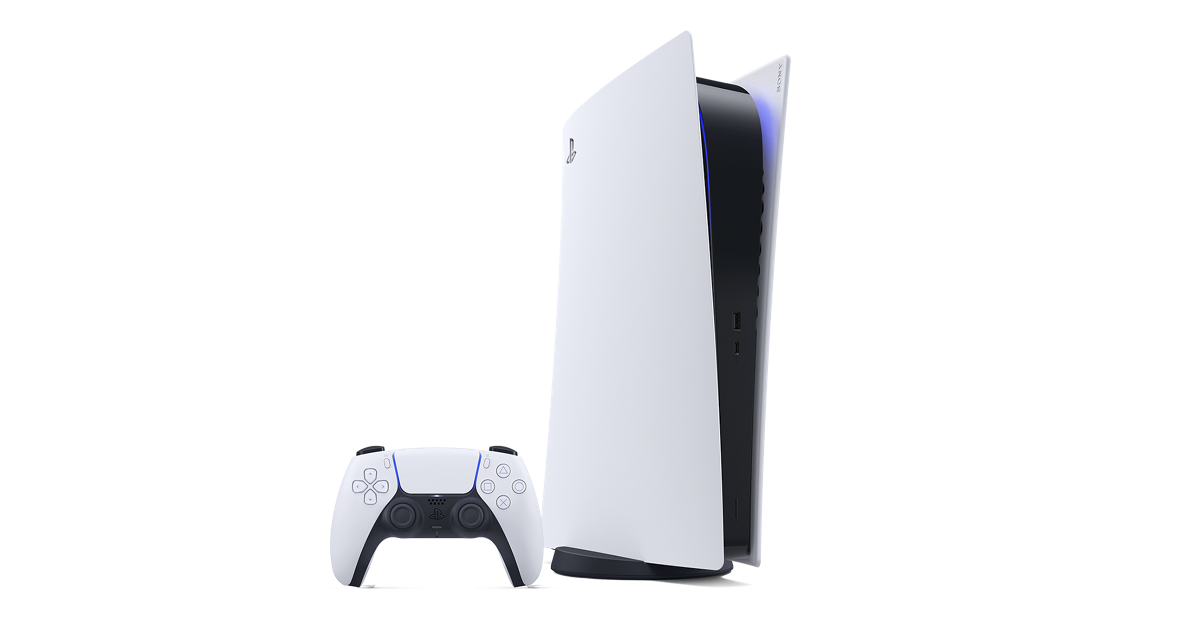
Sony has not confirmed a PlayStation 6, a PS6 price, or a PS6 release date. What exists right now is a cluster of leaked documents and roadmap slides, reportedly tied to conversations between Sony and AMD, that several tech outlets independently picked up and reported on in September 2026. Those leaks describe two devices — a standard next-generation console codenamed "Orion" and a PlayStation handheld codenamed "Canis" — with manufacturing tipped for mid-2027 and a release window of late 2027 to early 2028. Prices in the leaked material and from separate leaker commentary cluster around $499 to $600, though some analyst estimates run as high as $999 to $1,200 for a flagship configuration. Every figure below is a rumor unless stated otherwise, and it should be read that way.
- Codenames: "Orion" for the standard PS6, "Canis" for the PS6 handheld, according to leaked documents.
- PS6 (Orion) chip: reportedly an 8-core Zen 6 CPU with 40–48 RDNA 5 compute units, GDDR7 memory at 32+ GT/s, and roughly 160W of power draw.
- PS6 handheld (Canis) chip: reportedly 4x Zen 6c CPU cores, 12–20 RDNA 5 compute units, LPDDR5X-7500+ memory, and about 15W TBP.
- Release window: manufacturing said to begin mid-2027; launch rumored for late 2027 into early 2028.
- Price speculation: $499–$600 most commonly cited, with outlier estimates as high as $999–$1,200.
- Backward compatibility: both devices are rumored to run PS5 and PS4 libraries natively.
What was actually leaked, and where it came from
The reporting traces back to internal-looking roadmap documents that reportedly originated in conversations between Sony and AMD around 2023, with more recent leaks said to corroborate and update parts of that original material. BGR's write-up on the leak was explicit that the documents describe a roadmap rather than a finished product, and that some of the plans could still change before Sony formally reveals anything. Vice's report on the same leak points to hardware leaker Moore's Law Is Dead as the original source of the AMD roadmap slides, with other outlets independently reviewing or re-reporting the same documents.
None of this has been acknowledged by Sony. There is no official PS6 name, no confirmed release date, and no confirmed price. Treat every spec and date in this article as a rumor sourced to leaked documents and industry leakers, not as a Sony announcement.
PS6 (Orion): the rumored standard console
According to the leaked roadmap, the standard PS6 console is built around a semi-custom AMD chip codenamed "Orion." Tom's Guide's report on the leak describes an 8-core Zen 6 CPU (Sony's documents reportedly leave room for a newer core revision) paired with 40 to 48 RDNA 5 compute units clocked at over 3GHz. That would be a substantial jump from the PS5's 36 RDNA 2 compute units, and outlets covering the leak estimate somewhere around triple the PS5's rasterization performance, with an even larger jump in ray-tracing throughput.
Memory is reportedly GDDR7, running at 32 GT/s or faster across a 160-bit or 192-bit bus — a meaningfully wider and faster memory subsystem than the PS5's GDDR6 setup. Total board power (TBP) is pegged at roughly 160W in the leaked documents, and the chip is said to be built on a 3nm process, the same node reportedly earmarked for Microsoft's next-generation "Magnus" chip. Sony is reportedly targeting native 4K output at up to 120Hz, though frame-rate and resolution targets this far out are speculative even within the leak itself.
For context on how the current generation stacks up, our PS5 vs. PS5 Pro comparison breaks down what Sony's existing mid-generation refresh actually changed, which is a useful baseline for judging how large a leap the rumored PS6 numbers would represent.
One recurring detail across the coverage is that Orion may not be a single monolithic chip at all. Both Tom's Guide and LevelUp describe a possible chiplet-based design, reportedly borrowing from AMD's desktop "Navi 5" GPU chiplets rather than a single fused APU die the way the PS5 and Xbox Series X are built. If accurate, that would be a notable architectural break from how PlayStation consoles have historically been built, and could explain how Sony gets to a 40–48 compute-unit GPU without an unmanageably large single die. It would also put Orion on similar chiplet-driven footing to next-generation PC GPUs, which are increasingly moving away from single monolithic silicon for cost and yield reasons.
Sony is also reportedly using the leaked roadmap to plan around keeping the console's bill of materials down despite the bigger chip, according to outlets covering the documents, in part by leaning on a more mature 3nm process node by the time Orion actually ships in 2027. That production timing lines up with when foundries are expected to have brought 3nm yields and costs down from where they sit for early adopters of the node today.
PS6 handheld (Canis): Sony's rumored answer to Steam and Switch
The more surprising part of the leak is a second device: a PlayStation handheld codenamed "Canis." Coverage from TweakTown, NotebookCheck, and LevelUp converge on a similar spec sheet: 4x Zen 6c CPU cores (the compact "c" variant AMD uses for efficiency-focused designs) alongside 12 to 20 RDNA 5 compute units clocked between roughly 1.6GHz and 2.0GHz. Memory is reportedly LPDDR5X running at 7,500 MT/s or faster over a 128-bit bus, with total board power around 15W — squarely in handheld territory rather than console territory.
Multiple reports describe rasterization performance at roughly half of the base PS5, with disproportionately stronger ray-tracing thanks to the newer RDNA 5 architecture. Leaked feature claims include a touchscreen, microSD card support, an M.2 SSD slot for storage expansion, haptic feedback, dual microphones, and a USB-C connection for docking to a TV or monitor — a layout that multiple outlets have compared to the Nintendo Switch's docked/undocked approach. It's worth noting one later round of leaks, cited by TweakTown, describes a revised Canis configuration with a wider 192-bit LPDDR5X-8533 memory interface supporting up to 48GB of RAM and 16 fixed CUs — a meaningfully different memory setup than the earlier 128-bit figure, which is a reminder that even within the leak community these numbers are still moving and not fully settled.
Sony's handheld would enter a market that already includes Valve's Steam Machine and Steam Frame hardware and Nintendo's Switch 2; see our breakdowns of the Steam Frame's price and specs and how the Switch 2 compares to PS5 and Xbox Series X for a sense of the competitive landscape a PS6 handheld would land in.
Outlets framing the Canis leak have repeatedly pointed to one specific competitive target: ASUS and Microsoft's ROG Xbox Ally X. Multiple reports claim the rumored Canis specs would let Sony's handheld outperform that device in raw rasterization, which would be a meaningful claim if true, since the Ally X is one of the strongest x86 handhelds currently on the market. It's also worth noting that a dockable, Switch-style form factor would represent a real strategic shift for Sony, which has never shipped a home console/handheld hybrid before — the closest historical comparison is the PS Vita, a standalone portable that never natively ran mainline PS4 or PS5 titles the way Canis is rumored to.
PS6 vs. PS6 handheld vs. PS5: leaked specs side by side
The table below lines up the rumored Orion and Canis chips against the PS5's actual, publicly confirmed hardware. The PS5 column reflects Sony's own published PS5 specs; the PS6 and PS6 handheld columns are entirely leak-sourced and unconfirmed.
| Spec | PS6 "Orion" (rumored) | PS6 handheld "Canis" (rumored) | PS5 (current, confirmed) |
|---|---|---|---|
| CPU | 8-core Zen 6 (or later) | 4x Zen 6c cores | 8-core Zen 2 |
| GPU compute units | 40–48 RDNA 5 CUs, 3GHz+ | 12–20 RDNA 5 CUs, 1.6–2.0GHz | 36 RDNA 2 CUs, ~2.23GHz |
| Memory | GDDR7, 32+ GT/s, 160–192-bit bus | LPDDR5X-7500+, 128-bit bus | GDDR6, 448GB/s, 16GB unified |
| Board power (TBP) | ~160W | ~15W | ~200–350W |
| Rasterization vs. PS5 | ~3x (rumored) | ~0.5x (rumored) | baseline |
| Rumored price | $499–$600 (up to $999–$1,200 in outlier estimates) | $400–$500 | $499 (2020 launch) |
| Rumored release | Late 2027–early 2028 | Late 2027–early 2028 | Shipped Nov. 2020 |
Price speculation: why the numbers don't agree
Pricing is the least settled part of this leak, and outlets don't fully agree with each other. BGR's reporting on the leaked roadmap put the standard PS6 at roughly $500 to $600 and the handheld at $400 to $500, with a possible third, cheaper "PS6S" model under $300. Separately, leaker Moore's Law Is Dead has been quoted suggesting a $499 starting price for the flagship console — notably the same number Sony launched the original PS5 at in 2020 — while other industry analysts have floated far higher figures, from roughly $599–$649 up to $999 or even $1,000–$1,200 for a higher-end configuration, citing memory shortages and rising silicon costs as pressure pushing next-gen console prices upward generally. Handheld pricing has its own disagreement: at least one hardware leaker has publicly pushed back on a rumored $600 price point for the Canis handheld as too low given its rumored spec sheet, arguing the real number will land higher.
The throughline across nearly every outlet: $499 is the figure repeated most consistently as an aspirational starting price, but almost nobody claims it's locked in, and several analysts think economic pressure could push Sony toward a higher launch price than the PS5 carried in 2020. Our PS5 vs. PS5 Pro pricing breakdown is a useful reminder of how Sony has already crept prices upward mid-generation, which several analysts cite as a reason to expect PS6 pricing above $499 rather than at it.
Release date: manufacturing in 2027, launch window in late 2027 or early 2028
Every outlet that covered the leaked documents lands on roughly the same timeline: manufacturing of both the Orion and Canis chips is said to begin in mid-2027, with a launch window that outlets place anywhere from the 2027 holiday season to early 2028. That's consistent with Sony's typical console cadence, and it would put a PS6 launch roughly seven to eight years after the PS5's November 2020 debut. Nothing in the leaked material specifies a firm month, and Sony has given no public timeline of its own, so treat "late 2027 to early 2028" as a rumored window that could still shift in either direction as actual silicon moves through development.
Backward compatibility: PS4 and PS5 libraries, reportedly native
A recurring claim across the leak coverage is that both the standard PS6 and the Canis handheld will run PS5 and PS4 titles natively, without emulation. One report specifically claims PS4 titles would run at 60 FPS on the handheld. If accurate, that would mean Sony carrying forward two full console generations of backward compatibility into PS6 hardware — a bigger commitment than the PS5's launch-era compatibility, which covered PS4 titles but not earlier generations. As with everything else here, this is an unconfirmed claim inside leaked documents, not a Sony commitment.
How reliable is this leak?
Worth stating plainly: this entire story rests on leaked internal-looking documents and leaker commentary, not on any Sony statement, filing, or presentation. The originating material reportedly dates back to 2023-era roadmap conversations between Sony and AMD, which several outlets note means some details could be outdated even if the broader chip strategy holds. Specs have also shifted between reporting rounds — the Canis memory configuration is one clear example, with earlier reports citing a 128-bit LPDDR5X-7500+ bus and later reports describing a wider 192-bit LPDDR5X-8533 setup with more RAM. Sony has a long history of roadmaps changing significantly between an early leak and a final shipping product, and hardware leaks this far from a console generation's actual reveal have historically had a mixed accuracy record. None of that means the leak is wrong — multiple outlets with real technical sourcing converged on similar core numbers — but it does mean nothing here should be treated as final.
What's next
The next real signal to watch for isn't another leak, but Sony's own public behavior: hiring patterns for its hardware and semiconductor teams, AMD's public roadmap disclosures around Zen 6 and RDNA 5, and any shift in PS5/PS5 Pro production or pricing that would suggest Sony is clearing inventory ahead of a transition. Historically, Sony has confirmed next-generation hardware roughly a year or so before launch, so if the "late 2027 to early 2028" window in these leaks holds, a more concrete, semi-official signal from Sony itself would plausibly arrive sometime in 2027. Until then, everything in this article — chip names, specs, prices, and dates — remains sourced entirely to leaks and industry speculation. We'll update this piece as new reporting emerges or if Sony comments directly.
Frequently asked questions
Has Sony officially confirmed the PS6?
No. Sony has not announced a PlayStation 6, a PS6 handheld, a price, or a release date. Everything reported so far comes from leaked roadmap documents and industry leakers, not from Sony itself.
What are the PS6's rumored specs?
Leaked documents describe a chip codenamed 'Orion' with an 8-core Zen 6 CPU, 40 to 48 RDNA 5 compute units, GDDR7 memory at 32+ GT/s, and roughly 160W of board power, reportedly delivering around triple the PS5's rasterization performance.
What is the PS6 handheld, and is it real?
It is an unconfirmed device codenamed 'Canis' described in the same leaked documents as the PS6. Rumored specs include 4x Zen 6c CPU cores, 12 to 20 RDNA 5 compute units, LPDDR5X memory, and a Switch-style dockable design, but Sony has not confirmed it exists.
How much will the PS6 cost?
Price leaks disagree. BGR's reporting suggests $500 to $600 for the standard PS6 and $400 to $500 for the handheld. Separately, leaker Moore's Law Is Dead has cited a possible $499 starting price, while some analysts estimate a higher-end configuration could reach $999 to $1,200.
When will the PS6 release?
Leaked documents point to manufacturing starting in mid-2027, with outlets reporting a likely launch window between late 2027 and early 2028. Sony has not confirmed any date.
Will the PS6 play PS4 and PS5 games?
Leaked reports claim both the standard PS6 and the PS6 handheld will run PS4 and PS5 titles natively, with one report claiming PS4 games at 60 FPS on the handheld. This backward-compatibility claim has not been confirmed by Sony.
Sources
- BGR: PlayStation 6 And Handheld PS6 Release Dates Might Have Leakedbgr.com
- Tom's Guide: PS6 and new PlayStation handheld specs reportedly leaktomsguide.com
- TweakTown: PS6 handheld early specs leaktweaktown.com
- NotebookCheck: PS6 handheld hardware details, release date and specs leaknotebookcheck.net
- LevelUp: PlayStation 6 and New Sony Handheld: Leaked Specs and Release Windowlevelup.com
- Vice: PS6 specs and release date reportedly leakedvice.com
Jonah Reyes leads Pandromeda's gaming coverage: console and handheld hardware, release dates, pricing changes, patch notes and the business moves behind the biggest franchises. He sources every date and price from the platform holders and publishers themselves, and says plainly when something is still only a rumour.