WoW: Forever Class Guide: Which of the 9 Classes to Pick
New to WoW: Forever? Here's which of the nine classic classes to pick for solo play, fast leveling, or tanking, plus race combos and first-step tips.
If you're starting fresh in World of Warcraft: Forever, the short answer is: pick Hunter or Warlock if you want the smoothest solo leveling (both get a pet that tanks damage for you), pick Paladin or Warrior if you want to tank dungeons from day one, and avoid Druid as your very first character, since its shapeshifting kit has the steepest learning curve of the nine. Every other choice below explains why, plus how race and class fit together and what to do in your first hour.
What is World of Warcraft: Forever, and why does class choice matter here?
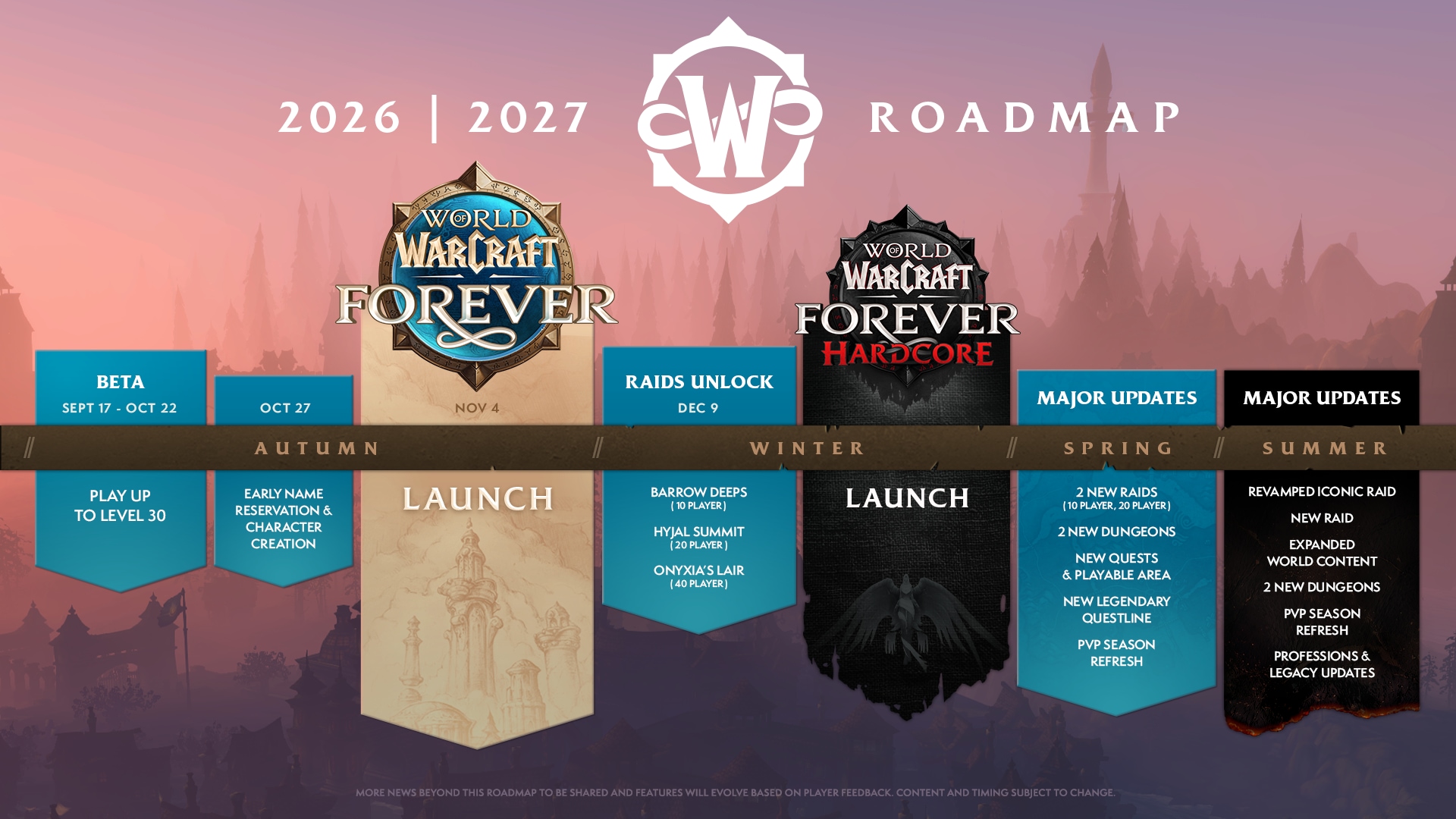
World of Warcraft: Forever is Blizzard's new, permanent version of the original World of Warcraft, sitting alongside modern WoW and WoW Classic rather than replacing either. According to Blizzard's own announcement post, Forever is set in a reimagined original Azeroth, picking up after the story of Warcraft III: Reforged and before the opening of Molten Core, and it launched globally on November 4, 2026. It uses the same nine classes the original 2004 release of World of Warcraft shipped with — Warrior, Paladin, Hunter, Rogue, Priest, Shaman, Mage, Warlock, and Druid — rather than any of the specializations or abilities added in later expansions.
That matters for a beginner's guide because Forever's classes play closer to their original, simpler kits than the retail game you may have tried before. Fewer buttons sounds easier across the board, but the nine classes were never equally beginner-friendly even in 2004 — some lean on a pet or a shield to cover for mistakes, others ask you to manage resources or stealth positioning that takes longer to get comfortable with. Picking the right one up front saves you a lot of frustration (or a second character) a few levels in.
- Launched globally November 4, 2026, as a third standing version of WoW alongside Modern and Classic Era
- Ships with the original nine classic classes — no new classes at launch
- New playable race: the Skyborne, with its own starting zone on Zephras Isle
- Access is included with an active WoW Subscription or Game Time
The best classes for beginners, at a glance
There's no single "best" class in a game built around nine very different playstyles, but some are considerably more forgiving while you're still learning the interface, your rotation, and how pulls work. The table below is a starting-point guide, not a tier list — it reflects how each class has traditionally played in the original 2004-era kit that Forever revives, plus how beta and launch players have talked about them.
| Class | Primary role(s) | Beginner difficulty | Solo-play rating |
|---|---|---|---|
| Hunter | Ranged DPS (pet) | Easy | Excellent |
| Warlock | Ranged DPS (pet) | Easy | Excellent |
| Paladin | Tank / Healer / Melee | Easy | Good |
| Warrior | Tank / Melee DPS | Easy–Moderate | Fair |
| Rogue | Melee DPS (stealth) | Moderate | Good |
| Shaman | Melee / Ranged / Healer | Moderate | Good |
| Priest | Healer / Ranged DPS | Moderate | Fair |
| Mage | Ranged DPS (crowd control) | Moderate–Hard | Fair |
| Druid | Hybrid (shapeshifter) | Hard | Good (once learned) |
This is a general difficulty read, not a balance claim — Blizzard hasn't published official difficulty ratings, and exact numbers can shift between beta and live patches. Treat it as a map of playstyles, not gospel.
How to pick: solo play, leveling speed, and tanking explained
Instead of picking a class because it sounds cool, work backward from how you actually plan to play.
If you mostly want to solo and don't want to grind back to a graveyard constantly: Hunter and Warlock both get a permanent companion — a tamed beast for the Hunter, a summoned demon for the Warlock — that absorbs melee damage while you attack from range. That single mechanic removes most of the risk of fighting multiple enemies at once, which is the thing that kills low-level solo characters. Paladins are a close third: their self-healing and armor let them out-sustain most early fights even without a pet.
If leveling speed is your priority: classes that can kill things quickly without resting between fights level fastest. Hunters again do well here because the pet keeps fighting while you drink or loot. Rogues can skip fights entirely with Stealth, which saves time even if their per-fight damage isn't the highest. Casters like Mage and Warlock trade some early survivability for strong burst damage once you have a few spell ranks.
If you want to tank group content: Warrior and Paladin are the two classic tanking classes, and Shaman and Druid can offer melee-adjacent utility but weren't built as dedicated tanks in the original kit. A Paladin tank leans on armor and self-healing and is generally considered the more forgiving of the two to learn; a Warrior tank has a steeper threat-management learning curve but becomes very durable with practice and gear. If your long-term goal is to tank dungeons, it's worth starting that class from level one rather than switching later, since tanking habits (watching aggro, positioning) take time to build.
If you want to heal: Priest is the dedicated healer of the nine, with Paladin, Druid, and Shaman as hybrids that can heal in a pinch. Priests solo more slowly than pet classes but are in constant demand for dungeon groups once you hit the level range where those open up.
All nine classic classes, briefly explained
Here's a short rundown of what each class actually does, for anyone coming to Forever without Classic experience.
- Warrior — Pure melee class with no spellcasting; can specialize into tanking or two kinds of damage-dealing playstyles. No resource to manage but Rage, which only builds in combat.
- Paladin — Alliance-only hybrid that mixes melee attacks, healing spells, and protective auras/blessings that buff the whole party.
- Hunter — Ranged physical damage dealer built around a tamed pet and traps; the most forgiving solo class for most new players.
- Rogue — Stealth-based melee class that can avoid fights, open with a burst combo, and pick locks/disarm traps.
- Priest — The primary dedicated healer, with a secondary toolkit of ranged damage and crowd-control spells.
- Shaman — Horde-only hybrid built around elemental totems that buff allies and debuff enemies, with melee, ranged, and healing options.
- Mage — Ranged spellcaster specializing in burst damage and crowd control (Polymorph, Frost Nova), but fragile in melee range.
- Warlock — Ranged spellcaster built around demon pets and damage-over-time spells; very strong soloist for the same reasons as Hunter.
- Druid — Shapeshifting hybrid that can fill almost any role (tank, healer, melee, caster) by changing forms, which also makes it the most complex class to learn first.
For a deeper comparison of how this classic-style class list differs from what's available in modern WoW or in WoW Classic Era right now, see the "what's next" links at the end of this guide.
Race and class combos, including what's new
Class availability is still tied to faction and race, largely following the rules WoW Classic Era players already know: Alliance and Horde each have access to a specific subset of the nine classes through their playable races, and a couple of classes (Paladin for the Alliance, Shaman for the Horde) have historically been exclusive to one side. Forever keeps that basic faction split rather than opening every class to every race.
Where Forever does expand things is through new combinations that didn't exist back in 2004. Multiple outlets covering the beta reported Blizzard enabling race/class pairings that Classic never allowed — an Orc Mage and an Undead Paladin were both cited as examples — on top of the new Skyborne race, which launches with its own starting experience on Zephras Isle and splits into an Alliance-aligned and Horde-aligned variant. If you want a combo that didn't exist in vanilla WoW, this is the version of the game to roll it in; just know that a brand-new combo may have less community-written leveling advice available than a classic pairing like a Dwarf Hunter or a Tauren Shaman.
If you're not sure the Skyborne race is worth it for a first character, or want the exact launch-week timeline and access requirements, Pandromeda's release-date and how-to-play breakdown covers that in more detail than this guide does.
How talents work for a first character
Each class in Forever uses the familiar three-talent-tree structure from the original game rather than the modern talent system — you'll put points into one of three specialization trees per class as you level, usually starting around level 10. As a beginner, the safest approach is to pick one tree that matches the role you want (for example, a Hunter going into the pet- and damage-focused tree rather than splitting points across all three) and follow a single build rather than experimenting broadly, since respeccing costs in-game gold. Blizzard has said it isn't modernizing the classes to match their current retail versions, though it has added a handful of new mechanics to a few of the classes it judged too simple on their own — treat any specific ability name you read about online as unconfirmed until you see it in-game, since beta-era abilities can change before or after launch.
It's also worth noting that a player survey floated around a dozen additional, never-before-seen classes — things like a Bard or a Necromancer — as possible future additions. None of this is confirmed or part of the launch roster. If you see a guide describing one of these classes as already playable, it's describing a rumor, not a real option at launch.
Practical first steps once you've picked a class
- Pick your realm ruleset before your class, if you can. A PvP realm changes how safely you can level a squishier class like Mage or Priest in contested zones; a Normal/Role-Play realm is friendlier to a first character of any class.
- Use your class's early quests to learn your core 4–5 abilities before worrying about the rest of the action bar. Classic-style kits reward a small, well-used ability set over a crowded bar.
- If you picked a pet class (Hunter or Warlock), tame or summon your pet as early as the game allows and keep it alive and fed/leveled. It's doing a large share of your survivability.
- If you picked a tank class (Warrior or Paladin), don't wait until a dungeon to practice holding aggro. Fight multiple enemies at once while leveling so positioning and threat become second nature.
- Join a guild or at least a leveling-friendly group early. Classic-style content leans harder on grouping for quests and dungeons than modern WoW does, and classes like Priest and Paladin will find themselves in demand quickly.
- Don't commit to Hardcore mode on your first character. Learn your class on a standard ruleset first; a permadeath run is much less forgiving of the mistakes everyone makes while learning a new kit.
Common beginner questions
A few questions come up constantly from players rolling their first Forever character; see the FAQ section below for quick answers on things like whether you can change class later, whether race matters for stats, and how talent respecs work.
What's next
Once you've got a class picked and a few levels in, the next useful reads are about the systems around your character rather than the character itself. If you're deciding whether to invest in a controller instead of mouse and keyboard, Pandromeda's look at WoW: Forever's controller support covers what's actually usable right now. And if you're still weighing Forever against sticking with WoW Classic Era on your existing character, the Forever versus Classic Era comparison breaks down the bigger structural differences — server rulesets, content cadence, and roadmap — beyond just the class list covered here. Beyond that, keep an eye on Blizzard's own World of Warcraft: Forever hub for official patch notes as classes get balance passes post-launch.
Frequently asked questions
Can I change my class later in WoW: Forever?
No. As in the original game, your class is locked in at character creation, so pick carefully or level a second character if you want to try another role.
What's the easiest class for a brand-new player?
Hunter is widely considered the most forgiving starting class because its pet absorbs melee damage while you fight from range. Warlock offers a similar pet-based safety net for casters.
Which class should I pick to tank dungeons?
Warrior or Paladin are the two dedicated tanking classes in the nine-class roster Forever uses, with Paladin generally considered the more forgiving of the two to learn.
Does race affect which class I can play?
Yes. Class availability is still tied to faction and race, and classes like Paladin and Shaman have historically been locked to one faction. Forever also adds some race/class combinations, such as an Orc Mage, that didn't exist in the original game.
Are there more than nine classes in WoW: Forever?
No. Forever launched with the original nine classic classes. Additional classes some players have seen discussed online come from an unconfirmed Blizzard player survey about possible future additions, not the current launch roster.
Do talent trees work differently than in modern WoW?
Yes. Forever uses the original three-talent-tree-per-class structure rather than the streamlined system in modern retail WoW, so plan to commit points toward one tree rather than splitting them.
Sources
- Blizzard: Carve a New Path with World of Warcraft: Forevernews.blizzard.com
- World of Warcraft: Forever official siteworldofwarcraft.blizzard.com
- Wikipedia: World of Warcraften.wikipedia.org
- Wikipedia: World of Warcraft Classicen.wikipedia.org
- Wikipedia: Warcraft III: Reforgeden.wikipedia.org
Jonah Reyes leads Pandromeda's gaming coverage: console and handheld hardware, release dates, pricing changes, patch notes and the business moves behind the biggest franchises. He sources every date and price from the platform holders and publishers themselves, and says plainly when something is still only a rumour.