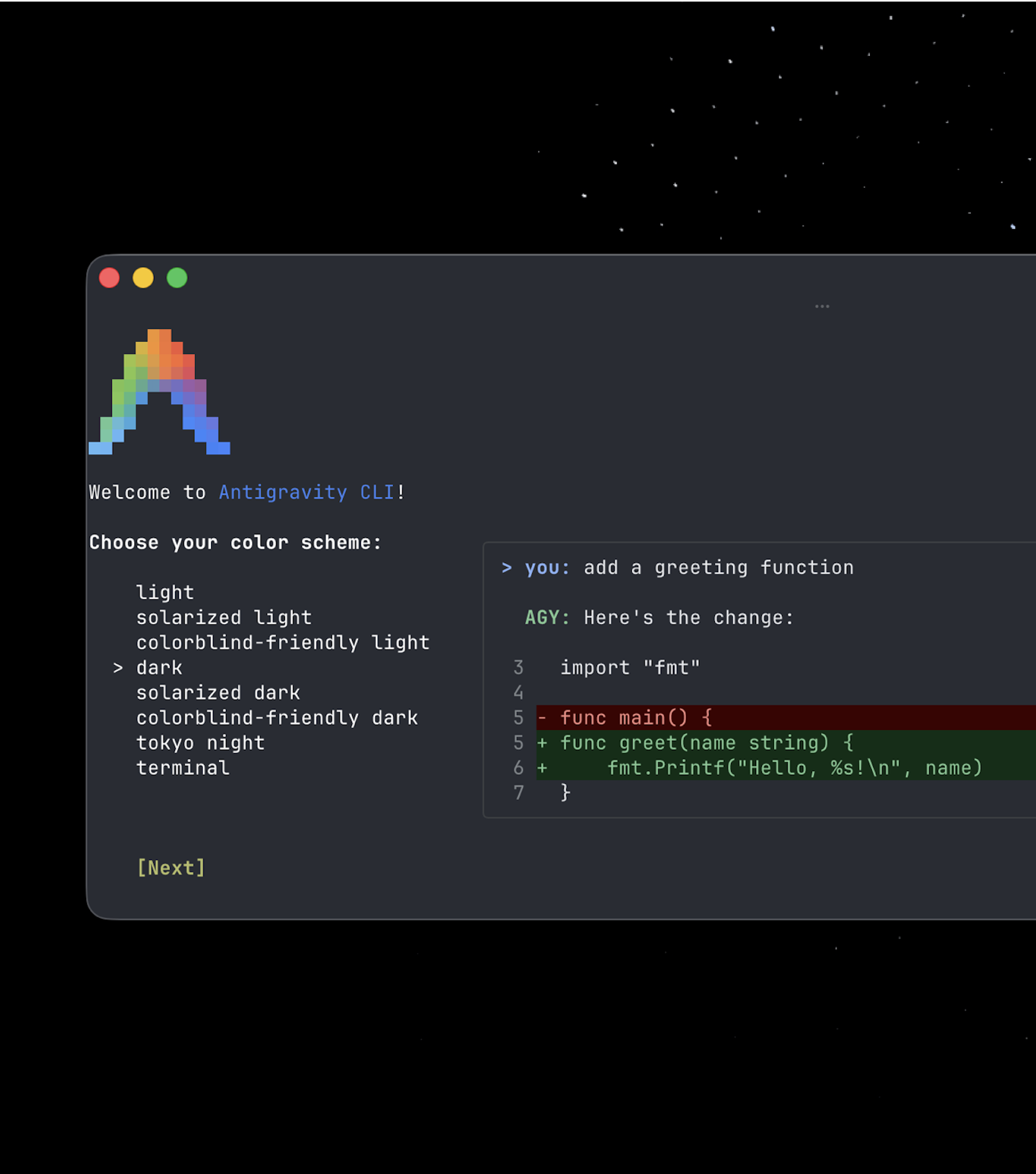
What Is an AI Agent? Definition, Examples and How It Works
An honest guide to what an AI agent actually is, how it differs from a chatbot, and how tools, planning and memory turn an LLM into one.
An AI agent is a system built around a large language model that can plan a multi-step task, call external tools or APIs to act on the world, check the results, and keep going until the goal is done or it needs a human to step in. That is the dividing line from a plain chatbot: a chatbot answers one prompt at a time in a conversation that a person drives turn by turn, while an agent is handed a goal and decides for itself which steps, tools, and loops get it there.
The term is suddenly everywhere - inside ChatGPT, Gemini, Microsoft 365 Copilot, and Claude - and vendors do not all define it identically. But the core ingredients repeat across every major lab's own documentation: a model that reasons, a set of tools it can call, some form of memory or state, and a loop that keeps running until a stopping condition is met. This guide pulls those pieces from the companies' own pages, shows real shipping examples, and lays out exactly how an agent differs from the LLM underneath it.
What is an AI agent, in plain terms
Google Cloud's own definition is a useful starting point: "AI agents are software systems that use AI to pursue goals and complete tasks on behalf of users. They show reasoning, planning, and memory and have a level of autonomy to make decisions, learn, and adapt." Google Cloud adds that large language models "serve as the foundation for building AI agents," acting as the agent's "brain," while separate components handle reasoning, action, and memory.
Anthropic, in its widely cited engineering post "Building effective agents," draws a narrower technical line. It separates workflows - "systems where LLMs and tools are orchestrated through predefined code paths" - from agents, where "LLMs dynamically direct their own processes and tool usage, maintaining control over how they accomplish tasks." Both fall under what Anthropic calls "agentic systems." In the simplest case, Anthropic writes, agents are "typically just LLMs using tools based on environmental feedback in a loop."
Microsoft's framing, from its Copilot Studio documentation, emphasizes autonomy and orchestration: an autonomous agent is "an AI-powered solution that manages, orchestrates, and automates complex business tasks," one that "proactively supports workflows, minimizes manual effort, and adapts to changing conditions or requirements." Microsoft describes it running through six stages - trigger activation, process automation, following guardrails, seeking human assistance when needed, orchestrating other agents, and integrating AI reasoning - in a repeating cycle rather than a single back-and-forth reply.
- An agent pairs an LLM with tools (search, code execution, APIs, browsers) it can call on its own.
- It plans and takes multiple steps toward a goal without a person prompting each one.
- It checks results against the real world (a tool's output, a file, a webpage) before deciding what to do next - Anthropic calls this "ground truth" from the environment.
- It usually keeps some memory or state across those steps, and stops at a defined limit, a completed goal, or a human checkpoint.
- A plain chatbot or a single LLM call does none of this by default - it just returns text for one prompt.
AI agent vs. chatbot or plain LLM: what actually changes
A chatbot and a bare LLM call are, functionally, the same thing from the model's point of view: you send text in, the model predicts text out, and the conversation only moves forward when a human sends the next message. There is no independent action, no tool the model reaches for on its own, and no persistent goal being pursued across turns unless the surrounding app bolts that on.
An agent changes three things at once: it can call tools and act on the result, it can take more than one step without a human prompting each one, and it tracks enough state to know what it has already tried. Anthropic's post describes the intermediate step toward this as "the augmented LLM" - a model enhanced with retrieval, tools, and memory, where the model itself can "generate its own search queries, select appropriate tools, and determine what information to retain." That augmented LLM is the building block; stacking it into a loop that runs until a goal is met is what turns it into an agent.
| Property | Plain chatbot / single LLM call | AI agent |
|---|---|---|
| Trigger | A human sends a prompt for each step | A goal or event starts it; it keeps going on its own |
| Tool use | None, or a single fixed lookup the app controls | The model chooses which tools to call and when |
| Steps per request | One response per prompt | Multiple steps in a loop (plan, act, observe, repeat) |
| State across steps | Only the visible chat history | Working memory of prior actions, tool results, and progress |
| Stopping condition | The model finishes its reply | Goal reached, iteration limit hit, or human checkpoint |
| Example | Asking a chatbot "what's a good subject line?" | Asking an agent to research competitors and build the slide deck itself |
How AI agents actually work: tools, planning, and loops
Strip away the branding and most production agents share the same four parts, described consistently across the vendor docs reviewed for this piece:
1. A model that reasons and plans
Google Cloud names reasoning and acting as the two foundational capabilities, tracing the pattern back to the academic "ReAct" framework: the model reasons about what to do, takes an action, observes the result, and reasons again. Anthropic's post frames planning as one of the capabilities that "make agents viable," alongside the model's ability to understand complex inputs and engage in reasoning and planning.
2. Tools and function calling
Tools are how an agent touches anything outside the chat window: a search API, a code interpreter, a database query, a browser, or another application's API. OpenAI's developer documentation for its Agents platform describes agents as systems that "can plan and complete tasks using tools, work with other agents, and maintain context across steps," and lists tool types spanning hosted capabilities, custom function handlers, and external MCP (Model Context Protocol) servers. Google Cloud calls this "tool learning" - teaching an agent to understand a tool's functionality and the context in which to use it.
3. Memory and state
An agent needs to remember what it has already tried so it does not repeat itself or lose track of a multi-step goal. OpenAI's docs describe several mechanisms for this depending on which of its APIs is used: saved session state and automatic context compaction in its Agents API, or conversation history and response chaining in its Responses API. Google Cloud simply lists memory alongside reasoning and planning as a defining feature of an agent.
4. The loop, and a stopping condition
This is the part that most distinguishes an agent from a single augmented LLM call. Anthropic describes the basic pattern plainly: an agent is an LLM "using tools based on environmental feedback in a loop," gaining "ground truth" from the environment - a tool's output, a test result, a webpage - at every step to judge whether it is making progress. Because that loop could in theory run forever, Anthropic notes agents typically include an explicit stopping condition, such as a maximum number of iterations, and Microsoft's Copilot Studio material likewise builds "seek assistance" - pausing to ask a human - directly into its agent lifecycle as a guardrail.
Real AI agents you can try today
These are shipping products described directly by their makers, not concepts:
OpenAI's ChatGPT agent and Agents platform
OpenAI's developer documentation for its Agents tooling describes agents that "can plan and complete tasks using tools, work with other agents, and maintain context across steps," running either through its hosted Agents API - which can execute in an OpenAI-managed or self-hosted sandbox - or its open-source Agents SDK, which developers wire into their own applications with custom tools and multi-agent handoffs.
Microsoft 365 Copilot's Researcher and Analyst agents
Microsoft's own announcement describes Researcher as a reasoning agent that "helps you tackle complex, multi-step research at work," combining a deep-research model with Copilot's orchestration, work data, and web search, and able to pull in third-party systems through connectors such as Salesforce and ServiceNow. Analyst, Microsoft says, "thinks like a skilled data scientist" - it runs Python against raw spreadsheet data and lets a user inspect the code it generates along the way. Microsoft gives concrete tasks for each: Researcher building a go-to-market strategy or a quarterly client report, Analyst producing demand forecasts or revenue projections.
Anthropic's agentic Claude, via the Model Context Protocol
Anthropic's "Building effective agents" post is less a product announcement than an engineering playbook, but it documents real patterns Anthropic uses in production: giving Claude access to tools through MCP servers, letting it generate its own search queries, and running it in a loop that checks results against the environment at each step. For related background on one widely discussed AI-assisted coding pattern, see Pandromeda's explainer on vibe coding, which touches on how agentic coding tools fit into that workflow.
Google Cloud's agent-building stack
Google Cloud's own "What are AI agents?" page positions Gemini and foundation models as the "brain" of an agent and describes single-agent and multi-agent systems, where "each agent can have different foundation models that best fit their needs" and agents "collaborate or compete to achieve a common objective." Google Cloud lists both interactive agents (customer service, healthcare support) and background agents that run with limited or no direct human interaction.
"AI agent" vs. "agentic AI": is there a difference?
People use the two terms loosely, and that is part of why autocomplete surfaces the comparison. In practice, "AI agent" usually refers to one system (one model plus its tools and loop) built to pursue a goal, while "agentic AI" is the broader umbrella for that whole style of building - including multi-agent systems where several agents coordinate, hand off work, or even negotiate with each other. Google Cloud's own breakdown fits this pattern: it classifies agents by "number of agents," distinguishing single agents that "operate independently to achieve a specific goal" from multi-agent systems where several agents "collaborate or compete" with different underlying models. Anthropic's "agentic systems" is effectively a synonym for the same umbrella, covering both the simpler, code-defined workflows and the fully autonomous agent pattern underneath it.
Why "agent" is suddenly the term every vendor uses
Three practical shifts made agents viable at the same time, per the vendor material above. Models got good enough at multi-step reasoning and tool selection to be trusted with a loop rather than a single answer - Anthropic cites this directly as a precondition. Standardized ways to connect models to tools emerged, most visibly the Model Context Protocol that Anthropic introduced and that OpenAI's Agents API now also supports, reducing the custom integration work every tool connection used to require. And enterprise vendors built the orchestration and guardrail layers - sessions, connectors, human-checkpoint hooks - that make an agent safe enough to let run unattended on business data, which is the gap Microsoft's Researcher, Analyst, and Copilot Studio autonomous agents are built to fill.
What to watch for before trusting an agent with a task
Every vendor reviewed here builds in some version of a safety valve, which is itself a signal about the risk. Anthropic recommends starting with the simplest approach that works and adding agentic complexity "only when needed," warning that agentic systems trade latency and cost for capability. Microsoft's autonomous-agent lifecycle explicitly includes a "seek assistance" stage so the agent can ask a human before proceeding. Before handing an agent a task with real consequences - sending money, emailing a client, deleting data - check whether the product requires a confirmation step for that action, what it logs, and whether you can see the tool calls it made, the way Microsoft's Analyst agent is designed to let users "view and verify the code it runs."
Bottom line
An AI agent is not a new kind of model - it is an LLM wired into tools, memory, and a loop that lets it pursue a goal across multiple steps instead of answering one prompt at a time. The exact architecture varies by vendor, but the shape is consistent across OpenAI, Microsoft, Google Cloud, and Anthropic's own descriptions: reason, act through a tool, observe the real result, repeat, and stop when the goal is met or a human needs to weigh in. If a product lets the model decide what to do next on its own and touch something outside the chat window to do it, it is an agent. If it only replies to what you type, it is a chatbot wearing an agent's name.
Frequently asked questions
What is an AI agent in simple terms?
An AI agent is a system built on a large language model that can plan multiple steps, call tools like search or code execution on its own, check the results, and keep going until a goal is met or a human needs to step in, rather than just answering one prompt at a time.
What is the difference between an AI agent and an LLM?
An LLM is the underlying model that predicts text from a prompt. An AI agent wraps that model with tools, memory, and a loop so it can take multiple actions toward a goal on its own, instead of returning a single reply to a single message.
How does an AI agent actually work?
Most agents follow a reason-act-observe loop: the model reasons about what to do, calls a tool to act, observes the real result, and reasons again, repeating until it hits a stopping condition such as a completed goal, an iteration limit, or a human checkpoint.
Is a chatbot the same thing as an AI agent?
No. A chatbot generally replies to one prompt at a time in a conversation a person drives. An agent can call tools and take several steps on its own once given a goal, without a person prompting each individual step.
What are some real examples of AI agents?
Examples described by their own makers include OpenAI's ChatGPT agent and Agents platform, Microsoft 365 Copilot's Researcher and Analyst agents, Anthropic's Claude used agentically through the Model Context Protocol, and Google Cloud's single- and multi-agent systems built on Gemini.
What is agentic AI versus an AI agent?
An AI agent usually refers to one system, one model plus its tools and loop, built to pursue a goal. Agentic AI is the broader umbrella for that style of building, including multi-agent systems where several agents coordinate or hand off work to each other.
Sources
- Anthropic: Building effective agentsanthropic.com
- Google Cloud: What are AI agents?cloud.google.com
- Microsoft 365 Blog: Introducing Researcher and Analyst in Microsoft 365 Copilotmicrosoft.com
- Microsoft Learn: Introduction to autonomous agents in Copilot Studiolearn.microsoft.com
- OpenAI developer docs: Agents guidedevelopers.openai.com
- Google Cloud: AI agents explained (2-minute AI with Google)youtube.com
Theo Park runs the AI desk at Pandromeda. He follows model launches from the frontier labs and the open-weight community, tracks the assistants and developer tools built on them, and explains what each release changes on pricing, capability and safety. His reporting leans on primary sources: model cards, technical reports, API documentation and the companies' own announcements.