Siri vs Gemini vs ChatGPT: Which AI Assistant Wins on Your Phone
Apple's Siri AI just gained five new beta languages in iOS 27.2. Here's how it stacks up against Gemini and ChatGPT as a real phone assistant.
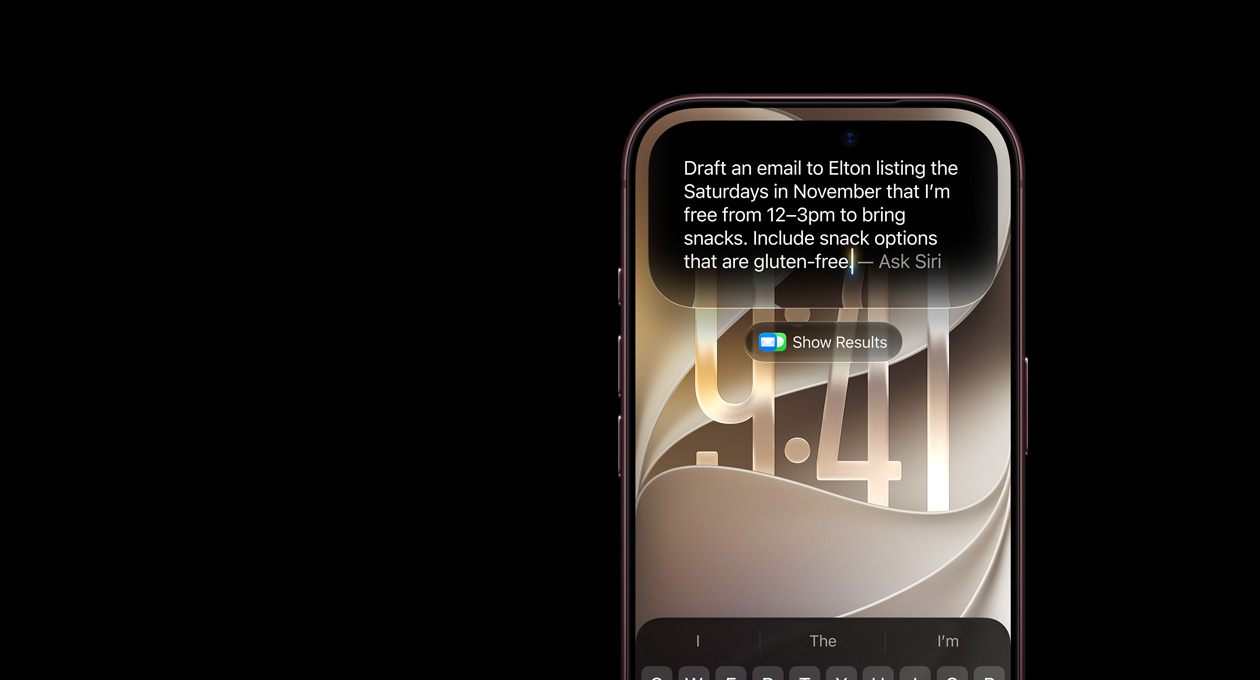
If you just want a straight answer: Gemini is the most capable voice assistant on a phone today, ChatGPT's Advanced Voice Mode is the best pure conversationalist, and Siri is the one that lives deepest inside your phone's apps and data but is still catching up — and its newest language upgrade, landing in the iOS 27.2 beta, is not yet available to everyone. Which one is "best" for you depends less on raw intelligence than on which phone you own, which languages you speak, and how much you trust a cloud server with your calendar.
That question — Siri vs Gemini, Siri AI vs ChatGPT, Siri vs Gemini vs ChatGPT — has quietly become one of the most common comparisons people type into Google, and for good reason. All three companies spent 2026 rebuilding their assistants at the same time. Apple shipped a rebuilt "Siri AI" with iOS 27 in September, then used the iOS 27.2 beta to add French, Japanese, Korean, Portuguese and Spanish on top of English. Google has spent the year retiring the old Google Assistant app in favor of Gemini on most Android phones. And OpenAI has pushed the standalone ChatGPT app's voice mode as a daily-driver alternative to both. Here is how they actually compare as something you talk to on your phone, not as general-purpose chatbots.
- Siri AI's new languages are in beta. iOS 27.2, currently in developer and public beta, adds French, Japanese, Korean, Portuguese and Spanish to Siri AI, which launched with iOS 27 in English only. Apple has said the expansion is planned for a general release in October; it is not yet live for most users.
- Google Assistant is being phased out. Google has confirmed it is upgrading mobile users from Google Assistant to Gemini and that the classic Assistant app will stop working on most phones and disappear from app stores later this year.
- Siri AI requires newer hardware. Apple ties the fuller Siri AI experience to Apple Intelligence-eligible devices (iPhone 15 Pro and newer, or iPhone 16 and later), so older iPhones running iOS 27 don't get the new assistant.
- Pricing differs sharply. Siri AI is free with a compatible iPhone. Gemini has a free tier plus paid Google AI Pro and Google AI Ultra plans. ChatGPT's voice mode is free with daily limits, with unlimited-ish access on the paid Plus tier.
- Apple and Google are now technology partners here. Apple has said it uses a version of Google's Gemini models to help power parts of the new Siri AI, even as Gemini also competes with Siri as Android's own assistant.
What actually changed in 2026
For most of Siri's life, "smart assistant" meant short commands: set a timer, text mom, play a song. That changed this year. Apple rebuilt Siri around a conversational large-language-model core, gave it a dedicated app with a visible conversation history synced through iCloud, and let it reference personal context — an old photo, a buried email, a saved note — when you ask about it. It shipped with iOS 27 on September 14, but only in English.
Google's move has been less a redesign than a replacement. Over the past year it has been migrating phones, tablets, cars and wearables from the decade-old Google Assistant to Gemini, and has told users the classic Assistant app will stop being accessible on most mobile devices and will no longer be available as a new download. Devices that are too old or underpowered (Android 9 or earlier, or under 2GB of RAM) keep Assistant for now, but that's a shrinking exception, not the plan.
OpenAI didn't have a phone operating system to rebuild, so its play has been the ChatGPT app itself: a voice mode good enough that people reach for it the way they'd reach for a built-in assistant, available on iPhone and Android alike, independent of who makes your phone. For a wider look at how the three main AI chat apps stack up as general assistants rather than phone assistants, see our ChatGPT vs Claude vs Gemini plan and price breakdown.
Siri AI and the iOS 27.2 language rollout
This is the news hook, so it's worth being precise about it. Siri AI launched alongside iOS 27 in September 2026 in English only. According to multiple reports tracking the iOS 27.2 developer and public betas, the second 27.2 beta build extends Siri AI to French, Japanese, Korean, Portuguese and Spanish — five languages that, combined with English, cover a large share of Siri's existing user base.
Two caveats matter here, and Apple has been fairly open about both. First, this is beta software. As of this writing, Apple's own support documentation on Apple Intelligence language availability does not yet list these additions for Siri AI specifically — the broader Apple Intelligence writing and image tools already support a longer list of languages, but Siri AI's conversational features started narrower and are expanding on their own timeline. Apple has indicated the new Siri AI languages are intended to reach general release in October 2026, not immediately. If you're not enrolled in the iOS 27.2 beta, you likely don't have them yet. Second, Siri AI remains unavailable in the European Union on iPhone and iPad at launch, for regulatory reasons Apple has attributed to interoperability requirements under EU law, and it has not rolled out in mainland China, where it awaits local regulatory approval.
Apple has also confirmed something that surprised a lot of longtime Siri watchers: part of what powers the new Siri AI's underlying models comes from a partnership with Google, which licenses a version of its Gemini technology to Apple for this purpose. Apple and Google are, in other words, simultaneously partners on Siri's back end and rivals in the phone-assistant market where Gemini competes directly against Siri.
Gemini: the new Android default
Gemini's advantage as a phone assistant is structural: on a compatible Android phone, it has first-class access to the OS the way Google Assistant always did, plus a much larger model behind it. Google has described the transition in blunt terms, telling users that "the Assistant experience on mobile is upgrading to Gemini," with Gemini Live enabling free-flowing, multimodal, voice-first conversation and Gemini able to connect to Gmail, Maps, YouTube and other Google apps to actually complete tasks rather than just answer questions.
On newer Pixel and Galaxy phones, Gemini is already the default assistant; on older or lower-spec Android devices, Google Assistant hangs on for now. Google support documentation notes a transitional quirk worth knowing: some fast voice actions and "Hey Google" detection on phones still lean on underlying Google Assistant infrastructure even inside the Gemini app, and some Assistant settings (like certain lock-screen controls) don't carry over automatically. It's a live migration, not a finished one.
For iPhone owners, Gemini is also available as a standalone app, so you don't need an Android phone to use it — you just don't get the same system-level "default assistant" integration that Siri or Google Assistant historically had on their native platforms.
ChatGPT voice mode: the platform-agnostic option
ChatGPT never tried to become your phone's system assistant in the way Siri or Gemini has. Its pitch is different: the same voice experience whether you're on iPhone or Android, with Advanced Voice Mode offering low-latency, natural back-and-forth conversation, a choice of several voices, and the ability to interrupt the assistant mid-sentence the way you'd interrupt a person. OpenAI's own help documentation describes voice conversations as available across the ChatGPT app, with free users getting voice access on a daily time budget and paid Plus subscribers getting substantially higher limits.
What ChatGPT's voice mode doesn't do is act as your phone's actual assistant layer — it can't reliably set a system alarm by voice from the lock screen, trigger arbitrary apps the way an OS-level assistant can, or search across your phone's local photos and messages the way Siri AI and Gemini both now claim to. It's a superb conversational voice product bolted onto an app, not a replacement for the assistant built into your OS. If you're trying to decide between ChatGPT and other leading chat assistants more broadly, our Claude vs Grok vs ChatGPT comparison covers that ground in more depth.
Price and plans compared
| Assistant | Free tier | Paid tier(s) | Where it lives |
|---|---|---|---|
| Siri AI (Apple) | Included free with a compatible iPhone/iPad/Mac | No separate Siri subscription; some Apple Intelligence features may eventually tie into broader Apple services | Built into iOS 27+, iPadOS 27+, macOS, watchOS, visionOS |
| Gemini (Google) | Free app and web access with usage limits | Google AI Pro and the higher-usage Google AI Ultra tier, sold as monthly subscriptions through Google | Default assistant on newer Android phones; also a standalone app on iOS |
| ChatGPT voice mode (OpenAI) | Free with a capped daily voice allowance | ChatGPT Plus and higher tiers raise or remove the daily voice cap | iOS and Android app, plus desktop and web |
None of these prices are static — all three companies have adjusted tiers multiple times over the past two years — so treat exact dollar figures as a snapshot rather than a permanent fact, and check each company's own pricing page before subscribing.
Privacy: on-device vs. cloud processing
This is where the three approaches diverge the most philosophically. Apple's long-standing pitch is a hybrid model: simple personal-context requests are handled on-device, and anything that needs a larger model is routed through what Apple calls Private Cloud Compute, which it says is designed so that even Apple cannot access the data used to answer your request, and that none of it is retained afterward. Apple markets this explicitly as "Apple Intelligence is aware of your personal information without collecting your personal information."
Google's Gemini, by contrast, is fundamentally a cloud-based assistant: conversations and actions are logged to what Google calls Gemini Apps Activity (distinct from the old Assistant's separate activity logging), and the heavy lifting happens on Google's servers rather than on your device. That's part of how Gemini can do more — deep research, broader reasoning, longer context — but it means a different privacy posture than Apple's on-device-first framing.
ChatGPT's voice mode is also cloud-based by design; your audio and the resulting conversation are processed on OpenAI's servers to generate a response, similar in structure to Gemini's approach rather than Apple's hybrid one. If privacy architecture is the deciding factor for you, Siri AI's on-device-first design is the most distinctive of the three — though it's worth noting that once a request is complex enough to need Private Cloud Compute, or (per Apple's own disclosure) a Google Gemini-derived model, it's no longer purely on-device either.
Real feature differences that matter day to day
Strip away the marketing and a few concrete differences show up:
- Visual intelligence. Apple has been building out camera-based "point and ask" features — identifying plants, pulling event details off a poster, scanning nutrition labels — integrated into the Camera app itself under iOS 27, building on the Visual Intelligence feature it introduced previously. Gemini has comparable camera and screen-sharing capabilities through Gemini Live, letting you point your phone's camera at something and talk through it in real time. ChatGPT's app supports image and camera input in conversation too, but it's not as deeply wired into the phone's native camera UI.
- App actions. Siri AI can take actions inside first-party Apple apps like Messages, Music and Reminders based on on-screen context. Gemini's equivalent leans on its connections to Google's own apps — Gmail, Maps, Calendar — plus a growing set of third-party app integrations. ChatGPT's action-taking is generally more limited on mobile unless you're using specific connected plugins or custom GPTs.
- Conversation memory. All three now support some form of multi-turn, context-aware conversation rather than one-shot commands, a genuine shift from the old "set a timer" era for Siri and Assistant alike. Siri AI stores a visible conversation history synced via iCloud in its own dedicated app; Gemini and ChatGPT both maintain their own in-app histories.
- Voice interruption and naturalness. This is widely considered ChatGPT's strongest card: Advanced Voice Mode is built specifically around natural turn-taking, including letting you cut in mid-response, which some people find smoother than either Siri AI or Gemini Live in casual conversation.
We're deliberately not declaring a "smartest" winner here. There's no independent, apples-to-apples benchmark that fairly scores a phone assistant's real-world voice intelligence across Siri AI, Gemini and ChatGPT at once, and anyone claiming a definitive ranking on raw intelligence alone is not working from a real test. The comparison that actually holds up is the one above: what each one can do, where, in what languages, and at what cost.
Which one should you actually use
If you're an iPhone owner who mostly wants an assistant that understands your own messages, photos and notes without you having to dig for them, Siri AI is the obvious default — it's free, built in, and improving quickly, but know that if you don't speak English you may be waiting on the iOS 27.2 language rollout to officially leave beta. If you're on a newer Android phone, Gemini is increasingly not optional — Google is retiring the alternative — and it's genuinely strong at research-heavy and multimodal tasks. If you want one voice assistant that behaves identically regardless of which phone you're holding, and you value conversational polish above OS-level integration, ChatGPT's voice mode is the most portable choice. Many people, reasonably, end up using more than one: Siri or Gemini for the phone-level basics, ChatGPT for deeper conversations.
Bottom line and what's next
Siri vs Gemini vs ChatGPT isn't a single contest with one winner — it's three different bets on what a phone assistant should be. Apple is betting on deep, private, on-device integration with your personal data, currently mid-rollout on languages beyond English. Google is betting on a full replacement of its old assistant with a more capable, cloud-native Gemini across phones, cars and wearables. OpenAI is betting that a great conversational voice, available anywhere, is valuable enough on its own. Watch for Apple's general (non-beta) release of Siri AI's five new languages, expected in October 2026, and for the final stretch of Google's Assistant-to-Gemini migration, as the two clearest near-term developments likely to reshape this comparison again.
Frequently asked questions
Is Siri's new language support in iOS 27.2 available to everyone?
Not yet. As of this writing, French, Japanese, Korean, Portuguese and Spanish support for Siri AI is rolling out through the iOS 27.2 developer and public beta. Apple has indicated a general release is planned for October 2026, but it is not yet live for most users outside the beta.
Is Google Assistant going away completely?
Google has said it is upgrading mobile users from Google Assistant to Gemini and that the classic Assistant app will stop being accessible on most phones and will no longer be offered as a new download. Older or lower-spec devices may retain Assistant for a transitional period.
Does ChatGPT's voice mode work as a phone assistant like Siri or Gemini?
Not in the same way. ChatGPT's Advanced Voice Mode is a strong conversational voice feature inside the ChatGPT app on iOS and Android, but it isn't an operating-system-level assistant, so it can't natively trigger system actions or search your phone's local data the way Siri AI or Gemini can.
Is Siri AI available in the European Union?
No, not at launch. Apple has said Siri AI is not initially available on iPhone and iPad in the EU, citing regulatory requirements, and it is also not yet available in mainland China pending local approval.
Does Apple actually use Google's technology inside Siri?
Apple has confirmed it uses a version of Google's Gemini models to help power parts of the rebuilt Siri AI, even though Gemini is also Siri's direct competitor as Android's default assistant.
Which of the three is free to use?
Siri AI is included free with a compatible iPhone, iPad or Mac. Gemini and ChatGPT both offer free tiers with usage limits, plus paid plans (Google AI Pro/Ultra and ChatGPT Plus, respectively) that raise those limits and unlock more capable models.
Sources
- Apple Support: Apple Intelligence Language and Region Availabilitysupport.apple.com
- Google Blog: The Assistant Experience on Mobile Is Upgrading to Geminiblog.google
- Google Support: Use Gemini as Your Phone's Assistant Appsupport.google.com
- OpenAI Help Center: Voice Conversationshelp.openai.com
- Wikipedia: Sirien.wikipedia.org
- Wikipedia: Gemini (chatbot)en.wikipedia.org
Theo Park runs the AI desk at Pandromeda. He follows model launches from the frontier labs and the open-weight community, tracks the assistants and developer tools built on them, and explains what each release changes on pricing, capability and safety. His reporting leans on primary sources: model cards, technical reports, API documentation and the companies' own announcements.