Claude vs Grok vs ChatGPT: Which AI Assistant Should You Pick?
Pricing, context windows, coding tools, and image or voice features compared across Claude, Grok, and ChatGPT, using each company’s own pages.
If you only have time for one answer: pick Claude if you want the most reliable coding partner and the largest practical context window, pick ChatGPT if you want the biggest ecosystem of apps, voice, and image tools bundled into one cheap plan, and pick Grok if you want live web/X search and fast multimedia generation baked into every tier, including the free one. All three now ship frontier-level models, so the real differences for everyday users come down to price, context window, and which coding or creative features you actually use — which is what the rest of this guide breaks down, plan by plan, feature by feature, using each company's own pricing and documentation pages.
Pricing and plans: Claude vs Grok vs ChatGPT compared
All three assistants follow a similar structure — a free tier, a mainstream paid plan around $20/month, and a premium tier for power users — but the details diverge once you look closely. Anthropic's Claude pricing page lists Free, Pro, and Max; xAI's official pricing page lists Free, SuperGrok, and SuperGrok Plus; and OpenAI's ChatGPT plans run Free, Go, Plus, and a three-tier Pro lineup confirmed on its Pro tiers help page.
| Assistant | Free tier | Mid-tier plan | Top-tier plan |
|---|---|---|---|
| Claude (Anthropic) | $0 — chat, web search, Artifacts, memory | Pro: $17/mo (annual) or $20/mo — adds Claude Code, Claude Design/Slides/Docs, Projects | Max: from $100/mo — choice of 5x or 20x the usage of Pro |
| Grok (xAI) | $0 — web/X search, voice mode, connectors | SuperGrok: $30/mo — higher limits, Grok's frontier model, image/video generation | SuperGrok Plus: $100/mo — 1080p video, much higher usage, priority access |
| ChatGPT (OpenAI) | $0 — unlimited chat on the base model, limited everything else | Plus: $20/mo — GPT-6 reasoning models, Codex, Projects, expanded memory | Pro: $100 / $200 / $500 per month (three usage tiers; $500 tier adds Ultrafast) |
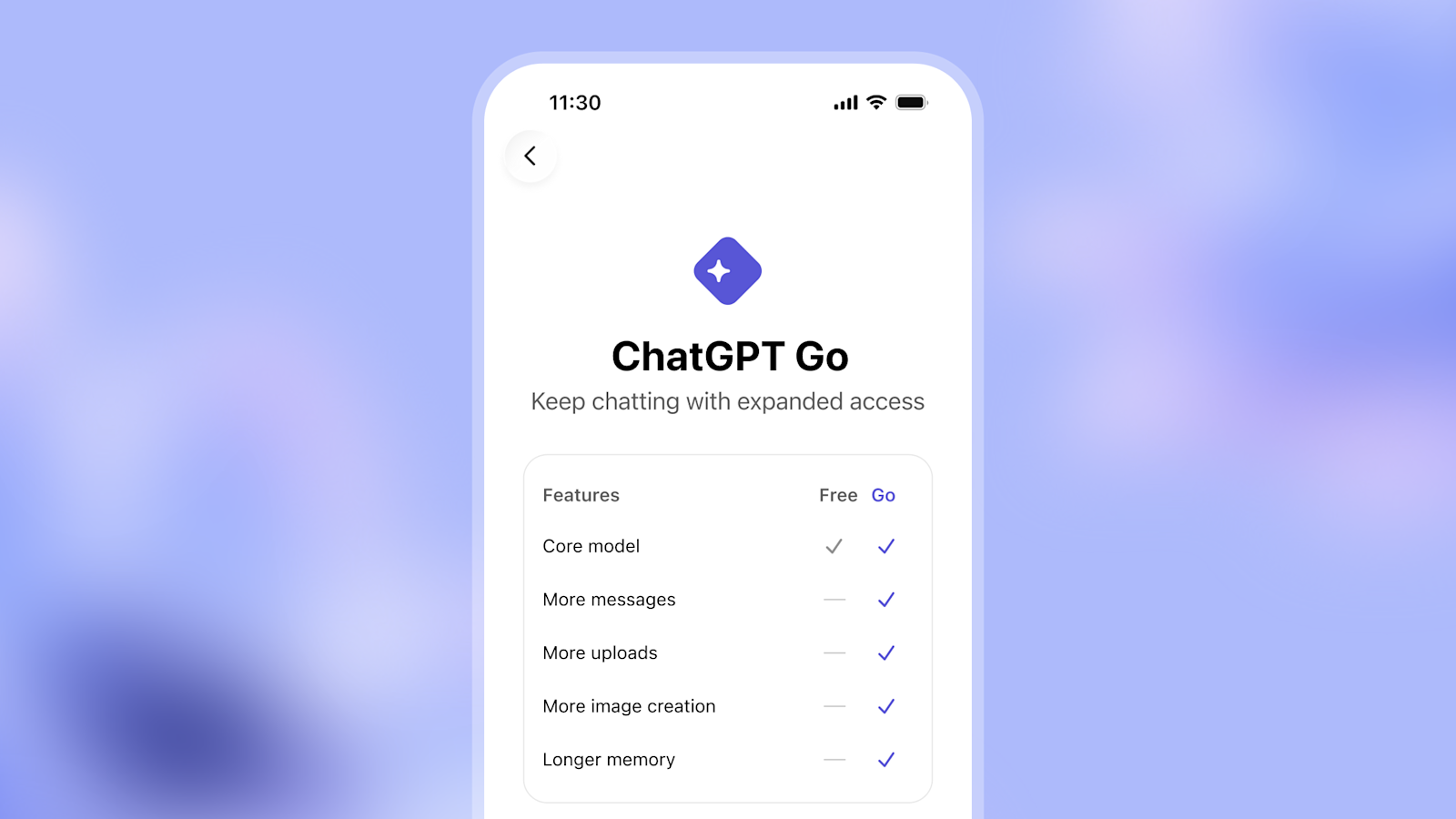
ChatGPT also has a budget option none of the others match directly: ChatGPT Go at $8/month, which sits between Free and Plus with more messages, uploads, and image generation on the base model. If your budget is under $10/month and you mostly want more headroom on everyday chat, Go is the cheapest meaningfully-upgraded plan across all three companies. If you want a closer look at how ChatGPT, Claude, and Gemini stack up plan-for-plan, Pandromeda's ChatGPT vs Claude vs Gemini price breakdown covers that angle in more depth; this piece focuses on where Grok fits into the picture.
- Cheapest paid plan: ChatGPT Go at $8/month
- Cheapest plan with a coding agent included: Claude Pro at $17–20/month (Claude Code bundled in)
- Largest advertised context window: Grok's grok-4.3 and grok-4.20 models at 1M tokens, matching Claude's 1M-token lineup
- Only assistant with live X (Twitter) search built in: Grok
- Most recent flagship release: Grok 4.7, announced September 21, 2026
Context window and memory: how much each assistant remembers
Context window determines how much text, code, or conversation history an assistant can hold in mind at once, and it's one of the biggest practical differences between the three. According to Anthropic's own published models overview, every current Claude model except Haiku 4.5 — Opus 5.5, Sonnet 5.5, and Fable 5.1 — supports a 1 million token context window, with Haiku 4.5 capped at 200K. That applies whether you're on Claude's Free, Pro, or Max plan; the context ceiling is a function of the model you pick, not the subscription tier.
Grok's model lineup, per xAI's developer documentation, is more fragmented: grok-4.7 (the newest, most capable model) and grok-4.6 top out at 500K tokens, while grok-4.3 and the grok-4.20 variants reach 1M tokens. The coding-specific grok-build-0.1 model is smaller at 256K. In other words, Grok's single most capable chat model has a smaller window than its older sibling — a quirk worth knowing if you need to paste in very long documents.
ChatGPT's context windows are the most tightly rationed by plan. OpenAI's own pricing page breaks it down as a "total context window" per model class: Free users get 27K tokens on the Instant model, Go and Plus users get 54K, and Pro users get 128K. Switch to a reasoning model and the ceiling rises — 256K on Go and Plus, 400K on Pro — but even Pro's reasoning-model ceiling falls short of what Claude and Grok's larger models offer by default. If you regularly work with long contracts, full codebases, or multi-hour meeting transcripts, Claude's 1M-token models are the most consistently generous option across all plans, including Pro.
Coding ability: Claude Code vs Grok 4.7 vs Codex
All three companies now treat coding as a flagship use case rather than a side feature, but they approach it differently. Anthropic's Claude Code is a standalone agentic coding tool available on desktop, terminal, IDE extensions, web, and mobile, bundled into every paid Claude plan (Pro and Max) at no extra cost — it draws from the same usage pool as your chat conversations. Anthropic describes it as capable of planning and executing multi-day refactors and migrations with the person acting as "architect and orchestrator" while Claude executes.
xAI's answer is Grok Build plus the grok-4.7 and grok-build-0.1 models. According to xAI's own model documentation, "for everything else, including code, use Grok 4.7. It is the most capable model we've built," and the company's September 21, 2026 announcement for Grok 4.7 specifically bills it as "SpaceXAI's most powerful model for coding and knowledge work," claiming it runs twice as fast and at half the price of comparable models. Grok Build itself is open source, per xAI's news archive, and is now available on every plan rather than being gated to the top tier.
OpenAI's coding agent is Codex, which is available at every ChatGPT tier but with very different limits: "limited" access on Free and Go, full access on Plus, and "expanded usage with longer sessions" on Pro. If you're comparing dedicated coding-tool setups rather than the general chat assistants, Pandromeda's Cursor vs GitHub Copilot vs Claude Code vs Codex comparison digs into pricing for that specific use case. For general assistant use, the practical takeaway is that Claude Code ships "in the box" with any paid Claude plan, Grok Build is now free-tier-available in beta, and ChatGPT reserves full Codex access for Plus and above.
Image, video, and voice features compared
Grok leans hardest into built-in multimedia generation. Its official product page advertises text-to-image and text-to-video "in the same thread" as chat, with Grok Imagine producing images up to 2K resolution and videos up to 15 seconds at 720p on the free and SuperGrok tiers; SuperGrok Plus unlocks 1080p video. Grok Voice offers what xAI calls "natural voice conversations with low-latency back and forth," available even on the free tier.
ChatGPT's equivalent features are more tightly plan-gated. Per OpenAI's pricing comparison table, image generation is "limited" on Free, becomes full access on Go, and gains "more complex and accurate image creation" on Plus, with "unlimited and faster" generation reserved for Pro. Voice works on every plan but is explicitly "expanded" on Go and Plus and "unlimited" on Pro; voice with video support only starts at Go.
Claude takes a different approach: it folds visual output into Claude Design, Slides, and Docs rather than a single "image generator," and those tools are available starting on the Pro plan, not Free. Voice mode, notably, is listed as available on every Claude plan including Free, according to Anthropic's feature comparison table. If multimedia generation (images, video, custom voices) is your priority, Grok currently offers the most capability for free; if you want it folded into documents and slides rather than standalone images, Claude Pro is the better fit.
Free plans compared: what you get without paying
Claude's free tier is unusually capable for a $0 plan: web search, file creation, code execution, cross-conversation memory, app connectors, and voice mode are all included, though Claude Code and Claude Design require Pro. Grok's free tier includes real-time web and X search, voice mode, and connectors, with image/video generation available but rate-limited compared to SuperGrok. ChatGPT's free tier gives unlimited text chat on its base model (currently GPT-5.6 Luna) but caps nearly everything else — messages with uploads, image creation, voice chats, deep research, memory, and Codex access are all explicitly "limited" per OpenAI's own comparison table, and the context window drops to a modest 27K tokens.
If you want to try all three before paying anything, Grok's free tier is the most feature-complete for search and multimedia, Claude's is the strongest for general assistant tasks like writing and file handling, and ChatGPT's free tier is the most restrictive of the three on everything except raw chat volume.
Which AI assistant should you use for writing and research?
For long-form writing, document review, and research tasks that benefit from a large context window, Claude is the strongest default: its 1M-token models are available across the lineup (Free included, model-dependent), and Pro adds Claude Design, Slides, and Docs for turning research into finished documents. Anthropic's recent Claude Cowork announcement, published September 16, 2026, describes merging its "Cowork" agent mode directly into the main Claude app for Pro and Max subscribers, so handing off a bigger research or drafting task no longer requires switching tools — you can start a quick question and escalate it into a longer async task in the same conversation.
ChatGPT Plus is a close competitor for research work, particularly if you want deep research mode, Projects, and scheduled tasks alongside writing — OpenAI's plan comparison lists "expanded deep research" and "expanded memory and context" as Plus-tier features. Grok's strength in this category is live, cited web and X search rather than long-document synthesis; its "DeepSearch"-style grounding in current events makes it a better fit for fast-moving news research than for synthesizing long static documents.
Which AI assistant should you use for coding?
If coding is your main use case, the decision mostly comes down to how you work. Claude Code, bundled into Claude Pro and Max, suits developers who want a single agent that can plan and run long, multi-step coding sessions across the terminal, IDE, and web without separate billing. Grok 4.7, xAI's newest and by its own description fastest and cheapest frontier model for code, is worth a look if you already pay for SuperGrok or just want to try Grok Build's free-tier agent. For a deeper dive specifically on Grok's pricing, benchmarks, and context window, see Pandromeda's Grok 4.7 explainer. ChatGPT's Codex is the right call if you're already paying for Plus or Pro for other reasons and want coding support without adding another subscription — its access tier scales with your existing ChatGPT plan rather than requiring a separate coding product.
What changed in September 2026
All three companies made moves in the weeks before this comparison that are worth knowing about. On September 16, 2026, Anthropic merged its Cowork workspace and standard chat into a single Claude experience for Pro and Max users, removing the need to decide upfront whether a task belonged in "chat" or "Cowork." On September 21, 2026, xAI shipped Grok 4.7, which it bills as its most capable coding and knowledge-work model yet, claiming it is twice as fast and half the price of comparable frontier models. And OpenAI's ChatGPT Pro lineup now includes a $500/month Pro 500 tier with an "Ultrafast" processing mode, alongside the return of new Pro 200 subscriptions, according to OpenAI's help center. If you're deciding today, it's worth checking each company's pricing page directly before subscribing, since all three have changed their lineups multiple times in 2026.
Bottom line: Claude vs Grok vs ChatGPT
There's no universal winner, because the three assistants are now optimized for different habits rather than competing on a single axis. Pick Claude if your work involves long documents, codebases, or multi-step coding tasks and you want generous context windows bundled in without hunting for an add-on. Pick Grok if live web and X search, fast image/video generation, and a usable free tier matter more to you than document-length ceilings. Pick ChatGPT if you want the broadest ecosystem — Projects, custom GPTs, Work, Excel/Word/PowerPoint extensions — and don't mind that its most generous context windows and unlimited image generation are reserved for the $100+/month Pro tiers. Whichever you choose, start on the free tier of each (or ChatGPT Go, at $8/month, if you want a cheap upgrade over Free) before committing to an annual plan, since all three vendors have shown they'll keep changing prices and limits as their models improve.
Frequently asked questions
Is Claude, Grok, or ChatGPT cheaper?
ChatGPT has the cheapest paid upgrade with ChatGPT Go at $8/month. Claude Pro and ChatGPT Plus both cost $20/month billed monthly (Claude Pro drops to $17/month billed annually), and Grok's SuperGrok is $30/month. At the top end, Claude Max starts at $100/month, Grok's SuperGrok Plus is $100/month, and ChatGPT Pro ranges from $100 to $500/month across its three usage tiers.
Which AI assistant has the largest context window?
Claude and Grok both offer 1 million-token models (Claude's Opus 5.5, Sonnet 5.5, and Fable 5.1; Grok's grok-4.3 and grok-4.20 variants), per Anthropic's and xAI's own documentation. ChatGPT's largest window is 400K tokens on reasoning models for Pro subscribers, well below the two 1M-token leaders.
Does Grok have a free plan?
Yes. xAI's official pricing page lists a $0/month Free tier that includes real-time web and X search, voice mode, and connectors, though image and video generation are rate-limited compared to the paid SuperGrok plan.
Is Claude Code included free with a Claude subscription?
Claude Code is included in both the Pro ($17-20/month) and Max (from $100/month) plans at no extra charge, drawing from the same usage pool as chat. It is not available on the free Claude plan.
Which assistant is best for coding?
It depends on your setup: Claude Code comes bundled into any paid Claude plan for long, multi-step coding sessions; Grok 4.7, released September 21, 2026, is xAI's fastest and, per its own claims, cheapest frontier coding model; and ChatGPT's Codex scales with your existing Plus or Pro subscription rather than requiring a separate coding product.
Can I use voice mode on the free plan of each assistant?
Yes for Claude and Grok, both of which list voice mode as available on their free tiers. ChatGPT's free tier also includes voice, but OpenAI labels it 'limited' compared to the 'expanded' and 'unlimited' voice access on its Go, Plus, and Pro plans.
Sources
- Claude pricing — Anthropicclaude.com
- ChatGPT pricing — OpenAIopenai.com
- Grok pricing — xAIx.ai
- Grok model documentation — xAI developer docsdocs.x.ai
- Claude models overview — Anthropic developer docsplatform.claude.com
- About ChatGPT Pro tiers — OpenAI Help Centerhelp.openai.com
Theo Park runs the AI desk at Pandromeda. He follows model launches from the frontier labs and the open-weight community, tracks the assistants and developer tools built on them, and explains what each release changes on pricing, capability and safety. His reporting leans on primary sources: model cards, technical reports, API documentation and the companies' own announcements.