Siri AI Update: 5 New Languages Land in iOS 27.2 Beta
Apple is rolling out Siri AI in French, Japanese, Korean, Portuguese and Spanish via the iOS 27.2 beta, with a public release expected in October.
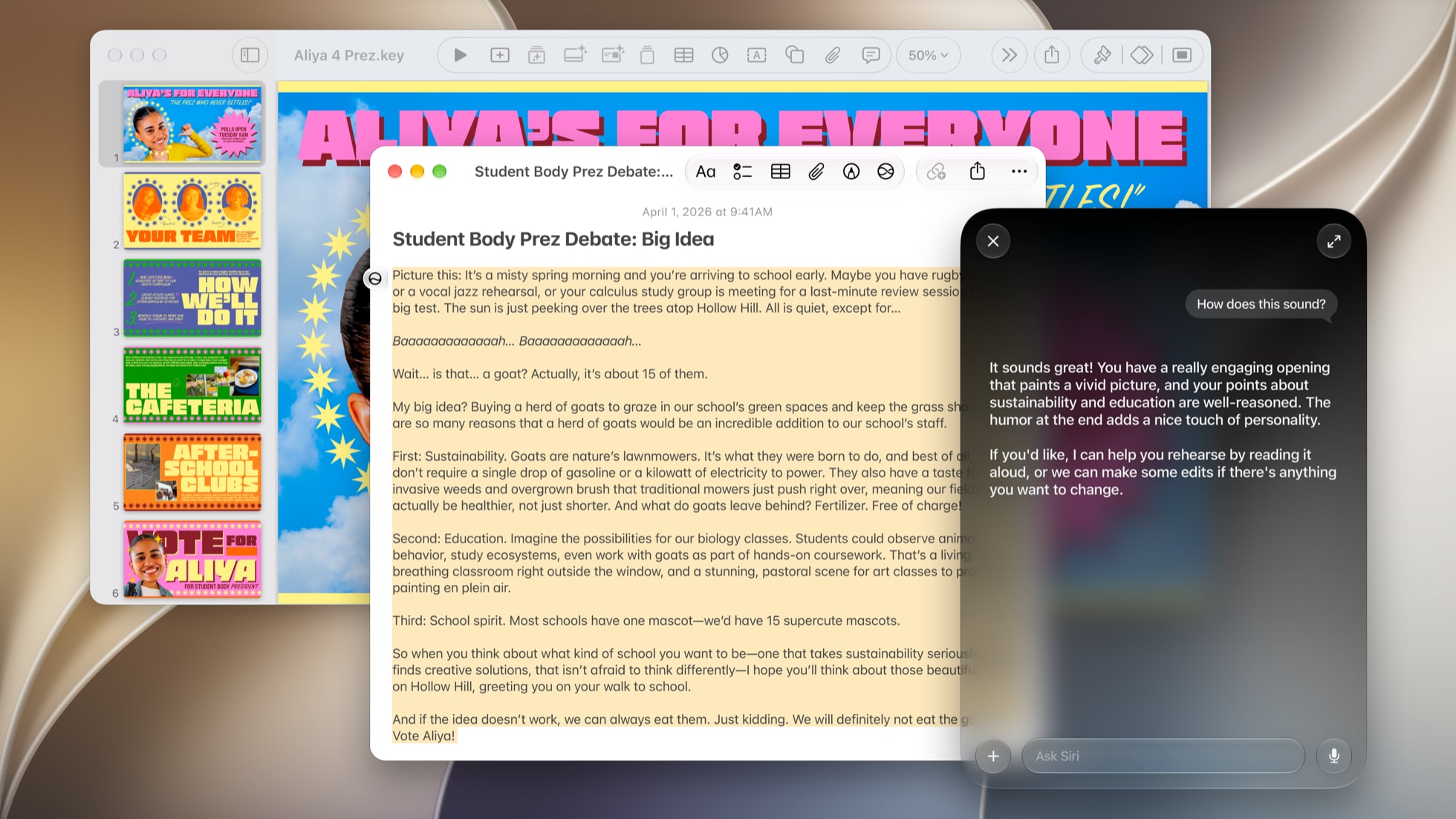
Siri AI, the generative-AI rewrite of Siri that Apple shipped with iOS 27, is about to stop being an English-only feature. Apple is expanding Siri AI to five new languages — French, Japanese, Korean, Portuguese and Spanish — starting with the iOS 27.2 beta that Apple seeded to developers in mid-September, with a public rollout expected this October. The update does not change what Siri AI can do; it changes who can talk to it in their own language, while the feature remains unavailable in the European Union and mainland China.
Siri AI language expansion, at a glance
- New languages: French, Japanese, Korean, Portuguese, Spanish
- Delivery: iOS 27.2 and iPadOS 27.2 beta, public release expected in October
- Launch language: English only, with iOS 27 on September 14, 2026
- Still unavailable: European Union (iOS, iPadOS, watchOS) and mainland China
- Devices: iPhone 15 Pro/Pro Max, iPhone 16 and iPhone 17 models, iPad and Mac with M1 or later
What's actually changing in iOS 27.2
iOS 27.2 is a point release, not a flagship update, but for anyone outside English-speaking markets it is the more consequential one. When Apple released iOS 27 on September 14, 2026, Siri AI — the rebuilt, more conversational version of Siri that understands personal context, reads what's on your screen, and can act across apps — only worked when a device's language was set to English. Apple said at the time that support for French, Japanese, Korean, Portuguese and Spanish was coming "next month," and the first iOS 27.2 developer beta, released just two days after iOS 27 itself, is the vehicle for that promise. The quick beta turnaround suggests Apple had the translated models largely ready and was holding them back for a staged rollout rather than still building them from scratch.
Beyond the language switch, early iOS 27.2 betas are also carrying smaller Siri refinements and groundwork for other Apple Intelligence features, but the headline change for most users abroad is simple: Siri AI stops being an English-only product.
Which languages are getting Siri AI
The five languages joining English are the same set Apple has prioritized for Apple Intelligence generally, reflecting its largest non-English markets.
| Language | Status at iOS 27 launch | Status in iOS 27.2 beta |
|---|---|---|
| English | Available | Available |
| French | Not available | Available in beta |
| Japanese | Not available | Available in beta |
| Korean | Not available | Available in beta |
| Portuguese | Not available | Available in beta |
| Spanish | Not available | Available in beta |
To use Siri AI in any of these languages, both the device language and the Siri language need to be set to the same supported language — a long-standing Apple Intelligence requirement carried over from how Apple phased in earlier language support. Once iOS 27.2 leaves beta, switching your iPhone or iPad's language and Siri language to French, Japanese, Korean, Portuguese or Spanish should be enough to unlock the feature, provided your device otherwise qualifies.
iOS 27.2 release date: when does the public update land
Apple has not published a specific public release date for iOS 27.2; Apple's own Siri AI announcement only commits to the new languages arriving "next month" after the September 14 iOS 27 launch, which points to an October release. Point releases like this typically spend several weeks in developer and public beta before a general rollout, so an October ship date would be consistent with the pace of earlier iOS updates. As with any beta-stage feature, exact timing can slip, and Apple has not committed to a specific calendar day.
Worth noting: Apple took the unusual step of shipping the first iOS 27.2 beta before an iOS 27.1 beta, which some reporting has tied to Apple wanting to hold certain hardware-related features back until other product announcements land. Whatever the reason, the sequencing doesn't change the language rollout itself — Siri AI's non-English support is arriving through the 27.2 branch of iOS and iPadOS, not through 27.1.
Device requirements: which iPhones, iPads and Macs qualify
Siri AI inherits Apple Intelligence's hardware floor, so the language expansion doesn't open the feature to any device that couldn't already run it in English. According to Apple's own Apple Intelligence requirements page, supported hardware includes:
| Device family | Minimum supported models |
|---|---|
| iPhone | iPhone 15 Pro and iPhone 15 Pro Max, iPhone 16 models or later (including the iPhone 17 line) |
| iPad | iPad models with the M1 chip or later |
| Mac | Mac models with the M1 chip or later |
| Apple Watch | Series 9 or later, Ultra 2 or later, when paired with a compatible iPhone |
| Apple Vision Pro | Supported |
If your device already runs Siri AI in English today, it will be eligible for the new languages once iOS 27.2 or iPadOS 27.2 ships publicly — no additional hardware is required. Anyone on an older iPhone, an Intel Mac, or an iPad without an M1 chip or newer will remain locked out of Siri AI entirely, regardless of language. That cutoff matters more than it might seem: a lot of still-functional iPhones, including the standard iPhone 14 and earlier, simply don't have the on-device neural engine horsepower Apple requires, so no software update will ever bring Siri AI to them. If you're shopping for a phone partly because of Apple Intelligence features like this one, it's worth checking how the newest hardware stacks up against alternatives — our comparison of the Pixel 11 Pro and iPhone 17 Pro covers how the two companies' flagships differ on specs, camera, and price, including how each handles on-device AI.
Freeing up storage before installing a point release is also good practice on older-but-supported devices, since a sizable chunk of Apple Intelligence's on-device model files have to download and install alongside the OS itself. If your iPhone is close to full, our guide to clearing iPhone storage before a major update covers quick ways to make room.
Why Siri AI launched English-only in the first place
Apple didn't explain in detail why Siri AI shipped with a single language, but the pattern matches how Apple Intelligence itself rolled out in 2024 and 2025: an English-only beta first, followed by staged language additions over the following months. Siri AI is a heavier lift than earlier Apple Intelligence features because it relies on a rebuilt Apple Foundation Models system handling on-device personal context, screen understanding, and broader "world knowledge" queries — all of which need to be tuned and safety-tested per language before Apple is comfortable shipping them. A one-language launch lets Apple validate the underlying architecture at scale before multiplying that work across five more languages simultaneously, which appears to be exactly what the iOS 27.2 beta cycle is doing. Apple tracks every Apple Intelligence milestone, including Siri AI, on its Apple Intelligence newsroom hub, which is the most reliable place to confirm when a new language or region actually ships, rather than relying on beta-build speculation.
Siri itself is nearly fifteen years old at this point — Apple acquired the original Siri technology and built it into the iPhone 4S back in 2011 — and Siri AI represents the most significant rebuild of the assistant since then. That history is part of why a staged, language-by-language rollout feels familiar: Apple took a similarly cautious approach when it first added non-English Siri support more than a decade ago, and again when it rolled out the original Apple Intelligence languages in 2024 and 2025.
What Siri AI can already do, in any language
It helps to be clear about what is and isn't changing here. The language rollout doesn't add new capabilities to Siri AI — it extends the existing feature set to people who weren't able to use it at all. According to Apple's own description of the feature, Siri AI's core abilities include:
- Personal context: Siri AI can draw on information already on the device — emails, messages, notes, and calendar events — to answer questions that reference your own life rather than generic facts.
- Onscreen awareness: Siri AI can see and reason about whatever is currently displayed on the screen, so you can ask questions about a webpage, document, or photo without describing it yourself.
- Broader app actions: Siri AI can take multi-step actions across supported apps rather than handling one command at a time.
- A dedicated Siri app: Conversations live in their own app, with history that syncs across a person's Apple devices through iCloud.
- Web-sourced answers: For general-knowledge questions, Siri AI can pull in current information from the web rather than relying only on what's stored on the device.
Apple detailed these capabilities at WWDC in June 2026, months before iOS 27 actually shipped, in its original Siri AI announcement. Everything in that feature list is what French, Japanese, Korean, Portuguese and Spanish speakers will get access to once iOS 27.2 ships publicly — not a trimmed-down or region-specific version of it.
Where Siri AI still isn't available: EU and China
The language expansion does not touch Apple's two biggest geographic carve-outs. Apple's own iOS 27 launch materials state plainly that Siri AI "will not be available initially in the EU" on iOS, iPadOS, and watchOS, a restriction Apple has attributed to compliance questions around the EU's Digital Markets Act; Mac and Apple Vision Pro users in the EU can access Siri AI when set to a supported language, but phones, tablets, and watches cannot. In mainland China, Apple says Siri AI and the newer Apple Intelligence features "will not be available... while Apple works through regulatory requirements," language that points to ongoing discussions with Chinese regulators rather than a near-term fix. Neither restriction is tied to the specific languages being added in iOS 27.2 — French- and Spanish-speaking users inside the EU, for example, still won't get Siri AI on their iPhones even once the language ships elsewhere, because the block is regional, not linguistic.
Apple has said only that it will "quickly expand support for more languages" over time, without committing to a public timeline for resolving the EU or China situation.
How Siri AI compares to ChatGPT and Gemini right now
Expanding language support doesn't change Siri AI's basic feature set: personal-context awareness pulling from mail, messages, and calendar, on-screen awareness that lets you ask about what's currently on your display, broader app actions, and web-sourced answers to general-knowledge questions. What it does is extend those same capabilities to users who were previously shut out simply because their devices weren't set to English. For readers weighing whether Siri AI is a genuine alternative to other assistants once it speaks their language, it's worth comparing feature sets directly rather than assuming parity — our breakdown of how Claude, Grok and ChatGPT stack up against each other is a useful reference point for what a mature, multilingual assistant already looks like elsewhere, since Siri AI's non-English experience is still new enough that rough edges are likely in this first wave.
How to get Siri AI in a new language once it's live
Once iOS 27.2 or iPadOS 27.2 is publicly available, turning on Siri AI in French, Japanese, Korean, Portuguese or Spanish should follow the same pattern Apple has used for every other Apple Intelligence language rollout:
- Update to iOS 27.2 or iPadOS 27.2 once it leaves beta and is offered as a public update.
- Go to Settings and set both the device language and the Siri language to the same supported language.
- Confirm your device meets Apple's Apple Intelligence hardware requirements and that Apple Intelligence is turned on.
- Confirm your Apple Account region is outside the EU and mainland China, since both remain excluded regardless of language.
Developers and anyone comfortable running beta software can test the new languages earlier by enrolling in the iOS 27.2 developer beta directly through Apple's developer site, though Apple's standard beta caveats apply: expect rougher edges, occasional bugs, and features that may still change before the public release.
What's next
The iOS 27.2 beta cycle is the thing to watch over the next several weeks. Based on Apple's own September commitment, a public release carrying French, Japanese, Korean, Portuguese and Spanish support for Siri AI is most likely in October, though Apple has not locked in an exact date and beta timelines can slip. Longer term, the open questions are less about languages and more about geography: Apple has given no public date for resolving Siri AI's absence in the EU or mainland China, and until that changes, even users fluent in one of the five new languages will be locked out if their Apple Account region falls inside either market. Anyone eager to use Siri AI in a new language should watch for the public iOS 27.2 and iPadOS 27.2 release rather than assuming the beta timeline is final, and should double check their device against Apple's published Apple Intelligence hardware list before expecting the feature to appear at all.
Frequently asked questions
When is Siri AI's language update coming out?
Apple is rolling out French, Japanese, Korean, Portuguese and Spanish support for Siri AI through the iOS 27.2 and iPadOS 27.2 beta, which began seeding to developers in mid-September 2026. Apple has said the new languages are coming "next month" after the September 14 iOS 27 launch, pointing to a public release in October, though no exact date has been confirmed.
Which languages is Siri AI adding?
French, Japanese, Korean, Portuguese and Spanish, joining English, which was the only language Siri AI supported when iOS 27 launched.
Is Siri AI available in the EU or China?
No. Apple says Siri AI is not initially available in the EU on iOS, iPadOS, or watchOS, citing compliance questions tied to the EU's Digital Markets Act (Mac and Apple Vision Pro are exceptions there). Siri AI is also unavailable in mainland China while Apple works through regulatory requirements. Both restrictions are regional and apply regardless of which language is added.
What devices support Siri AI?
Siri AI requires an Apple Intelligence-capable device: iPhone 15 Pro and 15 Pro Max, iPhone 16 models or later (including the iPhone 17 line), iPad and Mac models with an M1 chip or later, Apple Vision Pro, and Apple Watch Series 9 or later / Ultra 2 or later when paired with a compatible iPhone.
Do I need to update to iOS 27.2 to get Siri AI in a new language?
Yes. The new languages are tied to the iOS 27.2 and iPadOS 27.2 update. You'll also need to set both your device language and Siri language to the same supported language once the update is installed.
How is Siri AI different from ChatGPT or Gemini?
Siri AI is built into iOS and macOS and leans on personal context from your own device (mail, messages, calendar), on-screen awareness, and app actions, rather than functioning as a standalone chatbot. The language update doesn't change that design, it just extends the same feature set to more languages.
Sources
- Apple Newsroom: Siri AI, a profoundly more capable and personal assistant, is hereapple.com
- Apple Newsroom: Apple introduces Siri AI, a profoundly more capable and personal assistantapple.com
- Apple Support: How to get Apple Intelligencesupport.apple.com
- Apple Newsroom: Apple Intelligence topic hubapple.com
- Wikipedia: Sirien.wikipedia.org
Theo Park runs the AI desk at Pandromeda. He follows model launches from the frontier labs and the open-weight community, tracks the assistants and developer tools built on them, and explains what each release changes on pricing, capability and safety. His reporting leans on primary sources: model cards, technical reports, API documentation and the companies' own announcements.