Perplexity vs ChatGPT vs Claude: Best AI Search Assistant
Perplexity pairs Comet and Deep Research with cited answers; ChatGPT and Claude bolt search onto chat. Here is how pricing, citations, and agentic browsing compare in 2026.
If you want an AI that answers with receipts, all three now qualify — but Perplexity is the only one built around search and citations from day one, ChatGPT's Deep Research digs deepest on complex multi-step questions, and Claude's Research mode is the fastest to turn around a sourced answer without leaving your chat. The real split in 2026 is that Perplexity ships a full agentic browser (Comet) to act on what it finds, while OpenAI and Anthropic keep search as a feature inside a general chatbot.
- Best for citation-first search: Perplexity — built around sourced answers since 2022, free tier included.
- Best for long, autonomous research reports: ChatGPT Deep Research (Pro tier, highest query cap).
- Best for fast, in-chat sourced answers: Claude's web search and Research mode, now on every paid plan.
- Only one with its own browser: Perplexity's Comet, free worldwide since October 2025.
What Perplexity actually is, and why it matters now
Perplexity AI launched in August 2022 in San Francisco, founded by Aravind Srinivas, Denis Yarats, Johnny Ho and Andy Konwinski, built specifically as an "answer engine" that searches the live web and synthesizes a cited response rather than a traditional list of blue links. That citation-first design is the whole reason it's worth comparing against ChatGPT and Claude as a research tool rather than just another chatbot: search was never bolted on, it's the product.
By early 2026 the company had grown into a roughly $21 billion business backed by investors including Jeff Bezos, Nvidia and Databricks, and signed a three-year, $750 million cloud agreement with Microsoft Azure in January 2026. In February 2026, Perplexity also dropped its AI-integrated advertising experiments and moved to a subscription-first business model, a decision the company tied directly to preserving trust in its answers — a notable contrast with how ChatGPT and Claude both monetize primarily through subscriptions and enterprise API usage already.
Comet: the browser that makes Perplexity different
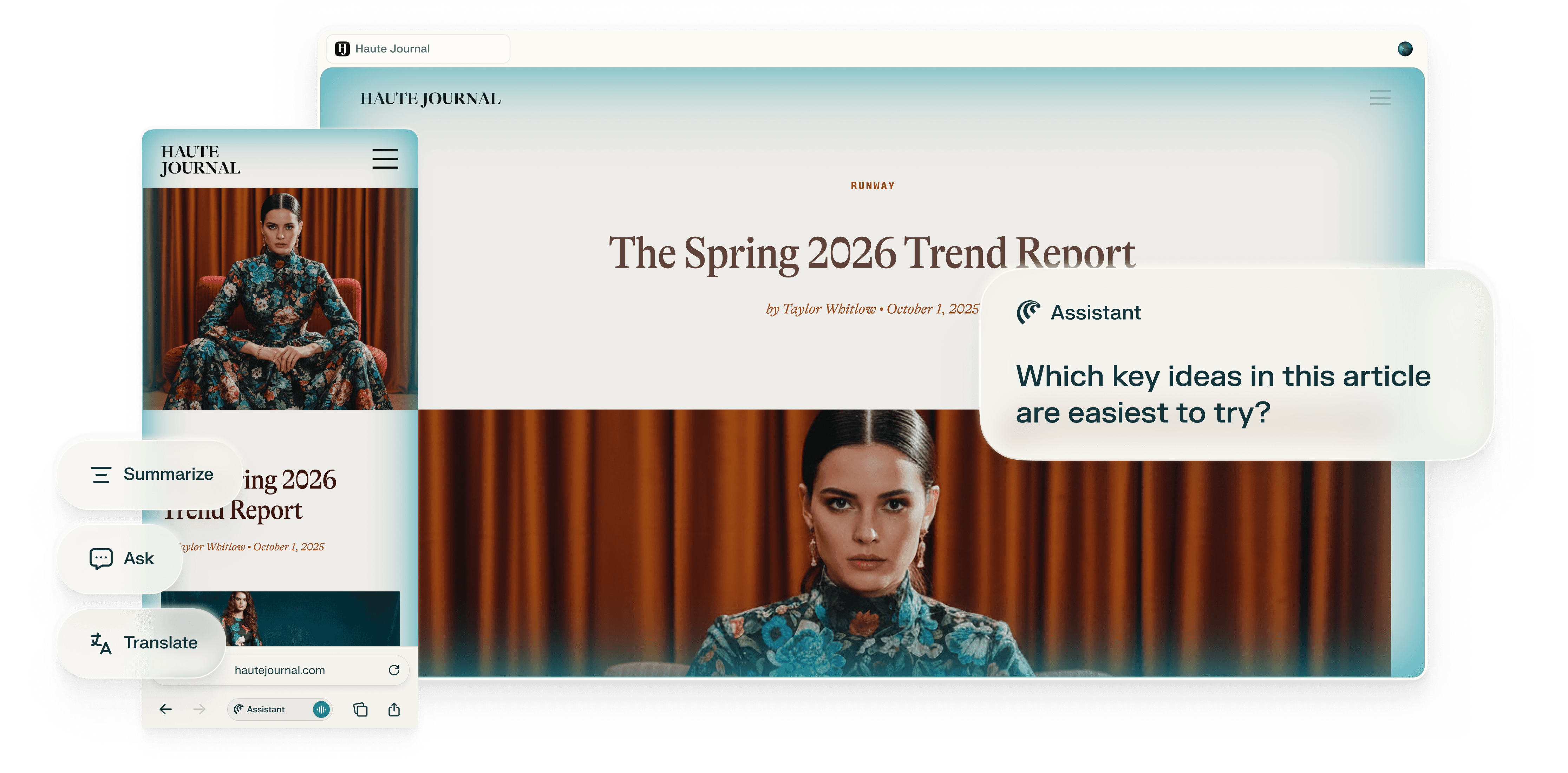
The feature that genuinely separates Perplexity from ChatGPT and Claude as a research assistant is Comet, a Chromium-based browser with Perplexity's assistant built into every tab. Comet launched in July 2025 as a Max-subscriber exclusive (at the time, Max cost $200/month), then went free for everyone worldwide on October 2, 2025. It's currently available on Mac, Windows, iOS and Android.
Inside Comet, the assistant sits in a sidecar panel that can summarize the page you're on, answer questions about it, and hold a research thread that persists across tabs — so a multi-tab research session doesn't reset every time you switch sites. Paid tiers add an agentic layer: Comet can take actions on your behalf, like comparing prices across retailer tabs, filling out forms, drafting and scheduling email replies, and compiling a short brief from several open pages. A "Background Assistant" on paid plans can run several of these multi-step tasks in parallel rather than one at a time, and an email assistant is reserved for Max subscribers. Neither ChatGPT nor Claude ships a full consumer browser with this level of direct, in-page DOM access; both instead add search and limited agent/browsing tools on top of a chat interface. For a broader look at how tool-calling and agent actions are standardized across AI products, see our explainer on Model Context Protocol and why it matters — it's the kind of plumbing that lets assistants like these take real actions instead of just answering questions.
Deep Research, three different ways
All three companies now ship a "deep research" style mode, but they built it differently and at different times.
Perplexity's Deep Research runs an iterative, agentic loop: it searches, reads what it finds, decides what's still missing, and searches again — often dozens of individual searches across many sources — before compiling a single cited report in a few minutes. Reports can be exported as PDFs or published as a shareable Perplexity Page.
ChatGPT's Deep Research, which OpenAI introduced as an agentic capability built on the same reasoning techniques behind its o-series models, independently browses the web, reads files, runs Python for analysis, and can take 10 to 30 minutes on genuinely complex questions, returning a fully cited report with a reasoning summary attached. OpenAI expanded access and set tiered monthly quotas after launch, with the deepest allowance reserved for Pro subscribers and lighter allowances on Free, Go and Plus.
Claude's Research mode takes a lighter-weight approach by design: Anthropic's own framing is that it runs multiple sequential web searches and returns a synthesized, cited answer in under a minute in typical use, trading some of the exhaustiveness of ChatGPT's deepest research runs for speed. Research launched as an early beta limited to Max, Team and Enterprise plans alongside a new Google Workspace connector (Gmail, Calendar, Docs), and Anthropic's current pricing page now lists Research as included on the Pro plan as well, not just the higher tiers.
How ChatGPT handles everyday search
ChatGPT's web search (distinct from Deep Research) launched October 31, 2024, expanded to all logged-in users by mid-December 2024, and became available to everyone — no account required — by February 2025. It decides on its own when a query needs fresh web data, or you can trigger it manually, and answers come with inline, clickable source links plus a dedicated sources sidebar. OpenAI also built in partner integrations for categories like weather, stocks, sports, news and maps, and search now works across chatgpt.com, the desktop and mobile apps, and a Chrome extension.
As of 2026, OpenAI's plan lineup for individuals runs Free, Go, Plus and Pro, with Pro itself split across usage tiers that stretch up toward roughly $200 a month for the most generous allowance. Deep research quotas scale up through that same ladder: Free and Go get a handful of queries a month, Plus gets a noticeably larger monthly allowance, and Pro gets the deepest quota, paired with OpenAI's top reasoning model for the most demanding research tasks. Business and Enterprise plans draw from shared, admin-managed usage pools instead of a fixed per-seat quota, which matters if your research needs come in bursts rather than a steady daily trickle.
How Claude handles everyday search
Claude's web search rolled out March 20, 2025, first to paid US users, and became available globally on every Claude plan — including Free — by May 27, 2025. Rather than returning raw results, Claude synthesizes relevant sources into a conversational answer with direct citations you can click through to verify. It's a toggle in settings rather than a separate mode, and it runs on whichever Claude model you're already chatting with. Anthropic positions it for the kind of work Perplexity has always targeted — market research, literature reviews, competitive comparisons — just delivered inside the same chat window you use for everything else, rather than a dedicated search-first interface.
Claude's Research mode also pairs with Anthropic's Google Workspace connectors, letting it pull in your own Gmail threads, Calendar entries and Docs alongside the open web when it builds an answer — something neither Perplexity nor ChatGPT's consumer search offers in quite the same native form. That combination is aimed less at open-web discovery and more at grounding an answer in both public sources and your own private context in one pass, which is a meaningfully different job than what Comet or Deep Research are built to do.
Pricing and plans compared
All three companies price search and research features differently across their tiers. Perplexity bundles search tightly into Free, with heavier research and the full Comet feature set unlocked by paid tiers; OpenAI and Anthropic both now include at least some web search on their free tiers too, with deep research capacity as the thing you actually pay to expand.
| Plan | Price | Web search | Deep research | Browser / agent |
|---|---|---|---|---|
| Perplexity Free | $0 | Unlimited basic search, cited | Limited daily allowance | Comet (free, all users) |
| Perplexity Pro | $20/mo ($200/yr) | Unlimited, multi-model picker | Expanded daily allowance | Comet + sidecar agent actions |
| Perplexity Max | $200/mo ($2,000/yr) | Unlimited, earliest model access | Highest allowance + Labs | Comet + Background Assistant, email assistant |
| ChatGPT Free | $0 | Yes, limited | ~5 queries/month | No dedicated browser |
| ChatGPT Plus | $20/mo | Yes | Expanded monthly quota | Agent/browsing tools in-app |
| ChatGPT Pro | Up to ~$200/mo | Yes | Highest monthly quota (GPT-6 Astra) | "Dot" always-on agent |
| Claude Free | $0 | Yes, all plans | Not included | No dedicated browser |
| Claude Pro | $17–$20/mo | Yes | Research mode included | Claude Code, Workspace connectors |
| Claude Max | From $100/mo | Yes | Research mode, higher limits | 5x–20x Pro usage, priority access |
The practical read: if search and research are your primary use case and you want a dedicated browser experience with agentic actions, Perplexity's free tier already does more out of the box than ChatGPT's or Claude's free tiers. If you want the single deepest, most exhaustive research report and don't mind waiting half an hour, ChatGPT Pro's Deep Research quota is the largest of the three. If you want a fast, cited answer without switching tools or thinking about which "mode" to use, Claude's always-on web search is the least friction. For the full breakdown of what every tier from all three companies (plus Gemini) actually includes, see our wider plan-by-plan guide to every ChatGPT, Claude and Gemini plan and price.
Citations and trust: who shows their work
All three now cite sources, but the defaults differ. Perplexity has always put inline citation numbers directly in the answer by default, a format carried over from its original search-engine positioning. ChatGPT surfaces clickable source links plus a separate sources sidebar you can expand. Claude's citations appear as clickable references inline in the synthesized answer, letting you fact-check without leaving the conversation. None of the three publish independent, third-party-audited accuracy benchmarks for citation correctness, so treat all of them — including whichever one you currently prefer — as a starting point for verification rather than a final source, especially for anything you'd publish or cite yourself.
Which one should you actually use
If your work is genuinely search-shaped — comparing products, tracking a fast-moving story, building a sourced brief, or wanting an assistant that can act on tabs you already have open — Perplexity's free tier and Comet browser are purpose-built for that and cost nothing to try. If your work is closer to open-ended analysis, code, or writing with occasional fact-checking needs, ChatGPT or Claude's built-in search covers most of what you'll actually use day to day, and you avoid adding a fourth app or browser to your workflow. Heavy, exhaustive research projects — a literature review, a competitive landscape document, a due-diligence packet — are where ChatGPT's Deep Research quota (on Plus or Pro) earns its keep, while Claude's faster Research mode suits people who want a sourced answer without stepping away from their existing chat. If you're also weighing Claude against other general-purpose assistants rather than search specifically, our comparison of Claude vs. Grok vs. ChatGPT covers that ground.
What next
Perplexity, OpenAI and Anthropic are all still actively shipping changes to search and research features, so the gaps here will keep narrowing. Perplexity's near-term roadmap leans into Comet's agentic actions and expanding Labs; OpenAI continues raising Deep Research quotas and tying its top reasoning model to search; Anthropic has been steadily pushing Research down from Max-only toward Pro and Free. The most useful next step is simple: try the free tier of whichever one matches how you actually search — a dedicated browser experience (Perplexity), an open-ended assistant with occasional deep dives (ChatGPT), or search that stays inside a single ongoing conversation (Claude) — before paying for any of them.
Frequently asked questions
Is Perplexity's Comet browser actually free?
Yes. Comet launched in July 2025 as a $200/month Perplexity Max exclusive, then Perplexity made it free for everyone worldwide on October 2, 2025. It's available on Mac, Windows, iOS and Android, with paid tiers unlocking extra agentic features like the Background Assistant.
What's the difference between Perplexity's Deep Research and ChatGPT's Deep Research?
Both run an agentic, multi-step search loop and return a cited report, but ChatGPT's version can take 10 to 30 minutes on complex questions and is gated by monthly quotas that scale with your plan, while Perplexity's typically compiles a report in a few minutes and can be exported as a PDF or shared as a Perplexity Page.
Does Claude have a dedicated search engine like Perplexity?
No. Claude adds web search and a faster Research mode as features inside its regular chat interface rather than as a standalone search product or browser. Web search is available on every Claude plan including Free; Research is included starting on the Pro plan.
Which one is cheapest for research-heavy use?
Perplexity's free tier includes unlimited basic cited search plus the free Comet browser, which is hard to match. For the deepest individual research reports, ChatGPT Plus ($20/month) or Claude Pro ($17-$20/month) are cheaper entry points than Perplexity Max or ChatGPT Pro at up to $200/month.
Can I choose which AI model answers my question inside Perplexity?
Yes, Perplexity Pro and Max subscribers get a model picker that can route a query to different frontier models, in addition to Perplexity's own Sonar models, rather than being locked into one house model.
Is Perplexity more accurate because it always shows citations?
Citations make answers easier to verify, but none of the three companies publishes an independent, third-party-audited accuracy benchmark for citation correctness. Treat citations from Perplexity, ChatGPT, and Claude alike as a starting point to check, not a guarantee of accuracy.
Sources
- Perplexity - Comet browserperplexity.ai
- Perplexity API documentation - Pricingdocs.perplexity.ai
- OpenAI - Introducing deep researchopenai.com
- OpenAI - ChatGPT pricingopenai.com
- Claude (Anthropic) - Pricingclaude.com
- Claude (Anthropic) - Claude can now search the webclaude.com
Theo Park runs the AI desk at Pandromeda. He follows model launches from the frontier labs and the open-weight community, tracks the assistants and developer tools built on them, and explains what each release changes on pricing, capability and safety. His reporting leans on primary sources: model cards, technical reports, API documentation and the companies' own announcements.