Tesla Optimus vs Figure 03 vs Unitree G1: Which Wins in 2026?
Tesla Optimus and Figure 03 remain unpriced prototypes; Unitree's G1 is the only humanoid robot of the three you can buy today.
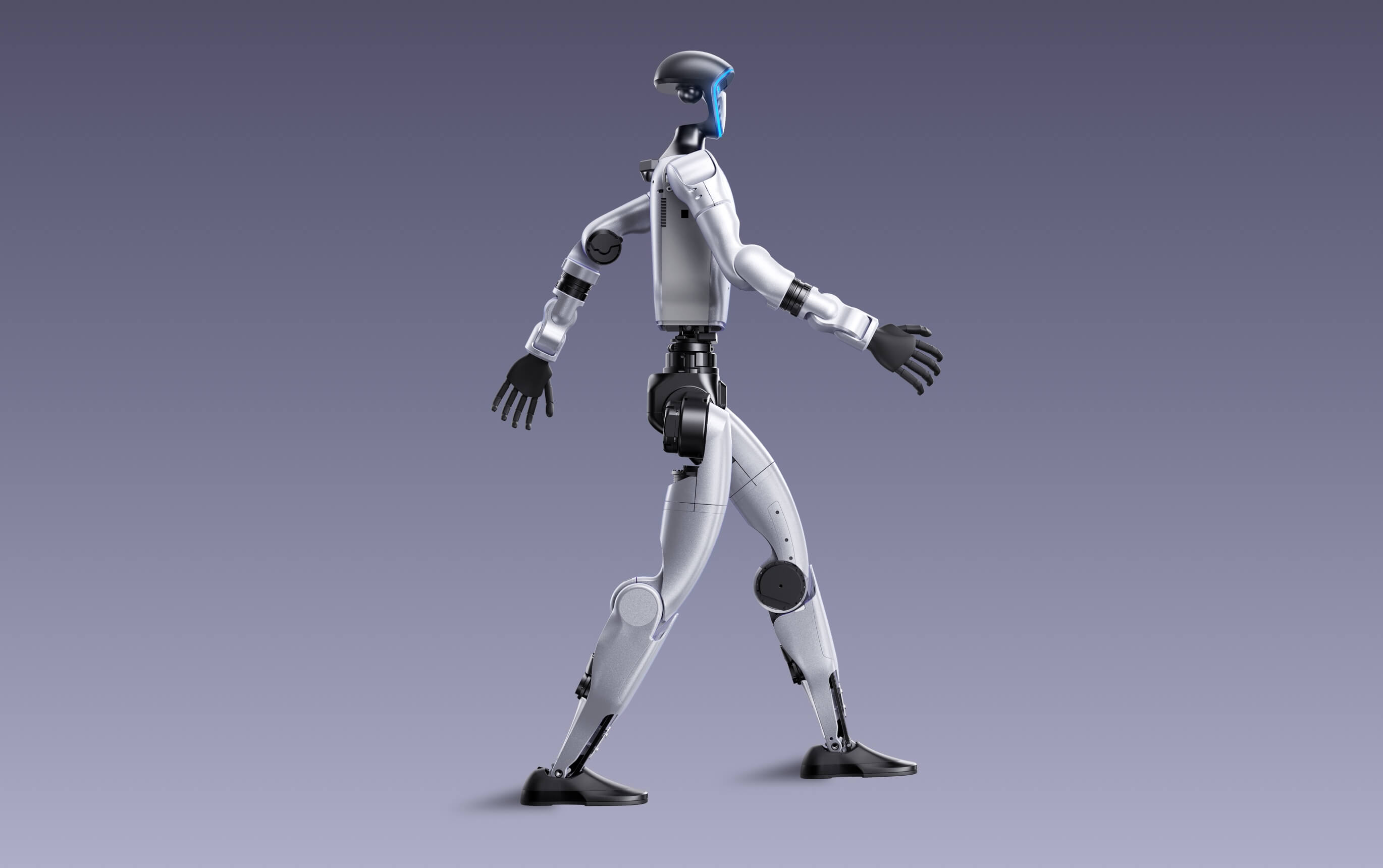
If you need a short answer: nobody can buy a Tesla Optimus or a Figure 03 today, and both companies' own published materials stop well short of a full spec sheet or a price tag. The Unitree G1 is the only one of the three you can actually order right now, starting at $13.5K before tax and shipping according to Unitree's own G1 product page. For hobbyists, researchers, and developers who want a working humanoid in 2026, that makes the G1 the only realistic purchase — Optimus and Figure 03 are still, by their own makers' accounts, pre-commercial systems being built out for factories, homes, and pilot deployments rather than sold off a shelf.
The three robots, in one paragraph each
Tesla Optimus is Elon Musk's bet that the same "real-world AI" stack Tesla uses for driving can be taught to walk, grip, and work. Tesla has talked publicly, including on earnings calls, about moving from hand-built prototypes toward dedicated production lines, and about a long-term ambition to sell Optimus at consumer-friendly prices. None of that is the same as a published spec sheet or an order page, and at the time of writing Tesla's own Optimus pages were not reachable for direct verification, so this article instead points to Tesla's official YouTube channel and the Wikipedia entry on Optimus — which cites Tesla's own public statements and filings — rather than repeating unverified third-party numbers as fact.
Figure 03 is Figure AI's third-generation humanoid, introduced on October 9, 2025, and explicitly positioned around its Helix AI system, home use, and manufacturing scale. Figure's own announcement says the robot is 9% lighter and has significantly less volume than Figure 02, ships with wireless inductive charging through coils in its feet, and is built on a new BotQ production line Figure says is designed for up to 12,000 robots a year, with a goal of 100,000 over the next four years.
Unitree G1 is the practical option: a sub-1.3-meter, roughly 35 kg humanoid that Unitree sells today, starting at $13.5K for the base configuration, with a higher-spec G1 EDU version available by quote for research and development customers. It is the one robot in this comparison with a public price, a listed spec sheet, and a real purchase path.
Tesla Optimus vs Figure 03 vs Unitree G1: spec comparison
| Spec | Tesla Optimus | Figure 03 | Unitree G1 |
|---|---|---|---|
| Price | Not publicly sold; no official price published by Tesla | Not publicly sold; no price disclosed by Figure AI | From $13.5K (base), tax and shipping excluded; G1 EDU is quote-only |
| Height / weight | Not published in current official materials | Not disclosed; Figure states only that it is 9% lighter than Figure 02 | ~1.32 m standing (0.69 m folded); ~35 kg with battery |
| Degrees of freedom | Not published in current official materials | Not disclosed in the Figure 03 announcement | 23 total (G1); up to 43 on G1 EDU with optional hands/wrists/waist joints |
| Battery / charging | Not published in current official materials | Wireless inductive charging via foot coils, 2 kW; runtime not disclosed | ~2 hours typical use; 13-cell, 9000 mAh quick-release pack, 54V 5A charger |
| Status / availability | Pre-production; no retail availability confirmed by Tesla | Announced Oct. 2025; BotQ line designed for up to 12,000 units/year, goal of 100,000 over 4 years; not sold publicly | On sale now direct from Unitree (base and EDU configurations) |
| Primary use case | Factory tasks now; home-assistant ambitions stated by Tesla long-term | Home help and commercial fleets (customizable uniforms, fleet-ID side screens) | Research, education, developer platforms, competitions (RoboCup, boxing), inspection, fire-rescue pilots |
Rows marked "not published" or "not disclosed" are not gaps in this article's research — they reflect what Tesla and Figure AI have and have not put on their own sites and in their own announcements as of this writing. Any number you see elsewhere attached to Optimus height, weight, or degrees of freedom is coming from a conference demo, a leaked image, or secondhand reporting, not from a current, citable Tesla spec page, and conflicting figures are common for exactly that reason.
Price and availability: the gap that actually matters
This is where the three robots stop being comparable in any direct sense. Unitree publishes a real price — "from $13.5K" on its own G1 product page — and sells the robot through its own store and resellers today. That single fact is probably the most search-relevant difference between these three machines in 2026: if the question is "which humanoid robot can I buy," the answer is Unitree, full stop.
Figure AI has never listed a price for Figure 03 and does not sell it as a consumer or small-business product; its public materials describe BotQ as a manufacturing scale-up, not a storefront. Tesla has likewise not published a retail price for Optimus. Public remarks by Musk about a future $20,000–$30,000 range have circulated widely in the press, but they are statements, not listed prices, and this article is not treating them as confirmed Tesla pricing because they could not be verified against Tesla's own current materials.
Hands, actuators, and dexterity
Figure's own announcement puts real emphasis on the hands: each hand has an embedded palm camera, fingertip sensors that can detect forces as small as three grams, and actuators Figure says run up to twice as fast as Figure 02's, with better torque density. That's a manipulation-first pitch, consistent with Figure's home-chores framing (folding laundry, loading dishwashers, and similar tasks have been demonstrated in Figure's own video content).
Unitree's dexterity story is more modular: the base G1 ships without a dedicated multi-finger hand in its lowest configuration, while the G1 EDU can add an optional three-fingered hand contributing up to seven additional degrees of freedom, plus optional wrist joints — which is how Unitree gets from 23 degrees of freedom on the base unit to as many as 43 on a fully optioned EDU unit. Tesla has shown hand concepts at public events, including hand systems with double-digit degrees of freedom in various demos, but because current, dated specs aren't available on Tesla's own site at the time of writing, this piece can't responsibly give you an exact, current DOF count for Optimus's hands.
The AI stack behind each robot
Figure's software identity is Helix, which the company frames as the system that lets Figure 03 operate in unpredictable home environments rather than the controlled layouts of a factory floor. Unitree's G1 runs on what the company calls UnifoLM, described as a "Unified Robot Large Model" robot world model, combined with imitation and reinforcement learning and over-the-air software updates; Unitree also points EDU buyers at an open-source resource hub and its GitHub repositories for secondary development. Tesla has tied Optimus's software lineage to the same "real-world AI" approach it uses for its driving software, a connection the company has made in its own public AI and robotics messaging, though specific current software documentation for Optimus was not accessible on tesla.com during this article's research. For a sense of how the broader humanoid-AI stack landscape is moving, Nvidia's new GR00T 2 robot AI model and Google DeepMind's Gemini Robotics 2.5 are two of the more significant general-purpose efforts competing to become the "brain" underneath robots like these.
Manufacturing scale: the quiet differentiator
Specs and prices get the headlines, but manufacturing capacity is arguably the more honest signal of how close each company is to real-world deployment. Figure AI is the most specific of the three on this point: its own announcement states that the first-generation BotQ line is designed for up to 12,000 robots a year, with a stated four-year goal of 100,000 units, and that critical systems are produced in-house under a custom manufacturing-execution system with full traceability. That's a company talking about factory throughput, not just robot capability.
Unitree's manufacturing story is less about scale-up drama and more about an already-running production operation — the G1 has been shipping to customers since 2024, and Unitree sells multiple humanoid and quadruped lines alongside it, which is part of why it can quote a firm price today instead of a roadmap. Tesla's public commentary has pointed at far larger eventual volumes, including figures in the range of a million units a year once Optimus production matures, but — consistent with the rest of this comparison — current, citable production-line details were not available from Tesla's own materials at the time of writing, so treat any specific Optimus production-volume figure you encounter as a forward-looking claim rather than a confirmed status.
Autonomy vs teleoperation: a live debate
A recurring theme in public commentary around all three companies is how much of what's shown in demo videos is autonomous versus remotely operated by a human. This has been a particularly visible question around Tesla's public Optimus demonstrations, where observers and journalists have repeatedly raised teleoperation as a possibility; Tesla itself has not published a detailed autonomy breakdown that would settle the question either way in the materials available for this article. Figure and Unitree face a lighter version of the same scrutiny, since humanoid robots across the industry commonly use some mix of pre-programmed behaviors, teleoperation, and increasingly capable learned policies (Helix for Figure, UnifoLM for Unitree) depending on the task and the setting. The practical takeaway for buyers and researchers is the same regardless of brand: ask specifically what proportion of a demonstrated task was autonomous before treating any humanoid robot video as a measure of real-world capability.
Which one should you actually buy or bet on in 2026?
If you're a developer, researcher, educator, or well-funded hobbyist who wants a humanoid robot you can take delivery of this year, the decision is simple: the Unitree G1 is the only one of the three with a public price and an actual purchase path, and the EDU tier adds the secondary-development support most serious projects will want.
If you're trying to judge which company is closer to a genuinely useful, AI-driven home or commercial humanoid, the honest answer is that neither Tesla nor Figure has shipped a publicly priced product yet, so you're evaluating roadmaps and manufacturing claims rather than finished goods. Figure's BotQ numbers (up to 12,000 units a year on its first line, a goal of 100,000 over four years) are the most concrete production commitment either company has put in writing. Tesla's ambitions are larger in scale — Musk has talked about eventual annual production in the millions — but the company's own current public materials don't yet give an outside reader a verifiable spec sheet or price to check those ambitions against.
In short: buy the G1 if you want a robot today; watch Figure 03 if you're interested in the home-robotics race specifically; and treat anything you read about Optimus pricing or specs as provisional until Tesla itself publishes it.
What to watch next
Three things will reshape this comparison fastest. First, any Tesla disclosure of a current Optimus spec sheet or price — on tesla.com, in an SEC filing, or at an earnings call — would immediately make the Tesla column of the table above fillable with primary-sourced numbers. Second, Figure AI moving from "introducing Figure 03" to an actual priced pilot or sale would change the "not disclosed" row for pricing. Third, watch the broader AI-model layer: as general-purpose robot AI models from outside players mature, the gap between these three companies may be decided less by hardware specs and more by whose software stack actually works reliably in a real kitchen or warehouse. That's also why developments in general-purpose robot AI models like GR00T 2 are worth tracking alongside the hardware headlines.
Frequently asked questions
Can I buy a Tesla Optimus robot right now?
No. As of November 2026, Tesla has not published a retail price or an order page for Optimus, and the company's own public materials describe production lines still ramping rather than a finished consumer product.
How much does the Unitree G1 cost?
Unitree's own G1 product page lists a starting price of $13.5K for the base configuration, excluding tax and shipping. The higher-spec G1 EDU version is priced by contacting Unitree's sales team.
Is Figure 03 for sale?
Not publicly. Figure AI's October 2025 announcement introduces Figure 03's design and its BotQ manufacturing line but does not list a price or a purchase option for the robot.
Which humanoid robot has the most degrees of freedom?
Unitree publishes exact figures: 23 degrees of freedom on the base G1, rising to as many as 43 on a fully optioned G1 EDU. Tesla and Figure AI have not published current, exact degrees-of-freedom counts for Optimus or Figure 03.
What is Figure 03's BotQ facility?
BotQ is Figure AI's in-house manufacturing line, which the company says is designed for up to 12,000 robots a year initially, with a stated goal of building 100,000 robots over four years.
Is Tesla Optimus's hardware finalized?
Tesla has discussed a next hardware generation publicly, but at the time of writing the company had not published a current spec sheet confirming a finalized design, so treat specific generation details found elsewhere as unconfirmed.
Sources
- Unitree — G1 product pageunitree.com
- Figure AI — Introducing Figure 03figure.ai
- Figure AI — official sitefigure.ai
- Tesla — official YouTube channelyoutube.com
- Wikipedia — Optimus (robot)en.wikipedia.org
- Unitree Robotics — official GitHubgithub.com
Theo Park runs the AI desk at Pandromeda. He follows model launches from the frontier labs and the open-weight community, tracks the assistants and developer tools built on them, and explains what each release changes on pricing, capability and safety. His reporting leans on primary sources: model cards, technical reports, API documentation and the companies' own announcements.