Replit vs Lovable: Pricing, Features and Which to Choose
Replit and Lovable are both AI app builders that turn plain-language prompts into working software. Here is how their pricing, credits and features compare in 2026.
Replit and Lovable are both AI app builders: tools that turn a plain-language description into a working piece of software, rather than requiring you to write code line by line. Replit's entry plan, Core, costs $20 a month ($18 billed annually) and bills on hours of Agent chat plus model credits, while Lovable's paid plans run on a single shared credit balance that covers building, hosting and the AI features inside the apps you ship, according to each company's own pricing page and pricing page. The short version: Replit leans toward builders who want a full cloud workspace and eventual code control, while Lovable leans toward people who want a fast, chat-first path from idea to a deployed web app, with Git sync available when you need to hand the code to developers.
Both products sit in the same emerging category — sometimes called "vibe coding" — but they are not identical tools wearing different skins. This guide walks through what each one actually charges, what you get for it, and which approach fits different kinds of projects.
- Replit's paid tiers start at Core, $20/month ($18/month billed annually); Pro is $100/month ($90/month billed annually); Enterprise is custom.
- Lovable's plans are Free, Pro, Business and Enterprise, priced on a shared credit balance rather than per seat — see lovable.dev/pricing for current credit-tier pricing.
- Replit Agent can propose a task plan before touching code ("Plan Mode") and saves rollback checkpoints as it works.
- Lovable apps sync to GitHub, GitLab or Bitbucket through Git sync, and new work can be tried in isolated "drafts" before publishing.
What is an AI app builder, and how is it different from a coding agent?
An AI app builder takes a natural-language prompt — "build me a client portal with login and a billing page" — and produces a working application: frontend, backend, database and often hosting, in one step. That is different from AI coding agents and AI-native editors such as Cursor or Windsurf, which sit closer to a traditional IDE and assist a developer who is already writing code inside a codebase. If you want the broader picture of how that category works, our explainer on how agentic coding agents work covers the mechanics that both styles of tool build on. Replit and Lovable both describe themselves in builder terms: Replit says its Agent "writes the code, refines it, and helps you publish it," while Lovable calls itself "an AI software engineer, which enables anyone to build for the web" by chatting rather than coding.
Replit pricing: Core, Pro and Enterprise
Replit's pricing page lists three plans, with no $0 tier currently shown. Core is the entry point; Pro adds more usage and team features; Enterprise is quote-based for larger organizations.
| Plan | Price | What's included |
|---|---|---|
| Core | $20/month, or $18/month billed annually | Up to 30 hours of chat on Free Mode; up to 60 projects on Free Mode; $20 toward more powerful models; unlimited workspaces; AI integrations |
| Pro | $100/month, or $90/month billed annually | Everything in Core, plus more Free Mode usage; $100 toward the most powerful models; premium support; up to 15 collaborators; database rollback up to 28 days; $100 in credits |
| Enterprise | Custom | SSO, SCIM and audit logs; advanced privacy controls; centralized security management; single-tenant and private networking options; dedicated premium support |
Replit's own description of Free Mode is important here: it is usage within your plan's allowance that resets on a schedule, while heavier tasks can run in paid Power or Max modes that draw down the dollar credits bundled into Core and Pro. Background tasks are capped — one running at a time on Core, up to ten on Pro — which matters if you plan to have the Agent work on several parts of a project in parallel.
Lovable pricing: credits instead of seats
Lovable prices its Free, Pro, Business and Enterprise plans around a shared credit balance rather than per-seat licensing. Per the company's own FAQ on its pricing page, credits are spent on three things from one pool: building (sending messages to the AI), running deployed apps on Lovable Cloud, and powering AI features inside the apps you ship. Lovable's billing update post confirms that every plan — including Free — gets 5 build credits a day and 20 Cloud credits a month, with Free capped at a further 4 AI-feature credits a month to try before subscribing.
Building cost depends on the mode and the task. In Default Mode, cost varies with how much work a prompt requires; in Plan Mode it's a flat 1 credit per message. Lovable's pricing FAQ gives concrete examples: asking it to "make the button gray" costs about 0.50 credits, "remove the footer" costs about 0.90 credits, adding authentication costs about 1.20 credits, and generating a landing page with several images and sections costs about 1.70 credits. Unused monthly plan credits expire two months after they're issued, annual plan credits expire a month after the annual period ends, and top-up credits last twelve months — all stated directly on Lovable's pricing page. For exact current Pro and Business monthly prices and credit allotments, Lovable's own pricing page is the page to check, since the figures are served dynamically and can change; the company's FAQ does confirm that Business costs more than Pro for the same underlying per-credit AI and hosting costs, because Business adds team and governance features on top.
| Plan | Who it's for | Credit grants (per Lovable's FAQ) |
|---|---|---|
| Free | Trying Lovable before paying | 5 build credits/day, 20 Cloud credits/month, 4 AI-feature credits/month |
| Pro | Individuals and small teams shipping real projects | 5 build credits/day, 20 Cloud credits/month, plus a monthly plan credit balance (see pricing page) |
| Business | Teams needing governance, SSO and higher usage | Same daily/Cloud grants as Pro, plus a larger plan credit balance and workspace controls |
| Enterprise | Large organizations | Volume-based credit pricing, custom terms |
How Replit Agent actually builds your app
Replit Agent takes a prompt and acts on it rather than just answering questions: it sets up the project, writes code, configures infrastructure, tests its own work and tries to fix problems it finds, according to Replit's own Agent documentation. Before touching anything, Plan Mode lets the Agent propose an ordered task list that you can review, revise and approve first. As it works, it saves checkpoints so you can roll back to an earlier state if a change goes wrong. Replit's marketing page also highlights Intelligent Model Routing, which the company says delivers comparable output quality to its prior Max Mode setup at a 65% lower average cost — a company-reported figure, not an independently verified benchmark.
Replit is built around a broader "workspace" than just one chat thread: more than 100 integrations including OpenAI, Stripe and Google Workspace, built-in authentication, database, hosting and monitoring with no separate setup, and enterprise controls like SSO/SAML and SOC 2 for bigger teams. That positions it as closer to a full development environment with an agent attached, which is one reason its pricing bundles workspace and collaborator features into the paid tiers rather than selling them separately.
How Lovable builds and ships apps
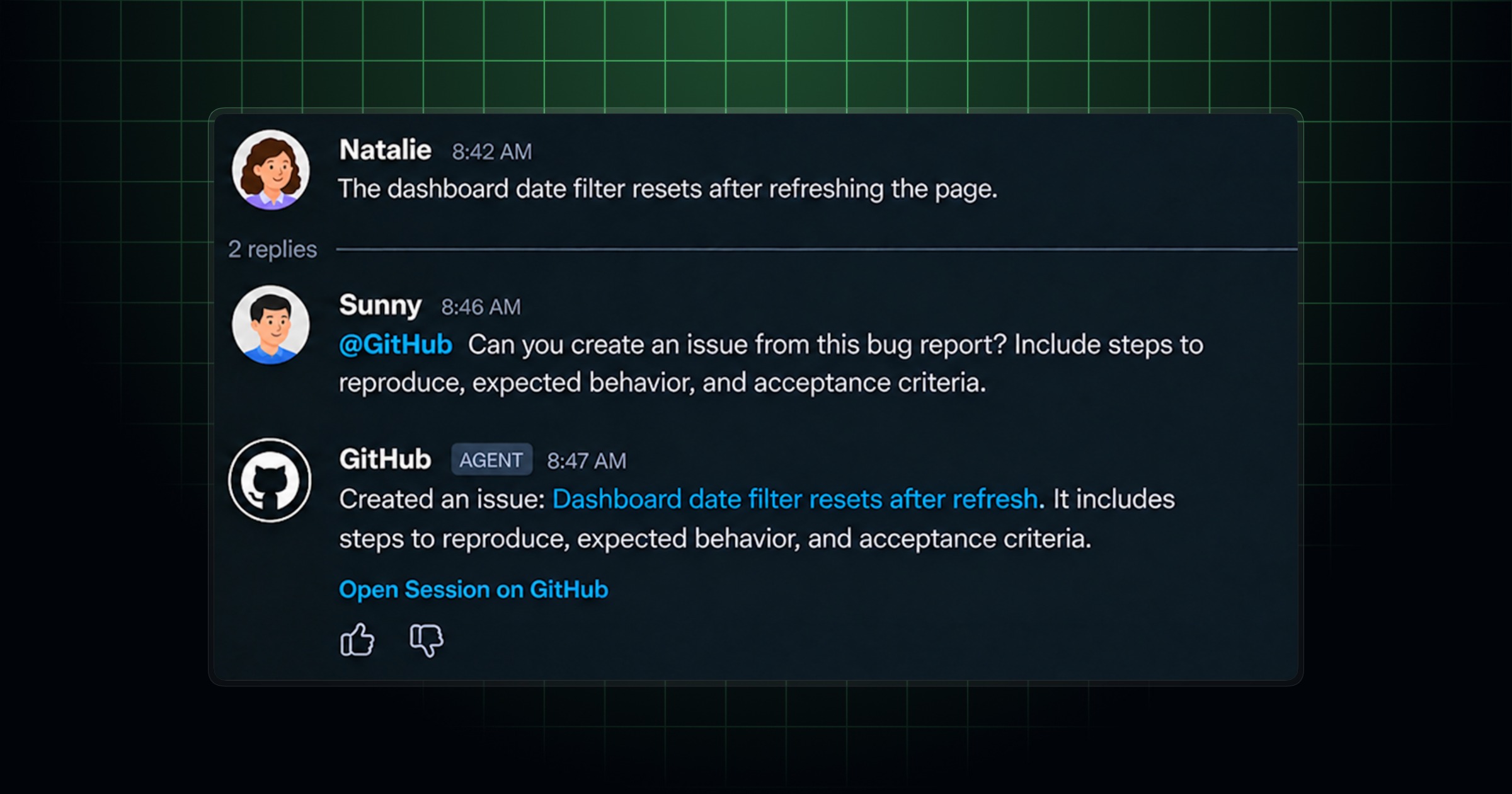
Lovable works through project chat: you describe the app, it generates a full-stack result — frontend, backend, database, authentication and integrations — and you iterate by continuing the conversation, per Lovable's own documentation. Publishing takes the app live on a URL, and when the code needs to move into a team's own pipeline, Git sync pushes it to GitHub, GitLab or Bitbucket. Lovable also ships a desktop app, a mobile app, and ways to drive it from Slack, Telegram, ChatGPT or an MCP server, according to the same documentation.
Two recent features are worth knowing before you pick a plan. "Drafts," announced by Lovable, let you fork a project into an isolated copy with its own chat and preview, so a teammate or client can try changes without touching the live app or its data until the draft is accepted and published — useful if several people are iterating on the same build at once. And Lovable's underlying model has been moving to Fable 5.1, which the company says is tuned for fixing and iterating on apps that are already live, at roughly 31% lower cost than the prior model on hard iterative tasks, though it reports building fully from scratch is roughly on par with, or at high reasoning effort slightly below, the previous model.
Replit vs Lovable: feature comparison at a glance
| Category | Replit | Lovable |
|---|---|---|
| Core workflow | Agent chat inside a full cloud workspace; Plan Mode + checkpoints | Project chat that generates a full-stack app; drafts for parallel iteration |
| Pricing model | Flat monthly/annual tiers (Core, Pro) plus dollar credits toward models | Shared credit balance across building, hosting and in-app AI features |
| Entry price | $20/month ($18/month annual) for Core | Free tier available; paid Pro/Business credit pricing shown on lovable.dev/pricing |
| Collaboration | Up to 15 collaborators on Pro; unlimited workspaces on Core | Shared workspace credit pool; drafts isolate experimental edits |
| Code portability | Projects live in Replit's workspace; code is accessible and exportable | Git sync to GitHub, GitLab or Bitbucket |
| Integrations | 100+ integrations including OpenAI, Stripe, Google Workspace | Connectors for extending apps; MCP server support; Slack/Telegram/ChatGPT access |
| Rollback/safety net | Agent checkpoints; database rollback up to 28 days on Pro | Drafts keep experimental changes off the live app and data until published |
| Enterprise controls | SSO, SCIM, audit logs, single-tenant/private networking | SSO, SCIM provisioning, 2FA, audit logs, workspace roles |
Who Replit fits best
Replit reads as the better fit when you want one workspace that covers building, hosting, databases and collaboration without leaving the product, and when you're comfortable with Agent chat as the primary interface rather than a dedicated chat-first design tool. The ability to run several background tasks at once on Pro, plus 28-day database rollback, suits teams running more than a single build at a time. It's also the more natural pick if you already lean on Replit for general-purpose coding and want app generation in the same place, rather than adopting a second, separate tool. For developers who split time between an agent like this and a traditional AI-assisted editor, our comparison of Google Antigravity vs. Cursor covers how those editor-centric tools price out by contrast.
Who Lovable fits best
Lovable reads as the better fit when the goal is a polished web app — a SaaS tool, internal dashboard, marketplace or prototype — built mostly through conversation, with a free tier to test the workflow before paying anything. The credit-based pricing means cost tracks actual usage rather than a flat seat price, which can suit teams whose build volume varies month to month, though it also means heavy iteration can draw down credits faster than a flat plan would. Drafts make Lovable a reasonable choice for teams where a designer or product manager wants to try changes without risking the live app, and Git sync means the result isn't locked in if a development team later wants to take the code further in a standard repository.
The verdict: which should you choose?
Neither tool is a strict upgrade over the other because they're optimized for different working styles. If you want predictable, flat monthly pricing, a full cloud IDE-like workspace, and tools that extend beyond app generation into general coding and collaboration, Replit's Core or Pro plans are the straightforward starting point. If you want the fastest path from a plain-language idea to a deployed, full-stack web app, with a free tier to test it and usage-based credit pricing that can flex with how much you build, Lovable is the more purpose-built option. Teams evaluating both should start on each product's free or cheapest tier, build the same small project in both, and compare how far a realistic month of prompts goes against Replit's hour/credit allowances versus Lovable's credit balance — since both companies price usage in units that only mean something once you've actually spent them on a real app.
What to do next
Before committing to either platform for a real project, check the current numbers directly: Replit's pricing page for Core/Pro/Enterprise terms, and Lovable's pricing page for the live credit tiers on Pro and Business, since both companies adjust credit allotments and model access over time. If your team is also choosing between AI-assisted editors rather than full app builders, our guide to Claude Code vs. GitHub Copilot covers that adjacent, more developer-centric category.
Frequently asked questions
Is Replit or Lovable cheaper?
Replit's cheapest paid plan, Core, is a flat $20 a month ($18 a month billed annually). Lovable has a free plan with daily build credits, then moves to credit-priced Pro and Business plans; check lovable.dev/pricing for current credit-tier costs, since Lovable bills usage rather than a flat seat fee.
Does Lovable have a free plan?
Yes. Lovable's free plan includes 5 build credits a day (up to 30 a month), 20 Cloud credits a month, and 4 credits a month to try AI features built into your app, according to Lovable's own pricing page.
Does Replit have a free plan?
Replit's current pricing page lists Core, Pro and Enterprise with no $0 tier; Core starts at $20 a month and includes up to 30 hours of Agent chat on Free Mode plus up to 60 projects.
Can I export or own the code Replit or Lovable generate?
Both keep the generated code accessible. Replit projects live in and can be worked with directly in its workspace, while Lovable supports Git sync to push a project's code to GitHub, GitLab or Bitbucket.
What is 'vibe coding' and how does it relate to Replit and Lovable?
Vibe coding describes building software mainly by describing what you want in natural language and letting an AI system generate and refine the code, rather than writing it by hand. Replit and Lovable are both built around that workflow, though Replit frames it through an Agent inside a broader cloud workspace and Lovable frames it through project chat focused on shipping a full-stack web app.
Which is better for a non-technical founder with no coding experience?
Lovable's chat-first workflow and free tier make it easier to try building a first app without any setup. Replit can do the same through Agent chat, but its workspace exposes more of the underlying project (files, databases, deployment settings), which some non-technical users may find busier than Lovable's more guided flow.
Sources
- Replit: Pricingreplit.com
- Replit Docs: Replit Agentdocs.replit.com
- Lovable: Pricinglovable.dev
- Lovable Docsdocs.lovable.dev
- Lovable Blog: Simplifying how billing workslovable.dev
- Lovable Blog: Introducing draftslovable.dev
Felix Moreau writes Pandromeda's software coverage and how-to guides. He covers Windows, macOS and Linux updates, the apps people rely on, emulators and developer tools, and turns official documentation into clear, numbered steps that work on the current version.