What Is 5G Standalone (5G SA)? SA vs NSA Explained
5G SA drops the 4G LTE crutch for a pure 5G core. Here is what that changes for speed and latency, and which carriers and phones actually support it.
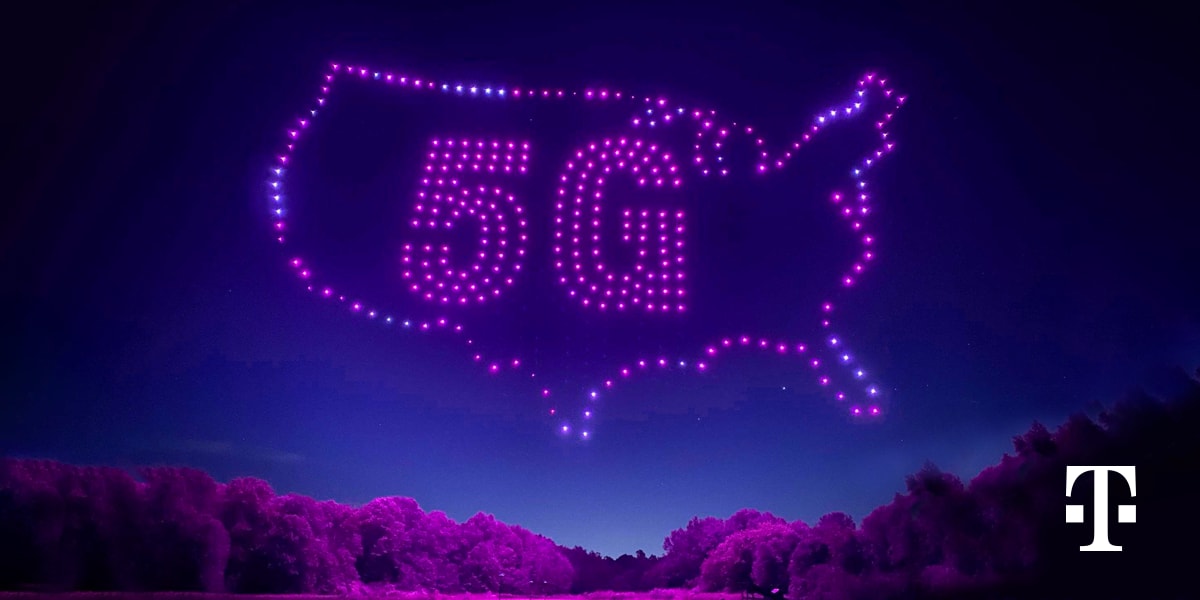
5G Standalone, or 5G SA, is a version of 5G that runs on its own dedicated 5G core network instead of leaning on a carrier's existing 4G LTE infrastructure. Most phones that show a "5G" icon today are actually using 5G Non-Standalone (NSA), which bolts a 5G radio onto a 4G core for data while 4G still handles the control connection. SA removes that 4G dependency entirely, which is what unlocks lower latency, network slicing, and the full set of features 5G was originally designed to deliver. T-Mobile, Verizon, and AT&T have all deployed nationwide or near-nationwide 5G SA networks, and most recent flagship phones already support it.
What Is 5G Standalone (5G SA), Exactly?
The distinction between SA and NSA comes from how a carrier's network core — the back-end system that handles authentication, routing, and session management — talks to the radio towers. The 3GPP, the global standards body that writes the technical specifications every 5G network and phone must follow, finished the first 5G Non-Standalone radio specifications in late 2017 so operators could launch 5G quickly on top of existing 4G equipment. The full Standalone specification followed in Release 15, pairing the new 5G radio with an entirely new 5G core network rather than reusing the 4G one.
In plain terms: NSA is 5G's "training wheels" mode. It uses 4G LTE as an anchor for the control signal (the part of the connection that keeps your phone registered on the network), while 5G handles the actual data transfer for speed. SA removes the training wheels — the phone connects to a 5G radio and a 5G core from end to end, with no 4G layer involved at all.
5G SA vs NSA: The Technical Difference in Plain English
Both modes can deliver fast download speeds, since the radio side is often similar. The difference shows up in latency, reliability, and what new features the network can actually turn on. Here's how the two compare:
| Feature | 5G NSA (Non-Standalone) | 5G SA (Standalone) |
|---|---|---|
| Core network | Relies on the existing 4G LTE core | Runs on an independent, purpose-built 5G core |
| Control signal path | Routed through 4G LTE | Routed entirely through 5G |
| Typical latency | Higher; still bound by 4G signaling | Lower, enabling near real-time responsiveness |
| Network slicing | Not supported | Supported — lets a carrier dedicate virtual network resources to specific uses |
| Voice over New Radio (VoNR) | Not supported (calls fall back to 4G VoLTE) | Supported, once enabled by the carrier and device |
| Rollout speed for carriers | Faster to deploy on top of existing 4G gear | Requires new core infrastructure, slower and costlier to build |
Carriers like NSA for one simple reason: it let them light up 5G radios quickly without replacing their entire network core. SA is the more expensive, more disruptive upgrade, but it's the version of 5G that GSMA Intelligence says "brings home 5G's early promise," according to the organization's head of research Peter Jarich.
Why 5G SA Actually Matters: The Real-World Benefits
SA isn't just a technical checkbox. It's the layer that enables features NSA structurally can't support.
- Lower, more consistent latency — useful for cloud gaming, video calls, and real-time apps, since the signaling path no longer has to loop through 4G.
- Network slicing — a carrier can carve out a dedicated virtual "lane" of network capacity for a specific use, such as public safety traffic or a business service, independent of general consumer traffic.
- 5G that doesn't quietly depend on 4G — on NSA, if the 4G anchor signal is weak, your "5G" connection degrades too. SA removes that bottleneck.
- Full use of mid-band and mmWave spectrum — advanced carrier aggregation techniques, which combine multiple 5G spectrum channels for higher peak speeds, scale more effectively on an SA core.
- A foundation for 5G-Advanced and future features — ongoing 3GPP standards work (5G-Advanced, Release 18 and beyond) builds on the SA architecture, not NSA.
GSMA Intelligence's February 2024 report put this in numbers: of 261 commercial 5G services live worldwide at the time, only 47 were running on SA networks, with another 89 planned — a sign of how much further the industry still had to go even as carriers claimed 5G milestones.
Which Carriers Have Deployed 5G SA: T-Mobile, Verizon, AT&T
In the U.S., the three national carriers have taken very different paths to SA, and they're at different points in that journey.
T-Mobile moved first. Its own newsroom says it launched what it called the world's first nationwide commercial SA 5G network in August 2020, then expanded it in November 2022 by lighting up its faster, mid-band "Ultra Capacity" spectrum on that SA network nationwide. "We're driving the industry forward with 5G standalone and delivering a level of performance for customers that can't be achieved otherwise," said Neville Ray, T-Mobile's then-President of Technology, in that release. T-Mobile also used its SA network to demonstrate four-carrier aggregation reaching speeds above 3 Gbps, with the Samsung Galaxy S22 among the first devices to support it. Most of that capability runs on T-Mobile's Ultra Capacity 5G tier, which is also tied to specific T-Mobile plan tiers.
Verizon took a slower, more cautious route, repeatedly delaying its SA core migration from an original 2020–2021 target. By 2025, Verizon's newsroom describes its 5G Standalone Core as live and "enhancing network performance, enabling faster speeds and lower latency, and enabling network slicing." Verizon has used that SA core to launch a dedicated network slice for public safety agencies (Frontline) and an enterprise-focused slice, both framed as early, concrete uses of SA-only network slicing.
AT&T moved last among the three. In an October 8, 2025 post on its official blog, AT&T's SVP and Network CTO Yigal Elbaz said the company's "5G standalone network is deployed nationwide, and we are thoughtfully moving customers onto it in select areas every day," adding that "5G Standalone networks have now reached a level of maturity that enables our nationwide expansion." AT&T said the SA buildout applies to its commercial network and is being rolled out region by region as device support and provisioning allow; it does not yet cover the separate FirstNet public-safety network.
| Carrier | SA network status (per carrier's own statements) | Key milestone date |
|---|---|---|
| T-Mobile | Nationwide SA since 2020; Ultra Capacity (mid-band) on SA nationwide | August 2020 (launch); November 2022 (Ultra Capacity on SA) |
| Verizon | SA core live, enabling network slicing (Frontline, enterprise slice) | 2025 newsroom statements; SA core migration after a multi-year delay |
| AT&T | SA deployed nationwide on the commercial network; gradual customer migration by region | October 8, 2025 |
Which Phones and Chipsets Support 5G SA
SA support depends on both the phone's modem chipset and whether the carrier has provisioned that specific device for SA — it's not purely a hardware question.
On the Apple side, Apple's own cellular specifications page lists supported 5G sub-6GHz and, on select models, mmWave bands for recent iPhones, and notes that exact 5G availability depends on your carrier and market. Apple doesn't publish a standalone "SA support" checklist publicly, but SA has been functionally supported on recent iPhone generations as carriers have provisioned it — current iPhones work on T-Mobile's, Verizon's, and AT&T's SA networks where those carriers have enabled it, the same way they already rely on eSIM for carrier provisioning rather than a physical SIM card.
On Android, support comes down largely to the modem. Qualcomm has built SA support into its Snapdragon X-series 5G modems for years — its Snapdragon X55 modem, for instance, is built to support "virtually any combination of spectrum bands and/or modes, including standalone and non-standalone modes." The current flagship Snapdragon X80 modem, used in recent Snapdragon 8-series platforms, extends that with peak download speeds up to 10 Gbps and more advanced carrier aggregation. MediaTek has shipped the same capability on the Android side: its M80 modem, used across Dimensity-series chipsets, was built from the start to run "ultra-fast speeds on both non-standalone (NSA) and standalone (SA) architectures," including mmWave and sub-6GHz carrier aggregation. Recent Samsung Galaxy S-series flagships and Google Pixel flagships both use these Qualcomm or in-house/MediaTek-class modems and are certified by carriers for SA use.
In short: essentially every current flagship — recent iPhones, Samsung Galaxy S-series, Google Pixel, and most Android flagships built on recent Snapdragon or Dimensity chips — has the modem hardware to run 5G SA. Whether it actually does on your line depends on your carrier having provisioned your specific account and device for it.
How to Check or Enable 5G SA on Your Phone
There's no single toggle labeled "5G Standalone" in iPhone or Android settings — SA activation is handled on the network side once your account and device are provisioned, not as a setting you flip yourself. What you can check is which flavor of 5G you're currently on, and adjust how aggressively your phone uses 5G at all.
On iPhone, Apple's own support documentation explains the status bar icons: a plain 5G icon means your carrier's standard 5G network is available; 5G+, 5G UW, 5G UC, or 5GA icons indicate you're on your carrier's higher-frequency, faster 5G tier (Apple notes this applies only in the United States, on iPhones purchased in the United States). Apple also documents the related 5G mode setting under Settings > Cellular > Cellular Data Options > Voice & Data: 5G Auto (the default, which favors battery life), 5G On (always use 5G when available), or LTE (5G off entirely). None of these settings let you force SA specifically — that's carrier-controlled — but they do control whether your phone uses 5G at all.
If you don't see a 5G icon where you'd expect one, Apple's guidance is to confirm with your carrier that your plan includes 5G and that you're in a coverage area, then try toggling Airplane Mode off and on to force the phone to re-register with the network. The same general logic applies on Android: check your carrier's device compatibility and coverage pages, confirm your plan supports 5G, and make sure your software is current, since carriers often push SA provisioning through over-the-air updates rather than a visible setting. If you're troubleshooting dropped calls or coverage gaps while your SA 5G is still being rolled out in your area, Wi-Fi Calling remains a useful fallback regardless of which 5G mode your phone is using.
5G SA, mmWave, and C-Band: How They Fit Together
5G SA and spectrum type (low-band, mid-band/C-band, or mmWave) are separate concepts that often get conflated. SA describes the network's core architecture; mmWave and C-band describe which radio frequencies carry the signal. You can have NSA running on mmWave, or SA running on low-band — the two are independent variables. In practice, though, carriers have paired their SA rollouts with their fastest spectrum: T-Mobile's SA buildout was specifically used to unlock mid-band Ultra Capacity carrier aggregation, and AT&T and Verizon have both described SA as the architecture that lets them extract more performance from C-band and mmWave holdings through more efficient carrier aggregation and network slicing. The practical upshot is that SA tends to show up first, and most reliably, on a carrier's higher-capacity spectrum layers rather than on basic low-band coverage layers.
What's Next for 5G Standalone
With all three major U.S. carriers now reporting nationwide or near-nationwide SA deployment, the next phase is less about building SA and more about using it. Expect more network-slicing products aimed at specific customer segments — Verizon has already shipped a public-safety slice and an enterprise slice on its SA core — along with wider support for Voice over New Radio (VoNR), which eventually lets calls route entirely over 5G instead of falling back to 4G VoLTE. Standards work is also moving forward: GSMA Intelligence reports that more than half of surveyed operators expect to start deploying 5G-Advanced, the next evolution defined in 3GPP Release 18, within a year of it becoming commercially available — and that work builds directly on the SA foundation carriers have spent the past several years laying down. For most users, the practical result will be less about a new feature to seek out and more about steadier, lower-latency 5G that quietly works better in the background.
Frequently asked questions
What is 5G Standalone (5G SA) in simple terms?
5G Standalone is 5G that runs entirely on its own 5G core network, with no reliance on a carrier's existing 4G LTE infrastructure. Most 5G in the U.S. historically ran as 5G Non-Standalone (NSA), which uses 4G to handle the control connection while 5G handles data. SA removes that 4G layer, enabling lower latency and features like network slicing.
What is the difference between 5G SA and 5G NSA?
NSA (Non-Standalone) pairs a 5G radio with the carrier's existing 4G LTE core, so the control signal still runs through 4G. SA (Standalone) uses a dedicated 5G core end to end. SA generally offers lower, more consistent latency and supports features NSA can't, such as network slicing and Voice over New Radio (VoNR).
Does my iPhone support 5G Standalone?
Current iPhone generations have the modem hardware to run 5G SA, and work on T-Mobile's, Verizon's, and AT&T's SA networks where each carrier has provisioned that device and account for it. Apple does not publish a separate public list of SA-certified iPhone models; availability depends on your carrier.
Has Verizon launched 5G Standalone?
Yes. After repeatedly delaying its original 2020–2021 target, Verizon's newsroom describes its 5G Standalone Core as live, citing faster speeds, lower latency, and network slicing. Verizon has used it to launch a public-safety network slice (Frontline) and an enterprise-focused network slice.
Is AT&T's 5G Standalone network nationwide?
AT&T said on October 8, 2025 that its 5G Standalone network is deployed nationwide on its commercial network, with customers being moved onto it gradually, region by region, as device support and provisioning allow. The nationwide SA milestone does not yet apply to AT&T's separate FirstNet public-safety network.
How do I check if I'm connected to 5G SA?
There is no phone setting labeled '5G Standalone.' On iPhone, Apple's status bar icons (5G, 5G+, 5G UW, 5G UC, 5GA) show which 5G tier you're on, but don't distinguish SA from NSA directly. SA activation happens on the carrier's network side once your account and device are provisioned, not through a toggle you control.
Sources
- T-Mobile Newsroom: T-Mobile Lights Up Standalone Ultra Capacity 5G Nationwidet-mobile.com
- AT&T: 5G Standalone network deployed nationwide (official blog, Oct. 8, 2025)att.com
- Verizon Newsroom: Verizon has the best 5G network in Americaverizon.com
- GSMA Intelligence: 5G Momentum Continues, press release on SA and 5G-Advancedgsma.com
- 3GPP: Release 15 specifications (Standalone 5G NR)3gpp.org
- Apple Support: Use 5G with your iPhonesupport.apple.com
Nadia Osei covers mobile and consumer gadgets for Pandromeda: smartphones, tablets, smartwatches, earbuds and smart-home devices. She tracks launches, software updates and pricing across Apple, Google, Samsung and the rest, and builds comparisons from the manufacturers' published specifications.