RTX Spark Laptops Get New AI Models, Agent Tools and Games
NVIDIA details new Nemotron and Liquid AI models, NVIDIA App GPU sharing, and RTX game updates for its $2,599-and-up Spark laptop platform.
- What: NVIDIA says RTX Spark Windows laptops are now shipping from six OEM partners, alongside new local-AI models, agent tools and game updates tied to the platform.
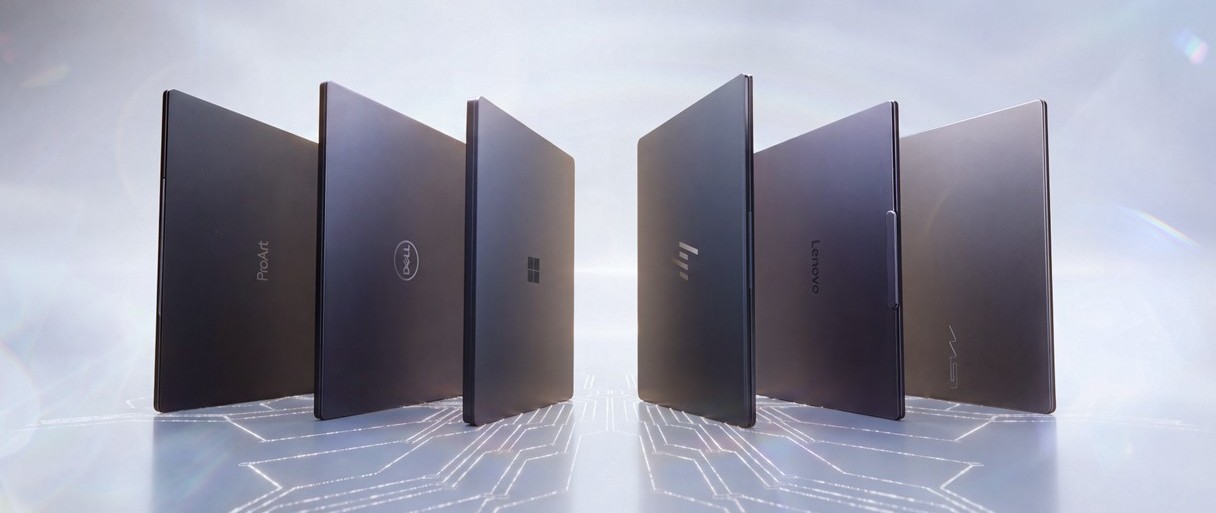
- Partners: ASUS, Dell, HP, Lenovo, Microsoft and MSI all sell RTX Spark laptops today.
- Price: Starting at $2,599; 128GB unified-memory configurations are now on shelves.
- Platform: A single superchip pairing a Blackwell RTX GPU with a Grace CPU, up to 128GB of unified memory shared across GPU and CPU, and up to 1 petaflop of FP4 AI performance.
- Size: As thin as 14mm and as light as 3 lbs, including 2-in-1 convertibles with touchscreens and pen support.
- New this week: NVIDIA Nemotron 3.5 Transcribe and Bolt models, Liquid AI's LFM3 family, Black Forest Labs' FLUX 3 Image Klein, new NVIDIA App GPU-sharing controls, and a 64GB DGX Spark now available from partners.
NVIDIA used an October 28, 2026 blog post to detail the next wave of software and hardware built around RTX Spark, the Windows laptop platform it launched with partners earlier this month. The post, titled "Thin, Light and Built for Everything," doesn't introduce a new chip — it's a status update on a platform that's now fully on shelves, covering pricing and configurations, a batch of new local-AI models, an NVIDIA App update for managing GPU resources between foreground apps and background agents, and a handful of RTX-accelerated game updates.
What is RTX Spark?
RTX Spark is NVIDIA's branding for a class of Windows laptops built around a single superchip that combines a Blackwell-generation RTX GPU with an NVIDIA Grace CPU. The two processors share a pool of unified memory — up to 128GB in the highest configurations — instead of splitting system RAM and dedicated VRAM the way most laptops do. NVIDIA rates the platform at up to 1 petaflop of FP4 AI performance, aimed at running local large language models, image generators and coding agents without a cloud connection. If you want the fuller rundown of how this differs from NVIDIA's desktop DGX Spark box, Pandromeda has covered how Apple's latest MacBook Pro chips stack up on unified memory for comparison, since both platforms now market "unified memory" as a headline spec.
RTX Spark laptop price and availability
According to NVIDIA's post, RTX Spark laptops are available now from six OEM partners: ASUS, Dell, HP, Lenovo, Microsoft and MSI. Pricing starts at $2,599, and NVIDIA says 128GB unified-memory configurations — the top-end tier — are now in stores rather than pre-order only. Microsoft's own Surface Laptop Ultra product page lists the same $2,599.99 starting price and confirms RTX Spark internals, including up to a 20-core Grace CPU, Blackwell RTX graphics, up to 128GB of unified memory, a 15-inch 120Hz touchscreen, and a chassis under 18mm thick and under 4.5 lbs. NVIDIA's blog separately claims laptops "as thin as 14mm" and "as light as three pounds" across the six-brand lineup, meaning the thinnest and lightest configurations come from other partners rather than Microsoft's own device.
RTX Spark specs
| Spec | RTX Spark laptop platform |
|---|---|
| Processor | NVIDIA Grace CPU + Blackwell RTX GPU, single superchip |
| Memory | Up to 128GB unified memory, shared by GPU and CPU |
| AI performance | Up to 1 petaflop FP4 |
| Thickness | As thin as 14mm (varies by OEM) |
| Weight | As light as 3 lbs (varies by OEM) |
| Form factors | Clamshells and 2-in-1 convertibles with touchscreens and pen support |
| Starting price | $2,599 |
| OEM partners | ASUS, Dell, HP, Lenovo, Microsoft, MSI |
NVIDIA frames the memory pool as the platform's core pitch: because GPU and CPU draw from the same 128GB allocation, a single laptop can hold large local AI models in memory while still running creative or gaming workloads. The company's post specifically calls out editing camera-native 4:2:2 video and rendering 3D scenes up to 90GB in size as creator use cases enabled by that shared pool, with Adobe Photoshop and Premiere both gaining native RTX Spark support in beta. For developers, NVIDIA is pitching local CUDA development with what it describes as a path to deploy the same code across more than 150 million RTX AI PCs and cloud GPUs.
Not every OEM has published a full spec sheet yet. Microsoft's Surface Laptop Ultra listing is the most detailed public page Pandromeda could verify at the time of writing, down to port selection (three USB-C/USB4, one USB-A, HDMI, an SD card reader and a headphone jack) and battery-life estimates. Dell's site lists RTX Spark as a filterable graphics and processor option across its laptop lineup, confirming the chip is shipping there too, though a single dedicated Dell RTX Spark product page wasn't available to check directly. Shoppers comparing configurations should expect the usual OEM variation in display size, chassis material and battery life even though the core RTX Spark superchip, 128GB memory ceiling and 1-petaflop FP4 rating are shared across all six brands.
New local AI models for RTX Spark
The bulk of NVIDIA's October 28 post is a software update: five new or newly-supported model families aimed at running locally on RTX Spark hardware rather than in the cloud.
| Model | Maker | What it does | Memory footprint |
|---|---|---|---|
| Nemotron 3.5 Transcribe | NVIDIA | Open-weight speech model for transcription, speaker labeling, translation and audio question answering in 40 languages | ~4.3B active parameters (30B-A4B architecture) |
| Nemotron 3.5 Bolt E4B | NVIDIA | Conversation and multistep local-agent model | As little as 4GB |
| Nemotron 3.5 Bolt 74B-A9B | NVIDIA | Local agent model for more demanding tasks | 24GB |
| LFM3 | Liquid AI | Open-weight family spanning text, vision, audio, omni and decision models on a shared backbone | Varies; new 1.7B base model |
| FLUX 3 Image Klein | Black Forest Labs | Open-weight image generation and editing | Runs on RTX GPUs with 8GB VRAM |
NVIDIA says Nemotron 3.5 Transcribe ranks No. 1 on the Hugging Face Open ASR leaderboard and No. 2 among open-weight models on Artificial Analysis, and supports seven Indic languages among its 40 total. It's available now on Hugging Face, with quantized and NVFP4 versions coming soon; NVIDIA has already published NVFP4 and FP8 variants of the model on its Hugging Face org page. The two Nemotron 3.5 Bolt variants are pitched specifically at the memory-constrained end of the RTX Spark lineup (4GB) and the higher-end configurations (24GB), and both support common local-inference tools including llama.cpp, vLLM, Ollama, Unsloth and LM Studio.
Liquid AI's LFM3 family adds local fine-tuning support via llama.cpp and vLLM, and NVIDIA says a new 1.7B base model in the family outperforms the previous generation's 2.6B base model. Black Forest Labs' FLUX 3 Image Klein is a 5.6B-parameter open image model that NVIDIA says can run on RTX GPUs with as little as 8GB of VRAM, with fine-tuning on RTX Spark supported through an NVIDIA NeMo AutoModel recipe. For readers comparing what local models like these can do versus hosted options, Pandromeda has also looked at how today's flagship cloud models price out, which is a useful contrast to the "runs entirely on your laptop" pitch here.
NVIDIA App resource management and local agents
NVIDIA's post also details a new resource-management feature in the NVIDIA App that lets users split GPU resources between foreground applications and background AI agents, so a local agent running continuously doesn't starve whatever app is currently in focus. The feature requires hardware-accelerated GPU scheduling to be enabled in Windows. NVIDIA names Hermes Agent, Pi and OpenClaw as platforms it expects people to run as local agents on RTX Spark hardware, and separately references new "OpenShell" and "Switchyard" tooling tied to Hermes Agent without detailing what either does in the body of the post. Readers who want background on how local agents retrieve and act on information — a building block behind tools like this — can see Pandromeda's explainer on retrieval-augmented generation.
As a demonstration, NVIDIA describes a "Microduck" robot shown at GTC Berlin, where Hermes Agent and Nemotron 3.5 Bolt plan an obstacle course on RTX Spark hardware, with NVIDIA's Isaac Lab used to train the navigation policy and Isaac Sim used to validate it before deployment on the physical robot.
A 64GB DGX Spark is also now available
Alongside the laptop news, NVIDIA confirmed that a 64GB configuration of its desktop DGX Spark — built on the GB10 Grace Blackwell Superchip and running DGX OS with NVIDIA's AI software stack — is now available for purchase through manufacturer partners. NVIDIA's own DGX Spark product page lists Acer, ASUS, Dell, Gigabyte, HP, Lenovo and MSI as OEM partners for DGX Spark systems generally, though it doesn't specify which of them carry the 64GB configuration specifically. NVIDIA says quantized versions of Nemotron 3.5 Transcribe, along with Nemotron 3.5 Bolt, are both supported on DGX Spark as well as on RTX Spark laptops.
Gaming on RTX Spark
NVIDIA's post says "hundreds of games" now run on RTX Spark hardware with support for DLSS, ray tracing, Reflex and G-SYNC. A handful of specific updates accompanied the post:
- RTX Remix 1.6, released the week before the post, adds DLSS 5 with 3D-Guided Neural Rendering, Multi Frame Generation up to 6x, native RTX Spark support, agent-assisted modding workflows, and a redesigned ComfyUI workflow for generating physically based materials.
- Minecraft: Java Edition 1.21.1 can now be rendered with DLSS-accelerated path tracing through an RTX Remix v0.1.0 release.
- Portal with RTX and the Half-Life 2 RTX demo both gained RTX Spark support, DLSS 5's 3D-Guided Neural Rendering, a new DLSS Frame Generation Performance Mode, and faster path-tracing options.
- Phantom Blade Zero, a separate action game from developer S-GAME, launched the same day (October 28, 7 p.m. PT) on Steam and the Epic Games Store with ray tracing and DLSS 4.5's Dynamic Multi Frame Generation running on RTX Spark hardware — one data point among several in NVIDIA's post rather than the centerpiece of this update.
RTX Spark vs. MacBook Pro: how they compare on paper
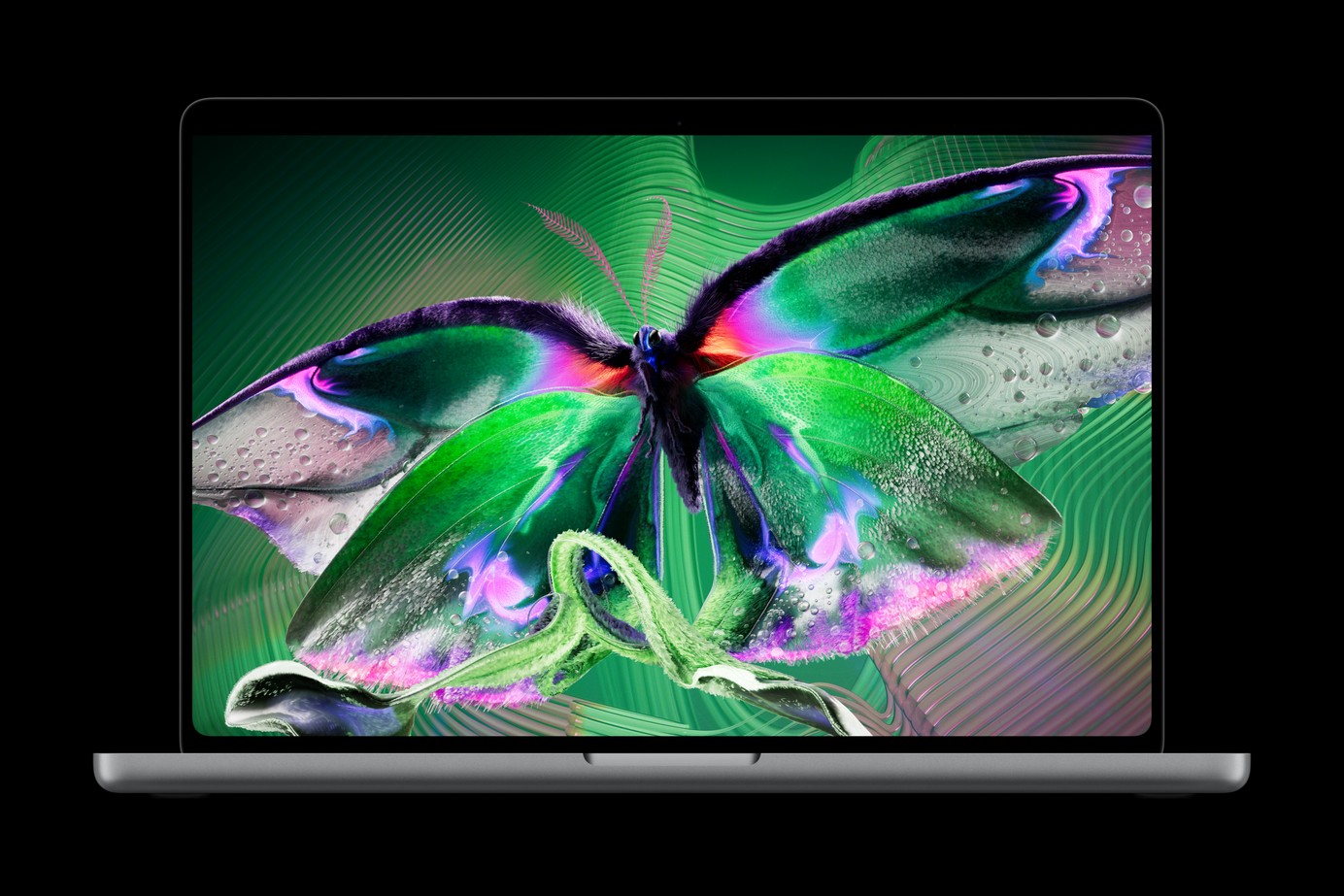
Search interest around RTX Spark laptops consistently includes comparisons to Apple's MacBook Pro lineup, and the two platforms do share one marketing pitch: unified memory shared between CPU and GPU rather than separate system RAM and VRAM pools. Where they diverge is ecosystem and workload focus — RTX Spark is built around CUDA, NVIDIA's AI model stack, and Windows, while MacBook Pro runs macOS and Apple's own Metal and Core ML frameworks. NVIDIA hasn't published head-to-head benchmarks against Apple silicon in this post, and Pandromeda hasn't independently tested either platform, so treat specs as the only fair comparison right now; see Pandromeda's own look at the current MacBook Pro chip lineup for the Apple side of that comparison.
What's next
NVIDIA's post reads as a mid-cycle platform update rather than a new hardware launch: RTX Spark laptops themselves shipped earlier in October, and this round is about filling out the software stack around them — new transcription and agent models, a GPU-sharing feature for the NVIDIA App, and RTX-accelerated updates to a handful of games. Expect NVIDIA to keep adding day-zero model support (it has already done so for Liquid AI's and Black Forest Labs' latest releases) as more OEMs fill out their RTX Spark lineups and as the quantized, lower-memory versions of Nemotron 3.5 Transcribe NVIDIA says are "coming soon" actually ship. Buyers comparing specific configurations should check each OEM's own product page directly, since thickness, weight, display options and port selection vary by brand even though the core superchip, memory ceiling and FP4 performance figures are shared across the platform.
Frequently asked questions
How much do RTX Spark laptops cost?
RTX Spark laptops start at $2,599, according to NVIDIA's October 28, 2026 blog post. Microsoft's Surface Laptop Ultra, one of six RTX Spark laptops, lists the same $2,599.99 starting price on its official product page.
Which brands sell RTX Spark laptops?
Six OEM partners currently sell RTX Spark laptops: ASUS, Dell, HP, Lenovo, Microsoft and MSI. NVIDIA says 128GB unified-memory configurations are now in stores across these partners.
How much memory do RTX Spark laptops have?
RTX Spark laptops offer up to 128GB of unified memory, shared between the Grace CPU and Blackwell RTX GPU rather than split into separate system RAM and VRAM pools.
Is DGX Spark the same thing as an RTX Spark laptop?
No. RTX Spark is NVIDIA's laptop platform, while DGX Spark is a separate desktop AI system. NVIDIA says a 64GB DGX Spark configuration is now available from manufacturer partners, separate from the RTX Spark laptop lineup.
What new AI models were announced for RTX Spark?
NVIDIA's post details five: Nemotron 3.5 Transcribe (an open-weight speech and translation model), two Nemotron 3.5 Bolt local-agent model variants (4GB and 24GB), Liquid AI's LFM3 family, and Black Forest Labs' FLUX 3 Image Klein image model.
Do RTX Spark laptops support gaming?
Yes. NVIDIA says hundreds of games run on RTX Spark hardware with DLSS, ray tracing, Reflex and G-SYNC support, and the post highlights RTX Remix 1.6, Portal with RTX, the Half-Life 2 RTX demo and Minecraft Java Edition path tracing as recent updates.
Sources
- NVIDIA Blog: Thin, Light and Built for Everything — RTX Spark Laptop Updatesblogs.nvidia.com
- Microsoft Surface Laptop Ultra (official product page)microsoft.com
- Dell: RTX Spark laptop listingsdell.com
- NVIDIA DGX Spark (official product page)nvidia.com
- Hugging Face: NVIDIA Nemotron 3.5 Transcribe (FP8)huggingface.co
Mara Lindqvist edits the hardware desk. She covers graphics cards, processors, memory and storage, the foundries and chip designers behind them, and what the numbers on a spec sheet mean for people choosing a PC. Specifications in her stories come from manufacturer spec pages and datasheets.