Googlebook Launches October 4: Where to Buy and What's Included
Google's Android-based laptop line hits US shelves October 4 and six more countries a day later, with Google AI Pro and app bundles included.
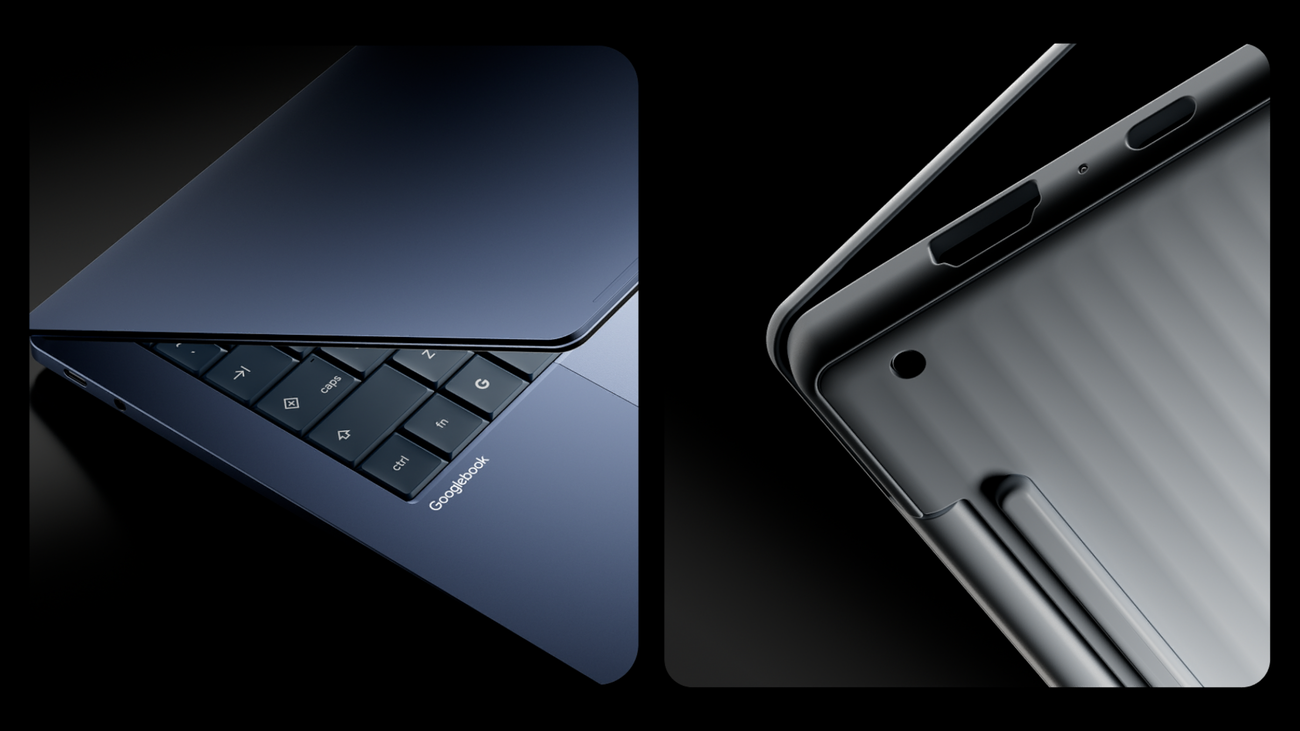
Google's Googlebook laptops go on sale in the United States on October 4, 2026, with Canada, the UK, Ireland, France, Germany and Australia following a day later on October 5, according to Google's own launch announcement. The five launch models — from Acer, ASUS, Dell, HP and Lenovo — move from pre-order to general availability through Google's own Googlebook store and Best Buy in the US, with every purchase bundling a year of Google AI Pro and several months of third-party apps at no extra cost.
- On sale: October 4, 2026 (US); October 5, 2026 (Canada, UK, Ireland, France, Germany, Australia)
- Where to buy: googlebook.google/shop and Best Buy in the US; select retailers elsewhere
- Starting price: $899 for the Acer Googlebook 14
- Lineup: Acer Googlebook 14, ASUS Googlebook 14, Dell XPS Googlebook, HP Googlebook 14, Lenovo Googlebook 15
- Included at launch: 12 months Google AI Pro (a $249.99 value) plus up to $290+ in app credits
When and Where Googlebook Goes on Sale
Google opened pre-orders for its first Googlebooks on September 21, 2026, and confirmed in its official launch post that devices would "arrive on shelves starting October 4 in the U.S., and October 5 in Canada, the U.K., Ireland, France, Germany, and Australia." That timeline holds: October 4 is the US on-sale date, with the other six launch markets getting their hardware the following day. Pandromeda previously covered the full specs and pricing breakdown for all five models when pre-orders opened; this piece focuses on what changes now that the laptops are actually shipping to buyers.
Seven countries make up this first wave. Google has not named additional markets for a second wave, though the company's pattern with Pixel hardware suggests more regions could follow in 2027 once initial supply stabilizes.
The launch caps roughly four and a half months of lead-up. Google first teased the category on May 12, 2026, in a post titled "Introducing Googlebook, designed for Gemini Intelligence," promising devices "later this year" without committing to a specific date. Pre-orders then opened September 21, giving buyers roughly two weeks to reserve a unit before shelves and the online store switch over to immediate shipping on October 4 and 5.
Where to Buy a Googlebook
In its pre-order announcement, Google said orders "are now open on the Google Store, Best Buy, and other select retailers," a line that also governs launch-day availability. In practice that means two confirmed channels in the US: Google's own storefront at googlebook.google/shop, which lists all five models directly from Google, and Best Buy, which Google named explicitly as a retail partner. Google's FAQ page for the product also directs shoppers back to the same store for configuration options and accessories.
Outside the US, Google has not published a country-by-country list of retail partners beyond confirming the five markets receiving hardware on October 5. Shoppers in Canada, the UK, Ireland, France, Germany and Australia should expect the Googlebook storefront to serve local pricing and shipping once the regional sites go live, alongside whatever local retailers each OEM and Google announce closer to launch.
Google's own frequently asked questions page for the product reinforces the same two-channel approach for the US, pointing shoppers back to the Shop section of googlebook.google for configuration options, accessories and a side-by-side spec comparison tool rather than listing additional third-party sellers.
What's Included at Launch
Every Googlebook purchased and activated on or after October 1, 2026 qualifies for Google's launch bundle, according to the terms listed on Google's own store. The headline perk is a full year of Google AI Pro — Google lists this as a $249.99 value — which adds 5TB of cloud storage, Gemini Pro access, the Nano Banana image tool, and Gemini integration inside Drive and Gmail. That offer is specifically tied to activating an "eligible Googlebook," per the terms published at googlebook.com's offer page.
Layered on top is a second, time-limited bundle Google describes as "up to $290+ in apps you love": three months of YouTube Premium, BandLab, Adobe Photoshop and CapCut, plus a full 12 months of Luminar and GeForce NOW's cloud-gaming service. Google's own marketing copy for the earlier pre-order window had cited a $350 version of this same promotion; the store's current terms show the $290+ figure as the one in effect heading into launch day, so buyers should check the final cart total rather than assume either number applies automatically. Both offers carry their own terms and conditions, which Google publishes separately from the base hardware warranty.
Beyond software, Google is committing to up to 10 years of Googlebook OS feature drops and updates for every model in the launch lineup — a figure it has also applied to recent Chromebook Plus hardware, and one that answers a common first question about how long a Googlebook will keep receiving new Gemini features after the on-sale date passes.
The Launch Lineup, Model by Model
Google's own storefront lists five configurations at launch, each still marked "Pre-order" as of October 3 — the status is expected to flip to in-stock as the October 4 and October 5 on-sale dates hit. Pricing, confirmed directly from Google's product pages, is as follows:
| Model | Starting price | Processor | Display | Battery (web browsing) | Weight |
|---|---|---|---|---|---|
| Acer Googlebook 14 | $899 | Intel Core Ultra 5 | 14" 2.8K OLED touch | Up to 16 hrs | 2.51 lbs |
| Dell XPS Googlebook | $999 | Snapdragon X Elite | 13.4" 2.5K LCD touch | Up to 18 hrs | 2.2 lbs |
| Lenovo Googlebook 15 | $1,099 | Intel Core Ultra 5 | 15.3" 2.8K OLED touch | Up to 13 hrs | 2.84 lbs |
| ASUS Googlebook 14 | $1,299 | Intel Core Ultra 5 | 14" 2.8K OLED touch | Up to 16 hrs | 2.2 lbs |
| HP Googlebook 14 | $1,299 | Snapdragon X Elite | 14" 2.8K OLED touch | Up to 19 hrs | 2.74 lbs |
All five base configurations ship with 16GB of RAM and 512GB of storage, with higher-memory and higher-storage trims available at added cost on Google's store. The Acer Googlebook 14 is the only convertible in the lineup; the other four are traditional clamshells. Security hardware varies slightly by model: the Acer and Dell units use Google's Titan C2 security chip with a fingerprint reader, the ASUS uses the earlier Titan C chip, and the HP and Lenovo models step up to a Titan C2 security module paired with both a fingerprint reader and face unlock. Every model uses a dedicated NPU rated between 45 and 49 TOPS, which Google and its partners use to run on-device Gemini features like Magic Pointer without a network round-trip.
Materials and finishing touches are consistent across the lineup, too. Google's hardware design post says every Googlebook is built from aluminum, magnesium alloy and carbon fiber, with backlit keyboards, haptic glass-feel trackpads, and audio systems that scale up to six speakers with Dolby Atmos support depending on the model. Each device also carries the "Glowbar," a lighting strip on the lid that animates on startup, sweeps to indicate battery level, and reacts when a user talks to Gemini — Google's visual signature for the category, distinct from the simple status LEDs most Chromebooks and Windows laptops use.
Shoppers weighing the Intel-versus-Qualcomm split — Acer, ASUS and Lenovo run Intel Core Ultra 5, while Dell and HP run Snapdragon X Elite — may find it useful to read Pandromeda's comparison of how Snapdragon and Intel Core Ultra silicon stack up in next-generation laptops, since the same battery-life and performance trade-offs generally apply here. The launch also lands amid a run-up in laptop component costs; Pandromeda has reported separately on how HP, Dell and Lenovo have raised prices on their conventional Windows laptops over memory costs, a backdrop that makes Google's fixed launch pricing worth watching if it holds through the holiday quarter.
How Googlebook Works With an Android Phone
Google's pitch for Googlebook centers on tying the laptop to an Android phone more tightly than Chromebooks ever did. Signing in moves a phone's Wi-Fi networks, saved passwords and messages onto the laptop, with Google saying that transfer is backed by end-to-end encryption. Three features do most of the day-to-day work, per Google's own description:
- Continue On — resumes a task started in a phone app, such as an edit started in BandLab during a commute, directly from the Googlebook's taskbar.
- Files (also referred to as Quick Access in Google's FAQ) — lets a user view, search and open a phone's files and photos from the laptop's file browser without emailing attachments to themselves or hunting through a downloads folder.
- Cast My Apps — streams and lets a user interact with a phone app, such as a delivery app or a one-time passcode in Messages, inside a desktop window without leaving whatever they were doing on the laptop.
Google is explicit that this is the differentiator it wants buyers to notice over a Chromebook: its own FAQ states that while Chromebooks offer some connectivity through Phone Hub and Quick Start, "Googlebooks offer unparalleled connectivity features including the ability to start workflows on your phone and continue them on your laptop, and allowing access to your phone's apps and files right on your laptop."
Gemini Built Into the Desktop
Three Gemini-powered features ship on every launch unit. Magic Pointer, built with Google DeepMind, activates when a user wiggles the cursor and offers contextual suggestions based on whatever is on screen — Google's own examples include pointing at a date in an email to schedule a meeting, or selecting two images to preview them combined. Gemini only acts when invoked, according to Google, and can be switched off. Rambler, positioned next to a dedicated Quick Insert key, converts spoken notes into structured, formatted text with headers and checklists, including across multiple languages. Create My Widget lets a user describe a widget in plain language and have Gemini generate it, pulling from connected Google apps like Gmail and Calendar to build a personalized dashboard.
These features were previewed back in May when Google first announced the Googlebook category, and remain unchanged in the shipping, on-sale hardware — Google has not announced any software changes between the May preview and the October launch beyond the launch-week app and subscription bundle described above.
Security and Developer Tools
Googlebook inherits ChromeOS's security architecture, which Google says is anchored by its Titan hardware root of trust, a defense-in-depth design, and on-device malware detection. New to the laptop category, per Google, is a Level 5 security-certified pKVM hypervisor that powers an isolated Linux environment with full terminal access — letting a user run Linux developer tools, pull code repositories, or run autonomous coding agents without compromising the rest of the system. Google specifically calls out running tools like Claude Code or its own Antigravity CLI inside that terminal for "serious agentic coding," alongside Antigravity itself, which Google describes as an AI agent development platform bundled with every Googlebook for building, testing and deploying apps on-device.
Is Googlebook Replacing Chromebook?
Not outright, according to Google's own framing. Google's FAQ for the product draws a clear line: Chromebooks "run ChromeOS" and are "built to prioritize simplicity, speed and efficiency," making them well suited to everyday, lower-cost use, while Googlebook is positioned as a new, premium category that layers Android's app ecosystem and phone connectivity on top of ChromeOS's desktop foundations. In practice, that means Chromebook hardware is not being discontinued alongside this launch — Googlebook instead launches as a higher-end sibling line aimed at buyers who want tighter Android-phone integration and are willing to pay $899 and up rather than typical Chromebook starting prices.
What's Next
With hardware now shipping, the near-term calendar for Googlebook is light on confirmed dates beyond one: Google has said actor Henry Cavill is partnering with the brand to build a video game on Googlebook hardware, due to arrive this November. Google has not detailed additional hardware, price changes, or new launch countries beyond the seven confirmed for this first wave, and its public messaging continues to point buyers to googlebook.google for updates as they're announced. For readers deciding between a launch-day purchase and waiting, the practical variables are the ones covered above — confirmed pricing starting at $899, a 10-year update commitment, and a launch bundle tied to activation on or after October 1 — rather than any specifics Google has signaled about near-term revisions to the lineup.
Frequently asked questions
When does Googlebook officially go on sale?
October 4, 2026 in the United States, and October 5, 2026 in Canada, the UK, Ireland, France, Germany and Australia, per Google's official launch announcement.
Where can I buy a Googlebook?
In the US, through Google's own store at googlebook.google/shop or at Best Buy. Google has not listed additional named retail partners for the other six launch countries.
How much do Googlebook laptops cost?
Prices start at $899 for the Acer Googlebook 14 and range up to $1,299 for the ASUS Googlebook 14 and HP Googlebook 14, with the Dell XPS Googlebook at $999 and the Lenovo Googlebook 15 at $1,099, per Google's official pricing.
What's included when you buy a Googlebook at launch?
12 months of Google AI Pro (a $249.99 value with 5TB of cloud storage and Gemini Pro access) plus a limited-time bundle of app subscriptions, including YouTube Premium, Adobe Photoshop, CapCut, BandLab, Luminar and GeForce NOW, for purchases activated on or after October 1, 2026.
Is Googlebook replacing Chromebook?
No. Google positions Googlebook as a new, premium category alongside Chromebook, which continues to run ChromeOS for buyers who want a simpler, lower-cost laptop.
What processors do Googlebook laptops use?
Intel Core Ultra 5 (Acer, ASUS, Lenovo) and Qualcomm Snapdragon X Elite (Dell XPS, HP), each paired with a dedicated NPU rated between 45 and 49 TOPS.
Sources
- Google — Googlebook launch and pre-order announcementblog.google
- Googlebook official store (pricing and specs)googlebook.google
- Googlebook official FAQgooglebook.google
- Google — Introducing Googlebook, designed for Gemini Intelligenceblog.google
- Google — Googlebook hardware and designblog.google
Mara Lindqvist edits the hardware desk. She covers graphics cards, processors, memory and storage, the foundries and chip designers behind them, and what the numbers on a spec sheet mean for people choosing a PC. Specifications in her stories come from manufacturer spec pages and datasheets.