Pokémon Legends: Z-A Guide: Starters, Battles, Mega Evolution
A practical guide to Pokemon Legends Z-A: pick a starter, learn the real-time battle system, and use Mega Evolution in Lumiose City.
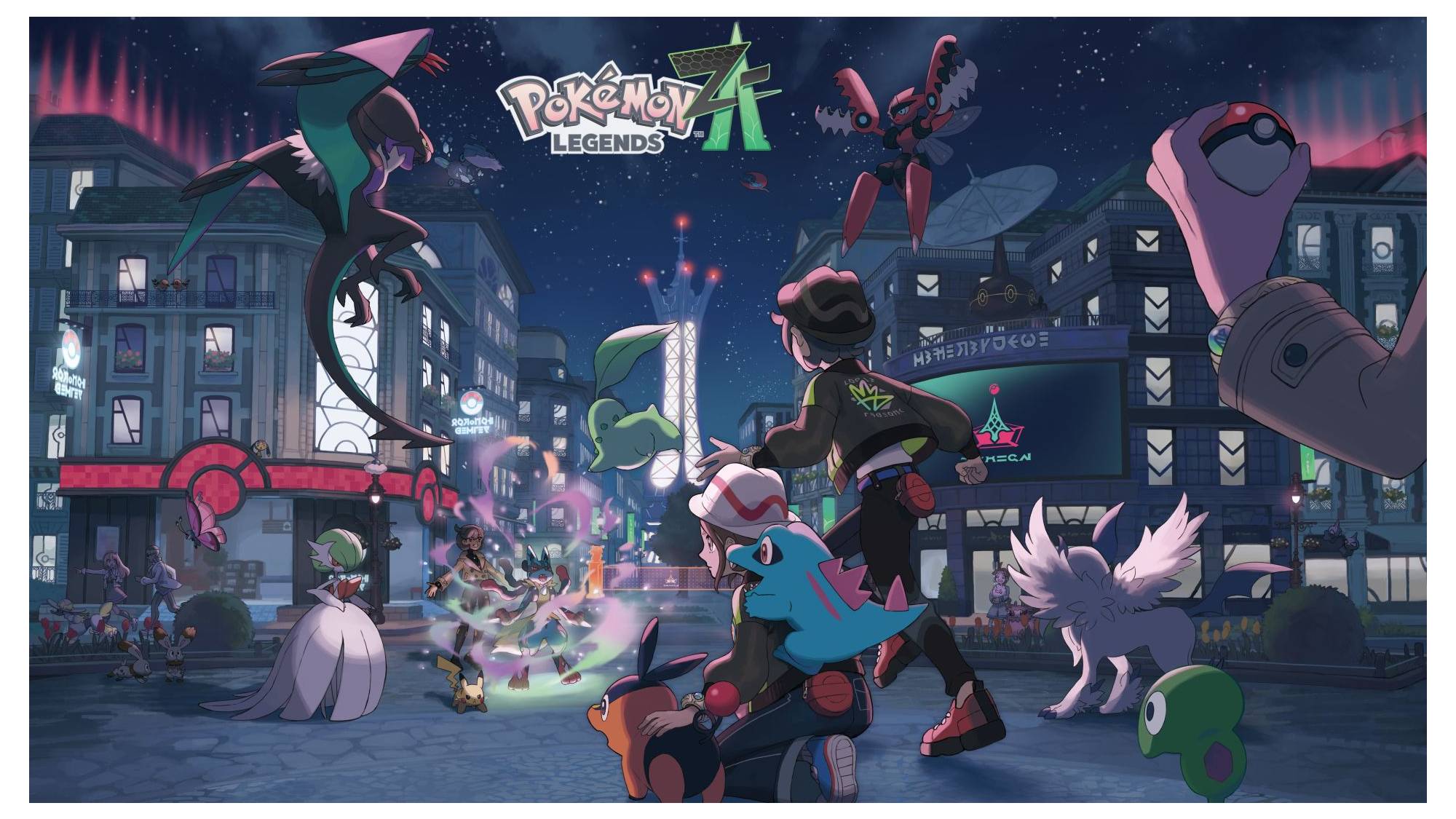
Pokémon Legends: Z-A trades the series' familiar turn-based battles for real-time combat, gives Trainers a Key Stone that triggers Mega Evolution inside a single sprawling city, and asks you to pick one of three starter Pokémon before you ever reach Lumiose City. This guide covers exactly those four things — starters, the new battle system, Mega Evolution, and the basics every new Trainer needs — using only what Nintendo and The Pokémon Company have confirmed officially.
Quick facts: Pokémon Legends: Z-A
- Platforms: Nintendo Switch and Nintendo Switch 2 (separate Switch 2 Edition, plus a Switch 2 Upgrade Pack)
- Release date: October 16, 2025
- Starters: Chikorita, Tepig, or Totodile
- Setting: Entirely within Lumiose City
- New mechanic: Real-time battles with no turns
- Digital price: $59.99 (Switch), $69.99 (Switch 2 Edition)
What is Pokémon Legends: Z-A?
Pokémon Legends: Z-A is the second entry in the Pokémon Legends spin-off line, and unlike mainline games that span whole regions, it takes place entirely within one location: Lumiose City, the Kalos-region capital first seen in Pokémon X and Y. Nintendo's official product page frames the setting around an in-progress redevelopment plan for the city, describing the goal as turning Lumiose into "a place Pokémon and people can truly share." That redevelopment is the backdrop for everything else in the game, from where you battle to which Pokémon start rampaging through the streets.
The game launched on October 16, 2025 for both the original Nintendo Switch and a Nintendo Switch 2 Edition, with a Switch 2 Upgrade Pack sold separately for owners of the base version. The Pokémon Company's own press materials described the battle system at reveal as "a real-time battle system unlike anything seen before in the franchise." If you are coming to it for the first time, the three systems worth understanding before you start are the starter choice, the real-time battle system, and Mega Evolution — covered in that order below.
Key Characters in Lumiose City
Because the whole game is confined to one city, its cast is built around the people running that city rather than a region's worth of gym leaders. Nintendo's official product page names several recurring characters you'll deal with:
- AZ — the enigmatic owner of Hotel Z, your home base. Nintendo's own description plays up his mystery: he's described as over nine feet tall and claiming to be three thousand years old.
- Floette — AZ's partner Pokémon, likewise said to have lived for three thousand years.
- Jett — CEO of Quasartico Inc., the company leading Lumiose City's redevelopment plan.
- Vinnie — Jett's secretary at Quasartico.
- A friend at Hotel Z who helps AZ run things day to day, introduced early in the story.
Quasartico's redevelopment plan is the thread that ties the cast together: Jett and Vinnie represent the corporate push to reshape the city, while AZ and Hotel Z anchor the more personal, Pokémon-focused side of the story you're actually playing through.
Starter Pokémon: Chikorita, Tepig, or Totodile
Nintendo's official listing for the game states it plainly: "Choose Chikorita, Tepig, or Totodile as your first partner Pokémon." That is a deliberate change from the past two Legends titles, which used Kanto's Gen I trio. Legends: Z-A instead mixes starters from two different regions and generations:
- Chikorita — Grass type, originally a Johto (Generation II) starter
- Totodile — Water type, also originally a Johto (Generation II) starter
- Tepig — Fire type, originally a Unova (Generation V) starter
Whichever you pick becomes your first partner Pokémon as you settle into Hotel Z and begin exploring Lumiose City. Because the game is built around real-time, positional battles rather than the old one-move-per-turn structure, the practical difference between starters comes down less to a type triangle and more to how their eventual movesets handle the new movement- and timing-based combat described below.
The Real-Time Battle System, Explained
This is the headline change for the whole game. Every previous mainline and Legends title used a turn-based system: your Pokémon acted once per turn, then the opponent's did. Pokémon Legends: Z-A removes that structure entirely. Nintendo's own description is direct: "Step onto the battlefield and command your Pokémon directly — there are no turns!"
In practice, that means:
- Trainers and their Pokémon can both move around the battlefield in real time, rather than standing still while menus resolve.
- Pokémon use their moves the moment their Trainer commands them, instead of waiting for a turn order to come around.
- Because there's no turn queue, timing, positioning, and a move's area of effect matter in a way they never did in the classic format — dodging an attack or repositioning before you command a move is now part of winning a battle.
- Swapping between your own Pokémon mid-battle is part of managing the fight, not just a once-per-turn decision.
If you've spent years on the turn-based formula, the adjustment is mostly about unlearning the pause-and-plan rhythm. Treat positioning as seriously as your move selection: standing in the open after commanding an attack is the single easiest way to eat a hit you didn't need to take.
| System | Classic Pokémon battles | Legends: Z-A battles |
|---|---|---|
| Turn structure | Strict turn order, one move per turn | No turns — real-time commands |
| Movement | Static, menu-driven | Trainer and Pokémon move around the battlefield |
| Positioning | Not a factor | Dodging and spacing affect outcomes |
| Mega Evolution | Not present in this form | Key Stone + Mega Stone, usable mid-fight |
Mega Evolution in Lumiose City
Mega Evolution returns as the game's other defining mechanic, and it's tied directly to the city setting rather than being an optional side system. Nintendo's official description of how it works: "a Key Stone worn by the Trainer resonates with a Mega Stone held by their Pokémon," unlocking the transformation. Officially confirmed Mega Evolutions shown for the game include Mega Charizard X and Y, Mega Gardevoir, Mega Kangaskhan, Mega Ampharos, Mega Sableye, Mega Altaria, Mega Absol, Mega Lucario, and Mega Gyarados.
Mega Evolution isn't purely a player tool, either. According to Nintendo's product page, rogue Mega-Evolved Pokémon periodically rampage through Lumiose City, and defeating one of these rampaging Pokémon rewards valuable Mega Stones — tying the city's unrest directly into how players actually unlock more Mega Evolutions for their own team. Expect Mega Evolution to show up as both a combat tool you activate mid-battle and a recurring event you have to respond to while out exploring the city.
Getting Around Lumiose City
Because the entire game takes place inside one city, Nintendo's materials describe several location-specific systems built to make that city feel navigable rather than cramped:
- Prism Tower sits at the center of Lumiose City and functions as a landmark you'll orient around throughout the game.
- Hotel Z is your home base — the place you return to between expeditions.
- Holovators let you reach rooftops and upper levels of the city rather than being limited to street level.
- Roto-Glide, unlocked later in the story, lets you glide temporarily through the air to cross the city faster.
- Shops sell outfits and hairstyles for customizing your Trainer.
- Cafés restore both your Pokémon's health and their friendliness toward you.
- Wild zones were added across the city specifically so people and Pokémon can share the same space — these are where you actually spend time catching and training Pokémon, Nintendo's page notes, rather than in separate routes or grasslands outside town.
Treat Holovators and the later Roto-Glide unlock as your main answers to "how do I get across the city faster" — both are built into the city itself rather than requiring an external vehicle or fast-travel menu. Outside of wild zones, Nintendo's page also mentions help-out side tasks scattered around town that reward you for pitching in with everyday errands.
Z-A Royale: The Nightly Tournament
Alongside the main story, Lumiose City runs a recurring competition called the Z-A Royale. Nintendo's official description invites players to "compete in the Z-A Royale and try to become the strongest Pokémon Trainer in town," with a new battle zone for the competition appearing each night. The structure is a climb: Trainers work their way up a rank ladder from Rank Z to Rank A by battling other Trainers and completing bonus card challenges along the way. Because wild zones are open during the day and the Royale's battle zone appears at night, the day/night split effectively separates the game's two main battle loops: catching and training during the day, competing after dark.
The game also supports multiplayer beyond the Royale. With a Nintendo Switch Online membership, you can battle up to three other Trainers locally or online, and Pokémon HOME transfers are supported from select previous games, so a Trainer's existing collection isn't necessarily locked out of Legends: Z-A. Nintendo's materials don't detail a standalone "Pokédex" feature by that name, but catching, collecting, and transferring Pokémon through HOME together cover the same ground that a dedicated Pokédex screen would in past games.
Switch 2 Edition and Performance
Pokémon Legends: Z-A ships in two forms. The standard release runs on the original Nintendo Switch at roughly 6 GB, while the Nintendo Switch 2 Edition is a separate, larger release at about 11.3 GB. Nintendo's Switch 2 product page describes that edition as featuring "improved performance, enhanced resolution, and smoother frame rates" compared to the base version, without publishing specific resolution or frame-rate figures. Switch owners who bought the original version can purchase a Switch 2 Upgrade Pack rather than buying the Switch 2 Edition outright.
Digitally, the base Nintendo Switch version lists at $59.99, and the Nintendo Switch 2 Edition lists at $69.99. A Mega Dimension DLC pack is sold separately for $29.99 and requires the full game to use. If you're deciding which Nintendo Switch 2 hardware setup to actually play it on, our breakdown of Switch 2 versus Steam Deck OLED covers how the two handhelds compare for a game like this, and our look at Switch 2's Mouse Mode controls is worth a glance if you're curious which other titles make use of the console's newer input options.
Tips for New Trainers
A few practical starting points, all based on how the systems above are actually described to work:
- Pick a starter based on team balance, not nostalgia. Chikorita, Tepig, and Totodile cover Grass, Fire, and Water respectively, so your choice still sets your early type coverage even though combat itself is now real-time.
- Treat battles as positional, not menu-driven. Since there's no turn order, get into the habit of moving before and after you command a move rather than standing in place.
- Watch for rogue Mega-Evolved Pokémon. These rampaging encounters in Lumiose City are a direct source of Mega Stones, so they're worth engaging rather than avoiding once you can handle them.
- Use Holovators early and Roto-Glide once it unlocks. Both exist specifically to speed up movement through a single large city, which matters more here than in a game with multiple separate towns.
- Decide on Switch vs. Switch 2 Edition before buying. The performance improvements on Switch 2 are real but unspecified, and the Upgrade Pack path exists if you already own the base game.
If you're also tracking other Switch 2 social features while you play, our explainer on Switch 2's GameChat setup and pricing covers how to stay connected with friends between sessions.
What to Watch Next
With the starter lineup, the real-time battle system, and Mega Evolution's city-wide role all officially confirmed, the open questions worth watching are how deep the eventual Mega Evolution roster gets and how Nintendo quantifies the Switch 2 Edition's performance gains now that both versions are out. Check Nintendo's own product pages for either version before buying if pricing or platform availability changes, since those are the figures most likely to move after launch.
Frequently asked questions
What are the starter Pokémon in Pokémon Legends: Z-A?
Nintendo's official listing says to choose Chikorita, Tepig, or Totodile as your first partner Pokémon. Chikorita and Totodile originally come from the Johto region, while Tepig originally comes from Unova.
How do battles work in Pokémon Legends: Z-A?
Battles are real-time rather than turn-based. Nintendo describes it as commanding your Pokémon directly with no turns, so both Trainer and Pokémon can move around the battlefield while moves are used the instant they're commanded.
How does Mega Evolution work in this game?
A Key Stone worn by the Trainer resonates with a Mega Stone held by their Pokémon to trigger Mega Evolution. Rogue Mega-Evolved Pokémon also rampage through Lumiose City, and defeating them rewards Mega Stones.
Is there a Nintendo Switch 2 Edition, and what does it cost?
Yes. The base Nintendo Switch version is $59.99 digitally, and the separate Nintendo Switch 2 Edition is $69.99 digitally, with Nintendo describing improved performance, enhanced resolution, and smoother frame rates. A Switch 2 Upgrade Pack is also sold for existing Switch owners.
What is the Z-A Royale?
It's a nightly in-game tournament where Trainers climb a rank ladder from Rank Z to Rank A by battling other Trainers and completing bonus card challenges, with a new battle zone appearing each night.
Does Pokémon Legends: Z-A have a Pokédex?
Nintendo's official materials don't name a standalone Pokédex feature, but they confirm catching and collecting Pokémon in wild zones and support for transferring Pokémon in from select previous games via Pokémon HOME.
Sources
Jonah Reyes leads Pandromeda's gaming coverage: console and handheld hardware, release dates, pricing changes, patch notes and the business moves behind the biggest franchises. He sources every date and price from the platform holders and publishers themselves, and says plainly when something is still only a rumour.