Nintendo Switch 2 vs Steam Deck OLED: Which Handheld Should You Buy?
Official specs, 2026 pricing changes, battery life and library differences for the Nintendo Switch 2 and Steam Deck OLED — plus a clear verdict by use case.
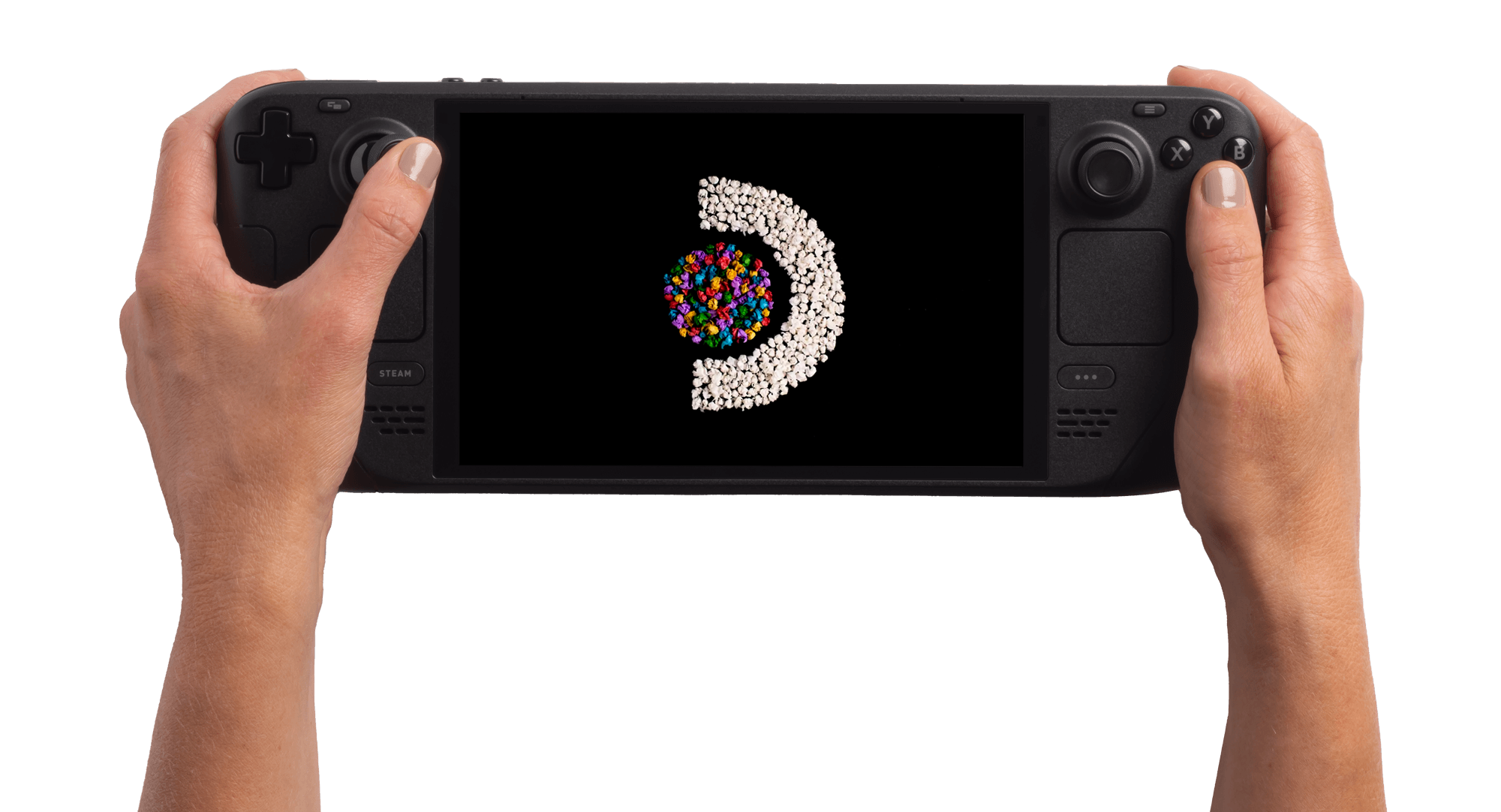
Quick verdict: If you want first-party Nintendo franchises, TV docking, and the simplest out-of-box experience, buy the Nintendo Switch 2. If you already own a Steam library (or want one open handheld that plays nearly any PC game, plus a sharper OLED screen), buy the Steam Deck OLED. Both makers raised prices in 2026 — check the numbers below before you order.
The short answer: the Nintendo Switch 2 and Steam Deck OLED are not really competing for the same wallet. The Switch 2 is a $499.99 games console that happens to be portable, built around Nintendo's own software and a 7.9-inch 1920x1080 LCD with 4K TV output when docked. The Steam Deck OLED is a $789+ handheld PC running Valve's SteamOS, built around a 7.4-inch 90Hz HDR OLED screen and the entire Steam library. Below is everything confirmed directly on Nintendo's own tech-specs page and Valve's own Steam Deck OLED page — including the 2026 price increases both companies have now put into effect.
Specs at a Glance
Here is how the two handhelds compare on paper, pulled directly from each manufacturer's current specification pages as of October 2026.
| Spec | Nintendo Switch 2 | Steam Deck OLED |
|---|---|---|
| Display | 7.9" LCD, 1920x1080, HDR10, VRR up to 120Hz | 7.4" HDR OLED, 1280x800, up to 90Hz, 1000 nits peak |
| Docked/TV output | Up to 3840x2160 (4K) at 60fps; 120fps at 1080p/1440p | Up to 4K via USB-C dock (external GPU-rendered, not a fixed native cap) |
| Processor | Custom processor made by NVIDIA | 6nm AMD APU (custom RDNA/Zen design) |
| Storage | 256GB UFS internal; microSD Express expansion | 512GB or 1TB NVMe SSD; microSD card expansion |
| Battery | 5,220mAh; approx. 2–6.5 hours (game dependent) | 50Whr; approx. 3–12 hours (content dependent) |
| Weight (console only) | 0.88 lb (~401g); 1.18 lb (~534g) with Joy-Con 2 | ~640g (~1.41 lb) total system weight |
| Connectivity | Wi-Fi 6, Bluetooth | Wi-Fi 6E, Bluetooth (3-antenna design) |
| Operating system | Nintendo Switch 2 system software | SteamOS (Linux-based) |
| Starting price (Oct 2026) | $499.99 (console); $549.99 Mario Kart World bundle | $789.00 (512GB); $949.00 (1TB) |
Official Pricing in 2026 — and What Changed
Both companies have adjusted prices this year, and the numbers on each official site right now are higher than what either device launched at.
Nintendo Switch 2: at launch, Nintendo's own newsroom confirmed the console would stay at $449.99 with a $499.99 Mario Kart World bundle, "despite a rapidly evolving economic environment." That held for over a year. Then, in a price-revision notice Nintendo posted to its own support site, the company confirmed a global price increase effective September 1, 2026, citing "various changes in market conditions, which are expected to extend over the medium to long term." Checking Nintendo's own current storefront confirms the increase already shows up in list prices: the Nintendo Switch 2 + Mario Kart World bundle is listed at $549.99 MSRP today, a $50 jump from its original $499.99, and a new Nintendo Switch 2 + Nintendo Switch Sports Resort bundle is set to launch October 22, 2026 at $529.99 MSRP. That $50-per-SKU increase lines up with the standalone console also moving to $499.99, which is the figure now showing at retail and on Nintendo's in-store kiosks, though Pandromeda could not locate a standalone-console product page on nintendo.com listing that exact figure in isolation — treat the $499.99 standalone price as corroborated rather than independently screenshotted from Nintendo's own site.
Steam Deck OLED: Valve's own current product page lists the 512GB Steam Deck OLED at $789.00 and the 1TB model at $949.00 — confirmed directly on steamdeck.com as of this writing. Notably, the entry-level 256GB LCD Steam Deck no longer shows a price on that page at all, suggesting it has been discontinued or pulled from sale. Multiple outlets reported a Valve price increase earlier in 2026 that pushed the 512GB OLED up from an original $549 and the 1TB OLED up from an original $649 — Valve's own site does not display that pricing history, so Pandromeda cannot independently confirm the prior figures from a primary source, but the current $789/$949 numbers above are taken straight from Valve's page.
Bottom line: anyone comparing sticker prices today should use $499.99 (Switch 2 console) against $789.00 (Steam Deck OLED, 512GB) — a wider gap than the devices had at their original launches.
Display and Design
This is where the two devices diverge hardest. The Switch 2's 7.9-inch LCD is physically larger and runs at a sharper native 1920x1080, with HDR10 support and variable refresh rate up to 120Hz — useful for fast-paced games that benefit from smooth motion. It's a capacitive touchscreen, and the whole package is Nintendo's familiar tablet-with-detachable-controllers design, now using redesigned Joy-Con 2 controllers that magnetically attach via a rail system.
The Steam Deck OLED's 7.4-inch panel is physically smaller but uses genuine HDR OLED technology: true blacks, a 1000-nit peak brightness, and a 90Hz refresh rate (up from 60Hz on the original LCD Steam Deck), plus a 180Hz touch-polling rate for more responsive touch input. Valve's chassis is a single fixed handheld — no detachable controllers — with twin trackpads, grip buttons on the back, and a built-in gyroscope, aimed squarely at PC-style control schemes (mouse-look via trackpad, for instance) that console games rarely use.
On weight, Nintendo's own regional spec pages put the Switch 2 console alone at roughly 401 grams, rising to about 534 grams with both Joy-Con 2 controllers attached — lighter in the hand than the Steam Deck OLED's roughly 640-gram total system weight, which Valve notes is already about 5% less than the original LCD Steam Deck thanks to the new display.
Nintendo's official dock weighs about 0.84 lb on its own and outputs video, audio and power to a TV through the console's USB-C port — the same approach Valve uses for the Steam Deck, which has no dedicated first-party dock bundled in the box but supports third-party and Valve's own separately-sold docking accessory over USB-C. Neither device includes a TV dock as standard with every SKU in exactly the same way, so factor that into a side-by-side price comparison if living-room play matters to you.
Performance and Battery Life
Nintendo doesn't publish detailed chip specifications beyond describing the Switch 2's silicon as a "custom processor made by NVIDIA" on its own tech-specs page — no core counts, clock speeds, or architecture name are listed officially. What Nintendo does confirm is output: up to 4K at 60fps when docked to a TV, or up to 120fps at 1080p/1440p resolutions, with HDR10 support in both modes.
Valve is similarly light on raw numbers for the Steam Deck OLED, describing it only as using an "updated, more efficient" 6nm AMD APU (the original Steam Deck used a 7nm chip) on its official product page. Valve does state the OLED's Wi-Fi was upgraded to Wi-Fi 6E (versus the Switch 2's Wi-Fi 6), and that the device runs cooler thanks to a bigger fan and reworked thermals.
Battery life is where the official numbers tell a clear story: Nintendo rates the Switch 2's 5,220mAh battery at approximately 2 to 6.5 hours depending on the game, with roughly 3 hours to recharge from empty in sleep mode. Valve rates the Steam Deck OLED's larger 50Whr battery — up from 40Whr on the original model — at approximately 3 to 12 hours depending on content, with fast-charging from 20% to 80% in as little as 45 minutes. Both companies are explicit that these are rough, content-dependent estimates rather than guarantees, so treat either range as a ceiling rather than an average for demanding 3D titles.
Storage, Expansion and Ports
The Switch 2 ships with 256GB of internal UFS storage and no model with more built in; Nintendo's spec sheet notes a portion of that is reserved for system use, and expansion requires the newer, separately-sold microSD Express cards (older Switch microSD cards are not compatible with game storage on Switch 2). The Steam Deck OLED comes in two tiers only — 512GB or 1TB, both on faster NVMe SSDs that Valve says users can physically replace — plus support for standard microSD cards for additional expansion. For anyone planning to install a large PC game library, Steam Deck's baseline storage is already double the Switch 2's, before any card is added; readers curious how the Deck's memory bandwidth factors into that performance picture can see Pandromeda's explainer on GDDR7 versus GDDR6 memory for general context on handheld GPU memory tradeoffs.
Software, Libraries and Compatibility
This is the real decision point for most buyers. The Switch 2 runs Nintendo's own closed system software and eShop: it plays Switch 2-exclusive titles plus backward-compatible original Switch games, and nothing outside Nintendo's own storefront and licensing. New Switch 2 features like Joy-Con mouse controls are opening up novel control schemes within that walled garden — Pandromeda has covered how Switch 2's mouse mode works and which games support it if you want the detail.
The Steam Deck OLED runs SteamOS, Valve's Linux-based operating system, with full access to the Steam storefront and (via Valve's Proton compatibility layer) a large share of Windows-only PC games. Because it is a genuine PC under the hood, it also supports Desktop Mode for installing other software, including other game storefronts or third-party emulation tools, at the user's own discretion and risk. Valve does not market or officially support running Nintendo's own games on Steam Deck, and doing so raises separate legal and ownership questions outside the scope of this comparison — if your goal is simply to play Nintendo's first-party catalog, the Switch 2 is the device built and licensed for that purpose.
There's also a practical multiplayer distinction worth flagging: Switch 2's Joy-Con 2 controllers detach for instant local two-player sessions straight out of the box, something the fixed-chassis Steam Deck OLED cannot replicate without buying separate controllers. Conversely, Steam Deck's library includes thousands of existing PC multiplayer and online titles already tied to a player's existing Steam friends list and achievements, which Switch 2's Nintendo Switch Online ecosystem does not share.
Which Handheld Should You Buy?
Buy the Nintendo Switch 2 if: you care primarily about Nintendo's first-party library (Mario Kart World, Zelda, Metroid, Animal Crossing, and future exclusives), want the simplest docked-to-TV experience, prefer a lighter device with detachable controllers for multiplayer, or you're buying for a household where ease of use matters more than raw horsepower or openness.
Buy the Steam Deck OLED if: you already own PC games on Steam and want to take that library on the road, want the better display technology (true OLED blacks, HDR, 90Hz), need an open platform you can install other software onto, or you value Valve's longer rated maximum battery life for lighter, less demanding titles. Be prepared to pay a meaningfully higher price than the Switch 2 for that flexibility — $789.00 versus $499.99 at the entry tier, per each company's current official pricing.
Buy both if: budget allows and you want Nintendo's exclusives on one device and your existing PC library on the other — there's genuinely little overlap in what each machine is for.
What to Do Next
Before you order either device, confirm current pricing directly on the manufacturer's own site — both Nintendo and Valve have changed prices in 2026, and third-party retailer listings can lag behind or mark up from official MSRP. Check Steam Deck availability and configuration options on Valve's own store listing, and compare it against Nintendo's current Switch 2 bundles before deciding which bundle, if any, makes sense for the games you already want to play. If Nintendo's control scheme is a deciding factor, it's worth reading up on what Joy-Con 2's new features add to the mix before you commit to a purchase.
Frequently asked questions
How much does the Nintendo Switch 2 cost in 2026?
Nintendo's own storefront currently lists the Switch 2 + Mario Kart World bundle at $549.99 MSRP, up from $499.99 at launch, following a global price increase Nintendo confirmed in a support-site notice effective September 1, 2026, attributed to 'changes in market conditions.' The standalone console is widely reported at $499.99, consistent with that $50 increase.
How much does the Steam Deck OLED cost in 2026?
Valve's own steamdeck.com page currently lists the 512GB Steam Deck OLED at $789.00 and the 1TB model at $949.00. The original 256GB LCD Steam Deck no longer shows a price on that page, suggesting it has been discontinued.
Which has better battery life, Switch 2 or Steam Deck OLED?
Nintendo rates the Switch 2 at roughly 2 to 6.5 hours per charge depending on the game. Valve rates the Steam Deck OLED at roughly 3 to 12 hours depending on content. Both are official estimates, not guarantees, for demanding 3D titles.
Which has the better screen, Switch 2 or Steam Deck OLED?
The Switch 2's 7.9-inch LCD is larger and sharper at 1920x1080 with up to 120Hz variable refresh rate. The Steam Deck OLED's smaller 7.4-inch, 1280x800 panel uses true HDR OLED technology with 1000-nit peak brightness and a 90Hz refresh rate, giving it deeper contrast and true blacks.
Which is lighter, Switch 2 or Steam Deck OLED?
The Switch 2 is lighter: about 401 grams alone or 534 grams with both Joy-Con 2 controllers attached, per Nintendo's own spec pages, versus the Steam Deck OLED's roughly 640-gram total system weight, per Valve's official page.
Can the Steam Deck OLED play Nintendo Switch 2 games, or vice versa?
No. The Switch 2 only runs software from Nintendo's own eShop, and the Steam Deck OLED runs SteamOS with the Steam library and Proton-compatible Windows PC games. Valve does not officially support running Nintendo software on Steam Deck.
Sources
- Nintendo Switch 2 Official Tech Specsnintendo.com
- Nintendo Switch 2 Price Revision Notice (Nintendo Support)nintendo.com
- Nintendo: Switch 2 Launch Pricing Confirmed (April 2025)nintendo.com
- Steam Deck OLED Official Product Page (Valve)steamdeck.com
- Steam Deck Official Store Listing (Valve)store.steampowered.com
- Nintendo Switch 2 + Mario Kart World Bundle (Nintendo Official Store)nintendo.com
Jonah Reyes leads Pandromeda's gaming coverage: console and handheld hardware, release dates, pricing changes, patch notes and the business moves behind the biggest franchises. He sources every date and price from the platform holders and publishers themselves, and says plainly when something is still only a rumour.