What Is Siri AI? Apple's Rebuilt Assistant, Explained
Apple's long-delayed, LLM-powered Siri overhaul is finally live in beta. Here's what's confirmed, what's still rumor, and how to check if you have it.
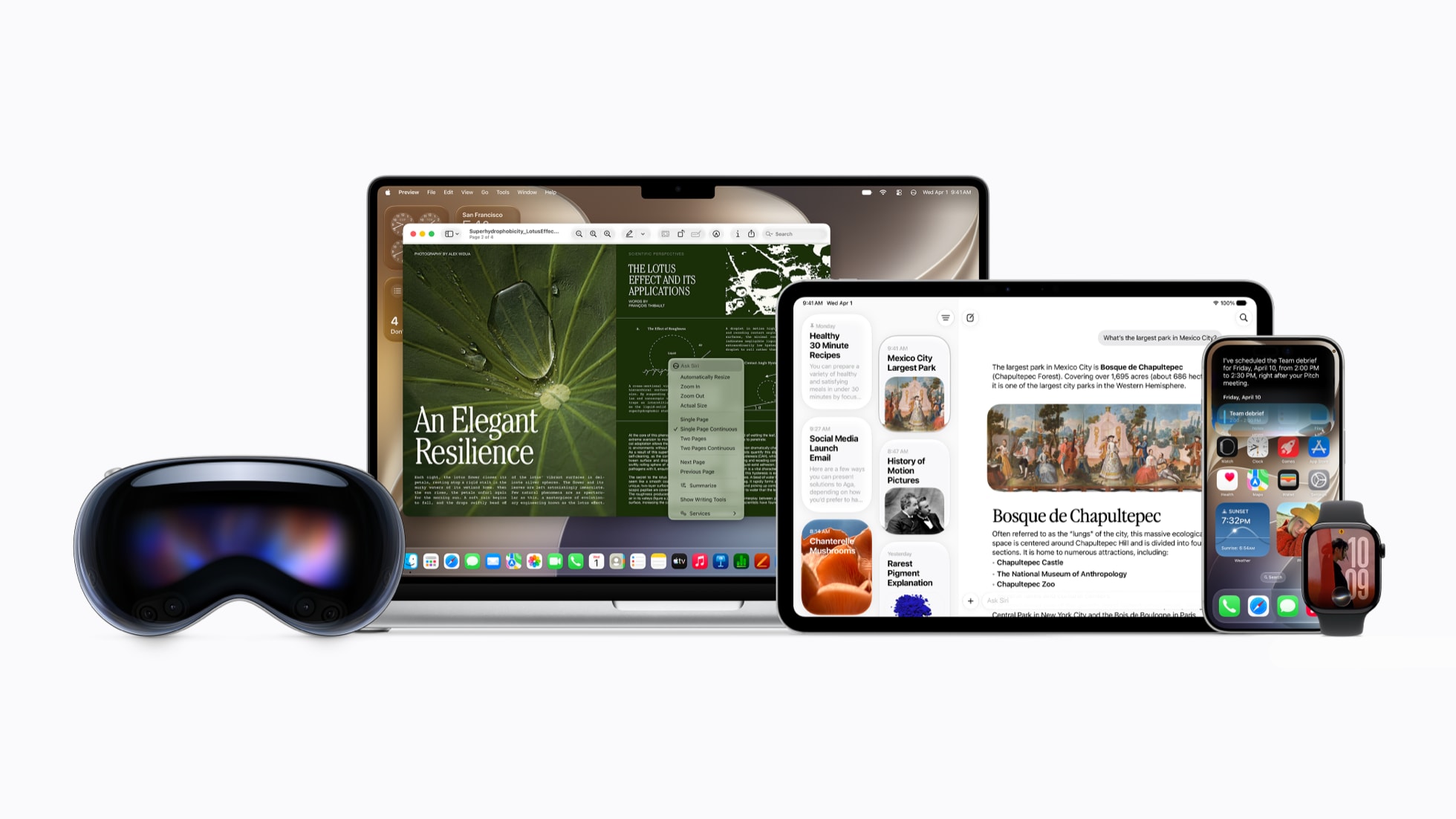
Siri AI is Apple's ground-up rebuild of its voice assistant, built on new Apple Foundation Models and designed to hold conversations, see what is on your screen, pull in your personal information, and act across apps instead of just answering simple commands. Apple announced it on June 8, 2026, and after a developer beta and then a public beta, it shipped as a beta feature inside iOS 27, iPadOS 27, macOS 27, watchOS 27, and visionOS 27 on September 14, 2026. As of today, it is live and expanding, but it is still labeled "Beta," still gated behind a waitlist, still English-only for most users, and still absent from the European Union on iPhone, iPad, and Apple Watch.
- Status today (Oct. 13, 2026): Shipped as "Siri AI (Beta)" inside iOS 27 and sibling operating systems; access is waitlisted, not instant.
- Announced: June 8, 2026, in an Apple newsroom post titled "Apple Introduces Siri AI, a Profoundly More Capable and Personal Assistant."
- Shipped: September 14, 2026, alongside iOS 27.
- Languages: English only at launch; French, Japanese, Korean, Portuguese, and Spanish are rolling out through an iOS 27.2 beta, per Apple's own October timeline.
- Not yet available: iPhone, iPad, and Apple Watch in the European Union; mainland China.
- Minimum hardware: iPhone 15 Pro or later; iPad mini (A17 Pro) or iPad with M1 or later; Mac with M1 or later; Apple Watch Series 9 or later.
What is Siri AI?
Siri AI is the name Apple settled on for the "more personal Siri" it first previewed at WWDC 2024 as part of Apple Intelligence. Where classic Siri mostly matched spoken commands to a fixed list of actions, Siri AI is built around large language model-style reasoning: it is meant to understand follow-up questions, reason about what is currently on your screen, draw on your own messages, email, photos, and notes when relevant, and complete multi-step tasks inside and across apps. Apple's own description, from its June 2026 newsroom announcement, frames it as a "profoundly more capable and personal assistant" rather than a simple update to the old Siri.
It arrives as part of the iOS 27 generation of software (also iPadOS 27, macOS 27 "Golden Gate," watchOS 27, and visionOS 27), not as a standalone app you download separately, though it also includes a dedicated Siri app for reviewing past conversations.
What's confirmed vs. what's still rumor
Because this project has been reported on, delayed, and re-reported for roughly two years, it is worth separating what Apple has actually said from what outside reporters have claimed.
Confirmed by Apple: the existence and name of Siri AI; its onscreen awareness, personal-context search, cross-app actions, conversational follow-ups, and dedicated Siri app; its reliance on new Apple Foundation Models running on-device and through Apple's Private Cloud Compute servers; its September 14, 2026 ship date inside iOS 27; its English-only beta start; and its absence from EU iPhones, iPads, and Apple Watches at launch (it is available on Mac and Vision Pro in the EU when set to a supported language).
Reported, not confirmed by Apple: Bloomberg's Mark Gurman has reported that Apple is paying Google roughly $1 billion a year for a custom Gemini model that handles planning and summarization tasks on Apple's own servers, while Apple's own on-device models continue to process personal data locally. Neither Apple nor Google has publicly confirmed this arrangement, and Apple's public materials describe the system only in terms of its own Foundation Models and Private Cloud Compute — so treat the Google/Gemini backend as credible but unconfirmed reporting, not an Apple statement.
Also worth remembering: the feature now called Siri AI was originally expected around "iOS 26.4" in spring 2026, per earlier Bloomberg reporting. That timeline slipped again in February 2026, and Apple ultimately introduced the rebuilt assistant at WWDC in June 2026 and shipped it with iOS 27 in September — a later and differently-numbered release than the iOS 26.4 target widely reported earlier in the year.
Current status, as of October 13, 2026
Siri AI has shipped, but "shipped" comes with real caveats. Apple's own support documentation still labels it "Siri AI (Beta)," and turning it on adds you to a waitlist rather than switching it on instantly — Apple says wait times vary and the feature downloads automatically once your turn comes. It launched in English only on September 14, 2026. Apple has said French, Japanese, Korean, Portuguese, and Spanish support is coming in October 2026, and as of early October those languages were already showing up in an iOS 27.2 beta, ahead of Apple's self-set deadline — a narrower update on that rollout is covered in Pandromeda's earlier piece on the five-language expansion landing in the iOS 27.2 beta.
So the accurate, current-as-of-today summary is: Siri AI is real, shipped, and installed on compatible devices running iOS 27 or later — but it is not yet a finished, globally available product. It is a staged beta rollout, region-limited, language-limited, and still missing some of the advanced capabilities (like expressive voices) that require the newest chips.
What Siri AI actually does
Per Apple's announcement, Siri AI's headline capabilities are:
- Broad world knowledge: it can answer open-ended questions on virtually any topic by drawing on web information, not just a narrow set of pre-built Siri answers.
- Personal context: it can search and surface information from your own messages, email, photos, and notes when a request calls for it, and third-party apps can extend that personal context through Spotlight.
- Onscreen awareness: it can see and act on whatever is currently displayed — for example, pulling a recipe off a webpage and adding it to Notes without you retyping anything.
- Cross-app actions: drafting emails, editing and sharing photos, and carrying out other systemwide tasks on your behalf.
- Multi-turn conversation: following up on its own previous answers instead of treating every request as a fresh, isolated command.
- A dedicated Siri app: conversation history that syncs across your devices through iCloud, so a conversation you start on iPhone can continue on Mac or iPad.
- A rebuilt Visual Intelligence: a new Siri mode inside the iPhone Camera app that can do things like split a bill using Apple Cash (U.S. only at launch) or surface nutritional information about food, plus equivalent Visual Intelligence access on iPad, Mac, and Apple Vision Pro.
- Better voice and dictation: more expressive synthesized voices with adjustable pace, plus more accurate dictation with automatic punctuation and formatting — though the most expressive voice options are limited to newer, more powerful chips.
How Siri AI differs from classic Siri
The practical difference shows up most in how each version handles ambiguity, context, and multi-step requests.
| Capability | Classic Siri | Siri AI |
|---|---|---|
| Understanding requests | Matches speech to a fixed set of commands and intents | Uses LLM-style reasoning to interpret open-ended, conversational requests |
| Follow-up questions | Largely treats each request as standalone | Holds context across a multi-turn conversation |
| Awareness of your screen | No onscreen awareness | Can read and act on what's currently displayed |
| Personal data access | Very limited, app-by-app access | Searches messages, email, photos, and notes when relevant, extended by apps via Spotlight |
| Cross-app actions | Narrow, pre-defined Siri Shortcuts-style actions | Broader systemwide actions across first- and third-party apps |
| General knowledge questions | Often hands off to a web search link | Answers directly using broad world knowledge from the web |
| Conversation history | Not retained in a dedicated app | Stored and synced across devices in a new Siri app |
| Processing model | Apple's earlier on-device/server Siri stack | New Apple Foundation Models on-device and via Private Cloud Compute (reportedly supplemented by a custom Google Gemini model on Apple's servers, per Bloomberg — unconfirmed by Apple) |
Which devices support Siri AI
Per Apple's support documentation, Siri AI requires one of the following, running the iOS 27 / iPadOS 27 / macOS 27 / watchOS 27 / visionOS 27 generation of software:
- iPhone: iPhone 15 Pro and 15 Pro Max, iPhone 16 and later, and iPhone Air.
- iPad: iPad mini (A17 Pro) and iPad models with an M1 chip or later.
- Mac: MacBook Neo (A18 Pro) and any Mac with an M1 chip or later.
- Apple Watch: Series 9 or later, Ultra 2 or later, and SE 3 — each paired with an Apple Intelligence-enabled iPhone that has Siri AI turned on.
- Apple Vision Pro: any model.
A smaller set of advanced features — notably the new expressive voice options and the most advanced dictation model — needs even newer silicon: iPhone Air, iPhone 17 Pro or 17 Pro Max, an iPad with an M4 chip or later and at least 12GB of memory, a Mac with an M3 chip or later and at least 12GB of memory, or an Apple Vision Pro with an M5 chip. Older but still Apple Intelligence-capable devices, like an iPhone 15 Pro, get the core Siri AI experience without those extras. It's a similar story to other recent platform cutoffs, where a device that still runs a current OS version doesn't necessarily get every new capability — see Pandromeda's explainer on why some apps quietly stop supporting older phones for the general pattern.
How to get Siri AI, and how to check if you already have it
Siri AI isn't a separate download — it's a setting you opt into on a compatible device already running the right OS version. Apple's own instructions are:
- Update your iPhone, iPad, Mac, Apple Watch, or Apple Vision Pro to iOS 27, iPadOS 27, macOS 27, watchOS 27, or visionOS 27 or later.
- Open Settings (or System Settings on Mac) and go to Siri. If Siri is off, turn it on first.
- Tap or click "Try Siri AI (Beta)."
- Follow the onscreen steps to choose a voice, complete voice enrollment, and review the privacy settings.
Completing those steps joins a waitlist rather than switching the feature on immediately — Apple says wait times vary, and Siri AI downloads automatically once access is granted. To check whether you already have it, open Settings > Siri: if you see an active "Siri AI" toggle or badge instead of the "Try Siri AI (Beta)" prompt, it's already enabled on that device. Your device language and the language Siri is set to use must both be set to a currently supported language — English at launch, with the additional languages arriving through the fall — and your Apple Account region has to be an eligible one; Siri AI currently does not work for accounts registered in mainland China, and it is not available on iPhone, iPad, or Apple Watch for accounts registered in the EU.
Languages and regional availability
At launch, Siri AI works only when both the device language and the Siri language are set to English. Apple has said it will "quickly expand" language support, and French, Japanese, Korean, Portuguese, and Spanish were already appearing in an iOS 27.2 beta as of early October 2026, consistent with Apple's stated October target for that expansion.
Regionally, the biggest gap is the European Union: Siri AI is not available on iPhone, iPad, or Apple Watch there at all right now. Apple has said it is working on a path that preserves privacy and security for EU users on those platforms, without giving a firm date. On Mac and Apple Vision Pro, EU users can already use Siri AI, provided their Apple Account region is in the EU and both the device and Siri languages are set to English — the restriction is specific to iOS, iPadOS, and watchOS rather than the whole European market. Siri AI also does not currently work for Apple Accounts registered in mainland China, pending regulatory approval there.
How Siri AI processes your data
Apple's architecture for Siri AI splits work between the device and Apple's own servers. Some requests are handled entirely on-device — Apple says the Spotlight personal-context index and the "App Toolbox" that lets Siri take actions in apps both run locally. More complex requests are sent to Private Cloud Compute, Apple's server infrastructure for Apple Intelligence; Apple states that when Private Cloud Compute handles a request, the personal data involved is not stored and is not made accessible to Apple or anyone else, and that outside security researchers can verify this claim.
What Apple's own materials do not say is which underlying model does the heavy lifting on those servers. That's where Bloomberg's reporting fills in a gap Apple has left open: according to Mark Gurman, Apple is paying Google for a custom version of its Gemini model to handle planning and summarization work on Apple's servers, while Apple's own Foundation Models continue to handle on-device, personal-data-adjacent tasks — with Apple's branding giving no indication of Google's involvement. That arrangement, reportedly worth around $1 billion a year to Google, has not been confirmed by either company, so it should be read as credible industry reporting rather than an Apple admission. Apple isn't unique in leaning more on cloud infrastructure for its assistant; other AI products have made similar moves, including Anthropic's shift to running Claude Cowork in the cloud by default for its Pro and Max subscribers.
What's still unknown
Several real questions remain open as of today:
- EU timeline for iPhone and iPad: Apple has committed only to "working on" a path for iOS, iPadOS, and watchOS in the EU, with no announced date.
- China availability: Apple has not given a timeline for resolving the regulatory requirements that currently block Siri AI there.
- Full language rollout: Apple has named five additional languages arriving after English, but hasn't published a complete roadmap for every language Apple Intelligence otherwise supports.
- The Google Gemini backend: whether, and to what extent, a Google-built model actually powers parts of Siri AI's server-side processing remains unconfirmed by either company.
- When the "Beta" label comes off: Apple hasn't said when Siri AI will graduate from a waitlisted beta to a fully rolled-out, default feature for every eligible device.
What happens next
The near-term path is fairly concrete: the five-language expansion is already visible in beta and tracking toward Apple's own October target, and Apple has a pattern of using point releases (27.1, 27.2, and beyond) to widen both language and regional support rather than holding everything for the next major OS cycle. The EU and China questions are the ones without a public clock attached, and given how long the broader project has already slipped — from an original 2024 preview to a 2026 ship date — it would be reasonable to expect further incremental updates rather than one single "Siri AI is finally everywhere" moment. Readers on a waitlist should check Settings > Siri periodically, since Apple has not published a way to jump the queue, and anyone outside the U.S., in the EU, or in mainland China should expect to wait longer than the headline September 2026 ship date suggests.
Frequently asked questions
Has the new Siri actually launched yet?
Yes, but with caveats. Apple shipped Siri AI as a beta feature inside iOS 27, iPadOS 27, macOS 27, watchOS 27, and visionOS 27 on September 14, 2026. It's live on compatible devices, but access is waitlisted, it's English-only for most users, and it's still labeled 'Beta' by Apple.
What happened to the iOS 26.4 Siri release Bloomberg reported on?
Earlier Bloomberg reporting pointed to an iOS 26.4 release around spring 2026 for the overhauled Siri. That timeline slipped again in February 2026, and Apple ultimately unveiled the rebuilt assistant as Siri AI at WWDC in June 2026, shipping it with iOS 27 in September 2026 instead.
How do I turn on Siri AI?
Update to iOS 27 or later, open Settings, tap Siri (turning Siri on first if it is off), then tap 'Try Siri AI (Beta)' and follow the steps to pick a voice and review privacy settings. This joins a waitlist; Siri AI downloads automatically once your access is granted.
Which iPhones support Siri AI?
Apple lists iPhone 15 Pro, iPhone 15 Pro Max, iPhone 16 and later, and iPhone Air as compatible. The most advanced features, like expressive voices, additionally require an iPhone Air or iPhone 17 Pro/17 Pro Max.
Is Siri AI available in the EU?
Not yet on iPhone, iPad, or Apple Watch. Apple says it is working on a privacy- and security-preserving path for those platforms in the EU, without a firm date. Siri AI is already available on Mac and Apple Vision Pro for EU accounts set to English.
Does Siri AI really run on Google's Gemini?
Apple has not confirmed this. Apple describes Siri AI as running on its own Apple Foundation Models, on-device and through Private Cloud Compute. Bloomberg's Mark Gurman has separately reported that Apple pays Google for a custom Gemini model used for some server-side planning tasks, but neither company has confirmed that arrangement publicly.
Sources
- Apple Newsroom: Apple Introduces Siri AI, a Profoundly More Capable and Personal Assistantapple.com
- Apple Support: How to get Siri AIsupport.apple.com
- Apple Newsroom: Major Updates for Apple's Software Platforms Are Now Availableapple.com
- Apple Newsroom: Apple Intelligence topic archiveapple.com
- Wikipedia: Sirien.wikipedia.org
Theo Park runs the AI desk at Pandromeda. He follows model launches from the frontier labs and the open-weight community, tracks the assistants and developer tools built on them, and explains what each release changes on pricing, capability and safety. His reporting leans on primary sources: model cards, technical reports, API documentation and the companies' own announcements.