Perplexity Launches Teammates, AI Agents for Ongoing Work
Perplexity's new Teammates agents plan, monitor and complete ongoing work across Slack, GitHub and email, built on the Computer platform and live now for Max subscribers.

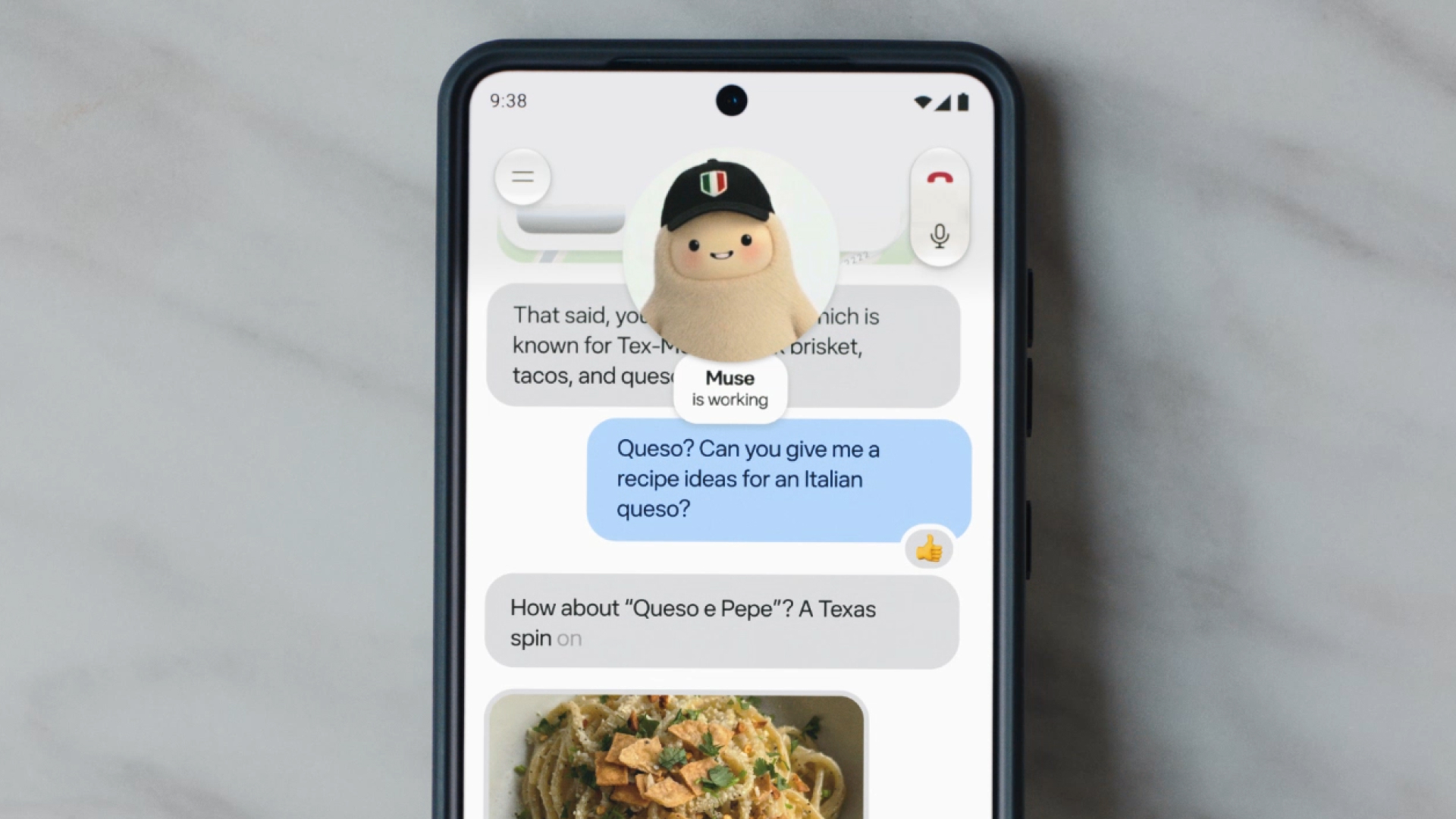
Perplexity has launched Teammates, a new class of AI agents built to own ongoing work rather than answer one-off prompts. The agents plan projects, monitor Slack channels and connected tools for changes, act without waiting for a new instruction, and hand finished work back for a human to review. Teammates is live now on the web for subscribers on Perplexity's Max plan, with iOS access coming "soon," according to the company's November 4, 2026 announcement.
- What: Perplexity Teammates — personal AI agents for long-running, ongoing work
- Announced: November 4, 2026, on Perplexity's official blog
- Availability: Live now on the web; iOS coming soon
- Access: Perplexity Max subscribers; Free and Pro users can upgrade in Settings
- Built on: Perplexity Computer's Projects, skills, memory and automations
- Integrations at launch: Slack, GitHub, Gmail, and other connected tools
What Perplexity announced
In a post titled "Teammates are agents for complex, ongoing work," Perplexity introduced Teammates as agents designed to carry a piece of work from start to finish over days or weeks, not just a single session. The company framed the launch as a deliberate shift away from assistants that wait for instructions: Perplexity wrote that personal agents "need to be purpose-built for work," distinguishing Teammates from chat-style help that answers a question and stops.
The announcement arrives one day after Perplexity detailed a Computer-based tool built for e-commerce brand growth, and two and a half weeks after the company open-sourced SPACE, the sandbox platform that Computer and now Teammates run on. Together, the posts describe a company moving quickly from single-purpose agent tasks toward agents that persist across a team's workflow.
How Teammates work
According to Perplexity, a Teammate keeps a project's goals, task history and shared files intact across every run, rather than starting fresh each time it is invoked. That continuity is what lets a Teammate pick up a multi-step job, check in on it later, and finish it without a person re-explaining the context.
Perplexity's post breaks the behavior into four capabilities:
- Ongoing ownership. Teammates plan a project, adjust the plan as priorities change, check their own results, and submit finished work for review — the same cycle a human owner would run on a task.
- Proactive monitoring. Teammates watch for changes in the work they own and act without a new prompt. Perplexity's example: a sales Teammate notices that a regular customer has stopped buying, investigates why, and drafts an offer on its own.
- Learning from feedback. Guidance a person gives a Teammate carries into future tasks. Perplexity's example is a Teammate that factors in an agency's two-week notice requirement the next time it schedules work for that account.
- Team collaboration. Teammates can sit in Slack channels, take tasks and status requests from colleagues, and pass work to other Teammates — for instance, one Teammate flags website bugs and hands the list to a second Teammate that prepares the fixes.
What a Teammate can be connected to
Each Teammate runs in its own environment with a separate browser session, and Perplexity says saved credentials are encrypted. People setting up a Teammate choose which tools it can reach — the launch post names Slack, GitHub and Gmail as connectable tools, consistent with the managed Slack and GitHub connectors already documented in Perplexity's Agent API cookbook, which shows an agent reading a Slack thread, investigating a linked GitHub repository, and replying in-thread without modifying the repository itself.
Control stays with the person who owns the Teammate: Perplexity says users can review a Teammate's work, take over its desktop session directly, or redirect it mid-task. For GitHub specifically, setup includes choosing exactly which repositories a given Teammate is allowed to access, rather than granting blanket account access.
Perplexity's suggested use cases span four functions:
- Marketing: managing posts, email and ads, watching performance and competitor promotions, and suggesting responses to price changes.
- Sales: finding opportunities, preparing outreach and quotes, following up on replies, and flagging support issues.
- Customer support: summarizing complaint trends, flagging cases that need a personal response, drafting replies, and tracking cases to resolution.
- Operations: tracking deadlines, checklists and vendor paperwork, and following up when a deadline is 72 hours out and items are still missing.
Setting up a Teammate
Perplexity describes a short setup flow: open Teammates from the web app's left navigation, name the Teammate, connect the tools it needs (Slack, GitHub, Gmail and others), define the work it owns and when it should run, then assign it to a Project with an initial task. Because Teammates inherit a user's existing Projects, skills, memory and automations inside Perplexity Computer, a Teammate can be pointed at infrastructure — saved brand voice, standing instructions, recurring workflows — that a team has already built rather than starting from zero.
Perplexity gives one recurring example throughout the post: a Teammate running a weekly pipeline review automatically, the kind of standing process that previously required someone to remember to run it.
Availability and who can use it
Teammates is rolling out first on the web, with Perplexity saying iOS access is coming "soon." The feature is available today to subscribers on Perplexity's Max tier, the company's highest subscription level; Free and Pro users can upgrade from Settings > Account > Subscription to get access. Perplexity did not publish a separate price for Teammates itself in the announcement, and said only that it plans to expand access and add features "in the coming weeks," without committing to a date for a Pro-tier or lower-cost rollout.
Teammates vs. Computer vs. Perplexity's assistant
Perplexity now runs three distinct layers of agent capability on top of its search product, and the difference in scope is the point of this launch. The table below reflects how Perplexity itself distinguishes the three, based on its own announcement posts and the company's background on Wikipedia.
| Product | Scope | Launched | Typical use |
|---|---|---|---|
| Perplexity Assistant / search | Single question, single answer | Core product since 2022 | Look up a fact, summarize a page, cite sources |
| Perplexity Computer | Multi-step task in one session, using multiple models and subagents | February 2026 | Build a landing page, run a one-off analysis, execute a workflow |
| Perplexity Teammates | Ongoing ownership of a project across days or weeks, with monitoring and memory | November 4, 2026 | Own a sales pipeline, watch support tickets, run a weekly report automatically |
In other words, Computer executes a defined task well; Teammates is Perplexity's attempt to make an agent that keeps a job moving even when nobody is actively prompting it.
The infrastructure behind Teammates
Teammates runs on the same sandbox platform Perplexity built for Computer. That platform, called SPACE, is the environment in which each agent session actually executes — and Perplexity open-sourced it on October 15, 2026, a few weeks before Teammates shipped. According to that post, every Teammate and Computer session runs inside its own small virtual machine with a separate operating system, isolating the agent's work from the host machine it runs on. A central control plane creates, pauses, resumes and removes these sandboxes, and SPACE stores only the changes made inside a sandbox rather than copying a whole environment each time, which Perplexity says sped up creating and restoring sessions.
Perplexity treats the sandbox itself as untrusted: network access and any platform-held credentials are managed outside the sandbox, so an agent can reach an authorized service, such as a connected Slack workspace or GitHub repository, without that credential ever being stored inside the environment it is running in. In testing Perplexity published alongside the SPACE release, 108 attempts to escape the virtual machine to the host system failed, though the company said it did find and fix some ways to bypass its network restrictions. SPACE has handled all Computer traffic since July 2026, when it replaced a third-party sandbox provider; Perplexity says sandbox creation on SPACE runs three to five times faster than it did on that previous provider. Akamai, Crusoe and CoreWeave have all added support for running SPACE on their own infrastructure since the source code became public.
This is the layer that gives a Teammate its "own environment with separate browser sessions," as Perplexity describes it in the Teammates launch post — the isolation claim rests on SPACE's sandboxing rather than on the Teammates feature itself.
Why this matters
Teammates lands in the middle of a broader push by AI companies to move agents from answering questions to holding down recurring jobs. Perplexity's own comparison point in the announcement is Comet, its web-capable browser assistant, which the company says was its first agent able to act on the open web when it launched in July 2025. Rivals have been making similar moves this year: Perplexity's Computer agent has already been compared directly against Anthropic's Claude Cowork as both companies push persistent, task-owning agents rather than single-turn chat, and OpenAI has been reshaping ChatGPT's own interface around blending chat and ongoing work into one tab. Teammates is Perplexity's most direct answer yet to that trend: an agent product explicitly pitched at "complex, ongoing work" rather than quick lookups.
The emphasis on monitoring and isolation also reflects a security posture Perplexity has been building out in parallel. The same week it introduced Teammates, Perplexity also published a guide to securing Model Context Protocol (MCP) systems, grouping risks into three buckets: LLM manipulation (such as indirect prompt injection, where hidden instructions in a document or tool output try to steer the agent), data and access security (excessive permissions, weak authentication, leaked credentials), and infrastructure vulnerabilities (malicious servers, compromised dependencies, local server compromise). Its recommended mitigations — restricting permissions and OAuth scopes, using short-lived tokens, requiring human approval for sensitive actions, and treating external content as untrusted — map directly onto what a standing, credentialed agent like a Teammate needs to get right, since a Teammate is explicitly designed to keep acting on Slack, GitHub and Gmail without a person re-approving every step. Perplexity also detailed "BrowseSafe++," its defenses against real-world prompt injection for browsing agents, in a separate post two days before the Teammates launch.
Perplexity's agent push, in context
Perplexity was founded in August 2022 by Aravind Srinivas, Denis Yarats, Johnny Ho and Andy Konwinski, and Srinivas remains chief executive, according to Perplexity's Wikipedia entry. The company built its name on an answer engine that cites sources, then spent 2026 layering autonomous agent products on top of that core product: Perplexity Computer launched in February 2026 as a general-purpose agent that performs multi-step tasks using multiple large language models and specialized subagents, and the company extended that with "Personal Computer," a version designed to run on a user's own device, in April 2026. Teammates is the newest layer on that stack, built specifically for work that outlives a single session.
What's not yet confirmed
Perplexity's announcement leaves several operational details open. The company has not published Teammates-specific pricing beyond requiring a Max subscription, has not said how many Teammates a single account can run at once, and has not given a firm date for iOS availability or for expanding the feature to Pro-tier accounts. Perplexity's phrase "in the coming weeks" is the only timeline given for broader access.
What to watch next
Perplexity says it will widen Teammates access and add capabilities in the near term, which is the first thing to watch: whether that means a lower-tier rollout, additional tool connectors beyond Slack, GitHub and Gmail, or deeper integration with Computer's existing automations. The iOS release is the second marker — a mobile Teammates experience would let people review and redirect agents away from a desktop browser, closer to how Perplexity already treats Comet on the web. Longer term, Teammates is also a test of how comfortable businesses are letting an agent act inside Slack and GitHub with standing, rather than one-time, permissions — exactly the kind of persistent access that security researchers tend to scrutinize first.
Frequently asked questions
What is Perplexity Teammates?
Teammates is a Perplexity product launched on November 4, 2026, made up of AI agents built to own ongoing work — planning projects, monitoring for changes, and submitting finished work for review — rather than answering a single prompt and stopping.
Who can use Perplexity Teammates right now?
Teammates is live on the web for subscribers on Perplexity's Max plan. Free and Pro users can upgrade to Max from Settings > Account > Subscription to get access.
Is Perplexity Teammates available on mobile?
Not yet. Perplexity says Teammates is launching first on the web, with access on iOS coming "soon," though it has not given a specific date.
What tools can a Perplexity Teammate connect to?
At launch, Perplexity names Slack, GitHub and Gmail as connectable tools. Teammates can join Slack channels, receive and hand off tasks, and, for GitHub, access only the specific repositories a user selects.
How is Teammates different from Perplexity Computer?
Computer executes a defined, multi-step task within a session using multiple AI models and subagents. Teammates builds on Computer's Projects, skills and memory but is designed to own a piece of work across days or weeks, monitoring it and acting without a new prompt each time.
How does Perplexity keep a Teammate's access secure?
Each Teammate runs in an isolated sandbox built on Perplexity's SPACE platform, with its own browser session and encrypted saved credentials. Perplexity also lets users review, take over, or redirect a Teammate's work at any point.
Sources
- Perplexity: Teammates are agents for complex, ongoing workperplexity.ai
- Perplexity: Open-sourcing SPACE, the sandbox platform behind Computerperplexity.ai
- Perplexity: Secure Your MCP System — 11 Common Risks and How to Protect Against Themperplexity.ai
- Perplexity Docs: Agent API cookbook — Slack and GitHub connectorsdocs.perplexity.ai
- Wikipedia: Perplexity AIen.wikipedia.org
Theo Park runs the AI desk at Pandromeda. He follows model launches from the frontier labs and the open-weight community, tracks the assistants and developer tools built on them, and explains what each release changes on pricing, capability and safety. His reporting leans on primary sources: model cards, technical reports, API documentation and the companies' own announcements.