ChatGPT Atlas vs. Perplexity Comet: Which AI Browser Won
OpenAI is sunsetting ChatGPT Atlas, leaving Perplexity's Comet as the AI browser still standing. Here's what changed, what each offers, and the Amazon lawsuit still hanging over Comet.
ChatGPT Atlas no longer exists as a standalone browser, so the head-to-head is shorter than it looks: Perplexity's Comet is the AI browser still standing. OpenAI shipped Atlas on Mac in October 2025, then told users in July 2026 that it was shutting the app down, with a targeted deprecation date of August 9, 2026. Atlas's agent and browsing features moved into the main ChatGPT desktop app and a Chrome extension instead. Comet, meanwhile, is free on Mac, Windows, iOS, and Android, has survived a federal lawsuit from Amazon over its shopping agent, and is the browser most people mean today when they say "AI browser."
- ChatGPT Atlas: Launched Mac-only in October 2025, retired by OpenAI with a targeted shutdown date of August 9, 2026. Its agentic browsing tools now live inside the ChatGPT desktop app and a Chrome extension.
- Perplexity Comet: Launched in July 2025 behind a $200/month paywall, made free worldwide in October 2025, and now runs on Mac, Windows, iOS, and Android.
- Legal risk: Comet is fighting a still-unresolved federal lawsuit from Amazon over its shopping agent; a preliminary injunction against it was vacated on appeal in August 2026.
- Bottom line: If you want a dedicated AI browser right now, Comet is effectively the only one left standing between these two.
What ChatGPT Atlas actually was
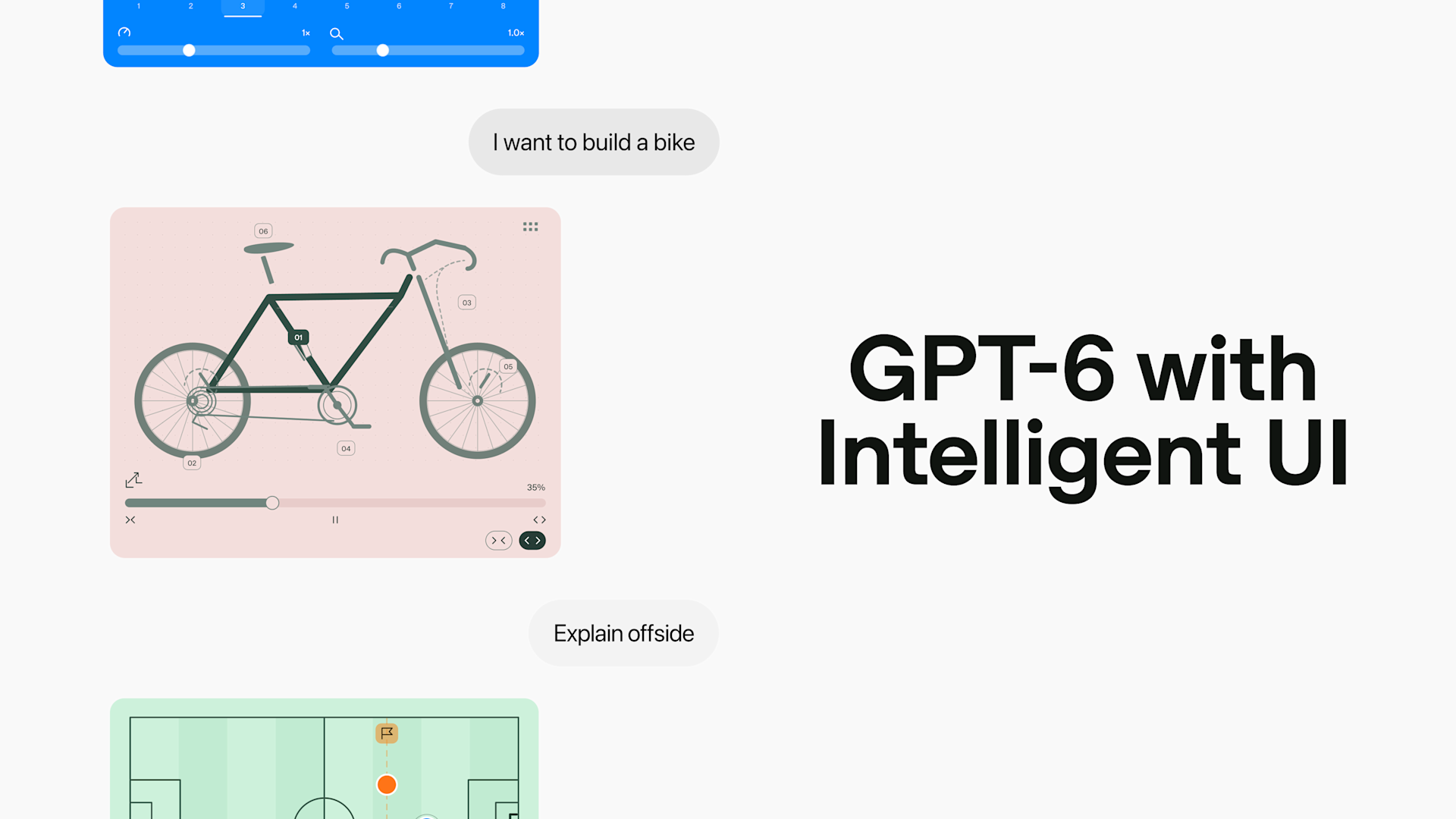
OpenAI introduced Atlas in October 2025 as a Chromium-based browser built around a persistent ChatGPT sidebar. According to OpenAI's own setup documentation for Atlas, the browser let people ask questions about whatever page was open, summarize articles, and, with permission, let the assistant remember what a user had been working on across sessions, with controls to view, pause, or delete that memory. Its headline feature was Agent Mode, a preview capability for Plus, Pro, and Business subscribers that could click through pages and complete multi-step tasks on a user's behalf. OpenAI built in guardrails from the start: agent mode could not run code, download files, or install extensions, and it paused for confirmation on sensitive sites such as banks.
The catch was availability. Atlas launched on macOS only, and OpenAI never shipped the Windows, iOS, and Android versions it had described as "in development." Reviewers and competitors, including our own look at how Comet, Gemini, and Copilot Mode define the AI browser category, routinely flagged the Mac-only limitation as Atlas's biggest practical weakness next to Comet's broader reach.
Why OpenAI pulled the plug on Atlas
In July 2026, alongside the launch of ChatGPT Work and the GPT-5.6 model family, OpenAI said it was sunsetting Atlas. OpenAI product lead James Sun confirmed the move publicly, and OpenAI's help center article on the transition laid out a targeted deprecation date of August 9, 2026, after which the standalone app stops working. The company's explanation was that everything it learned building a dedicated browser got folded into a more capable successor rather than kept running as a side project. Reporting around the shutdown also tied it to a broader pullback on standalone consumer bets at OpenAI's Applications division.
What replaced it is not a browser you download and set as default, but a built-in browser and computer-use capability inside the unified ChatGPT desktop app for Mac and Windows, plus a ChatGPT Chrome extension for people who want to stay on Chrome. According to OpenAI's support documentation for the built-in browser, the desktop app's browser lets ChatGPT work across open tabs, pull in files, and wait while a user signs into a site, with the heavier agentic lifting now branded as ChatGPT Work. Practically, that means OpenAI no longer competes with Comet on the same terms: it is not asking people to switch their default browser, just to let ChatGPT reach into whichever browser they already use. Atlas users were told bookmarks, saved passwords, and browsing history would not transfer automatically, and were advised to export bookmarks as an HTML file before the shutdown date.
What Perplexity Comet does right now
Comet is a Chromium-based browser Perplexity first announced in July 2025 under the headline "Browse at the speed of thought". Perplexity's own description centers on an assistant that can run entire browsing sessions on a user's behalf: comparing products, answering questions about whatever is on screen, drafting email replies, booking things, and consolidating open tabs into one interface. Perplexity has since expanded Comet into mobile, launching on Android in November 2025 and iOS in March 2026, with the Comet Assistant able to summarize articles, fill out forms, research people ahead of a meeting, and carry a research thread from desktop to phone. Perplexity's current Comet page states plainly that the browser is "available for Mac, Windows, iOS, and Android" — a four-platform footprint Atlas never reached.
Comet launched gated behind Perplexity Max, the company's $200-a-month tier, with a waitlist for everyone else. Perplexity reversed that in October 2025, making the browser itself free worldwide and describing the change as permanent rather than promotional. Free access does come with limits: Perplexity's paid Pro ($20/month) and Max ($200/month) plans unlock higher usage caps on Deep Research and the most capable underlying models, and a separate $5/month Comet Plus add-on brings licensed publisher content into the browser (it's bundled free with Pro and Max).
Agentic task performance: what each company has actually claimed
Neither company has published independent, third-party benchmark scores for browser agent accuracy, so comparisons mostly come down to each company's own stated design choices and the limitations it has disclosed. OpenAI described Atlas's Agent Mode as deliberately constrained: no code execution, no file downloads, no extension installs, and a hard pause on financial sites pending human confirmation. That made Atlas's agent cautious by design rather than broadly capable. Perplexity has marketed Comet's assistant more aggressively, framing it as able to handle "any task" from booking a meeting to buying a forgotten item, and has continued to expand what the assistant can touch, including shopping on third-party retail sites — which is precisely the behavior that triggered Amazon's lawsuit, discussed below. Perplexity has also called Comet "the fastest-growing AI browser" and said its assistant is "one of the most-used AI agents with web access," claims that are the company's own and have not been independently verified.
With Atlas gone, the more relevant comparison for agentic work going forward is Comet against OpenAI's ChatGPT Work and its built-in desktop browser, not against the discontinued Atlas app. That is a different matchup from the one most people are searching for today, which is exactly why it is worth being explicit that the "vs." in this comparison is now partly historical.
Atlas, Comet, and what replaced Atlas: side by side
| ChatGPT Atlas (as launched, now retired) | What replaced it (ChatGPT desktop + Work) | Perplexity Comet | |
|---|---|---|---|
| Status as of Oct. 2026 | Discontinued; targeted shutdown Aug. 9, 2026 | Active | Active |
| Form factor | Standalone Chromium browser | Built-in browser inside the ChatGPT desktop app, plus a Chrome extension | Standalone Chromium browser |
| Platforms | macOS only | macOS and Windows (desktop app); Chrome extension cross-platform | Mac, Windows, iOS, Android |
| Price to access agent features | Free to install; Agent Mode preview for Plus/Pro/Business | Varies by plan; some agent features reach Free users | Browser itself free; higher usage limits on Pro ($20/mo) and Max ($200/mo) |
| Headline agent feature | Agent Mode (no code execution, no downloads, pauses on sensitive sites) | ChatGPT Work: cross-app, cross-file "computer use" agent | Comet Assistant: multi-step browsing, shopping, scheduling, research |
| Known legal exposure | None reported | None reported | Amazon lawsuit over shopping-agent behavior (ongoing) |
Privacy, memory, and data handling
OpenAI's design for Atlas defaulted to not using browsing data to train its models unless a person opted in, and offered an incognito mode alongside a memory feature users could inspect, pause, or delete. That approach is expected to carry forward into the ChatGPT desktop app's browser, per OpenAI's support documentation, though OpenAI has not published a separate, detailed privacy policy specific to the new built-in browser. Perplexity's public framing of Comet leans on a related but distinct argument: in its response to Amazon, the company described a "user agent" as something that should act with the user's own logged-in credentials, stored on the user's device, rather than Perplexity's servers — "private, personal, and powerful," in the company's words. Neither company's agent is marketed as fully autonomous; both describe permission prompts and human-in-the-loop checkpoints for consequential actions, though the exact triggers differ and aren't independently documented in detail by either company.
The Amazon lawsuit: a real, unresolved legal dispute
This is a legal dispute, not a settled finding of wrongdoing, and it is still working its way through the courts. Amazon sued Perplexity in the U.S. District Court for the Northern District of California in early November 2025, alleging that Comet's shopping agent violated the Computer Fraud and Abuse Act by disguising its browser identity and continuing to access Amazon's site after being blocked. Perplexity responded the same week with a blog post titled "Bullying is Not Innovation," arguing that a "user agent is your AI assistant — it has exactly the same permissions you have," and framing Amazon's suit as an attempt to intimidate a smaller competitor rather than a legitimate security concern.
The dispute escalated in March 2026, when a federal judge issued a preliminary injunction blocking Comet's agent from making purchases on Amazon while the case proceeded — a real but non-final ruling. Perplexity appealed, and in August 2026 the appeals court vacated that injunction, concluding Amazon was unlikely to succeed on its core legal theory because it is the user's own Amazon account, not Perplexity itself, accessing Amazon's systems. The underlying case was sent back to the district court, where other claims may still proceed, and Amazon has said it disagrees with the outcome. None of this amounts to a court finding that Comet broke the law, and none of it amounts to Perplexity having been fully cleared either — it is an active, unresolved fight that anyone evaluating Comet for shopping tasks should know is still open.
Pricing and platform availability, side by side
| Plan | OpenAI (ChatGPT) | Perplexity |
|---|---|---|
| Free tier | ChatGPT Free, with some ChatGPT Work agent access per OpenAI | Comet browser is free; Perplexity's free search tier is capped at a handful of Pro Searches per day |
| Mid tier | ChatGPT Plus (~$20/month) | Perplexity Pro (~$20/month) — higher usage caps, Comet Plus included |
| Top tier | ChatGPT Pro (~$200/month) | Perplexity Max (~$200/month) — highest usage caps, early access to new Comet features |
| Dedicated browser available? | No — Atlas retired; browser is built into the ChatGPT desktop app / Chrome extension | Yes — Comet, free to download on Mac, Windows, iOS, Android |
Exact usage limits on both sides change often enough that the specific caps are worth checking on each company's own pricing page before subscribing; the tier names and structure above have been stable through 2026.
Which should you actually use right now?
If the question is literally "should I download ChatGPT Atlas or Perplexity Comet," the answer is that you can't download Atlas anymore — it's gone. If the real question is "should I use OpenAI's or Perplexity's AI browsing tools," it depends on what you're optimizing for. People who live inside ChatGPT already and want browsing folded into the same app they use for everything else will get that through the ChatGPT desktop app and its Work agent, with OpenAI's more conservative, permission-gated approach to sensitive actions. People who want a dedicated browser they can set as default on any device, including a phone, and who are comfortable with an assistant that takes a more expansive view of what it can do on their behalf — including contested territory like automated shopping — are better served by Comet. Worth noting for anyone comparing the underlying assistants rather than just the browser shell: our breakdown of how OpenAI's and Anthropic's current model lineups compare on price and benchmarks is a useful companion read, since the model behind the agent matters as much as the browser wrapped around it. And because OpenAI folded Atlas's agentic work into the same desktop app now carrying Codex, it's also worth reading how that coding agent stacks up against Codex versus Claude Code if development work is part of why you wanted an agentic browser in the first place.
What's next for AI browsers
The practical lesson from Atlas's shutdown is that "AI browser" was never guaranteed to be a durable product category on its own — it may simply be a feature that gets absorbed into whichever app a company already has people living inside. OpenAI's bet is now that ChatGPT itself, not a separate browser, is the right home for agentic browsing. Perplexity's bet is the opposite: that owning the browser chrome itself, on every platform, including phones, is worth defending even through an active federal lawsuit. Whether Comet keeps its legal footing with Amazon, and whether Google, Microsoft, or The Browser Company respond with their own aggressive pushes, will likely decide whether a standalone AI browser still looks viable a year from now, or whether Atlas's fate turns out to be the category's preview rather than its exception.
Frequently asked questions
Is ChatGPT Atlas still available?
No. OpenAI retired the standalone Atlas browser, with a targeted shutdown date of August 9, 2026, after telling users in July 2026 that it was sunsetting the app. Atlas's agentic browsing features moved into the ChatGPT desktop app and a Chrome extension instead.
What happens to Atlas bookmarks and history after the shutdown?
OpenAI said bookmarks, browsing history, and open tabs would not transfer automatically, and advised Atlas users to export their bookmarks as an HTML file before the deprecation date so they could import them into another browser.
Is Perplexity Comet free to use?
Yes. Comet launched in July 2025 gated behind Perplexity's $200/month Max plan, then Perplexity made the browser itself free worldwide in October 2025. Paid Pro ($20/month) and Max ($200/month) plans raise usage limits and include Comet Plus.
What platforms does Comet support?
Perplexity's own Comet page lists Mac, Windows, iOS, and Android. Comet reached Android in November 2025 and iOS in March 2026, completing the four-platform rollout.
Is Perplexity Comet involved in a lawsuit?
Yes. Amazon sued Perplexity in November 2025 over Comet's automated shopping agent. A preliminary injunction against Comet was issued in March 2026 and then vacated on appeal in August 2026, so the underlying case remains open and unresolved.
Since Atlas is gone, what's the real alternative to Comet?
OpenAI's replacement isn't a separate browser but a built-in browser and agent inside the unified ChatGPT desktop app (Mac and Windows) plus a ChatGPT Chrome extension, branded ChatGPT Work for the heavier agentic tasks.
Sources
- OpenAI Help Center: Getting started with Atlashelp.openai.com
- OpenAI Help Center: Evolving Atlas into ChatGPT for browser-based agentic workhelp.openai.com
- OpenAI Help Center: Using the built-in browser in the ChatGPT desktop apphelp.openai.com
- Perplexity: Comet browser overview and platform availabilityperplexity.ai
- Perplexity Blog: Introducing Cometperplexity.ai
- Perplexity Blog: Bullying is Not Innovationperplexity.ai
Theo Park runs the AI desk at Pandromeda. He follows model launches from the frontier labs and the open-weight community, tracks the assistants and developer tools built on them, and explains what each release changes on pricing, capability and safety. His reporting leans on primary sources: model cards, technical reports, API documentation and the companies' own announcements.