Genie 4 Release: Project Genie Access, Price and How to Use It
Google's Genie 4 world model is rolling out to AI Ultra subscribers, with an AI Pro waitlist and Gemini API access for developers. Here's who gets in and what changed.
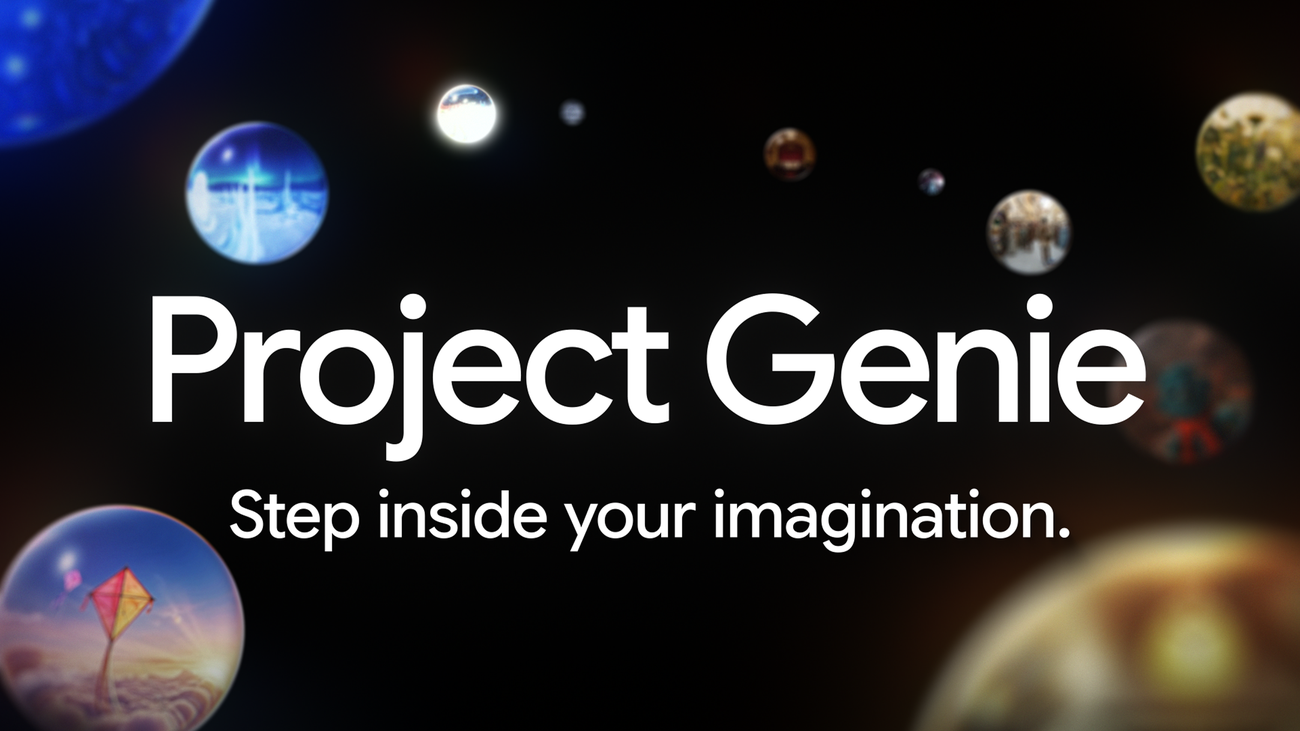
Genie 4 is rolling out now: Google announced on November 18, 2026 that eligible Google AI Ultra subscribers can start using the new Project Genie experience today, Google AI Pro members can join a waitlist, and developers can access Genie 4 through the Gemini API. Genie 3, the previous real-time world model, also picked up a set of upgrades in the same rollout.
Genie 4 access at a glance
- Who has it now: Eligible Google AI Ultra subscribers, via Project Genie
- Who's waiting: Google AI Pro members, via an in-app waitlist
- Developers: Access via the Gemini API's Interactions API and Google AI Studio
- Price: Not published for consumer access beyond existing Google AI plan tiers; developers are pointed to the Gemini API's own pricing page
- Genie 3: Also upgraded — sessions now run up to 3 minutes (up from 60 seconds), plus world chaining and 360-degree panorama grounding
Who can use Genie 4 right now
According to Google's own announcement, Genie 4 access is tiered by subscription, not a single public launch:
- Google AI Ultra subscribers are first in line. Google says "eligible" Ultra subscribers can try the new Project Genie experience "starting today," which points to a staged rollout rather than every Ultra account getting access simultaneously.
- Google AI Pro members do not get immediate access. Instead, Google is offering them a waitlist inside the product.
- Google's post makes no mention of a free tier for Genie 4. If you're not on AI Ultra or AI Pro, there's currently no stated path to try it as a consumer.
The entry point for all of this is labs.google/projectgenie, which Google describes as the home for the "new Project Genie experience." Exact plan pricing and what's bundled into Ultra versus Pro is laid out on Google's Google AI plans page, since the Genie 4 announcement itself doesn't restate subscription prices.
| Who | Access to Genie 4 | Where |
|---|---|---|
| Google AI Ultra subscribers | Rolling out now (eligible accounts) | labs.google/projectgenie |
| Google AI Pro members | Waitlist only | In-product waitlist via Project Genie |
| Everyone else (no paid plan) | Not available | — |
| Developers | Available via API | Gemini API / Google AI Studio |
What Project Genie was before this rollout
Project Genie isn't brand new — it's been running as an experimental prototype since January 2026, when Google first opened it to Google AI Ultra subscribers in the U.S. who were 18 or older (Google AI Ultra for Business accounts were excluded at the time). At that original launch, Google described Project Genie as "an experimental research prototype that lets you create and explore worlds," built on Genie 3, Nano Banana Pro for image generation, and Gemini.
That original version let people sketch a world from text or an image, choose a camera perspective and movement style, explore it in real time, and remix existing prompts from a curated gallery. Google was upfront at the time about the rough edges: worlds didn't always look realistic or follow prompts and physics closely, characters could be harder to control because of latency, and every session was capped at 60 seconds. The November 18 announcement is the point where that early prototype turns into a broader release — adding a second, more capable model in Genie 4, extending Genie 3's session cap well past that original 60-second limit, and opening a developer path through the Gemini API that didn't exist in January.
What's actually new in Genie 4
Pandromeda covered what Genie 4 is as a technology in our earlier explainer on Genie 4's real-time world model. This piece is about what changed with the November 18 rollout — specifically, what Google says separates Genie 4 from Genie 3 now that both are live in the same product.
Google's announcement calls Genie 4 "our most realistic and interactive world model yet," and highlights two specific capabilities:
- Mid-session text edits. Users can type a prompt while already inside a generated world to change it on the fly — for example, changing the weather, adding characters, or redirecting the action — without restarting the session.
- Real-time native audio paired with visuals. Google says Genie 4 is the first Genie model to generate real-time native audio alongside video, with ambient soundscapes and character dialogue that adapt to what's happening in the scene.
Google also claims Genie 4 has the highest fidelity visuals, physics, and native audio of any Genie model released so far. That's a company claim rather than an independently measured benchmark, and Google's post does not publish specific numbers (resolution, frame rate, or latency figures) for the consumer Project Genie experience — those details differ on the developer side, covered below.
Genie 3 also got upgraded, not just Genie 4
One detail that's easy to miss in the Genie 4 headlines: Genie 3 is still available in Project Genie's model picker, and it got a separate set of upgrades in this same release. Per Google's announcement:
- Longer sessions. Genie 3 generations can now run up to 3 minutes, up from the previous 60-second cap.
- World chaining. Multiple generated worlds can now be linked together into a longer continuous journey.
- 360-degree panorama grounding. New worlds can be seeded directly from 360-degree panorama images, rather than only text or a single reference image.
- Real-time in-world events. The environment can change mid-session in response to natural-language prompts while you're exploring it.
In other words, this rollout isn't purely a "Genie 4 replaces Genie 3" story — Google is running both models side by side inside Project Genie, with Genie 4 positioned as the higher-fidelity, audio-enabled option and an upgraded Genie 3 still in the mix for longer, chainable sessions.
The new Project Genie agent
Alongside the two models, Google introduced a Project Genie agent that sits on top of them. According to the announcement, the agent:
- Builds a world from a natural-language conversation, rather than a single one-shot prompt, coordinating Google's multimodal models to generate the initial visuals and background music.
- Can bring Gemini into an active session so it observes what's on screen and offers context-aware suggestion chips, or triggers in-world events automatically.
- Lets users remix existing worlds from the community gallery — changing structure, soundtrack, or rules — and then publish their own version.
The community gallery, explained
Project Genie now includes a community gallery that mixes Google-curated worlds with ones made by users, who can publish, explore, and remix them. Google's post names a few specific examples:
- "Living Memory" — turns personal photos into explorable spaces.
- "Dino Field Guide" — prehistoric habitats generated from 360-degree panoramas.
- "Rock Paper Scissors" — a game where Gemini acts as the referee.
Google also highlighted two collaborations built with early-access creators: "Villa Giallo," a gothic manor mystery built with an artist credited as Will (BLVCKL!GHT), and "The Life of Ants," an ant-colony navigation experience built with filmmaker Anand Gandhi — both built using Genie 4.
Developer access: Genie 4 on the Gemini API
Separately from the consumer rollout, Google published a companion post — dated November 19, 2026, one day after the main Genie 4 announcement — confirming that Genie 4 is now available on the Gemini API for developers, through the Interactions API. That's a distinct access path from Project Genie: instead of a consumer web app gated by an AI Ultra or AI Pro subscription, it's an API surface that any developer with Gemini API access can call directly, build into their own apps, or test inside Google AI Studio. Based on Google's developer announcement and documentation:
- Developers can generate continuous worlds at 720p and 24fps with synchronized native audio — ambient sound, sound effects, and character dialogue.
- Worlds can be generated from a text prompt, a reference image, or both.
- Real-time keyboard controls can be combined with live text prompts to change weather, lighting, objects, or events mid-session.
- Every output carries SynthID watermarking, same as the consumer product.
- Google AI Studio offers a live interactive canvas and starter apps for testing Genie 4 directly, documented at aistudio.google.com/docs/genie.
On pricing: Google's developer post does not state a per-second or per-request price for Genie 4 in the body of the announcement — it only directs developers to "review pricing details" in the Gemini API's own documentation. We were not able to independently confirm a specific figure on an official Google pricing page at publication time, so if you see a number cited elsewhere, treat it as unconfirmed until Google's pricing page itself lists it. What is confirmed is that access exists now, through the Gemini API, documented at Google AI Studio.
Google's developer post also does not specify rate limits, geographic availability, or which Gemini API tiers (free vs. paid) include Genie 4 access — those details weren't part of the announcement we reviewed. For developers evaluating whether to build on it, the practical takeaway is that the model is reachable today through documented endpoints, even though the commercial terms live in a separate pricing page rather than in the launch post itself.
| Capability | Project Genie (consumer) | Gemini API (developer) |
|---|---|---|
| Model(s) | Genie 4 and upgraded Genie 3, selectable | Genie 4 via the Interactions API |
| Input | Text prompts, images, 360-degree panoramas | Text prompt, reference image, or both |
| Output | Real-time video with native audio | 720p / 24fps continuous video with synchronized native audio |
| Mid-session control | Text edits, Gemini-driven suggestions and events | Keyboard controls plus live text prompts |
| Watermarking | SynthID on all output | SynthID on all output |
What Genie 4 still can't do
Google is explicit that both Genie 3 and Genie 4 remain frontier research models rather than finished products, and lists ongoing limitations in its own post:
- Camera latency — delays between a camera movement prompt and the world updating.
- Intricate physical interactions — complex object and character physics are still being refined.
- Real-time audio precision — the native audio doesn't always sync or match perfectly with on-screen events.
- Long-term scene permanence — generated worlds don't yet reliably "remember" earlier state over long sessions.
Google points readers to the Genie 4 research overview on DeepMind's site for a fuller discussion of model limitations.
Safety and watermarking
Per Google's announcement, every piece of video and audio generated inside Project Genie — across both Genie 3 and Genie 4 — includes SynthID watermarking, and all model inputs and outputs go through safety screening before and after generation. Google doesn't publish specifics on what that screening catches or blocks in this announcement.
How to try Genie 4 today
If you want to use Genie 4 as a consumer rather than a developer, the practical path right now is:
- Check your Google AI plan. Confirm whether your account is on Google AI Ultra, since that's the tier Google says gets access first. Plan details are on the Google AI plans page linked above.
- Open Project Genie. Go to labs.google/projectgenie and look for the new experience; Google describes the rollout as reaching "eligible" Ultra accounts, so it may not appear for every subscriber on day one.
- If you're on Google AI Pro, look for the waitlist option inside Project Genie rather than the live experience.
- If you build software, skip the consumer waitlist and go straight to the Gemini API documentation linked above, where Genie 4 is already available through the Interactions API.
For broader context on how Genie 4 fits next to Google's other recent AI releases, see our coverage of Gemini 4 Neon's price and specs and of Google's move to make Gemini Tasks free in six countries.
What next
Google has not published a timeline for widening Genie 4 access beyond Google AI Ultra, and the AI Pro waitlist currently has no stated conversion date. Watch for: Google AI Pro accounts starting to clear the waitlist, any published per-second or per-request pricing on the Gemini API's pricing page for Genie 4 specifically, and further detail in the Genie 4 research overview on camera latency and scene-permanence fixes. Pandromeda will update this story as Google publishes more on pricing, wider availability, or additional Genie 4 capabilities.
Frequently asked questions
Is Genie 4 out now?
Yes. Google announced on November 18, 2026 that Genie 4 is rolling out through the new Project Genie experience. Eligible Google AI Ultra subscribers can access it starting that day, while Google AI Pro members can join a waitlist. Google has not stated a free consumer tier.
How much does Genie 4 cost?
Google has not published a standalone Genie 4 price. Consumer access runs through existing Google AI Ultra and Google AI Pro subscription tiers, detailed on Google's AI plans page. For developers, Google's Gemini API announcement points to the Gemini API's own pricing documentation rather than stating a figure in the launch post, so no confirmed per-use price is available yet.
How do I get Project Genie access?
Go to labs.google/projectgenie. Google AI Ultra subscribers can use the new experience if their account is marked eligible for the rollout. Google AI Pro members can join an in-app waitlist. There is currently no stated access path for accounts without an Ultra or Pro subscription.
Can developers use Genie 4?
Yes. Google confirmed Genie 4 is available on the Gemini API through the Interactions API, with a live interactive canvas and starter apps in Google AI Studio, documented at aistudio.google.com/docs/genie. This is separate from the consumer Project Genie waitlist and doesn't require an AI Ultra or AI Pro subscription.
What's different between Genie 4 and Genie 3 now?
Both are selectable inside Project Genie. Google positions Genie 4 as higher fidelity, with mid-session text edits and real-time native audio paired with visuals for the first time. Genie 3 was separately upgraded in the same rollout: sessions now run up to 3 minutes (up from 60 seconds), worlds can be chained together, and new worlds can be seeded from 360-degree panoramas.
What can't Genie 4 do yet?
Google describes Genie 3 and Genie 4 as still being frontier research models and lists ongoing limitations: camera latency, imprecise handling of intricate physical interactions, imperfect real-time audio precision, and a lack of long-term scene permanence in generated worlds.
Sources
- Google Blog: Genie 4 is now available (Project Genie)blog.google
- Google Blog: Genie 4 is now available on the Gemini APIblog.google
- Google: Introducing Project Genie (original January 2026 launch)blog.google
- Google AI plans (Ultra and Pro tiers)one.google.com
- Google AI Studio: Genie documentationaistudio.google.com
- DeepMind: Genie 4 research overviewdeepmind.google
Theo Park runs the AI desk at Pandromeda. He follows model launches from the frontier labs and the open-weight community, tracks the assistants and developer tools built on them, and explains what each release changes on pricing, capability and safety. His reporting leans on primary sources: model cards, technical reports, API documentation and the companies' own announcements.

