Microsoft Says Copilot+ PCs Now Ship in the Tens of Millions a Year
Microsoft used its Oct. 7 Windows and Surface event to reveal Copilot+ PC shipment and usage figures alongside a new hybrid intelligence strategy for Windows.

Microsoft says Copilot+ PCs are now shipping in the tens of millions of units a year and account for more than 40% of the laptops being built for business, figures the company's Windows leadership shared at an Oct. 7, 2026 Windows and Surface event alongside a new "hybrid intelligence" strategy for splitting AI work between the PC and the cloud. The company also disclosed, in a same-day blog post, that Copilot+ PCs now run more than 2 trillion AI inferences locally every month across search, imaging, and video calls.
- Over 40% of laptops being built for business are now Copilot+ PCs, per Microsoft's Windows Experience Blog.
- Copilot+ PCs run more than 2 trillion AI inferences locally per month across search, imaging, and video calls.
- Microsoft executives said on stage that Copilot+ PCs are shipping in the tens of millions of units annually.
- Microsoft Execution Containers (MXC), a new agent-governance layer, is now generally available on Windows 11.
- Copilot is gaining local file and activity access on Copilot+ PCs, rolling out "in the coming months."
What Microsoft announced on October 7
The figures come from a Windows Experience Blog post titled "Building Windows for hybrid intelligence," published October 7, 2026, and written by Pavan Davuluri, Microsoft's Executive Vice President of Windows + Devices. The post frames Windows as "the home for hybrid intelligence: a platform where agents can run locally when it makes sense, reach the cloud when they need to, and operate with the security and manageability organizations expect."
The announcement bundles several pieces together: updated Copilot+ PC adoption numbers, the general availability of a new agent-containment system called Microsoft Execution Containers (MXC), expanded local-model support for Copilot and GitHub tools, new hardware built around NVIDIA's RTX Spark silicon, and a refreshed Windows Search experience with built-in "actions." It's Microsoft's clearest public signal yet that it intends to keep investing in on-device AI hardware, even as cloud-based assistants dominate headlines elsewhere.
The shipment and market-share numbers, explained
Two figures in the blog post are explicit and quotable. Microsoft states that "across all Copilot+ PCs, over 2 trillion inferences are run locally per month, improving customers' experience across search, imaging, and video calls," and that "today, over 40% of laptops being built for business are Copilot+ PCs." Both numbers describe the installed base and production mix of the Copilot+ PC category Microsoft introduced in 2024, not a single product launch.
A third figure — that Copilot+ PCs are now shipping in the tens of millions of units a year — was not written into the blog post itself. It was stated on stage at the same event by Microsoft's Windows leadership, including Davuluri, according to multiple outlets that covered the keynote live. Microsoft's own post does not spell out an exact annual unit count, so readers should treat the "tens of millions" figure as a verbal disclosure from the event rather than a line in the company's official write-up. Taken together, the written and spoken figures point in the same direction: Copilot+ PCs have moved from a 2024 launch category to a meaningful share of new business laptop production two years later.
Microsoft does not break the 40% figure down by region, OEM, or device tier, and it does not disclose how "business laptops" is defined (for example, whether it includes only commercial-channel SKUs or all laptops ultimately deployed by businesses). The blog post also carries a standing caveat that applies across its feature announcements: "availability and timing may vary by device, market, and silicon platform."
| Metric | Figure | Where it was stated |
|---|---|---|
| Share of business laptops built that are Copilot+ PCs | Over 40% | Windows Experience Blog post |
| Local AI inferences across all Copilot+ PCs | Over 2 trillion per month | Windows Experience Blog post |
| Annual Copilot+ PC shipment volume | "Tens of millions" of units | Reported from on-stage remarks at the event |
| Microsoft Execution Containers (MXC) status | Generally available on Windows 11 | Windows Experience Blog post |
| Copilot local file/activity access rollout | "Coming months," Copilot+ PCs first | Windows Experience Blog post, footnote 3 |
What Microsoft means by "hybrid intelligence"
"Hybrid intelligence" is the umbrella term Microsoft used throughout the October 7 post to describe splitting AI workloads between a PC's local silicon and Microsoft's cloud, task by task. The company argues that as AI models grow larger and more capable, "customers' needs are outpacing what their cloud budgets can support," and that running more inference locally lets people "stretch their budgets while preserving access to the intelligence they need." Microsoft says this depends on four things working together: powerful local models, intelligent routing of tasks to the right place, a runtime (Windows ML) to run those models efficiently across CPU, GPU, and NPU, and capable silicon in the PC itself.
Concretely, Microsoft detailed several local models now reaching Copilot+ and higher-end "Builder" PCs: MAI Code 1.1 Flash, a 137-billion-parameter coding model (6.8 billion active parameters) that Microsoft says it compressed roughly 80% using 3-bit precision while keeping a 256K context window; an upcoming quantized NVIDIA Nemotron model; and DeepSeek V4 Flash. On the orchestration side, Microsoft says it is extending GitHub's HydraFusion routing system — which GitHub introduced earlier in 2026 to route coding tasks to the right cloud model — so that it can also route tasks to models running locally on a Windows PC, inside the GitHub Copilot app, GitHub Copilot CLI, and Visual Studio Code, in experimental preview later in October.
Readers researching the category from scratch may want the baseline explainer on what qualifies as a Copilot+ PC and what hardware it requires before digging into how hybrid intelligence changes that baseline.
MXC: Microsoft's new governance layer for AI agents
The other major platform change is security-focused. Microsoft says agents "don't work like traditional apps" because they can run continuously, call tools, write code, and act across systems "often without someone watching every step," which the company says requires a different security model built around three primitives: containment (what an agent can access), identity (which agent took which action), and manageability (tying agent activity into IT tools like Microsoft Agent 365 and Intune).
Microsoft Execution Containers (MXC), the containment piece of that model, became generally available on Windows 11 on October 7. MXC lets organizations define which files and networks an agent is allowed to reach, with those limits enforced at runtime, and gives administrators containment options ranging from process and session isolation up to full virtual machines and Windows 365 for Agents. Microsoft says agents that already support MXC include Codex from OpenAI, GitHub Copilot, OpenClaw, Replit, LM Studio, NVIDIA's OpenShell, and Unsloth AI, with Anthropic's Claude Code, Box, Egnyte, Perplexity, and several others listed as expected to add support. Meta's "Muse for Windows" personal agent is also described as coming soon as a native Windows app with MXC integration. Microsoft has also published the MXC project on its GitHub organization and a companion developer post explaining how to integrate agents with it.
For organizations already weighing agentic coding tools against each other, this containment layer is a direct companion to coverage on how GitHub Copilot's local sandboxing works, since GitHub Copilot is named as one of the agents MXC already supports.
Copilot is gaining local file and activity access
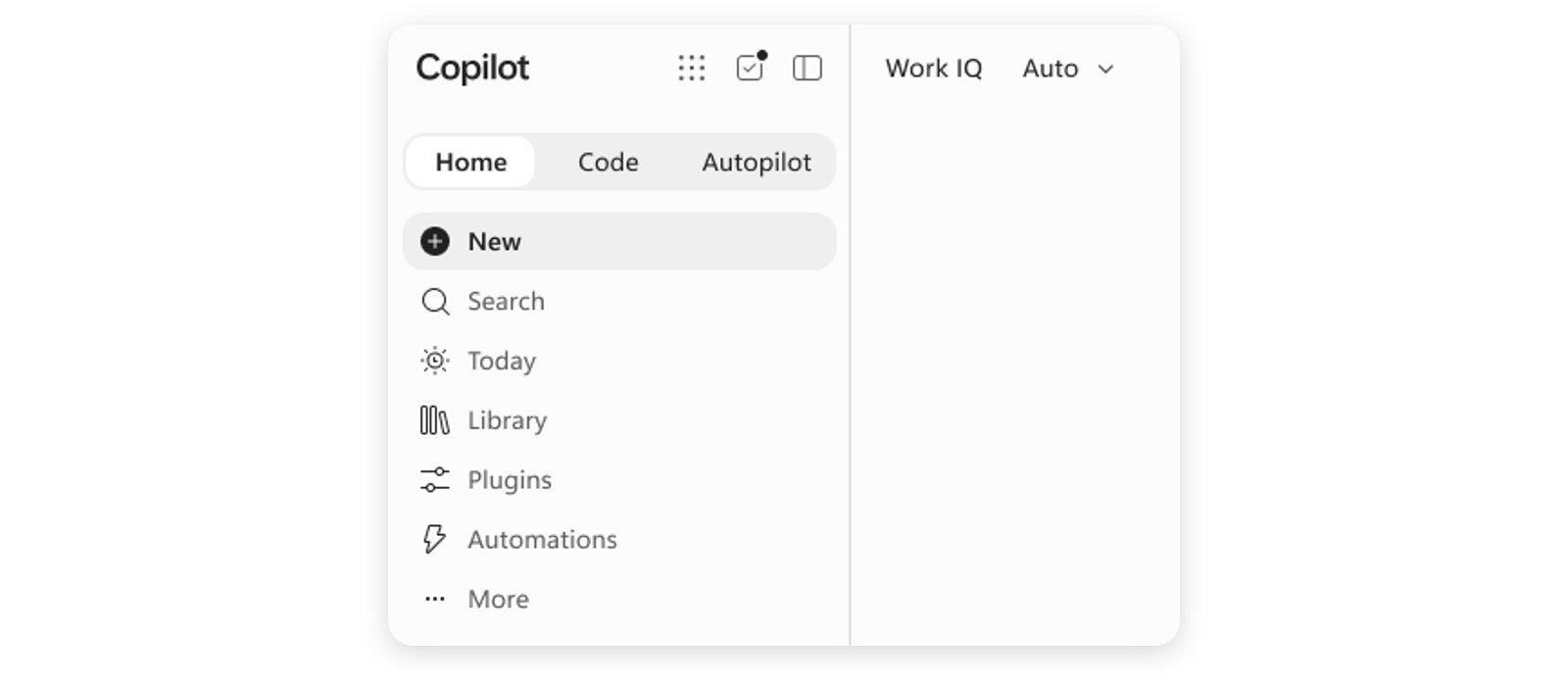
Separately from MXC, Microsoft is changing what its own Copilot assistant can see and do on a PC. The blog post says that, with user permission, Copilot on Copilot+ PCs will gain three new local capabilities: "local context" (understanding relevant files and recent activity on the PC), "local actions" (carrying out tasks across Windows such as organizing files, running diagnostics, troubleshooting, and coding), and "local models" (using on-device AI models combined with the cloud when needed). Microsoft frames this as an extension of the Copilot overhaul — built around Home, Code, and Autopilot experiences — that it introduced in a separate blog post on September 25, 2026.
Microsoft's own explanation of the mechanics is brief but direct: "Copilot understands your PC, takes action with your permission, and uses local models when it makes sense, with you in control at every step." The company says these Copilot capabilities are "expected to begin rolling out on Copilot+ PCs in the coming months," with a footnote reiterating that a Windows Update is required and that "availability and timing may vary by device, market, and silicon platform." Readers who want the fuller picture of Autopilot specifically, including what it costs, can see the existing breakdown of how Copilot Autopilot works and what it costs.
Windows Search gets "actions" on the taskbar
Microsoft also used the post to detail a new Windows Search experience that adds what it describes as "thousands of new actions" directly from the taskbar, so users can complete short tasks without opening another app. Examples Microsoft gave include typing phrases like "switch to dark mode," "turn on Do Not Disturb," "enable Airplane mode," "dim my screen," "mute," "minimize all my windows," or "text Elisa I'll be there soon." Microsoft says these actions began rolling out to Windows Insiders in the experimental channel the same day, and that an opt-in option to bring the new Copilot into taskbar Search — for inline answers and a jump-off point into the full Copilot app — will reach "select markets" later in 2026.
New Copilot+ and "Builder" hardware tied to the push
The announcement leaned on new hardware to make hybrid intelligence practical at the high end. Microsoft and NVIDIA's RTX Spark platform, introduced in June 2026, underpins a new "Builder PC" tier that includes Microsoft's own Surface Laptop Ultra and Surface RTX Spark Dev Box, alongside new RTX Spark-based machines from ASUS, Dell, HP, Lenovo, and MSI. Microsoft says Surface Laptop Ultra, with up to 128GB of unified memory, can run AI models exceeding 120 billion parameters locally, and is available for pre-order now ahead of an October 16 release; the Surface RTX Spark Dev Box is also available for pre-order, shipping to U.S. customers in November. At the very top of the range, Microsoft says NVIDIA DGX Station for Windows systems — built on the GB300 Grace Blackwell Ultra chip — are coming later this year and are designed to run models approaching a trillion parameters locally for engineering, research, and "token factory" workloads inside organizations. Mainstream Copilot+ PCs, Microsoft says, remain available from Acer, ASUS, Dell, HP, Lenovo, and Microsoft Surface via Microsoft's own Copilot+ PC shopping page.
For readers still deciding whether any of this matters for a purchase today, Microsoft's push doesn't change the baseline requirements for the category — it layers new software capability on top of hardware that already qualifies. The existing comparison of what separates a Copilot+ PC from an ordinary Windows 11 machine is still the right starting point before evaluating whether hybrid intelligence features are worth waiting for on a specific device.
Caveats and rollout timing
Microsoft attached the same qualifying language to nearly every new feature in the announcement: features require a Windows Update, "will roll out over time," and "availability and timing may vary by device, market, and silicon platform." That caveat applies to the Copilot local-access features, the taskbar Copilot integration in Search, and the broader hybrid intelligence rollout. None of the AI performance comparisons Microsoft cited for its new RTX Spark hardware (for example, claimed gains over an Apple MacBook Pro 16-inch with M5 Pro) apply to existing Copilot+ PCs already in the market — those figures are specific to the new Builder-tier devices and were based on Microsoft- and NVIDIA-commissioned testing using pre-production hardware, per the blog's own footnotes.
It's also worth being precise about sourcing: the 40% business-laptop figure and the 2-trillion-inferences figure are both direct lines from Microsoft's own blog post. The "tens of millions of units a year" shipment figure, by contrast, was given verbally at the event and has not (as of publication) been restated in a Microsoft press release or written post with a specific unit count, so it should be read as a company disclosure from the keynote rather than a documented figure in Microsoft's own writing.
Why it matters
Copilot+ PCs launched in May 2024 as a new Windows hardware category built around on-device NPUs capable of at least 40 trillion operations per second. Two years on, Microsoft's own numbers suggest the category has moved well past early-adopter status in the commercial channel, while the company is simultaneously trying to make the AI running on those devices more capable — not just via bigger local models, but via a security and governance layer (MXC) that lets IT departments actually trust what agents are allowed to touch. That combination — more AI running locally, plus a framework for containing it — is Microsoft's answer to two separate problems: cloud AI costs piling up, and enterprises hesitant to let autonomous agents loose on sensitive files and networks without guardrails.
What to watch next
The next concrete dates to watch: Surface Laptop Ultra ships October 16, 2026; the Surface RTX Spark Dev Box ships to U.S. customers in November; GitHub's HydraFusion local routing reaches an experimental preview in GitHub Copilot, GitHub Copilot CLI, and VS Code later in October; and Microsoft says it will share more about hybrid intelligence for organizations at Microsoft Ignite in November 2026. Copilot's new local-context and local-action features on Copilot+ PCs don't have a firmer date yet beyond "coming months," and the opt-in Copilot-in-Search integration is limited to "select markets" for now — both are worth checking back on as Microsoft narrows the rollout schedule.
Frequently asked questions
Did Microsoft say exactly how many Copilot+ PCs ship each year?
Not in writing. Microsoft's October 7, 2026 blog post confirms that over 40% of laptops being built for business are Copilot+ PCs and that they run over 2 trillion local AI inferences a month, but the specific "tens of millions of units a year" shipment figure was stated verbally at the event rather than printed in Microsoft's own post.
What is Microsoft's "hybrid intelligence" strategy for Windows?
It's Microsoft's framing for splitting AI workloads between a PC's local silicon and the cloud, using local models, an orchestration layer, the Windows ML runtime, and capable silicon so that routine tasks run on-device while harder tasks reach the cloud.
What is Microsoft Execution Containers (MXC)?
MXC is a new agent-governance layer that became generally available on Windows 11 on October 7, 2026. It lets organizations define which files and networks an AI agent can access, enforced at runtime, with containment options from process isolation up to full virtual machines.
Is Copilot getting access to my files automatically?
No. Microsoft says the new local-context and local-action capabilities on Copilot+ PCs require user permission, and they are expected to begin rolling out "in the coming months," with availability varying by device, market, and silicon platform.
Do I need a new PC to get these hybrid intelligence features?
Many of the features Microsoft described, like Copilot's expanded local access, are aimed at existing Copilot+ PCs. The highest-end local AI capabilities, such as running 120-billion-plus-parameter models, are tied to new NVIDIA RTX Spark-based hardware like the Surface Laptop Ultra.
When does the Surface Laptop Ultra ship?
Microsoft says Surface Laptop Ultra is available for pre-order now and ships beginning October 16, 2026, while the Surface RTX Spark Dev Box ships to U.S. customers in November 2026.
Sources
- Microsoft Windows Experience Blog: Building Windows for hybrid intelligenceblogs.windows.com
- Microsoft Blog: Introducing the new Copilot with Home, Code, and Autopilotblogs.microsoft.com
- Windows Developer Blog: Microsoft Execution Containers — policy-driven containment for AI agentsblogs.windows.com
- GitHub: microsoft/mxc repositorygithub.com
- GitHub Blog: Project HydraFusion — frontier quality via multi-model orchestrationgithub.blog
- Microsoft: Shop Copilot+ PCsmicrosoft.com
Felix Moreau writes Pandromeda's software coverage and how-to guides. He covers Windows, macOS and Linux updates, the apps people rely on, emulators and developer tools, and turns official documentation into clear, numbered steps that work on the current version.