Microsoft Authenticator Flaw Let Apps Steal Work Tokens: Update Now
CVE-2026-80097 let a permission-less Android app pose as Teams and steal Microsoft Authenticator tokens. Here's what happened and how to update.
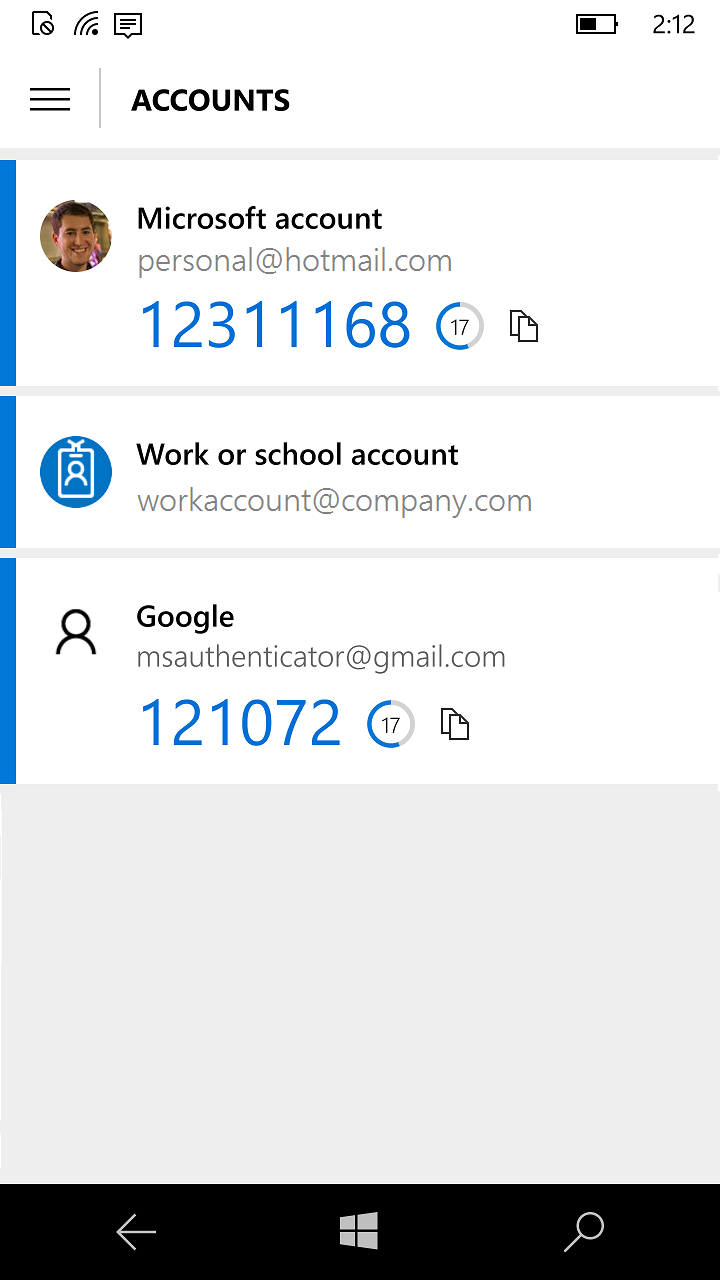
Update Microsoft Authenticator for Android now. A flaw tracked as CVE-2026-80097 (CVSS 8.6, "Important") let a malicious app with zero permissions impersonate a trusted Microsoft app like Teams and walk away with your work account's sign-in tokens — enough to read and send your mail, read and write your files, and read and write your calendar. Microsoft fixed it in Authenticator for Android version 6.2606.4246. It's not listed as actively exploited, but the technical details only became public on October 23, 2026, which is why it's trending now.
The short version: if you use Microsoft Authenticator for Android to sign into a work or school account, make sure your app is updated past version 6.2606.4246. The flaw has been patched since Microsoft's September 2026 Patch Tuesday, but security firm Enclave only published the technical breakdown of how the attack actually worked on October 23 — and that write-up raises a real disagreement with Microsoft about how easy the attack actually is to pull off.
| Date | Event |
|---|---|
| Before Sept. 2026 | Ofek Levin, via the Enclave Fellowship Program, reports the flaw to Microsoft |
| September 8, 2026 | Microsoft assigns CVE-2026-80097 and ships the fix in Authenticator for Android 6.2606.4246, as part of that month's Patch Tuesday |
| October 23, 2026 | Enclave publishes its full technical write-up, "AuthMask," with proof-of-concept details |
| October 26, 2026 | CVE-2026-80097 still not listed in CISA's Known Exploited Vulnerabilities catalog |
What the vulnerability actually does
CVE-2026-80097 lives in how Microsoft Authenticator for Android decides whether to trust an app asking it for a sign-in token. Authenticator exposes a component called AccountChooserActivity that any app installed on the phone is allowed to start — no special permission required. When an app starts that activity, it gets to supply its own claimed identity: which app it says it is, what permissions (scopes) it's asking for, and the redirect address tokens should be sent back to.
Authenticator's one safeguard was a signature check: it compared the identity the calling app claimed against the real signature of whatever app it claimed to be. According to Enclave's write-up, that check has a critical gap — because the impersonated app (Teams, in Enclave's proof of concept) was genuinely installed on the device, an attacker's app could compute a redirect value that matched Teams' real signature and sail through the check. Authenticator could see which app had actually made the call, through a separate Android system API, but Enclave found it wasn't using that information to make the trust decision at all.
This category of bug has a name in the mobile security world: a broker impersonation flaw. Microsoft Authenticator acts as what's called an "authentication broker" on Android — a shared component that other Microsoft apps (and some third-party apps) hand off to when they need a user to sign in, rather than each app implementing its own sign-in flow. That design is normally a security benefit, since it means individual apps don't each need to handle sensitive credentials directly. The tradeoff is that the broker itself becomes a single, high-value target: if an attacker can convince the broker they're a different, trusted app, they inherit whatever that trusted app would have been allowed to request, which is exactly what Enclave's proof of concept demonstrated by impersonating Teams specifically because of the broad Microsoft Graph permissions Teams is typically granted.
What a malicious app could actually get
- By impersonating Teams, Enclave's test app obtained Microsoft Graph tokens scoped for Mail.ReadWrite, Mail.Send, Files.ReadWrite.All, Calendars.ReadWrite, ChatMessage.Send and Sites.ReadWrite.All.
- That's full delegated access to read, send, and modify a victim's mailbox, OneDrive/SharePoint files, and calendar.
- Impersonating Teams' chat backend separately exposed a user-impersonation scope for Skype-based chat infrastructure.
- Impersonating Authenticator's own client exposed scopes to read and write a victim's authentication methods and passkeys.
- Tokens apply only to whichever work account is signed into Authenticator on that specific device.
That last point is the main limiting factor on how bad this could get for any individual victim: the attack doesn't give an attacker access to arbitrary Microsoft accounts, only to whichever specific work or school account happens to be signed into Authenticator on the compromised phone at the time. For an individual user, that's still a serious problem — full read/write access to work email, files and calendar is enough to run a convincing business email compromise or exfiltrate sensitive documents. For an IT security team, the bigger concern is scale: if the same malicious app made it onto many employees' devices, each install would hand over that same level of access for whichever account was signed in on that specific phone, without the employee doing anything unusual beyond having the malicious app installed.
Who found it, and when
The flaw was found by Ofek Levin, a researcher working through a fellowship program at security firm Enclave. Microsoft assigned CVE-2026-80097 on September 8, 2026, as part of that month's Patch Tuesday cycle, and fixed it in Microsoft Authenticator for Android version 6.2606.4246. Enclave published its full technical write-up, including proof-of-concept details, on October 23, 2026 — more than six weeks after the CVE was assigned. That gap between the patch and the public technical disclosure is the actual news hook here: this isn't a brand-new unpatched hole, it's a now-public explanation of how a quietly-patched one worked, which is why it's generating fresh coverage this week even though the fix has existed since September.
A genuine disagreement: does this need any user action at all?
This is worth stating plainly rather than smoothing over, because Microsoft and the researchers who found the bug don't agree on one key point.
- Microsoft's position: The CVSS vector Microsoft assigned includes a "User Interaction: Required" component, and Microsoft's own guidance frames exploitation as "less likely," describing the attack as needing the victim to complete a sign-in step in Authenticator.
- Enclave's position: Enclave's write-up states the attack requires no permissions from the malicious app and "no user interaction beyond the broker being present" — meaning, in their account, simply having Authenticator installed with a work account already signed in was enough; their proof of concept didn't require the victim to take any additional sign-in action at the moment of the attack.
Neither this article nor the sources it draws on resolve that disagreement. Both claims are attributed to their source above rather than presented as settled fact.
Is this being actively exploited?
As of October 26, 2026, CVE-2026-80097 is not listed in CISA's Known Exploited Vulnerabilities catalog, and neither Microsoft nor Enclave's write-up claims evidence of in-the-wild exploitation. This is a disclosed-and-patched vulnerability, not an active incident — treat any claim elsewhere online that attackers are actively using this specific flaw right now with skepticism unless it cites a named, dated source.
How to check you're protected
Microsoft Authenticator for Android versions 6.2606.4246 and later include the fix. To check and update:
- Open the Google Play Store, search for Microsoft Authenticator, and tap Update if one is available, or check the app's listed version against 6.2606.4246 or later.
- Microsoft's own support documentation notes it no longer supports Authenticator versions more than a year old, so an outdated install may already be past the point Microsoft is patching for other issues too.
- Organizations managing devices through Intune or another MDM platform can enforce a minimum Authenticator version so employees can't stay on a vulnerable build.
Neither Microsoft's advisory nor Enclave's write-up addresses whether updating retroactively revokes a token a malicious app may have already obtained before the fix — if you have reason to suspect an unauthorized app accessed your device before you updated, a work or school account admin can revoke active sessions and tokens for that account directly through Entra ID, independent of the Authenticator app update itself.
It's also worth being specific about what updating does and doesn't protect against. Updating Authenticator closes this particular path, where an unprivileged app impersonates a trusted first-party app to request a token through the broker's exposed activity. It does not protect against a phishing page tricking you into approving a push notification for a sign-in you didn't initiate, or against a device that's already compromised at the operating-system level by malware with broader permissions than the attack described here required. Those are separate risk categories with separate defenses — this fix addresses the specific broker-impersonation path Enclave documented, not authenticator security in general.
Why an authenticator app flaw is different from a typical app bug
Authenticator apps exist specifically to be the trusted gatekeeper between your device and your most sensitive accounts — the entire point is that other apps are supposed to be unable to get at the tokens it manages. A flaw that lets an ordinary, permission-less app pose as Teams and walk out with full mailbox and file access cuts against that core promise more directly than a bug in a typical consumer app would. It's also a useful reminder that "two-factor authentication app" and "unbreakable" aren't synonyms — the authenticator apps comparison on this site covers how Microsoft's app stacks up against Google Authenticator and Authy more broadly, and anyone setting one up for the first time should read our guide to setting up an authenticator app for the basics of two-factor authentication.
It's worth noting this isn't the first time a broker-style vulnerability has surfaced in a major platform's authentication app, and it almost certainly won't be the last — any app that acts as a shared trust anchor for other apps is a natural target for exactly this kind of impersonation research, and security researchers specifically look for these flaws because a single bug in a broker can unlock the permissions of every app that relies on it. That's also why Microsoft's bug bounty and fellowship-style programs, like the one Enclave's researcher worked through, exist: finding and reporting this class of bug before it's exploited in the wild is the entire point of the exercise, and in this case the system worked as intended — a researcher found it, Microsoft fixed it within the same disclosure cycle, and the public write-up came only after the fix was already in users' hands.
What to do next
If you use Microsoft Authenticator for Android for a work or school account, update the app today and confirm you're on version 6.2606.4246 or later. If you manage devices for an organization, push that minimum version through your MDM policy rather than relying on individual employees to update on their own schedule. And if you're evaluating authenticator apps generally rather than just patching this one, remember that disclosed-and-fixed vulnerabilities like this one are a normal part of any security product's lifecycle — the more useful signal is how fast a vendor assigns a CVE and ships a fix once a researcher reports an issue, which in this case took Microsoft from report to patched release within the same Patch Tuesday cycle the CVE was assigned in.
Frequently asked questions
What is CVE-2026-80097?
A vulnerability in Microsoft Authenticator for Android that let an app with no special permissions impersonate a trusted Microsoft app and steal work-account sign-in tokens. It is rated 8.6 (High) on the CVSS scale.
Is Microsoft Authenticator still safe to use?
Yes, once updated. Microsoft fixed the flaw in Authenticator for Android version 6.2606.4246, released as part of its September 2026 Patch Tuesday.
Do I need to do anything if I use an iPhone?
No. The vulnerability affects Microsoft Authenticator for Android only, based on the technical write-up from security firm Enclave.
Has this vulnerability been used in real attacks?
Not that has been publicly confirmed. It is not listed in CISA's Known Exploited Vulnerabilities catalog as of October 26, 2026.
Does updating undo any damage from before the fix?
Neither Microsoft nor the researchers address this directly. If you suspect unauthorized access, a work or school admin can revoke active tokens and sessions through Entra ID.
Why do Microsoft and the researchers disagree about the risk?
Microsoft's CVSS score says exploitation requires user interaction and is less likely. Enclave's write-up says its proof of concept needed no extra user interaction beyond having a signed-in account. The discrepancy has not been publicly resolved.
Sources
- Microsoft Security Response Center: CVE-2026-80097msrc.microsoft.com
- Enclave: AuthMask — We Made Microsoft Authenticator Hand Over Tokensenclave.ai
- Microsoft Support: Download Microsoft Authenticatorsupport.microsoft.com
- CISA: Known Exploited Vulnerabilities Catalogcisa.gov
Sana Qureshi runs the security and privacy desk. She reports on actively exploited vulnerabilities, vendor patches and data breaches, and covers the password managers, VPNs and authentication tools readers use to protect themselves. Her alerts cite vendor advisories, CISA and the CVE record directly.