What Is Qi2 Charging? Qi2 vs. MagSafe, Qi2.2 and Certification
Qi2 adds magnets to wireless charging for perfect alignment. Here’s how it compares to MagSafe and the original Qi, plus what Qi2.2 changes and what’s actually certified.
Qi2 is the wireless charging standard that adds ring magnets to the inside of a phone and a charging pad so the two snap into perfect alignment every time, instead of you nudging a phone around a coil hoping to find the charging "sweet spot." It was built around the same magnetic-alignment idea Apple introduced with MagSafe, then handed to the Wireless Power Consortium (WPC) so any phone maker could use it. A newer update, branded Qi2 25W (and often called Qi2.2), raises the power ceiling from 15W to 25W. Here's what actually matters if you're trying to decide whether a "Qi2 certified" charger or phone is worth buying.
What is Qi2, exactly?
Qi2 is the second major version of Qi, the wireless charging standard the Wireless Power Consortium has overseen since 2010. The WPC's board approved the Qi2 specification in April 2023, describing it as a standard that uses magnetic attachment to align a device and charger "perfectly" for better energy efficiency, faster charging, and easier day-to-day use. The core addition in Qi2 is something called the Magnetic Power Profile (MPP): a ring of magnets built into the back of a phone (or a magnetic case) that pulls the phone into the exact center of a compatible charging pad's coil, every time, with a satisfying snap.
That matters more than it sounds. On older Qi chargers, even a few millimeters of misalignment between the phone's coil and the charger's coil wastes energy as heat and can slow or stop charging. Qi2's magnets remove the guesswork — and once a phone is locked in place, it also enables snap-on accessories (card wallets, kickstands, battery packs) that stay attached while charging, the way MagSafe accessories have worked on iPhones since 2020.
How Qi2's magnetic alignment actually works
Inside a Qi2 phone (or a Qi2-compatible magnetic case) sits a ring of magnets arranged to match the magnets inside a Qi2 charger. When you bring the phone close, the magnets pull it into position over the charging coil so the transmitter and receiver coils line up concentrically. The WPC's standards page describes this as alignment that reduces energy loss compared with a flat, unguided charging surface, which is also why Qi2 charging is generally described as more efficient than charging on an unaligned first-generation Qi pad.
The magnets also hold the phone in place on a vertical stand, in a car mount, or under a MagSafe-style wallet — something plain Qi coils were never designed to do. The tradeoff: because the magnets are a physical, mechanical feature, a phone either has them built in, ships with a matching magnetic case, or doesn't get true Qi2 alignment at all.
Qi2 vs. the original Qi: what actually changed
The original Qi standard, first released in 2010, is the "classic" wireless charging most Android phones and older iPhones have used for years — put the phone down somewhere roughly centered on a pad and it charges, typically at 5W to 15W depending on the phone and charger. It has no magnets and no guaranteed alignment.
Qi2 keeps the same basic inductive-charging physics but adds the magnetic alignment layer on top, plus tighter efficiency and interoperability testing. The WPC's standards documentation notes that Qi2 is meant to replace the original Qi standard as the one global spec, while the older Qi hardware (with its roughly 13,000 certified products already in the market) remains in wide use and keeps working with new Qi2 chargers — magnets or not.
Within Qi2 itself there are technically two tiers, which is where some of the Android confusion comes from: the Extended Power Profile (EPP), which delivers Qi2's improved efficiency and up to 15W without any magnets, and the Magnetic Power Profile (MPP), which adds the magnets on top. A phone can be fully Qi2 certified under EPP and still have nothing to snap onto.
| Spec | Max power | Magnetic alignment | Branding you'll see |
|---|---|---|---|
| Qi (original) | Up to ~15W (varies by phone) | No | "Qi" logo |
| Qi2 (2023) | 15W | Yes (Magnetic Power Profile) or no (Extended Power Profile, no magnets) | "Qi2" logo |
| Qi2 25W / Qi2.2 (2025) | Up to 25W (up to 50W transfer ceiling in the spec) | Yes | "Qi2 25W" logo |
Qi2 vs. MagSafe: are they the same thing?
Not quite, and this is the most common mix-up. MagSafe is Apple's own magnetic wireless charging system, which launched on the iPhone 12 in 2020 — three years before Qi2 existed. When the WPC built Qi2, it licensed the magnetic-alignment concept from Apple's MagSafe design and turned it into the open, cross-manufacturer Magnetic Power Profile, so any phone maker — not just Apple — could build magnet-aligned wireless charging without paying Apple a licensing fee.
In practice: every iPhone that supports MagSafe (iPhone 12 and later) also supports Qi2's Magnetic Power Profile, because the two use the same magnet ring and placement. A charger that's "Qi2 certified" will generally work as a MagSafe-style charger on those iPhones, and Apple's own current MagSafe Charger support documentation confirms the charger reaches up to 25W on newer iPhone models when paired with a strong enough adapter. But "MagSafe certified" is a separate, Apple-run accessory program with its own logo and licensing; a charger can be Qi2 certified without being officially MagSafe certified, and most third-party "MagSafe-compatible" pucks on the market today are really Qi2 chargers wearing MagSafe-friendly marketing.
What is Qi2.2 (Qi2 25W)?
"Qi2.2" is the informal name people use for the update the WPC announced in July 2025 and formally branded Qi2 25W. According to the WPC's own standards page, Qi2 25W delivers nearly 70% more power than the original 15W Qi2 spec and can take a compatible phone from 0 to roughly 50% charge in about 30 minutes. It's built on an interface revision the WPC calls Qi v2.2.1, which is why "Qi2.2" became shorthand in coverage of the update, even though the consumer-facing logo on boxes and product pages just says "Qi2 25W."
Qi2 25W is backward compatible: a Qi2 25W charger still works with older 15W Qi2 phones (just capped at 15W), and a Qi2 25W phone still charges on an older 15W Qi2 pad. To actually hit 25W, you need all three pieces certified for it — phone, charging pad, and a sufficiently powerful USB-C power adapter (Apple's and Samsung's own 25W chargers both specify a 30W-or-greater, high-voltage adapter to reach their top speed).
How to tell if something is "Qi2 certified"
Qi2 certification is a lab process, not a marketing claim. Under WPC rules, a product can only carry the Qi or Qi2 logo after it's been tested for interoperability, power delivery, and safety at an independent, WPC-authorized test lab. That's true whether it's a $20 charging puck or a flagship phone. The WPC maintains a public certified-products database so you can look up a specific model before buying, rather than taking a retailer listing's word for it.
A few practical labels to know, since brands use them inconsistently:
- Qi2 certified — passed WPC lab testing, usually implies the Magnetic Power Profile (magnets included).
- Qi2 25W certified — the faster tier; certified for up to 25W with magnetic alignment.
- "Qi2 Ready" / Extended Power Profile — a phone that supports Qi2's power and software side but ships without built-in magnets, relying on a separate magnetic case to get alignment.
- MagSafe compatible — a third-party charger's own marketing claim of fitting Apple's magnet layout; not the same as a WPC or Apple certification.
Which phones actually support Qi2?
On the iPhone side, it's straightforward: iPhone 12 through the current lineup all ship with the magnet ring Qi2 standardized, so every recent iPhone supports Qi2's magnetic alignment, and the newest models — including the phones compared in our iPhone 17e vs. iPhone 17 vs. iPhone 16 breakdown — are also rated for the faster Qi2 25W tier when paired with a 25W-certified charger and a strong enough adapter.
Android is messier. Samsung's own Galaxy S25 and S26 series notably ship without built-in magnets — Samsung has said magnets inside the phone interfered with the display and S Pen — so those phones need a separate Qi2-ready magnetic case before they'll snap onto a Qi2 charger; without the case they still charge wirelessly, just without the alignment. Google's Pixel Pro line and various other Android flagships have added built-in Qi2 magnets more recently. If you're comparing current flagships, our Galaxy S26 Ultra vs. iPhone 17 Pro Max comparison is a useful reference for which side has native magnets and which needs a case. Foldables remain further behind, with built-in Qi2 magnets still rare in that category.
Qi2-certified chargers worth knowing about
Several accessory makers now sell Qi2 and Qi2 25W certified chargers directly, usually alongside non-magnetic Qi models at similar prices, so checking the box or listing for the Qi2 logo (rather than just "wireless charger") is the easiest way to avoid buying the wrong one. A few examples, drawn from the brands' own product pages:
| Charger | Certification | Notes |
|---|---|---|
| Apple MagSafe Charger (current) | Qi2 25W | Up to 25W on recent iPhones with a 30W+ adapter; 15W on older MagSafe iPhones, per Apple's support documentation. |
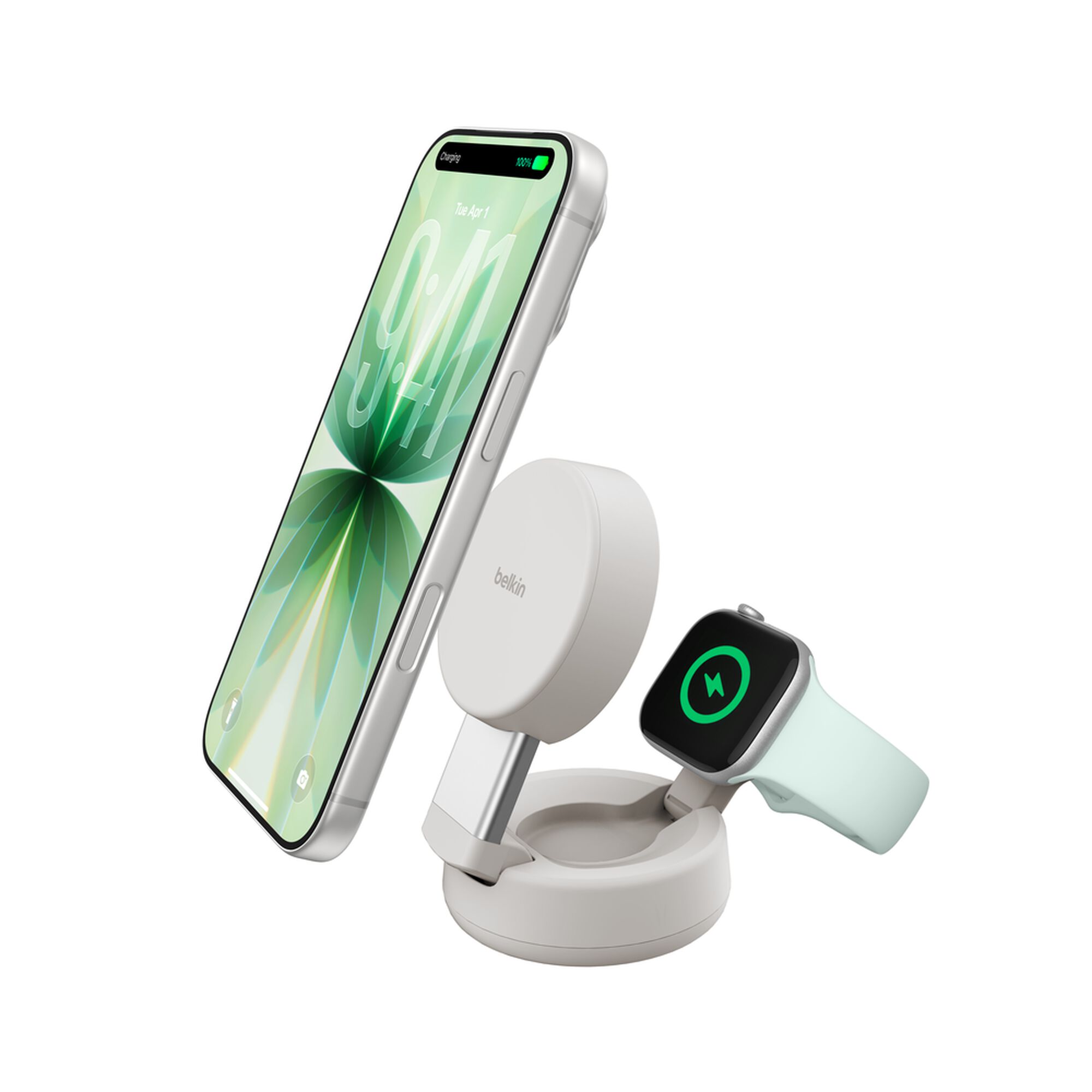
| Belkin UltraCharge Pro 2-in-1 | Qi2 25W | Belkin's listing claims a 0–50% charge in about 29 minutes on a compatible iPhone with a sufficient adapter. |
| Samsung Magnet Wireless Charger (EP-P2900) | Qi2 25W | Up to 25W with Samsung's own 45W charger; requires a Qi2-ready case on Galaxy S25/S26 phones, per Samsung's product page. |
| Anker MagGo Wireless Charging Pad | Qi2 (15W) | Qi2-certified 15W puck with built-in magnets and Anker's ActiveShield temperature monitoring, per Anker's product listing. |
Is it worth buying into Qi2?
If your phone already has Qi2's magnets built in — any iPhone 12 or later, or a recent Android flagship with native magnets — upgrading to a Qi2-certified charger is a low-risk, genuinely useful change: better alignment, generally faster and more consistent charging, and the ability to use magnetic stands, car mounts, and battery packs that just snap on. It's a smaller leap than it sounds, since most Qi2 chargers are priced close to their non-magnetic predecessors.
The calculation is murkier if your phone (like a Galaxy S25 or S26) doesn't have built-in magnets. You're then paying for a case plus a charger to get alignment you wouldn't otherwise have — worth it if you want magnetic accessories, skippable if you just want fast wireless charging, since the phone already reaches Qi2's 15W ceiling without magnets at all. And if your phone or charger has stopped charging reliably, magnets aren't the fix for a worn cable or dirty port — our guide on why an iPhone won't charge and how to fix it covers the more common culprits before you blame the standard.
Chasing the newer Qi2 25W tier specifically only pays off if your phone, charger, and power adapter are all certified for it — otherwise you're simply getting 15W Qi2 performance from more expensive hardware.
What's next for Qi2
Qi2 25W is still rolling out: the WPC opened full-scale certification testing to the hundreds of devices in its queue only in mid-2025, so expect the list of 25W-certified phones and chargers to keep growing through 2026 and beyond, with Android brands other than Samsung likely to join in. Longer term, the WPC has talked about Qi2's magnetic mount as a foundation for future accessories beyond phones — AR/VR headsets and other gadgets that could snap onto the back of a device to charge. For now, the practical move is simple: check a product's listing or the WPC's own certified-products database for the specific "Qi2" or "Qi2 25W" logo before you buy, rather than assuming "magnetic charger" and "Qi2 charger" always mean the same thing.
Frequently asked questions
What is Qi2 charging?
Qi2 is a wireless charging standard from the Wireless Power Consortium that adds a ring of built-in magnets to phones and chargers so they align perfectly over the charging coil, improving efficiency and letting magnetic accessories snap on. It launched in 2023 as the successor to the original Qi standard.
What does Qi2 certified mean?
Qi2 certified means a product has been tested by an independent, WPC-authorized lab for interoperability, power delivery, and safety, and is approved to carry the official Qi2 logo. You can verify a specific product in the Wireless Power Consortium's public certified-products database.
What is Qi2 charging vs. MagSafe?
MagSafe is Apple's own magnetic charging system, launched in 2020 on the iPhone 12. Qi2 is the open, cross-brand standard the Wireless Power Consortium built using the same magnetic-alignment concept, so any manufacturer can offer magnet-aligned charging without using Apple's MagSafe branding or licensing.
What is Qi2.2?
Qi2.2 is the informal name for Qi2 25W, a 2025 update to the Qi2 standard that raises the maximum charging power from 15W to 25W, according to the Wireless Power Consortium. It is backward compatible with older 15W Qi2 devices.
What is Qi2 compatible?
A phone or charger is Qi2 compatible if it supports the Qi2 interface, though true magnetic alignment only works if both the phone and the charger include the Magnetic Power Profile's magnets, either built in or via a compatible magnetic case.
Is Qi2 backward compatible with the original Qi?
Yes. Qi2 chargers work with older Qi devices and vice versa, though without magnetic alignment and typically at lower power, since the magnets and Qi2-specific power profiles only activate between two Qi2-certified products.
Sources
- Wireless Power Consortium – Qi Wireless Charging standardwirelesspowerconsortium.com
- Wireless Power Consortium – WPC approves release of the Qi2 standardwirelesspowerconsortium.com
- Apple Support – How to use your MagSafe Charger with iPhone (HT211829)support.apple.com
- Belkin – UltraCharge Pro 2-in-1 Convertible Magnetic Charger with Qi2 25Wbelkin.com
- Samsung – Qi2 25W Magnet Wireless Chargersamsung.com
- Anker – MagGo Qi2 Wireless Charging Padca.anker.com
Nadia Osei covers mobile and consumer gadgets for Pandromeda: smartphones, tablets, smartwatches, earbuds and smart-home devices. She tracks launches, software updates and pricing across Apple, Google, Samsung and the rest, and builds comparisons from the manufacturers' published specifications.