iPhone 17e vs Pixel 10a: Which Budget Phone to Buy
Apple's $699 iPhone 17e and Google's $599 Pixel 10a both chase budget buyers. Here's how their chips, cameras, batteries, and update policies actually compare.
If you have about $600 to spend and you're choosing between Apple and Google, the short version is this: the iPhone 17e ($699 for 256GB at apple.com as of this writing) wins on raw chip speed, video capture, and long-term resale value, while the Pixel 10a ($599 at store.google.com) wins on camera versatility, battery stamina, charging speed, and software-update longevity. Neither is this year's flashiest phone — that's the point. Both exist to answer the same question for budget-minded buyers: how much phone can you get without paying flagship prices? Here's how Apple's and Google's current entry-level models actually compare, spec for spec, using only what Apple and Google themselves publish.
Pricing and availability
Apple introduced the iPhone 17e via press release on March 2, 2026, with pre-orders opening March 4 and general availability on March 11, 2026. As listed on Apple's own store today, it starts at $699 for 256GB of storage and $899 for 512GB — there is no smaller, cheaper tier. Google announced the Pixel 10a on February 18, 2026, with pre-orders and retail availability both beginning March 5, 2026, at a launch price of $499. On Google's own store today, the current listed price is $599, covering 128GB and 256GB storage options with 8GB of RAM across both. In other words, the Pixel 10a has moved up from its launch price over the months since release, but it still undercuts the iPhone 17e's entry price by a meaningful margin.
Carrier installment and trade-in offers change constantly on both storefronts — Apple and Google each list monthly financing and trade-in credit programs that can lower the effective price further, but those vary by carrier, plan, and the condition of your trade-in device, so they're worth checking directly on apple.com and store.google.com rather than assuming a flat discount.
Specs at a glance
| Spec | iPhone 17e | Pixel 10a |
|---|---|---|
| Starting price (current) | $699 (256GB) | $599 (128GB) |
| Launch price | Not independently listed by Apple at $599 tier; current site starts at $699 | $499 (March 5, 2026) |
| Storage options | 256GB, 512GB | 128GB, 256GB |
| Chip | Apple A19 (6-core CPU, 4-core GPU, 16-core Neural Engine) with C1X modem | Google Tensor G4, 8GB RAM |
| Display | 6.1-inch Super Retina XDR OLED, 2532×1170 (460ppi), 800 nits typical / 1200 nits HDR peak | 6.3-inch Actua OLED, up to 60Hz refresh, 3000 nits peak brightness |
| Rear cameras | 48MP Fusion main (ƒ/1.6) + 12MP 2x telephoto, up to 10x digital zoom | 48MP wide + 13MP ultrawide dual camera |
| Front camera | TrueDepth camera for Face ID (resolution not published for 17e) | 13MP fixed-focus selfie camera |
| Video | 4K Dolby Vision up to 60fps | Not published to the same spec level by Google |
| Battery claims | Up to 26 hours video playback, 21 hours streamed video | 30+ hours on one charge, up to 120 hours in Extreme Battery Saver |
| Charging | USB-C (USB 2, up to 480Mb/s); no stated fast-charge wattage; MagSafe wireless | Up to 30W wired (with Google's 45W USB-C charger, ~50% in 30 min); up to 10W Qi wireless |
| Durability | IP68 (6m / 30 min), Ceramic Shield 2 front, aluminum frame, 30% recycled material | IP68, Corning Gorilla Glass 7i |
| Biometrics | Face ID only | Not detailed in this comparison; check store.google.com for current unlock options |
| Software support | Apple does not publish a fixed year count on this product page | Guaranteed 7 years of OS, security, and Pixel Drop feature updates |
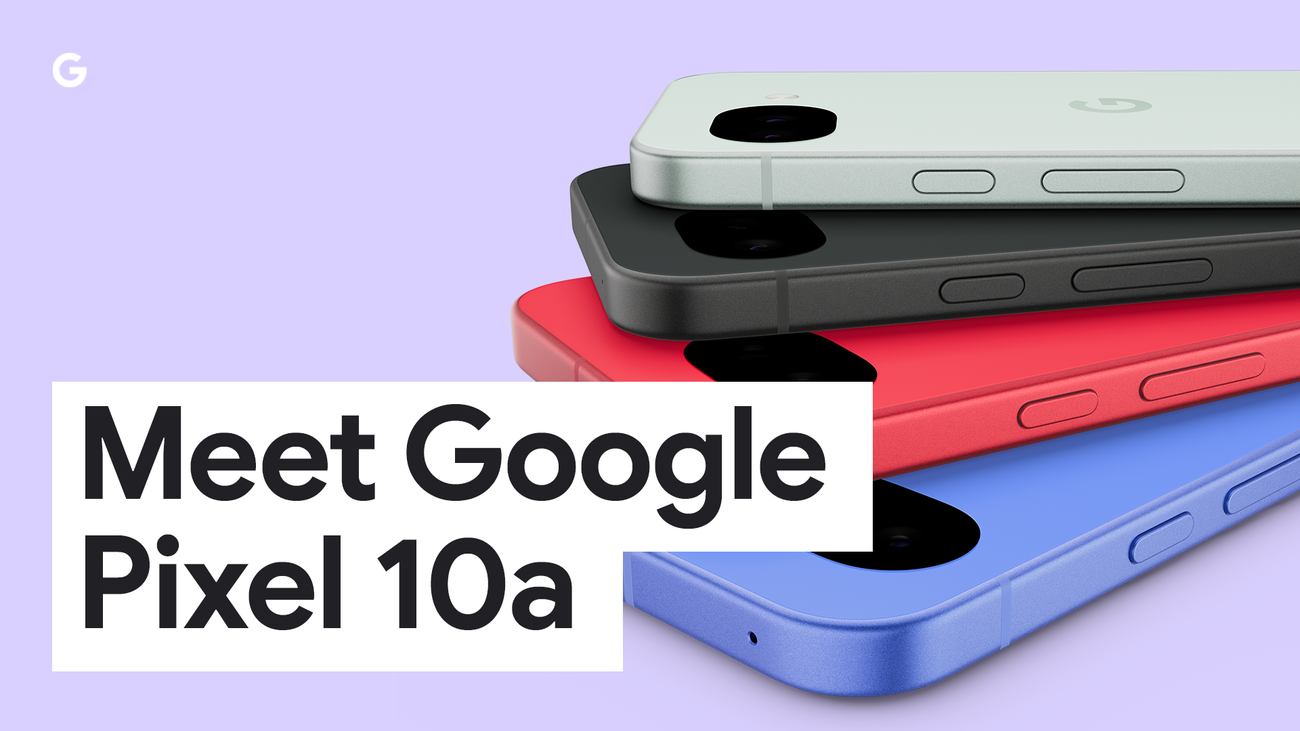
| Colors | Black, White, Soft Pink | Obsidian, Lavender, Berry, Fog |
| 5G | Sub-6GHz with 4x4 MIMO | Not broken out separately in this comparison |
Specs pulled directly from apple.com/iphone-17e/specs/, apple.com's iPhone 17e buy page, store.google.com/product/pixel_10a, and Google's Pixel 10a announcement on blog.google. Where a company doesn't publish a figure, we've said so rather than guessing.
Performance: A19 vs Tensor G4
The iPhone 17e runs Apple's A19 chip, the same silicon family powering this generation's mainline iPhones, paired with a 6-core CPU (2 performance cores, 4 efficiency cores), a 4-core GPU, and a 16-core Neural Engine. Apple also pairs it with the in-house C1X modem, which the company says is up to twice as fast as the C1 modem it shipped in the iPhone 16e. That modem jump matters more than most buyers realize — it affects real-world cellular throughput in weak-signal areas, not just peak speed test numbers.
The Pixel 10a runs Google's Tensor G4 with 8GB of RAM. Tensor chips have historically prioritized the on-device machine-learning workloads that power Google's AI features — things like real-time translation, Call Screen, and Gemini's local processing — over raw synthetic benchmark scores. Google doesn't publish core-count or GPU-core specs for Tensor G4 on the Pixel 10a product page the way Apple does for A19, so a direct architectural comparison isn't possible from primary sources alone. What is public: the Pixel 10a's chip is a generation behind the Tensor G5 that ships in the standard Pixel 10 and Pixel 10 Pro, which is exactly the same pattern Apple follows by giving its "e" line a current-but-not-flagship chip.
Display: size, brightness, and refresh rate
This is one of the more clear-cut differences. The iPhone 17e has a 6.1-inch Super Retina XDR OLED panel at 2532×1170 resolution (460 pixels per inch), with 800 nits of typical max brightness and a 1200-nit peak in HDR content. Apple does not give this display variable refresh rate — it's a standard 60Hz panel, matching the iPhone 16e before it.
The Pixel 10a steps up to a larger 6.3-inch Actua OLED display that Google rates at up to 3000 nits peak brightness — more than double Apple's HDR peak figure — though its refresh rate is capped at 60Hz as well, so neither phone offers the 90Hz or 120Hz smoothness found on Apple's and Google's pricier models. For anyone who reads outdoors often, Google's brightness advantage on paper should make the Pixel 10a's screen easier to view in direct sunlight, though neither company publishes outdoor legibility testing methodology, so take the nits figures as manufacturer claims rather than independently verified lab results.
Cameras: one telephoto vs. one ultrawide
Camera hardware is where the two phones diverge in philosophy rather than just numbers. The iPhone 17e has a 48MP Fusion main camera at ƒ/1.6 plus a 12MP camera Apple uses for a 2x telephoto crop, with digital zoom reaching 10x. Video tops out at 4K Dolby Vision at up to 60fps — a genuinely strong spec for this price tier, and one of the clearest arguments for the iPhone 17e if video capture matters to you.
The Pixel 10a instead pairs a 48MP wide camera with a 13MP ultrawide, giving you a wider field of view option rather than a telephoto one. There's no dedicated zoom lens, so distant subjects rely on Google's computational upscaling rather than optical or even true telephoto-sensor zoom. The front camera is a fixed-focus 13MP sensor. Google leans heavily on software — Magic Editor-style tools and its broader computational photography pipeline — to close hardware gaps, and the company markets the Pixel 10a's "best-in-class camera system" for its price band, but that's a marketing claim, not an independently benchmarked one.
If you shoot a lot of portraits or product-style close-ups, Apple's telephoto crop is the more directly useful tool. If you photograph landscapes, architecture, or group shots in tight spaces, Google's ultrawide is the better fit. Neither phone is positioned as a camera-first device the way the pricier iPhone 17 or Pixel 10 Pro are.
Battery life and charging speed
Apple states the iPhone 17e delivers up to 26 hours of local video playback or 21 hours of streamed video playback, with the caveat that these figures vary with network configuration and usage. Google states the Pixel 10a lasts "over 30 hours" on a single charge under normal use, extending to roughly 120 hours in its Extreme Battery Saver mode — figures that aren't directly comparable to Apple's video-playback-specific numbers, since the two companies test and disclose battery life differently. Treat both as manufacturer claims under controlled conditions rather than apples-to-apples real-world results.
Charging is a clearer win for Google. The Pixel 10a supports up to 30W wired charging with Google's own 45W USB-C Power Charger, reaching roughly 50% in about 30 minutes, plus up to 10W Qi-certified wireless charging. Apple does not publish a fast-charging wattage figure for the iPhone 17e on its specs page, and its wireless charging comes via MagSafe — a feature that's new to the "e" line this generation, having been absent from the iPhone 16e. USB-C data transfer on the iPhone 17e is capped at USB 2 speeds (480Mb/s), which affects wired file transfers more than charging.
Key differences to weigh
- Chip and modem: A19 plus C1X modem (iPhone 17e) vs. Tensor G4 (Pixel 10a) — Apple publishes more granular CPU/GPU core specs.
- Camera shape: telephoto crop (iPhone 17e) vs. ultrawide (Pixel 10a) — pick based on what you shoot.
- Charging: Pixel 10a's 30W wired spec is faster than anything Apple discloses for the iPhone 17e.
- Software longevity: Google guarantees 7 years of OS, security, and feature updates for the Pixel 10a; Apple does not publish an equivalent fixed-year commitment on this product's page.
- Price today: Pixel 10a ($599) undercuts iPhone 17e ($699) by $100 at their respective entry storage tiers, though storage amounts at those tiers differ (128GB vs. 256GB).
Design, durability, and colors
Both phones are rated IP68 for dust and water resistance, with Apple specifying a maximum depth of 6 meters for up to 30 minutes under IEC standard 60529. The iPhone 17e uses an aluminum frame with a Ceramic Shield 2 front panel and Apple notes 30% recycled material in its construction. The Pixel 10a uses Corning Gorilla Glass 7i on its display, which Google positions as resistant to everyday drops, spills, and scratches, though Gorilla Glass 7i is generally considered a step below the Victus-class glass used on more expensive phones.
Color options differ in character: Apple offers the iPhone 17e in Black, White, and a new Soft Pink. Google offers the Pixel 10a in Obsidian, Lavender, Berry, and Fog — a noticeably more playful palette that leans into the colorful identity Google has built for its A-series Pixels since their introduction.
Software, AI features, and update support
The Pixel 10a ships with Google's Gemini built in, including Gemini Live (with a video mode that can analyze what your camera sees in real time), Call Screen, Add Me, and Circle to Search — features Google markets as differentiators for the A-series this generation. Google also guarantees seven years of OS, security, and Pixel Drop feature updates from when the device first became available on the Google Store in the US, a commitment the company states explicitly and repeatedly on the Pixel 10a's own product page.
Apple does not publish an equivalent fixed-year update guarantee on the iPhone 17e's own marketing pages the way Google does for Pixel 10a; Apple's iPhones have historically received major iOS updates for five-plus years as a practical matter, but that's a pattern observed over time rather than a number Apple commits to in writing on this product page, so we won't state it as an Apple claim here. If a guaranteed, published update timeline matters to your buying decision, Google's explicit seven-year commitment is the one of the two companies making that promise in writing today.
Which one should you actually buy?
Choose the iPhone 17e if: you're already inside Apple's ecosystem (Messages, FaceTime, AirDrop, an Apple Watch or AirPods you want tightly integrated), you shoot a lot of video and want 4K Dolby Vision at 60fps, you want MagSafe accessories, or you simply want the fastest chip-and-modem combination available at this price from Apple. The $699 entry price buys 256GB of storage, which is double Google's base tier.
Choose the Pixel 10a if: you want a lower entry price ($599 vs. $699), faster-charging hardware, a brighter display on paper, Google's Gemini-based AI features, a wider-angle second camera instead of a telephoto one, or the peace of mind of a published seven-year software update commitment. If your current phone is an older Pixel, the upgrade path and app continuity will also feel more familiar.
Neither phone is a flagship, and buyers who genuinely need the best camera system, the brightest always-on display, or the fastest chip money can buy should look one tier up — at the standard iPhone 17 or the Pixel 10 and 10 Pro. For budget-conscious buyers specifically cross-shopping these two models, the decision mostly comes down to ecosystem lock-in (Apple vs. Google/Android) and which single feature — Apple's telephoto camera and video specs, or Google's charging speed and update guarantee — matters more to your daily use.
What to check before you buy
Prices and promotions move fast on both storefronts. Before buying either phone, check apple.com and store.google.com directly for current carrier trade-in credits, which can meaningfully change the effective price on both devices. If you're coming from an older Pixel and want to know what's holding back this year's flagship Android release, our coverage of why Pixel 11's Android 17 QPR1 update is still missing in October is worth a look. If you're deciding between Apple's full-price and budget iPhones rather than crossing over to Android, see our breakdown of iPhone 17e vs. iPhone 17 vs. iPhone 16 for how the budget iPhone stacks up against Apple's own mainline models. And if you're weighing whether to upgrade within Android more broadly, our look at OnePlus 16 vs. OnePlus 15 covers a similar budget-vs-upgrade calculus from a different manufacturer.
Frequently asked questions
Which is cheaper, the iPhone 17e or the Pixel 10a?
The Pixel 10a is cheaper at its current Google Store price of $599 (128GB), versus $699 for the iPhone 17e's entry 256GB tier on apple.com. The Pixel 10a launched at $499 in March 2026 before its current listed price rose to $599.
Does the iPhone 17e have a telephoto camera?
Yes. Apple's specs page lists a 48MP Fusion main camera plus a 12MP camera used for a 2x telephoto crop, with digital zoom up to 10x. The Pixel 10a instead pairs its 48MP wide camera with a 13MP ultrawide, with no dedicated telephoto lens.
Which phone charges faster, iPhone 17e or Pixel 10a?
Google publishes a faster charging spec for the Pixel 10a: up to 30W wired charging with its 45W USB-C Power Charger, reaching about 50% in 30 minutes. Apple does not publish a fast-charging wattage figure for the iPhone 17e on its specs page.
How many years of software updates do these phones get?
Google guarantees seven years of OS, security, and Pixel Drop feature updates for the Pixel 10a, stated explicitly on its product page. Apple does not publish an equivalent fixed-year update commitment on the iPhone 17e's own marketing pages.
What colors do the iPhone 17e and Pixel 10a come in?
The iPhone 17e is available in Black, White, and Soft Pink. The Pixel 10a is available in Obsidian, Lavender, Berry, and Fog, per Google's official announcement.
Are both phones water resistant?
Yes. Both carry an IP68 rating. Apple specifies the iPhone 17e withstands a maximum depth of 6 meters for up to 30 minutes under IEC standard 60529. The Pixel 10a is also IP68-rated and uses Corning Gorilla Glass 7i on its display.
Sources
- Apple Newsroom: Apple introduces iPhone 17eapple.com
- Apple: iPhone 17e full specsapple.com
- Apple: Buy iPhone 17e (pricing)apple.com
- Google Store: Pixel 10a product pagestore.google.com
- Google Blog: Google announces the new Pixel 10a for $499blog.google
Nadia Osei covers mobile and consumer gadgets for Pandromeda: smartphones, tablets, smartwatches, earbuds and smart-home devices. She tracks launches, software updates and pricing across Apple, Google, Samsung and the rest, and builds comparisons from the manufacturers' published specifications.