Nothing Phone (3a) vs Pixel 10a: Which Budget Phone Wins?
Nothing's $379 Phone (3a) and Google's $499 Pixel 10a both target budget buyers — here is how their specs, cameras, and software support compare.
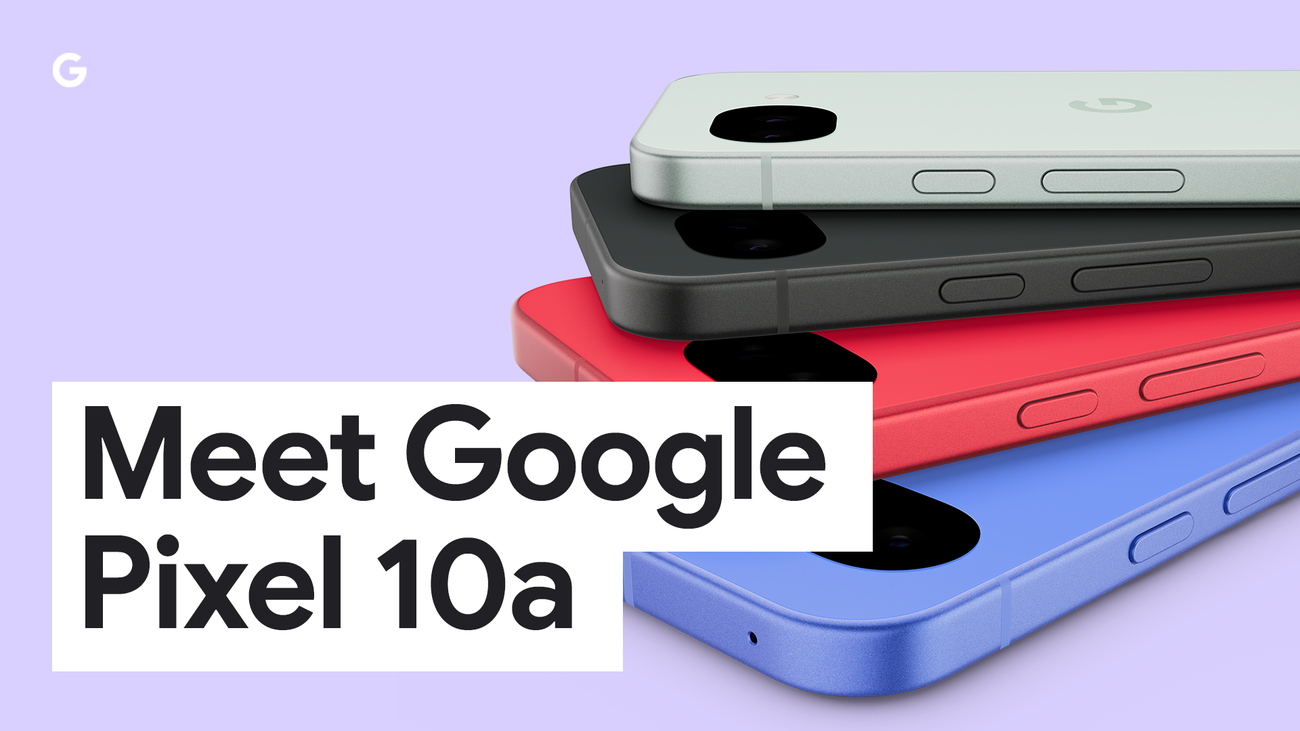
If you have roughly $400 to $500 to spend on a new phone and you are choosing between the Nothing Phone (3a) and the Google Pixel 10a, the short answer is this: pick the Pixel 10a if you want the longest software runway and the most dependable camera, and pick the Nothing Phone (3a) if you want a faster chip, a 120Hz AMOLED screen, and a design that still turns heads on a tight budget. Both are genuinely good phones for the price, and the right pick comes down to which trade-off matters more to you.
Quick facts
- Nothing Phone (3a): announced March 4, 2025, from $379 (Pro from $459), Snapdragon 7s Gen 3.
- Pixel 10a: announced February 18, 2026, released March 5, 2026, from $499, Google Tensor G4.
- Software: Nothing promises 3 years of OS updates and 6 years of security updates; Google promises 7 years of OS, security, and Pixel Drop updates on the 10a.
- Both phones sit in the same $380–$500 bracket and are routinely cross-shopped by budget buyers.
Price and availability
The Nothing Phone (3a) launched on March 4, 2025, with pricing starting at $379 for the base model and $459 for the step-up Phone (3a) Pro, which adds a periscope telephoto camera. The Pixel 10a arrived almost a year later, announced on February 18, 2026, on Google's own blog, with general availability from March 5, 2026, and a starting price of $499. That gap of roughly $120 between the two starting prices is the first thing to weigh: the Nothing Phone (3a) undercuts the Pixel 10a by a meaningful margin, while the Pixel asks a premium that it tries to justify with software longevity and camera processing rather than headline hardware.
By late 2026, the Phone (3a) has also been on sale long enough that it regularly shows up discounted below its launch price, which widens the real-world price gap even further in Nothing's favor for buyers who are not in a hurry. Neither brand sells through every carrier in every region, so it's worth checking local availability before assuming either phone ships with full carrier support where you live; Nothing has historically sold the base Phone (3a) in the US through a more limited beta-style channel than its mainline European and Indian markets, while the Pixel 10a ships broadly through the Google Store and major US carriers from day one.
Display
Nothing's Phone (3a) uses a 6.77-inch flexible AMOLED panel at 1080 x 2392 resolution with a 120Hz refresh rate, giving it a noticeably larger, faster-scrolling screen than most phones at this price. The Pixel 10a steps down to a smaller 6.3-inch Actua display, but Google's own spec sheet lists a sharper 1080 x 2424 panel at 422.2 PPI, a variable 60-120Hz Smooth Display refresh rate, Corning Gorilla Glass 7i on top, and peak brightness up to 3,000 nits versus a dimmer ceiling on the Nothing. In short: bigger screen on the Nothing, brighter and more durable glass on the Pixel. Neither display is a weak point, and most buyers will be satisfied either way, but outdoor visibility leans toward the Pixel while sheer screen real estate leans toward the Nothing.
Chipset and performance
This is where the two phones diverge most. The Phone (3a) runs on Qualcomm's Snapdragon 7s Gen 3, a chip built for everyday multitasking and gaming headroom rather than on-device AI. The Pixel 10a instead uses Google's own Tensor G4 with a Titan M2 security coprocessor, the same silicon found in the Pixel 9a. Tensor chips are not built to top performance charts; they exist to run Google's AI features — Magic Eraser, Call Screen, Gemini-powered tools — efficiently and consistently rather than to post the fastest raw benchmark numbers. If day-to-day speed and lighter gaming matter more to you, the Snapdragon 7s Gen 3 in the Nothing generally has the edge in raw throughput for the price. If you care about Google's AI camera and assistant features running smoothly and staying current for years, the Tensor G4 is the safer bet, because Google controls both the chip and the software roadmap built around it.
Cameras
Nothing's approach on the Phone (3a) is a 50-megapixel main camera paired with an ultrawide and a 32-megapixel front camera (the Pro model adds a 50-megapixel periscope telephoto that the base 3a skips). Google's approach on the Pixel 10a, per its own store listing, is a dual rear system: a 48-megapixel wide sensor and a 13-megapixel ultrawide, with digital Super Zoom up to 8x, plus a 13-megapixel selfie camera. On paper the Nothing's main sensor count looks more impressive, but Google's camera reputation on the Pixel A-series has consistently rested on computational processing — Night Sight, Super Res Zoom, and Magic Editor tools — rather than raw megapixels. Buyers who mostly shoot in good light and want flexibility (telephoto included) may prefer the Nothing Phone (3a) Pro; buyers who shoot a lot of low-light, portrait, or zoomed shots and want Google's processing pipeline will likely be happier with the Pixel 10a.
Battery and charging
The Nothing Phone (3a) packs a 5,000mAh battery with 50W wired charging and no wireless charging support. The Pixel 10a is slightly larger at a typical 5,100mAh (minimum 5,000mAh), and Google's spec page describes fast charging to 50% in about 30 minutes using a 45W USB-C PPS charger sold separately, plus Qi-certified wireless charging — a feature the Nothing lacks entirely. Neither phone ships a charger in the box. Wired charging speed is roughly a wash, but the Pixel 10a's wireless charging support is a real, practical advantage for anyone who uses charging stands or pads, which weighs in Google's favor for day-to-day convenience even though it starts from a higher price.
Software and update policy
This is the single biggest differentiator between these two phones, and it is worth reading closely before you decide. Nothing's update pledge for the Phone (3a) series is three years of Android OS upgrades and six years of security patches from the device's original availability date, running on Nothing OS (now at version 5.0, per Nothing's own software page, which still lists the Phone (3a) as a supported device for the general rollout). That means major Android version upgrades stop around 2028, even though security patches keep arriving through roughly 2031. Google, by contrast, commits to seven years of OS updates, security patches, and quarterly Pixel Drop feature updates on the Pixel 10a, counted from when it first went on sale in the US — all the way out to roughly 2033. For anyone who keeps a phone for four-plus years, this gap is large enough to be the deciding factor on its own, regardless of which phone wins on hardware specs.
Design and build
Nothing's whole identity is built around its see-through, Glyph-lit design language, and the Phone (3a) carries that forward with a translucent-inspired back panel and the brand's signature LED Glyph lighting for notifications — a look nothing else in this price range really attempts. It carries an IP64 splash-resistance rating and weighs about 201 grams. The Pixel 10a takes the opposite approach: a plain composite matte back, a satin aluminum frame, and a more conservative design, but it backs that up with a full IP68 dust- and water-resistance rating — a meaningfully tougher spec than the Nothing's IP64, and one that matters if you are likely to drop your phone near a pool, a sink, or in the rain. If you want a phone that looks distinctive on a budget, Nothing wins easily. If you want a phone built to survive accidents, the Pixel 10a's IP68 rating is the more reassuring spec.
Nothing Phone (3a) vs Pixel 10a: full spec comparison
| Spec | Nothing Phone (3a) | Google Pixel 10a |
|---|---|---|
| Announced | March 4, 2025 | February 18, 2026 |
| Price (starting) | $379 | $499 |
| Display | 6.77" AMOLED, 1080x2392, 120Hz | 6.3" Actua pOLED, 1080x2424, 60-120Hz, Gorilla Glass 7i |
| Chipset | Snapdragon 7s Gen 3 | Google Tensor G4 + Titan M2 |
| RAM / Storage | 8/12GB RAM, 128/256GB | 8GB RAM, 128/256GB |
| Rear camera | 50MP main + 8MP ultrawide | 48MP main + 13MP ultrawide, 8x Super Zoom |
| Front camera | 32MP | 13MP |
| Battery | 5,000mAh | ~5,100mAh |
| Charging | 50W wired, no wireless | 45W wired (PPS), Qi wireless |
| Water resistance | IP64 | IP68 |
| Software updates | 3 years OS / 6 years security | 7 years OS, security & Pixel Drops |
| Weight | ~201g | Not listed by Google |
Which phone should you buy
There is no single right answer here, because the two phones are optimized for different priorities:
- Buy the Nothing Phone (3a) if: you want the lowest price, the biggest and fastest screen, a distinctive design, and you don't mind retiring the phone or living without Android version upgrades after about three years.
- Buy the Pixel 10a if: you plan to keep your phone for four years or longer, you want Google's computational camera processing and AI features, you want wireless charging, or you want the tougher IP68 build.
- Buy the Nothing Phone (3a) Pro instead if: you like the Nothing design language but want a telephoto camera closer to what the Pixel 10a offers via digital zoom.
For most people planning to hold onto a phone for several years, the Pixel 10a's seven-year update commitment is the strongest single argument in its favor, even at $120 more. For anyone who upgrades every two to three years anyway, or who simply wants the most hardware for the least money today, the Nothing Phone (3a) remains very hard to beat on value.
It's also worth thinking in terms of cost per year of guaranteed support rather than just sticker price. Spread over the update windows each company promises, the Phone (3a)'s $379 covers roughly three years of major OS updates, while the Pixel 10a's $499 covers seven — meaning the Pixel's effective yearly software cost is actually lower if you intend to use the phone for its full supported lifespan. That math flips back in Nothing's favor if you only ever keep a phone for two years before trading it in, since you'd never reach the point where the Pixel's longer runway pays off.
Trade-in value and resale are also worth a mention, even though neither company publishes guaranteed resale figures. Phones with longer official software support windows have tended to hold resale value better over time, simply because a buyer three years from now can still expect updates on a Pixel in a way they cannot on a Nothing phone past its third year.
Frequently asked questions
Is the Nothing Phone (3a) still worth buying in late 2026? Yes, if its price has dropped further and you don't need more than three years of major OS upgrades — Nothing is still shipping Nothing OS 5.0 to the device as of November 2026.
Does the Pixel 10a support wireless charging? Yes. Google's spec sheet lists Qi-certified wireless charging on the Pixel 10a, which the Nothing Phone (3a) does not offer.
Which phone has the better camera? The Nothing Phone (3a) has higher megapixel counts, but the Pixel 10a's computational photography and Google's processing pipeline typically produce more consistent results, especially at night and when zooming.
How many years of updates does each phone get? Nothing promises three years of Android OS upgrades and six years of security updates for the Phone (3a); Google promises seven years of OS updates, security patches, and Pixel Drops for the Pixel 10a.
What's next
Both lineups are already moving forward. Nothing has since released the Phone (4a) and Phone (4a) Pro, and shoppers deciding between generations may want to read how the Nothing Phone 4a compares with the 4a Pro before committing to the older (3a). On the Google side, rumors are already circulating about a Pixel 11a with a Tensor G6 chip arriving around spring 2027, which could reset the budget-Pixel value equation again. Buyers who want to track what Google is adding to the current A-series through software alone can also follow November 2026's Pixel feature drop, since several of those features land on the Pixel 10a as well. For now, both the Nothing Phone (3a) and the Pixel 10a remain available to buy, making this comparison relevant for anyone shopping the sub-$500 segment today.
Frequently asked questions
Is the Nothing Phone (3a) still worth buying in late 2026?
Yes, if its price has dropped further and you don't need more than three years of major OS upgrades — Nothing is still shipping Nothing OS 5.0 to the device as of November 2026.
Does the Pixel 10a support wireless charging?
Yes. Google's spec sheet lists Qi-certified wireless charging on the Pixel 10a, which the Nothing Phone (3a) does not offer.
Which phone has the better camera?
The Nothing Phone (3a) has higher megapixel counts, but the Pixel 10a's computational photography and Google's processing pipeline typically produce more consistent results, especially at night and when zooming.
How many years of updates does each phone get?
Nothing promises three years of Android OS upgrades and six years of security updates for the Phone (3a); Google promises seven years of OS updates, security patches, and Pixel Drops for the Pixel 10a.
Which phone is cheaper?
The Nothing Phone (3a) starts at $379, compared to $499 for the Pixel 10a — a $120 difference at launch pricing.
Sources
- Google — Pixel 10a official announcementblog.google
- Google Store — Pixel 10a tech specsstore.google.com
- Google — Pixel software update policysupport.google.com
- Nothing — Nothing OS software pagenothing.tech
- Nothing — official sitenothing.tech
Nadia Osei covers mobile and consumer gadgets for Pandromeda: smartphones, tablets, smartwatches, earbuds and smart-home devices. She tracks launches, software updates and pricing across Apple, Google, Samsung and the rest, and builds comparisons from the manufacturers' published specifications.


