Nvidia DGX Spark 64GB Release Date, Price and Specs Explained
Nvidia confirmed a 64GB DGX Spark on October 2, 2026, priced from $4,999 and arriving October 23 — the same Grace Blackwell platform as the 128GB model, with less memory.
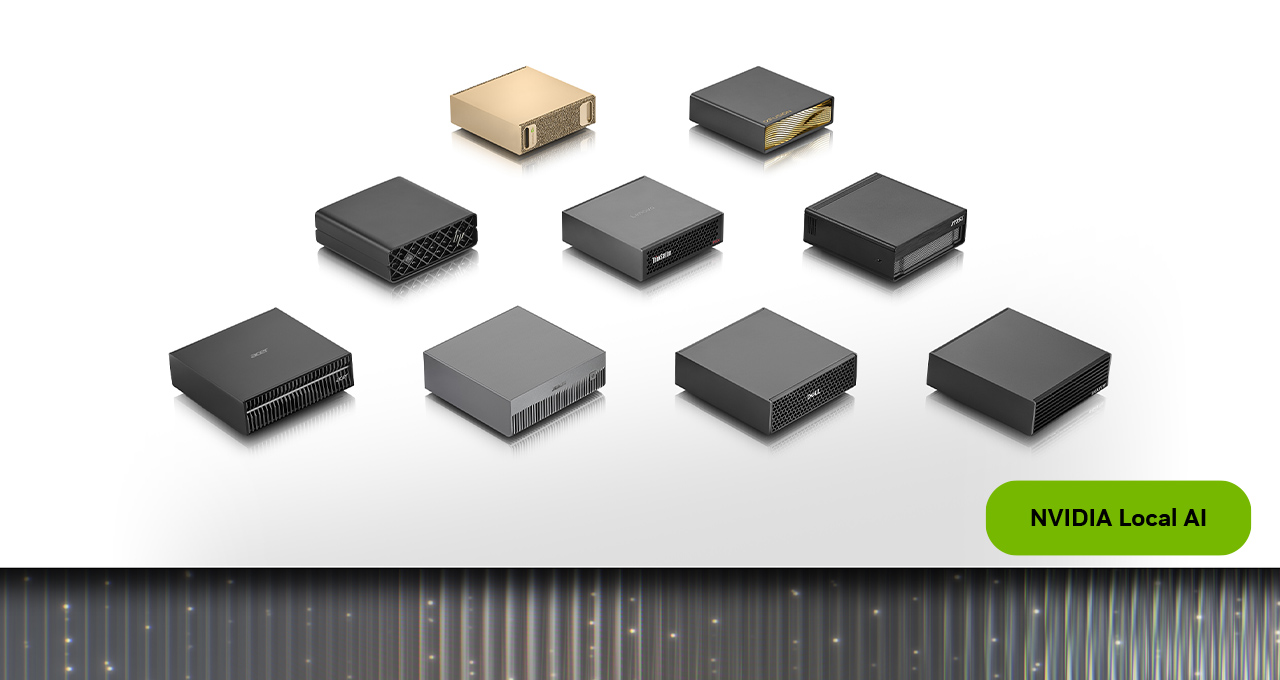
Nvidia confirmed on October 2, 2026 that DGX Spark is getting a 64GB memory configuration, a cheaper entry point into its Grace Blackwell "personal AI supercomputer" desktop line. The new SKU starts at $4,999 and goes on sale October 23, 2026 through six manufacturing partners — Acer, ASUS, Dell, Gigabyte, HP and MSI — rather than directly from Nvidia. It keeps the same GB10 Grace Blackwell Superchip, DGX OS and full Nvidia AI software stack as the existing 128GB DGX Spark, but halves the unified memory to bring the platform to more developers who don't need to run the largest local models.
DGX Spark 64GB at a glance
- Announced: October 2, 2026, via Nvidia's own blog
- Price: Starting at $4,999 (Nvidia-stated)
- On sale: October 23, 2026, from OEM partners only
- Memory: 64GB unified LPDDR5x (vs. 128GB on the original model)
- Chip: Same GB10 Grace Blackwell Superchip as the 128GB unit
- Model support: Up to 100 billion parameters on one unit; up to 200 billion when two units are clustered
What Nvidia Announced on October 2
In a post titled "NVIDIA DGX Spark 64GB Gives Developers More Ways to Build and Scale Local AI," Nvidia said the new configuration is meant to meet a shift it's seeing among developers: open models are shrinking enough to run well on local hardware, so more builders want an affordable box to run them on without paying for cloud GPU time. The company frames DGX Spark 64GB as "a new starting point for personal AI supercomputing" rather than a replacement for the 128GB model, which stays on sale alongside it.
Nvidia's own description is specific about what did and didn't change: the 64GB unit is "available exclusively from manufacturer partners," keeps "the platform at an accessible price point while retaining the GB10 Grace Blackwell Superchip, DGX OS and full NVIDIA AI software stack — same as the 128GB model." In other words, this isn't a cut-down chip or a different operating system — it's the same compute platform with less unified memory, sold only through third-party system builders rather than as an Nvidia Founders Edition.
DGX Spark 64GB Price and Release Date
Nvidia's blog post states plainly: "DGX Spark 64GB is available from Acer, ASUS, Dell, Gigabyte, HP and MSI on Friday, Oct. 23, starting at $4,999." That's the only pricing Nvidia has published for this configuration as of this article's publication — there's no separate "Nvidia-direct" listing, since the 64GB model ships exclusively through those six OEM partners, and actual retail prices could vary slightly by partner and configuration (storage size, bundled accessories) once each manufacturer's store pages go live.
For context, the original 128GB DGX Spark began shipping to developers in October 2025 after Nvidia opened orders that month, a launch Nvidia detailed in its own newsroom announcement. Nvidia's current DGX Spark product page lists both the 64GB and 128GB configurations side by side, but does not display a direct retail price for either — it instead routes buyers to the Nvidia Marketplace and partner storefronts. So while $4,999 is confirmed as the 64GB starting price, we're not citing a specific current number for the 128GB model here, since Nvidia hasn't published one on its own spec page at the time of writing. Anyone comparing the two should expect the final shelf price to vary slightly by OEM, storage tier and region once partner listings go live.
DGX Spark 64GB Specs: Same Chip, Smaller Memory Pool
The headline spec is unified memory: 64GB versus 128GB on the original DGX Spark. Everything else that defines the platform carries over unchanged, according to Nvidia:
- Processor: GB10 Grace Blackwell Superchip, pairing a 20-core Arm CPU (10 Cortex-X925 + 10 Cortex-A725 cores) with a Blackwell-architecture GPU
- GPU: Blackwell architecture with 5th-generation Tensor Cores and 4th-generation RT Cores, 6,144 CUDA cores on the full GB10 die
- Networking: Built-in NVIDIA ConnectX-7 NIC supporting a 200 Gb/s fabric, used both for general networking and for clustering two units together
- Software: DGX OS, CUDA-X AI libraries, Nvidia Agent Toolkit, Nemotron open models, and out-of-the-box support for Ollama, vLLM and PyTorch with CUDA
- Model capacity: Up to 100-billion-parameter models running entirely on a single 64GB unit
Nvidia's hardware documentation for the DGX Spark family also lists up to 1 petaflop of FP4 AI performance (with sparsity) and up to 1,000 TOPS of inference throughput for the GB10 platform, along with a 240W external power supply and a 140W thermal design power for the SoC itself. Storage on the original model is offered in 1TB or 4TB self-encrypting NVMe M.2 options; Nvidia's October 2 post does not specify which storage tiers ship with the 64GB SKU, so that detail will likely come from individual OEM listings closer to the October 23 launch. Nvidia's announcement doesn't restate the petaflop or TOPS figures specifically for the 64GB SKU, but since the chip is identical, the raw compute ceiling should match the 128GB unit — the difference is how much of a model's weights can actually fit in memory at once.
DGX Spark 64GB vs. 128GB: What's Different
The table below lines up what Nvidia has confirmed for each configuration. Fields marked "not listed by Nvidia" reflect specs the company hasn't published directly for that SKU as of this article's publication, rather than numbers we're estimating.
| Spec | DGX Spark 64GB | DGX Spark 128GB |
|---|---|---|
| Announced | October 2, 2026 | Original model detailed around Nvidia's October 2025 launch news |
| Chip | GB10 Grace Blackwell Superchip | GB10 Grace Blackwell Superchip |
| Unified memory | 64GB LPDDR5x | 128GB LPDDR5x (256-bit, 273GB/s) |
| CPU | 20-core Arm (10 Cortex-X925 + 10 Cortex-A725) | Same |
| Networking | ConnectX-7, 200Gb/s fabric | Same |
| Max model size (single unit) | Up to 100B parameters | Up to 200B parameters (inference) |
| Max model size (clustered) | Up to 200B parameters (two units) | Up to 405B parameters (two units, per Nvidia) |
| Sold by | OEM partners only (Acer, ASUS, Dell, Gigabyte, HP, MSI) | Nvidia and partners |
| Starting price | $4,999 (Nvidia-confirmed) | Not listed by Nvidia on its current spec page |
| Availability | October 23, 2026 | Shipping since late 2025 |
Clustering Two DGX Spark 64GB Units for 128GB
Nvidia built DGX Spark around the idea that one unit is a starting point, not a ceiling. Every DGX Spark ships with that built-in ConnectX-7 NIC, and two units can be linked directly over a QSFP cable to pool their memory — turning two 64GB systems into one logical 128GB system, with model support rising to roughly 200 billion parameters and memory bandwidth doubling in the process.
Nvidia published one concrete performance data point for this setup: in internal testing on Qwen3.8 27B, "two clustered 64GB systems delivered up to 1.7x performance compared with a single system." That's Nvidia's own benchmark, run on its own hardware with a specific model, so treat it as a directional figure for that workload rather than a universal multiplier — results will vary by model and task.
The clustering itself is meant to be close to zero-configuration. Nvidia's new Sync Cluster Assistant software detects connected units, validates their configuration and sets up the ConnectX-7 network automatically, and the company says every node runs the same software stack so nothing needs to be reinstalled or reconfigured when scaling from one box to two.
Software Stack and Developer Use Cases
DGX Spark 64GB ships ready to run agentic workloads out of the box: Nvidia lists the Nvidia Agent Toolkit, CUDA-X AI libraries, Nemotron open models, and out-of-the-box support for Ollama, vLLM and PyTorch with CUDA as pre-installed or immediately available. Nvidia also says Blender is "among the first major creator application providers to support the platform," with a prebuilt installer coming soon, and that a new Sync Model Launcher — arriving later this month — will let developers download and run a model like Qwen3.8 27B with a few clicks, on either a single unit or a cluster.
Nvidia's own suggested use cases for the 64GB configuration include:
- Running a standing AI agent: keeping a coding or research agent active around the clock for code review, document analysis or multistep tasks
- Offloading inference from your main PC: running a language or image-generation model on DGX Spark while a laptop or desktop handles everyday work and the user-facing app
- Scaling only when needed: starting on one unit and clustering a second DGX Spark 64GB only once a workload — a bigger model, a longer context window, more concurrent agent requests — actually outgrows it
DGX Spark vs. RTX Spark: Don't Confuse the Two
Nvidia's naming here invites mix-ups, and its own October 2 post doesn't help — it closes by noting that "new Windows PCs powered by NVIDIA RTX Spark are coming this month," a completely different product sharing half a name. DGX Spark, in either memory size, is a Linux-based, Arm-powered Grace Blackwell developer appliance built specifically for running and fine-tuning AI models locally — it's not a general-purpose PC. RTX Spark, by contrast, is Nvidia's branding for a line of Arm-based Windows 11 PCs from partners like Acer, ASUS, Dell, HP, Lenovo, Microsoft and MSI, aimed at mainstream Windows users rather than AI developers specifically.
If you're trying to figure out which "Spark" product actually fits a Windows workflow, our existing coverage of RTX Spark's release date, specs and price and the rundown of every confirmed RTX Spark laptop model covers that separate line in detail. DGX Spark, including this new 64GB configuration, is the one to look at if the goal is running local AI models and agents on dedicated Grace Blackwell hardware rather than buying a Windows laptop.
How and Where to Buy DGX Spark 64GB
Nvidia says the 64GB configuration will be available starting October 23, 2026, exclusively through six manufacturer partners: Acer, ASUS, Dell, Gigabyte, HP and MSI. Nvidia's blog post links directly to each partner's page for the product, and buyers should expect individual partner storefronts to confirm their own exact pricing, bundled storage options and regional availability closer to that date, since Nvidia itself isn't selling this configuration as a Founders Edition the way it originally did with the 128GB unit.
Nvidia's developer-facing build.nvidia.com/spark hub also lists software playbooks — covering serving LLMs with vLLM, running OpenClaw with a local model, and connecting multiple DGX Spark units for distributed workloads — with several marked as "coming soon to 64GB devices," suggesting some documentation and tooling will roll out alongside or shortly after the October 23 launch date rather than all at once.
What to Watch Next
A few things are worth tracking as the October 23 release date approaches: whether individual OEM partners post their own prices above or below Nvidia's stated $4,999 floor, whether Nvidia publishes an updated spec sheet with 64GB-specific TOPS or petaflop figures rather than carrying over the 128GB unit's numbers, and how the promised Sync Model Launcher and Blender integration perform once they ship later this month. It's also worth watching whether Nvidia ever lists a direct, Nvidia-sold price for the 128GB DGX Spark again, since its current spec page routes buyers to partners rather than quoting a number itself.
For now, the confirmed facts are narrow but solid, straight from Nvidia: a 64GB DGX Spark variant exists, it costs $4,999 to start, it ships October 23, 2026 through six named partners, and it runs the same Grace Blackwell platform and software stack as the 128GB model it sits alongside.
Frequently asked questions
What is the Nvidia DGX Spark 64GB?
It's a lower-memory version of Nvidia's DGX Spark desktop AI developer computer, announced October 2, 2026. It uses the same GB10 Grace Blackwell Superchip, DGX OS and Nvidia AI software stack as the existing 128GB DGX Spark, but with 64GB of unified memory instead of 128GB, at a lower starting price.
How much does the DGX Spark 64GB cost and when does it ship?
Nvidia says it starts at $4,999 and becomes available October 23, 2026, sold exclusively through manufacturer partners Acer, ASUS, Dell, Gigabyte, HP and MSI rather than directly from Nvidia.
How is DGX Spark 64GB different from the 128GB DGX Spark?
The core chip, CPU, networking and software are identical. The main difference is unified memory: 64GB versus 128GB, which lowers the maximum single-unit model size from roughly 200 billion to about 100 billion parameters. Nvidia also sells the 64GB unit only through OEM partners, not as an Nvidia-direct Founders Edition.
Can two DGX Spark 64GB units be combined for more memory?
Yes. Nvidia says two units can connect over their built-in ConnectX-7 ports and, using the new Sync Cluster Assistant software, pool their memory to 128GB total, raising supported model size to about 200 billion parameters and, in Nvidia's own Qwen3.8 27B test, delivering up to 1.7x the performance of a single unit.
Is DGX Spark the same as Nvidia's RTX Spark?
No. DGX Spark is a Linux-based Grace Blackwell developer appliance built specifically for running and fine-tuning AI models locally. RTX Spark is a separate line of Arm-based Windows 11 PCs from partners like Acer, ASUS, Dell, HP, Lenovo, Microsoft and MSI, aimed at general Windows users rather than AI developers.
Does Nvidia sell the DGX Spark 64GB directly?
No. Nvidia's blog post says the configuration is available exclusively from manufacturer partners — Acer, ASUS, Dell, Gigabyte, HP and MSI — starting October 23, 2026, not through an Nvidia-direct storefront.
Sources
- Nvidia Blog: NVIDIA DGX Spark 64GB Gives Developers More Ways to Build and Scale Local AIblogs.nvidia.com
- Nvidia Newsroom: NVIDIA DGX Spark Arrives for World's AI Developersnvidianews.nvidia.com
- Nvidia: DGX Spark Product Pagenvidia.com
- Nvidia Docs: DGX Spark Hardware Overviewdocs.nvidia.com
- Nvidia: Build.NVIDIA.com DGX Spark Developer Hubbuild.nvidia.com
Mara Lindqvist edits the hardware desk. She covers graphics cards, processors, memory and storage, the foundries and chip designers behind them, and what the numbers on a spec sheet mean for people choosing a PC. Specifications in her stories come from manufacturer spec pages and datasheets.