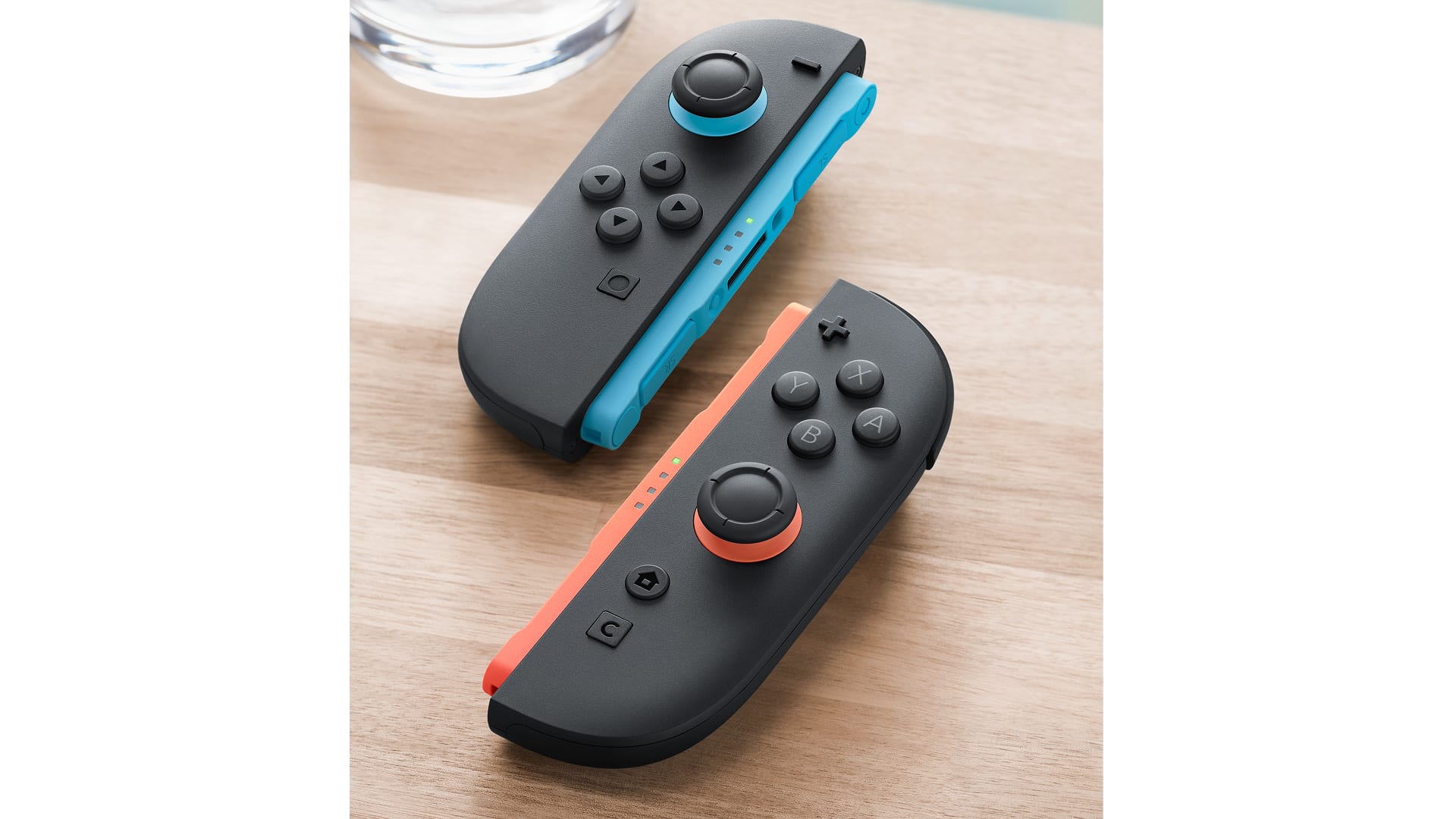
ROG Xbox Ally X20 vs Ally X vs Steam Deck OLED: Specs and Prices
ASUS’s $1,299 ROG Xbox Ally X20 adds a 7.4-inch HDR OLED to the Ally X formula. Here’s how it compares with the Ally X and a now-pricier Steam Deck OLED.

The ROG Xbox Ally X20 is ASUS’s new top-end Windows handheld. It is on pre-order now for $1,299 and goes on sale on 15 October. It uses the same AMD Ryzen AI Z2 Extreme chip, 24GB of memory and 1TB SSD as the $999.99 ROG Xbox Ally X, but swaps the 7-inch LCD for a brighter 7.4-inch HDR OLED panel. The Steam Deck OLED now costs $789 (512GB) or $949 (1TB) after Valve’s May price rise. It has a lower-resolution 90Hz OLED screen and a much older, lower-power chip, but it is the cheapest of the three and the only one running SteamOS.
Key facts
- ROG Xbox Ally X20: $1,299 standalone or $2,499 bundle; on sale 15 October 2026
- ROG Xbox Ally X: $999.99 launch price (ERP) from Microsoft
- Steam Deck OLED: $789 (512GB) or $949 (1TB) since 27 May 2026
- X20 vs Ally X: same chip, RAM, storage and 80Wh battery; the X20 adds a 7.4-inch HDR OLED, TMR sticks and microSD Express, and weighs 41 g more
- Steam Deck OLED: 1280 x 800 at up to 90Hz, 16GB RAM, 50Wh battery, about 640 g
ROG Xbox Ally X20 vs Ally X vs Steam Deck OLED: specs compared
This table uses each company’s own spec sheets: the ASUS ROG Xbox Ally X20 announcement, the ROG Xbox Ally X spec page and Valve’s Steam Deck OLED tech specs.
| Spec | ROG Xbox Ally X20 | ROG Xbox Ally X | Steam Deck OLED |
|---|---|---|---|
| US price | $1,299 ($2,499 bundle) | $999.99 (launch ERP) | $789 (512GB) / $949 (1TB) |
| Availability | Pre-order; on sale 15 October 2026 | On sale since October 2025 | On sale |
| Processor | AMD Ryzen AI Z2 Extreme | AMD Ryzen AI Z2 Extreme (8 cores, 16 threads, up to 5.0GHz, NPU up to 50 TOPS) | 6nm AMD APU: Zen 2, 4 cores/8 threads, 2.4–3.5GHz; 8 RDNA 2 CUs at 1.6GHz (1.6 TFLOPS FP32); 4–15W |
| Memory | 24GB LPDDR5X-8000 | 24GB LPDDR5X-8000 | 16GB LPDDR5 (6400 MT/s) |
| Storage | 1TB M.2 2280 SSD | 1TB PCIe 4.0 M.2 2280 SSD | 512GB or 1TB NVMe SSD |
| Display | 7.4-inch OLED, 1920 x 1080, 120Hz | 7-inch IPS-level LCD, 1920 x 1080, 120Hz | 7.4-inch HDR OLED, 1280 x 800, up to 90Hz |
| Brightness | 600 nits, 1,400 nits peak (VESA DisplayHDR True Black 1400) | 500 nits | 600 nits SDR, 1,000 nits peak HDR |
| Variable refresh | FreeSync Premium Pro, 30–120Hz | FreeSync Premium | Not listed |
| Battery | 80Wh | 80Wh | 50Wh (Valve quotes 3–12 hours) |
| Weight | 756 g | 715 g | About 640 g |
| Size | 300 x 121.1 x 51.3 mm | Not listed on spec page | 298 x 117 x 49 mm |
| Ports | USB4 (DisplayPort 2.1, Thunderbolt 4 compatible), USB 3.2 Gen 2 Type-C, microSD Express, 3.5mm | USB4 (Thunderbolt 4 compliant, DisplayPort 1.4), USB 3.2 Gen 2 Type-C, UHS-II microSD, 3.5mm | USB-C (DisplayPort, up to 4K at 120Hz), UHS-I microSD, 3.5mm |
| Wireless | Wi-Fi 6E, Bluetooth 5.4 | Wi-Fi 6E, Bluetooth 5.4 | Wi-Fi 6E, Bluetooth 5.3 |
| Controls of note | TMR sticks, impulse triggers, transforming D-pad, 2 back buttons | Hall effect triggers, 2 assignable grip buttons | Two 32.5mm haptic trackpads, capacitive sticks, 4 grip buttons |
| Operating system | Windows 11 Home | Windows 11 Home | SteamOS |
What’s new in the ROG Xbox Ally X20?
The X20 is ASUS’s 20th-anniversary edition of the ROG Xbox Ally X. ASUS announced pre-orders on 25 August 2026 and says it will be “on shelves” from 15 October. The processor, memory, storage and 80Wh battery are the same as the Ally X, so the changes are to the screen, the controls and the look:
- Display: a 7.4-inch “Nebula HDR” OLED panel, up from 7 inches, at the same 1080p and 120Hz. ASUS lists 600 nits typical and 1,400 nits peak brightness, VESA DisplayHDR True Black 1400 certification, Dolby Vision, and variable refresh from 30 to 120Hz. ASUS says its anti-reflection coating cuts reflections by 65%.
- Controls: magnetic TMR joysticks, which ASUS says cut the deadzone to 3%, a rubber-and-metal D-pad that switches between 4-way and 8-way input, flatter face buttons and a rubberised grip.
- Ports: the USB4 port now supports DisplayPort 2.1, and the card slot moves to microSD Express.
- Design: a translucent black shell with a gold internal frame, gold-plated fans and gold lighting around the sticks.
The cost is 41 g of extra weight (756 g against 715 g) and $300 more than the Ally X’s launch price.

What’s in the $2,499 bundle?
According to the ROG pre-order announcement, the $2,499 bundle adds ROG XREAL R1 Edition 20 AR glasses, a dbrand Killswitch case with a kickstand, a custom Pelican Protector case and a 68W charger. The glasses also sell separately for $799. ASUS says they project a virtual screen of up to 171 inches at four metres, with 1080p micro-OLED panels per eye, a 240Hz mode and a 57-degree field of view. They connect to the handheld with a single USB-C cable. Both the bundle and the standalone X20 are on pre-order from the ASUS Store and Best Buy in the US.
ROG Xbox Ally X: the same power for $300 less
The ROG Xbox Ally X went on pre-order in September 2025. Microsoft’s Xbox Wire pre-order announcement set its price at $999.99 ERP. Its performance hardware is identical to the X20’s: a Ryzen AI Z2 Extreme with eight cores and 16 threads, 24GB of LPDDR5X-8000, a 1TB PCIe 4.0 SSD and an 80Wh battery. The difference is the display, a 7-inch 1080p IPS-level LCD running at 120Hz with FreeSync Premium, rated at 500 nits. It covers 100% of sRGB and has Gorilla Glass Victus.
That gap matters mostly for HDR and dark scenes, where OLED’s per-pixel contrast gives it an advantage. If you mainly care about frame rates, the Ally X gives you the X20’s chip and battery for less money, and it weighs less.
There is also a cheaper model. The standard ROG Xbox Ally launched at $599.99 with an AMD Ryzen Z2 A processor, 16GB of LPDDR5-6400, a 512GB SSD and a 60Wh battery, according to Microsoft’s ROG Xbox Ally family page.
Steam Deck OLED: now $789, and the only SteamOS option
The Steam Deck OLED has the same hardware it launched with, but it costs a lot more. Valve’s 27 May 2026 announcement raised the 512GB model to $789 and the 1TB model to $949, blaming “rising memory and storage costs”. It said that “Steam Deck itself hasn’t changed.” Valve’s new prices in other regions:
| Model | USD | CAD | EUR | GBP | AUD |
|---|---|---|---|---|---|
| Steam Deck OLED 512GB | $789 | 1,129 | 779 | 649 | 1,199 |
| Steam Deck OLED 1TB | $949 | 1,349 | 919 | 779 | 1,429 |
On paper the Deck is the weakest of the three. Its 6nm AMD APU has four Zen 2 cores and eight RDNA 2 compute units, and runs at 4 to 15W. The screen is a 1280 x 800 OLED that tops out at 90Hz. In return, the Deck is the lightest at about 640 g. The low resolution also means it has fewer pixels to render than the 1080p Allys. It has two haptic trackpads, which help in mouse-driven PC games, and it runs SteamOS rather than Windows.
SteamOS is still being updated. Valve released SteamOS 3.8.28 to all users today. It brings a new major Mesa graphics driver with ray-tracing performance improvements and “greatly improved VRAM management”, and fixes a rare Steam Deck issue where fan speed reverted to BIOS control.
Storage, docking and expansion compared
The spec sheets show some practical differences that are easy to overlook.
Internal storage and memory cards
Both Allys use a full-length M.2 2280 SSD. ASUS describes the X20’s as “for easier upgrade”, so swapping in a larger drive later should be straightforward. Their card readers differ. The X20 moves to microSD Express (ASUS lists support up to SD 8.0, and it also reads regular UHS-I cards), while the Ally X has a UHS-II reader. The Steam Deck OLED comes in 512GB and 1TB versions, with a UHS-I microSD slot on both. If you plan to keep a large library on a card, the X20’s reader supports the fastest card standard of the three.
Plugging into a TV or monitor
All three can drive an external display over USB-C. The X20 has two USB-C ports: a USB4 port with DisplayPort 2.1 that is Thunderbolt 4 compatible, and a USB 3.2 Gen 2 port that also carries DisplayPort 2.1. The Ally X has the same pair of ports, but its USB4 port is listed with DisplayPort 1.4. Valve says the Deck’s single USB-C port outputs up to 8K at 60Hz or 4K at 120Hz. Microsoft says that on the Ally family, docked play “now moves entirely to the TV”, adjusting resolution, refresh rate and HDR output for the big screen. Valve sells its own Steam Deck Dock.
Charging
Valve ships the Deck with a 45W USB-C Power Delivery charger. ASUS lists a 65W adapter for the Ally X, though it notes that whether a charger is included varies by country and model. The X20 bundle comes with a 68W charger.
Windows 11 vs SteamOS: which matters more?
For many buyers the operating system decides this more than the specs do.
- ROG Xbox Ally X20 and Ally X (Windows 11 Home): run PC games from any store, including the Xbox app, Steam and others. Microsoft pitches them around Xbox Play Anywhere and Xbox Game Pass. They can stream or download Game Pass games, and Microsoft’s Handheld Compatibility program rates how well games play on them. If you already pay for Game Pass, our Game Pass tiers explainer shows what each plan covers on PC.
- Steam Deck OLED (SteamOS): built around your Steam library, with Valve’s Deck Verified ratings showing how well each game runs. It boots straight into a controller-first interface and gets frequent SteamOS updates from Valve, as this week’s release shows.
Which handheld should you buy?
Buy the ROG Xbox Ally X20 if…
You want the best screen on a Windows handheld and the price doesn’t matter much. It has the brightest HDR panel of the three (1,400 nits peak, against 1,000 on the Deck and 500 on the Ally X), 1080p at 120Hz, and the newest sticks and D-pad.
Buy the ROG Xbox Ally X if…
You want Z2 Extreme performance and the 80Wh battery for $300 less than the X20, and you can live with a 500-nit LCD. It is also 41 g lighter than the X20.
Buy the Steam Deck OLED if…
Most of your games are on Steam, you want the lightest and simplest device, and you’d rather spend $789 than $999.99 or more. The screen resolution and chip are clearly a generation behind, but SteamOS is the most console-like of the three.
Consider the base ROG Xbox Ally if…
You want Windows and Xbox features on a budget. At $599.99 it is the cheapest current Windows model in this line-up, with a Z2 A chip, 16GB of RAM and a 60Wh battery.
Bottom line
Handheld PCs have become expensive this year. The Steam Deck OLED is now $789 and up after Valve blamed memory and storage costs, the ROG Xbox Ally X launched at $999.99, and the new X20 starts at $1,299. The X20 doesn’t add performance over the Ally X. What it adds is a bigger OLED screen with far better HDR, plus better controls. Pre-orders are open now and ASUS lists 15 October for store availability. If you don’t need OLED, the Ally X is the better-value Windows choice. If you live in your Steam library, the Deck remains the simplest option despite its higher price.
Frequently asked questions
How much is the ROG Xbox Ally X20?
ASUS prices the ROG Xbox Ally X20 at $1,299 on its own, or $2,499 in a bundle with ROG XREAL R1 Edition 20 AR glasses, a dbrand case, a Pelican case and a 68W charger.
When does the ROG Xbox Ally X20 come out?
Pre-orders opened on 25 August 2026 at the ASUS Store and Best Buy, and ASUS says the handheld will be on shelves from 15 October 2026.
Is the ROG Xbox Ally X20 faster than the Ally X?
The spec sheets list the same AMD Ryzen AI Z2 Extreme processor, 24GB of LPDDR5X-8000 memory, 1TB SSD and 80Wh battery. The X20's upgrades are its 7.4-inch HDR OLED display, TMR joysticks, microSD Express and new design.
How much does the Steam Deck OLED cost now?
Since 27 May 2026, Valve charges $789 for the 512GB Steam Deck OLED and $949 for the 1TB model, citing rising memory and storage costs.
Which handheld has the best screen?
The ROG Xbox Ally X20 has the highest-specified display of the three: a 7.4-inch 1080p OLED at 120Hz with 1,400 nits peak brightness. The Steam Deck OLED is 1280 x 800 at up to 90Hz with 1,000 nits peak HDR, and the Ally X uses a 7-inch 1080p 120Hz LCD rated at 500 nits.
Which is the lightest?
The Steam Deck OLED is about 640 g, the ROG Xbox Ally X is 715 g and the ROG Xbox Ally X20 is 756 g, according to Valve and ASUS.
Sources
- ASUS ROG announces ROG Xbox Ally X20 pre-orders, ASUS Pressroompress.asus.com
- ROG Xbox Ally X tech specs, ASUS ROGrog.asus.com
- ROG Xbox Ally X and ROG Xbox Ally pre-orders, Xbox Wirenews.xbox.com
- Steam Deck tech specs, Valvesteamdeck.com
- Steam Deck back in stock, with updated pricing, Steam Newsstore.steampowered.com
Jonah Reyes leads Pandromeda's gaming coverage: console and handheld hardware, release dates, pricing changes, patch notes and the business moves behind the biggest franchises. He sources every date and price from the platform holders and publishers themselves, and says plainly when something is still only a rumour.