Nano Banana Pro vs GPT Image 2: Which AI Image Tool Wins in 2026
A side-by-side look at pricing, resolution, and editing tools to decide whether Google or OpenAI makes the better AI image generator for your workflow.

If you need the short version: Google's Nano Banana Pro is the better pick when price-per-image and native 4K output matter most, while OpenAI's GPT Image 2 is the better pick when you're already living in ChatGPT and want tight, iterative edits with flexible aspect ratios. Both are reasoning ("thinking") image models released within the last year, both charge in the low tens of cents per image at their top quality tier, and neither is free to use through its API.
- Nano Banana Pro (Google, model ID
gemini-3-pro-image): $0.134 per 1K/2K image, $0.24 per 4K image via the Gemini API; free with limits in the Gemini app. - GPT Image 2 (OpenAI, model ID
gpt-image-2, snapshotgpt-image-2-2026-04-21): priced per token — $8/1M image input tokens, $30/1M image output tokens on the standard API tier. - Resolution: Nano Banana Pro outputs 1K by default, with 2K and 4K selectable. OpenAI's guide lists recommended sizes up to 1536×1024/1024×1536, with custom sizes up to a 4K-equivalent pixel count.
- Best for: Nano Banana Pro — infographics, multi-image composites, Google-ecosystem workflows. GPT Image 2 — in-chat iterative editing, text-heavy marketing assets inside ChatGPT.
What is Nano Banana Pro?
Nano Banana Pro is Google's premium image generation and editing model, officially named Gemini 3 Pro Image and built on top of the Gemini 3 Pro reasoning model. It followed the original "Nano Banana" (Gemini 2.5 Flash Image) and is positioned, per Google's own Gemini API documentation, as the "premium choice for the most complex visual tasks." It reasons through a prompt before rendering, can combine up to 14 reference images in a single request (split across object, character, and style references), can ground an image in live Google Search results, and stamps every output with a SynthID watermark. If you want the full rundown of what it does and how to prompt it, we covered that in our explainer on Nano Banana Pro's pricing and features.
What is GPT Image 2?
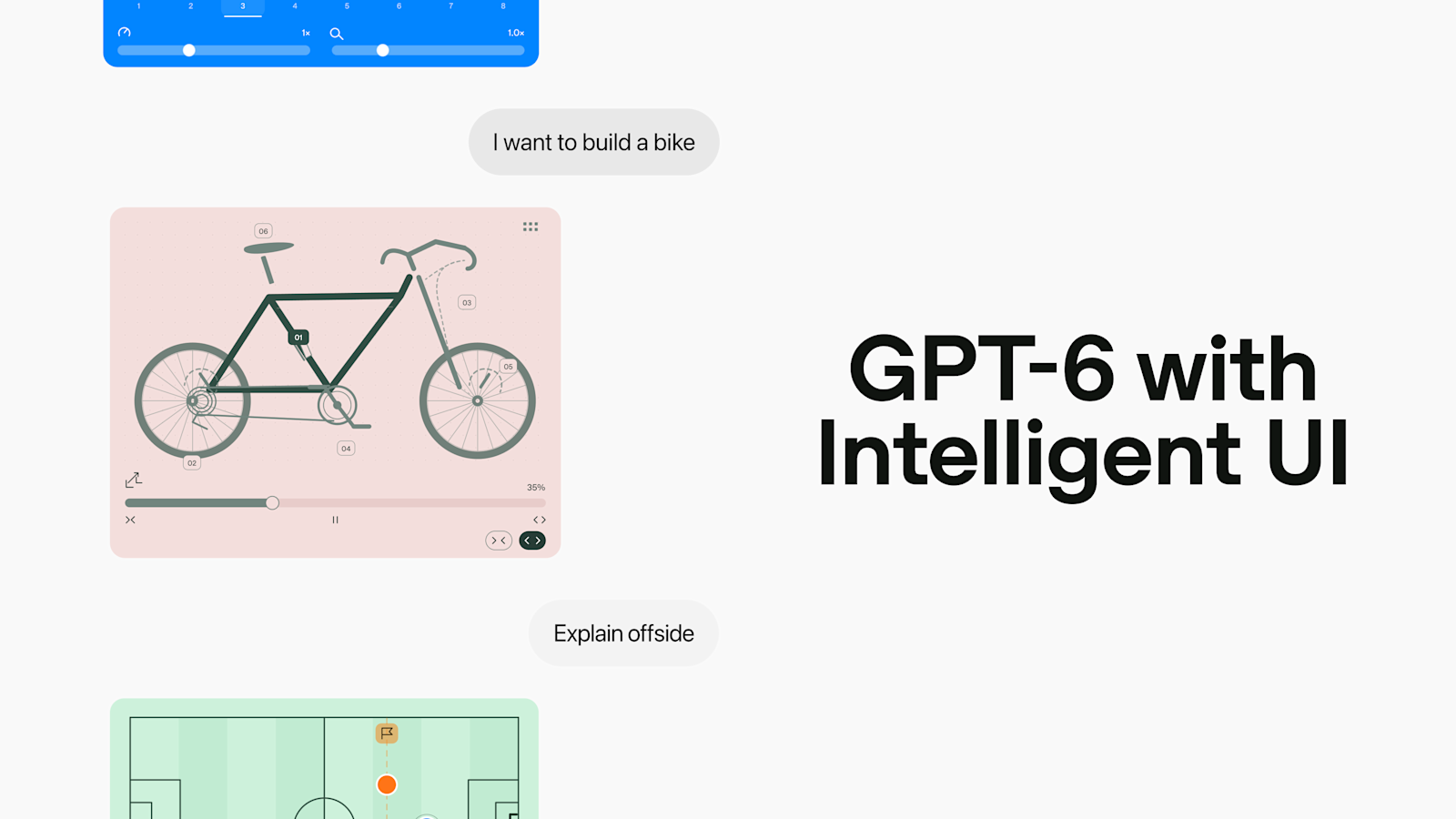
GPT Image 2 is OpenAI's current image generation and editing model, available both inside ChatGPT (where OpenAI's rollout was branded "Images 2.0") and through the API under the model ID gpt-image-2. According to OpenAI's model reference page, the default snapshot is dated April 21, 2026, and the model accepts text and image input while outputting images only, through the dedicated image generation, image edit, and batch endpoints. It does not sit on the Chat Completions or Responses endpoints as a general chat model — it's a purpose-built image model that ChatGPT and the API both call into.
OpenAI's broader image-generation guide frames GPT Image 2 as part of a family that also includes newer 2.5-generation variants built for even higher quality tiers, but gpt-image-2 remains the model documented under its own dedicated reference page with the April 2026 snapshot, and it's the version most developers calling the Images API by default will reach unless they pin a different snapshot.
Pricing: Nano Banana Pro vs GPT Image 2
This is where the two companies price things very differently. Google publishes a flat price per image, scaled by resolution. OpenAI prices by token, which makes a true apples-to-apples comparison harder without running an actual request.
Per Google's Gemini API pricing page, Nano Banana Pro on the standard tier costs $0.134 per image at 1K or 2K resolution, and $0.24 per image at 4K. Google calculates this from an image-output token rate of $120 per 1 million tokens — a 1K/2K image consumes 1,120 tokens, a 4K image up to 2,000 tokens — plus image input at roughly $0.0011 per reference image (560 tokens). Batch and Flex processing is cheaper, at $0.067 (1K/2K) and $0.12 (4K); Priority processing runs $216 per 1 million output tokens. There is no free tier for the API itself, though Google AI Studio lets you test the model, and the consumer Gemini app includes free, rate-limited access.
Per OpenAI's official pricing page, GPT Image 2 is billed per token rather than per image: standard-tier image input costs $8.00 per 1 million tokens ($2.00 cached), image output costs $30.00 per 1 million tokens, and any accompanying text input is $5.00 per 1 million tokens ($1.25 cached). Batch processing roughly halves those rates ($4.00 input / $15.00 output per 1 million image tokens). OpenAI's own image-generation guide doesn't publish a flat per-image dollar figure — it directs developers to a cost calculator instead — so there's no officially confirmed "price per image" to set directly against Google's $0.134/$0.24 figures. Any third-party estimate of per-image cost for GPT Image 2 should be treated as an approximation, not an OpenAI-stated number.
| Spec | Nano Banana Pro (Gemini 3 Pro Image) | GPT Image 2 |
|---|---|---|
| Maker | Google DeepMind | OpenAI |
| API model ID | gemini-3-pro-image | gpt-image-2 |
| Pricing basis | Flat price per image | Per-token (input/output) |
| Standard price | $0.134 (1K/2K), $0.24 (4K) per image | $8/1M input, $30/1M output image tokens |
| Batch price | $0.067 (1K/2K), $0.12 (4K) | $4/1M input, $15/1M output image tokens |
| Max resolution | 4K (via image_size) | Up to ~4K total pixels (custom sizes) |
| Reference images | Up to 14 (6 object, 5 character, 3 style) | Multiple, via edit endpoint |
| Free tier | None via API; free in Gemini app with limits | None via API; included for ChatGPT users |
| Watermark | SynthID on every image | Not specified on pricing/model pages |
Resolution and image quality
Nano Banana Pro defaults to 1K output, with 2K and 4K available by setting the image_size parameter — Google's documentation notes the value must use an uppercase "K" (e.g., "4K") or the request is rejected. The lower-cost 512px option that exists on Google's lighter Nano Banana models is not available on the Pro tier.
GPT Image 2's official image-generation guide lists recommended output sizes of 1024×1024 (square), 1536×1024 (landscape), and 1024×1536 (portrait), plus support for custom WIDTH×HEIGHT values. Custom sizes must be multiples of 16, keep an aspect ratio between 1:3 and 3:1, stay under 3,840 pixels on any edge, and fall between roughly 655,000 and 8.3 million total pixels — a ceiling in the same ballpark as a 4K image, though OpenAI flags anything above 2560×1440 as "experimental." Quality is set separately via a low/medium/high/auto parameter; OpenAI's documentation notes that the newer xhigh and max tiers are reserved for its 2.5-generation models, with gpt-image-2 topping out at "high."
On text rendering specifically, OpenAI's own guide describes GPT Image 2 as "significantly improved" at placing and rendering text but notes it "can still struggle with precise placement and clarity" on dense copy. Google's documentation highlights Nano Banana Pro's legible, stylized text output for infographics, menus, and diagrams as a flagship feature of the broader Nano Banana line, which Pro inherits and extends with higher-resolution output.
Features and editing tools
Nano Banana Pro's standout features, per Google's API documentation, are its reference-image ceiling (up to 14 images combined across object, character, and style references, with up to 5 people kept visually consistent), optional Google Search grounding for factual accuracy, a "thinking" step that runs by default and can't be disabled through the API, and the ability to interleave text and images within a single response — useful for step-by-step visual explainers.
GPT Image 2's official guide emphasizes its editing workflow: you can submit multiple reference images to an edit call, apply a prompt-guided mask (which must include an alpha channel and stay under 50MB), and chain multi-turn edits using a previous_response_id so later prompts build on an existing image rather than starting fresh. An action parameter lets you force a pure "generate" or "edit" behavior instead of relying on auto-detection, and a streaming option returns up to three partial images while the final render completes. A moderation parameter offers a stricter "auto" setting or a "low" option for less restrictive filtering. OpenAI's guide also warns that recurring characters or brand elements "may drift across generations" and that complex prompts can take up to two minutes to resolve — both of which fit the broader industry pattern of providers tightening or loosening content controls, not unlike Anthropic's recent usage-policy update for its own models.
Speed and "thinking" behavior
Both models now reason before they render, rather than generating directly from a raw prompt — a shift that mirrors how video-generation models have evolved too; see our Sora 2 vs Veo 3.1 comparison for how that same reasoning-first approach plays out in AI video. For Nano Banana Pro, Google's documentation states this thinking process is on by default for Gemini 3 image models and cannot be turned off via the API. For GPT Image 2, OpenAI's guide confirms multi-turn, context-aware generation and warns that complex, reasoning-heavy prompts can take up to roughly two minutes — slower than a one-shot, non-reasoning image call, but intended to trade latency for accuracy on layout and instruction-following.
API access and rate limits
Getting API access isn't identical for the two models either. OpenAI's gpt-image-2 model page states plainly that API Organization Verification is required before any developer account can call GPT Image models at all — a step beyond simply holding an API key. Once verified, default rate limits scale with usage tier: OpenAI's documentation lists a "Build" tier at 250,000 tokens per minute and 20 images per minute, a "Launch" tier at 3,000,000 tokens per minute and 150 images per minute, and a "Grow" tier at 8,000,000 tokens per minute and 250 images per minute. There's no equivalent published tier system for Nano Banana Pro; Google's pricing page simply notes the model "can be tested in Google AI Studio" and bills standard, batch/flex, or priority requests at the rates above, without an organization-verification gate comparable to OpenAI's.
Where you can use each tool
Nano Banana Pro's reach is broad inside Google's own ecosystem. Per Google's own rundown of where to find it, it's available globally in the Gemini app (choose "Create images," then the "Thinking" model), in AI Mode in Search for signed-in users in select English-language markets, in NotebookLM for building slide decks and infographics, in Google Slides and Google Vids for Workspace customers, in Flow on all paid plans, in Mixboard, and for developers through Vertex AI, AI Studio, Stitch, Firebase, and Antigravity. Google AI Plus, Pro, and Ultra subscribers get higher usage quotas than the free tier, which reverts to the original Nano Banana model once its limit is hit.
GPT Image 2 lives primarily in two places: ChatGPT, where OpenAI's "Images 2.0" update made the model available across chat tiers with higher-tier plans unlocking extra capacity and the model's "thinking" workflow, and the standalone Images API (gpt-image-2), which developers can call directly for generation, editing, and batch jobs once their organization has completed OpenAI's required API verification step.
Nano Banana Pro vs GPT Image 2: quick FAQ
A handful of the most common questions people ask when comparing these two models, answered directly from each company's own documentation — see the full FAQ block below the article for more.
Which should you use? The verdict
Pick Nano Banana Pro if: you need predictable, flat per-image pricing; you want native 4K output without juggling custom pixel dimensions; your workflow already touches Google Slides, NotebookLM, Vertex AI, or AI Studio; or you need to combine several reference images (products, people, style boards) into one coherent composite.
Pick GPT Image 2 if: you live inside ChatGPT and want image generation and iterative, mask-based editing in the same conversation; you need fine control over editing behavior through parameters like action, partial-image streaming, or a relaxed moderation setting; or your use case is already built around OpenAI's Images API and you'd rather not re-architect around a second vendor.
What to do next: if price predictability and maximum resolution are your priority, start with Nano Banana Pro through Google AI Studio or the Gemini app and budget roughly $0.134–$0.24 per image depending on resolution. If you need tight, conversational editing control and you're already paying for ChatGPT Plus, Pro, or Business, GPT Image 2 is already available to you at no extra per-image charge inside the chat interface — reserve the pay-per-token API for automated or high-volume pipelines, and run a small batch of real prompts through OpenAI's own cost calculator before committing to it at scale.
Frequently asked questions
Is Nano Banana Pro or GPT Image 2 cheaper?
Nano Banana Pro has a clear, published per-image price: $0.134 at 1K or 2K resolution and $0.24 at 4K, per Google's Gemini API pricing page. GPT Image 2 is billed per token ($8/1M input, $30/1M output image tokens on the standard tier), and OpenAI does not publish a flat per-image price, so a direct comparison depends on how much text and how many reference images a given request uses.
What is the maximum resolution each model supports?
Nano Banana Pro supports 1K (default), 2K, and 4K via the image_size parameter. GPT Image 2's documentation lists recommended sizes up to 1536x1024 or 1024x1536, with custom sizes allowed up to roughly 8.3 million total pixels, a ceiling in the same range as 4K, though OpenAI calls anything above 2560x1440 experimental.
Which model is better at rendering text in images?
Google highlights legible, stylized text for infographics and diagrams as a flagship Nano Banana feature. OpenAI describes GPT Image 2 as 'significantly improved' at text placement compared to earlier models but notes it can still struggle with precise placement and clarity on dense text.
Can I use either model for free?
Neither model is free through its developer API. Google's Gemini app offers free, rate-limited access to Nano Banana Pro before reverting to the base Nano Banana model. GPT Image 2 is included in ChatGPT's paid and free tiers in-app, with higher-tier ChatGPT plans unlocking more capacity and the model's thinking workflow.
How many reference images can each model accept?
Nano Banana Pro accepts up to 14 reference images per request, split across up to 6 object images, 5 character images, and 3 style images, per Google's API documentation. OpenAI's GPT Image 2 edit endpoint also accepts multiple reference images, though its guide does not state a fixed numeric limit.
Do I need special approval to use either API?
OpenAI requires API Organization Verification before any developer account can call GPT Image models, with rate limits that scale across Build, Launch, and Grow tiers. Google's documentation describes no equivalent verification gate for the Gemini API, beyond standard billing setup.
Sources
- Gemini API pricingai.google.dev
- Gemini API image generation guideai.google.dev
- Google: Where to use Nano Banana Problog.google
- OpenAI API pricingdevelopers.openai.com
- OpenAI image generation guidedevelopers.openai.com
- OpenAI gpt-image-2 model pagedevelopers.openai.com
Theo Park runs the AI desk at Pandromeda. He follows model launches from the frontier labs and the open-weight community, tracks the assistants and developer tools built on them, and explains what each release changes on pricing, capability and safety. His reporting leans on primary sources: model cards, technical reports, API documentation and the companies' own announcements.