Microsoft Copilot Autopilot vs Claude Cowork: Which AI Agent to Use
Microsoft's always-on Autopilot and Anthropic's Claude Cowork both promise to run work for you without constant prompting. Here's how they actually differ in scope, pricing and setup.
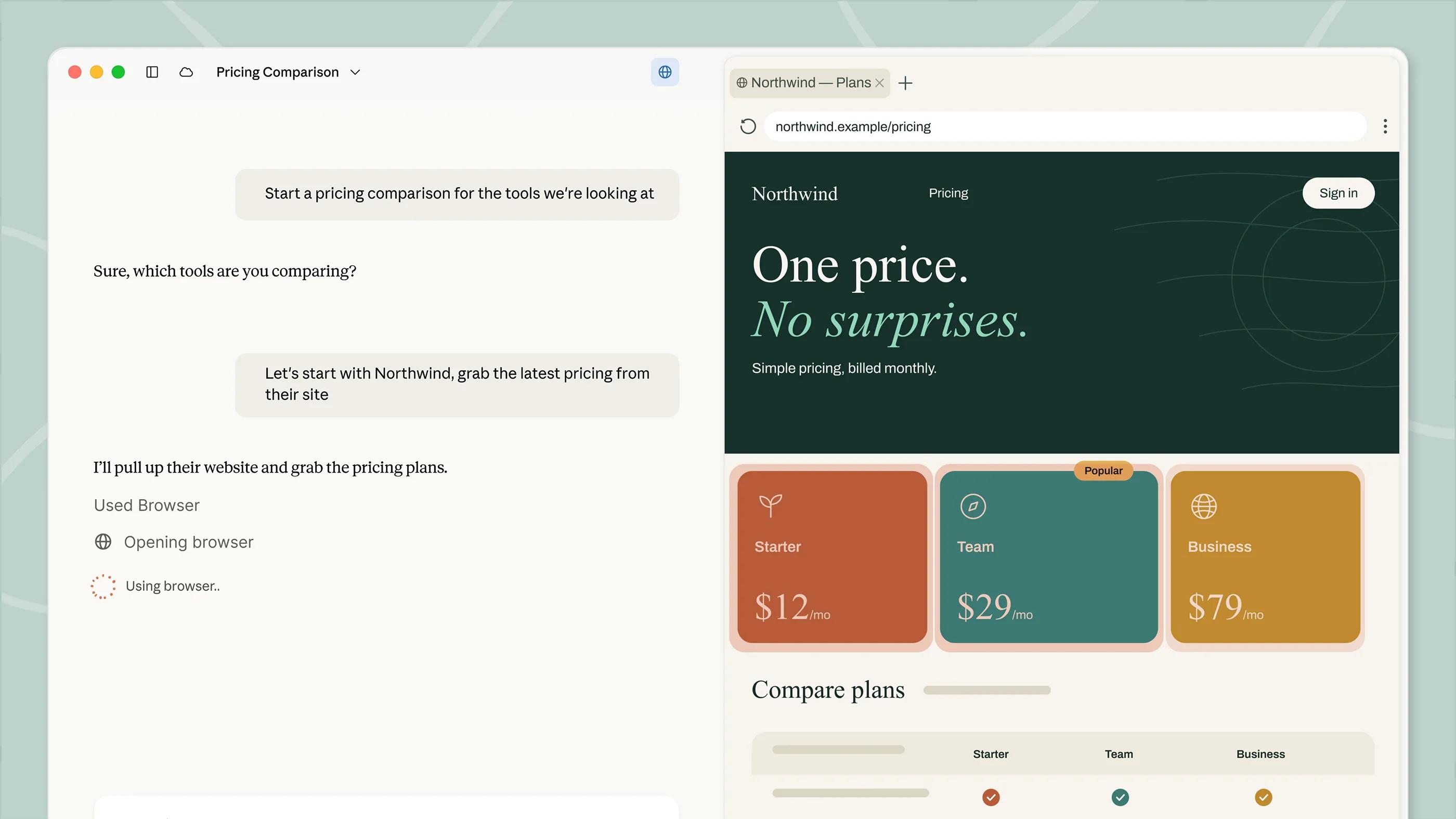
Microsoft Copilot Autopilot is an always-on agent that lives inside a Microsoft 365 tenant and keeps working on an open-ended goal — monitoring Teams channels, chasing unanswered emails, running recurring reports — for as long as you leave it on. Claude Cowork is Anthropic's agentic workspace inside the Claude desktop, web and mobile apps, which takes a defined goal, splits it into parallel sub-tasks, and hands back finished files. The short version: Autopilot is built for ongoing, days-or-weeks-long oversight of a role inside Microsoft's ecosystem, while Cowork is built for finishing discrete, file-heavy deliverables fast, on whatever device you're using. Which one fits depends on whether you need a persistent digital teammate or a project assistant that clears its desk and waits for the next job.
Autopilot: announced Nov 17, 2026 at Microsoft Ignite; rolling out now to Frontier early-access customers inside Microsoft 365 tenants; no fixed price published, usage runs on Copilot Credits.
Cowork: available now on Pro ($20/mo), Max ($100/mo), Ultra ($200/mo), Team ($20/seat/mo) and Enterprise plans, on the Claude desktop (macOS), web and mobile apps.
What is Microsoft Copilot Autopilot?
Microsoft unveiled Autopilot on November 17, 2026, during the Copilot keynote at Microsoft Ignite 2026. Microsoft's own description calls it "a trusted autonomous agent that is personal to you, always on, and working for you." Rather than waiting for a prompt, Autopilot is meant to keep moving on a goal you give it — the example Microsoft uses in its announcement is setting up and running an entire supplier review process without someone restarting it every morning.
Technically, an Autopilot lives inside your organization's Microsoft 365 tenant and gets its own Microsoft Entra Agent ID, plus a named human manager who is accountable for it. It can be @mentioned like a colleague inside Teams channels and chats, brought into a live meeting, or added to an Outlook thread, and it draws on Work IQ — Microsoft's layer for grounding agents in a user's existing mail, files, chats and meetings — to understand context. IT admins can scope exactly what data and tools it can touch, see every action it takes logged under its own identity, and switch it off at any time. You can also tell an individual Autopilot to pause and check in with you before it takes a "consequential" action, such as sending an external email or deleting a file.
As of this writing, Autopilot has only just begun rolling out to customers in Microsoft's Frontier early-access program; there is no general-availability date yet, and Microsoft has not published a flat per-seat price for it. Based on how Microsoft prices other Copilot agent work, expect usage to be metered through Copilot Credits — the same consumption pool that other Copilot Studio and Microsoft 365 Copilot agent actions draw from — layered on top of whatever Microsoft 365 Copilot and Agent 365 licensing a tenant already has. (For a closer look at how Autopilot differs from Microsoft's own Copilot Chat and Cowork tools, see this morning's deep dive on Autopilot.)
What is Claude Cowork?
Claude Cowork is Anthropic's answer to the same problem — handing an AI agent a goal instead of a conversation — built on the same agentic architecture that powers Claude Code. It launched as a macOS research preview for Claude Max subscribers in January 2026, reached Claude Pro subscribers shortly after, and has since expanded to the Claude web and mobile apps as well, so a task you start on a laptop can be checked on, or continued, from a phone.
Inside Cowork, you describe an outcome rather than a single instruction. Claude reads and writes files directly in folders you grant it access to — documents, spreadsheets, presentations, images, notebooks and code — and splits larger jobs into smaller pieces that can run in parallel, for example researching a topic while drafting a first version of a report at the same time. A built-in browser (currently in research preview) lets it complete tasks on the open web without touching your own browser session, and screen control is offered only as a last resort, with a permission prompt for each app it wants to operate. Deleting anything, or taking any action Claude judges "significant," requires your sign-off, and you can switch on a stricter mode where Claude lays out its plan and waits for approval before doing anything consequential. Tasks keep running after you close your laptop, and you can schedule some to repeat on a daily, weekly or monthly cadence.
Cowork connects to outside tools through Anthropic's connectors (Model Context Protocol), including Microsoft 365 and, on Team plans, Slack, and it can be extended with reusable Skills and bundled Plugins. For teams and enterprises, admins can restrict tool permissions by group, cap spend, and stream activity logs to a SIEM. Anthropic has been rolling Cowork's capabilities into the main Claude product under the banner "Claude Cowork is now just Claude," though the Cowork name and workspace still appear for accounts the rollout hasn't reached yet.
Autopilot vs. Cowork: the core differences
The biggest split between the two is time horizon. Autopilot is explicitly designed to run continuously on an open-ended goal — Microsoft frames Copilot Chat as the place for a quick question and Cowork (Microsoft's own, confusingly similarly-named tool) as the place to hand off one whole workflow, with Autopilot sitting a level above both as the thing that keeps running indefinitely. Anthropic's Claude Cowork, despite sharing a name with Microsoft's own internal tool, behaves more like Microsoft's Cowork than like Autopilot: you give it a goal, it works through a bounded task — even a long or multi-part one — and it returns a finished result, though you can schedule it to repeat.
| Dimension | Microsoft Copilot Autopilot | Claude Cowork |
|---|---|---|
| Made by | Microsoft | Anthropic |
| Announced / status | Nov 17, 2026; Frontier early access only | Generally available on paid plans |
| Best for | An ongoing role: monitoring channels, chasing follow-ups, running a recurring process | A defined deliverable: a document, spreadsheet, research summary, or codebase change |
| Where it lives | Inside your Microsoft 365 tenant; works in Teams, Outlook, chats, meetings | Claude desktop (macOS), web and mobile apps |
| Identity & oversight | Own Microsoft Entra Agent ID, named human manager, admin-scoped access | Runs under your own Claude account; admin controls at Team/Enterprise tier |
| Local file access | Works through M365 data via Work IQ, not your local disk | Reads/writes local files directly in folders you grant |
| Web/browser automation | Not described in the Ignite announcement | Built-in browser (research preview); screen control as a last resort, per-app permission |
| Pricing | Not yet published; expected to draw on Copilot Credits plus existing Copilot/Agent 365 licensing | Pro $20/mo, Max $100/mo, Ultra $200/mo, Team $20/seat/mo, Enterprise custom |
| Availability today | Rolling out to Frontier customers only; no GA date | Available now to Pro, Max, Ultra, Team and Enterprise subscribers |
Pricing and plans compared
Cowork's pricing is simple because it rides on Claude's existing subscription tiers: Pro costs $20 a month (or $17 a month billed annually), Max is $100 a month, and the new Ultra tier is $200 a month with a larger Cowork usage allowance than Max. Teams pay $20 per seat per month for groups of two to 150 seats and get the Slack connector included, while Enterprise pricing is custom and adds admin controls, usage analytics, and SIEM streaming.
Microsoft has not published a standalone price for Autopilot. The closest public numbers are for the pieces Autopilot is built on top of: Microsoft's Agent 365 governance layer lists at $15 per user per month standalone, or is bundled into the Microsoft 365 Copilot E7 offering at $99 per user per month, and agent actions — including, presumably, Autopilot's — are expected to draw from a tenant's pooled Copilot Credits rather than carry their own flat fee. Until Microsoft publishes Autopilot-specific pricing, budget for it as an add-on cost on top of whatever Microsoft 365 Copilot and Agent 365 licensing your organization already carries, not as a separate subscription.
Setup and permissions
Getting an Autopilot running is an IT-admin-level task today: it requires a Microsoft 365 tenant already provisioned with Copilot and Agent 365, and Microsoft's announcement gives no self-serve setup flow for individual users outside the Frontier program. Once provisioned, an Autopilot is assigned a name, a goal, and a human manager, and admins decide what Microsoft Graph data and tools it can touch — the same permission model used for other managed agents under Agent 365, including sign-in and action logging under the agent's own identity.
Cowork, by contrast, is set up per-user in minutes: install the Claude desktop app (or use web/mobile), pick the folders or connectors Claude should have access to, and describe the outcome you want. Org-wide controls — restricting tool permissions, capping spend, turning Cowork off entirely — exist at the Team and Enterprise tiers but aren't required to start using it individually.
Availability right now
If you don't have a seat in Microsoft's Frontier early-access program, you can't use Autopilot yet at all — Microsoft's Ignite announcement says only that the rollout to Frontier customers "is beginning," with no broader timeline. Claude Cowork has no such waitlist: any Pro, Max, Ultra, Team or Enterprise subscriber can open it today in the Claude app on macOS, in a browser, or on mobile.
Which one should you use?
If what you need is a teammate that quietly keeps an eye on a process for weeks at a time — chasing a supplier, nudging stalled approvals, watching a Teams channel — and you're already deep in Microsoft 365, Autopilot is the more natural fit once it's actually available to you. If what you need right now is something that will take a goal today and hand back a finished spreadsheet, slide deck, or piece of research by reading and writing your own local files, Claude Cowork is the one you can actually sign up for this afternoon. Organizations using both Microsoft 365 and Claude don't have to pick one: Cowork already connects to Microsoft 365 as one of its integrations, so the two can realistically sit side by side — Cowork finishing bounded deliverables, an Autopilot (once it reaches general availability) watching the process around them.
For related reading, our earlier comparison of Cowork and Microsoft 365 Copilot covers how Cowork stacks up against Microsoft's existing (non-Autopilot) Copilot, and our explainer on how AI agents control a screen goes deeper on the browser- and screen-control piece both companies are racing to get right.
What's next
Watch for two things: a published, Autopilot-specific price once it leaves Frontier early access, and whether Microsoft gives Autopilot its own local-file and browser-automation abilities to close the gap with Cowork. On Anthropic's side, watch the pace of the "Cowork is now just Claude" rollout — once it's complete, some of the distinctions in this piece may simply become features of "Claude" rather than a separate product name.
Frequently asked questions
Is Microsoft Copilot Autopilot available to everyone yet?
No. As of its November 17, 2026 announcement at Microsoft Ignite, Autopilot is only rolling out to customers in Microsoft's Frontier early-access program. Microsoft has not given a general-availability date.
How much does Claude Cowork cost?
Cowork is included in Claude's paid plans: Pro is $20/month ($17/month billed annually), Max is $100/month, Ultra is $200/month, and Team is $20 per seat per month for 2-150 seats. Enterprise pricing is custom.
What's the main difference between Autopilot and Cowork?
Autopilot is built to run continuously on an open-ended goal inside a Microsoft 365 tenant - monitoring channels, chasing follow-ups, running recurring work. Cowork takes a defined goal and hands back a finished deliverable, such as a document or spreadsheet, by reading and writing your local files.
Can Claude Cowork access files on my computer?
Yes. The Cowork desktop app reads and writes files directly in folders you grant it access to, including documents, spreadsheets, presentations, images, notebooks and code, without manual uploads or downloads.
Does Autopilot work outside of Microsoft 365?
Not based on Microsoft's announcement. Autopilot lives inside your organization's Microsoft 365 tenant and is grounded in your existing mail, files, chats and meetings through Work IQ; it is not described as having local-file or general web-browsing access the way Claude Cowork does.
Is "Claude Cowork" still the product's name?
Anthropic is in the process of folding Cowork into the main Claude app under the message "Claude Cowork is now just Claude." The Cowork name and separate workspace still appear for accounts the rollout hasn't reached yet.
Sources
Theo Park runs the AI desk at Pandromeda. He follows model launches from the frontier labs and the open-weight community, tracks the assistants and developer tools built on them, and explains what each release changes on pricing, capability and safety. His reporting leans on primary sources: model cards, technical reports, API documentation and the companies' own announcements.