What Is the AI Bubble? Signs, Risks and What a Pop Would Mean
From circular financing to stretched valuations, here is what people mean by an AI bubble, who is warning about it, and who is pushing back.
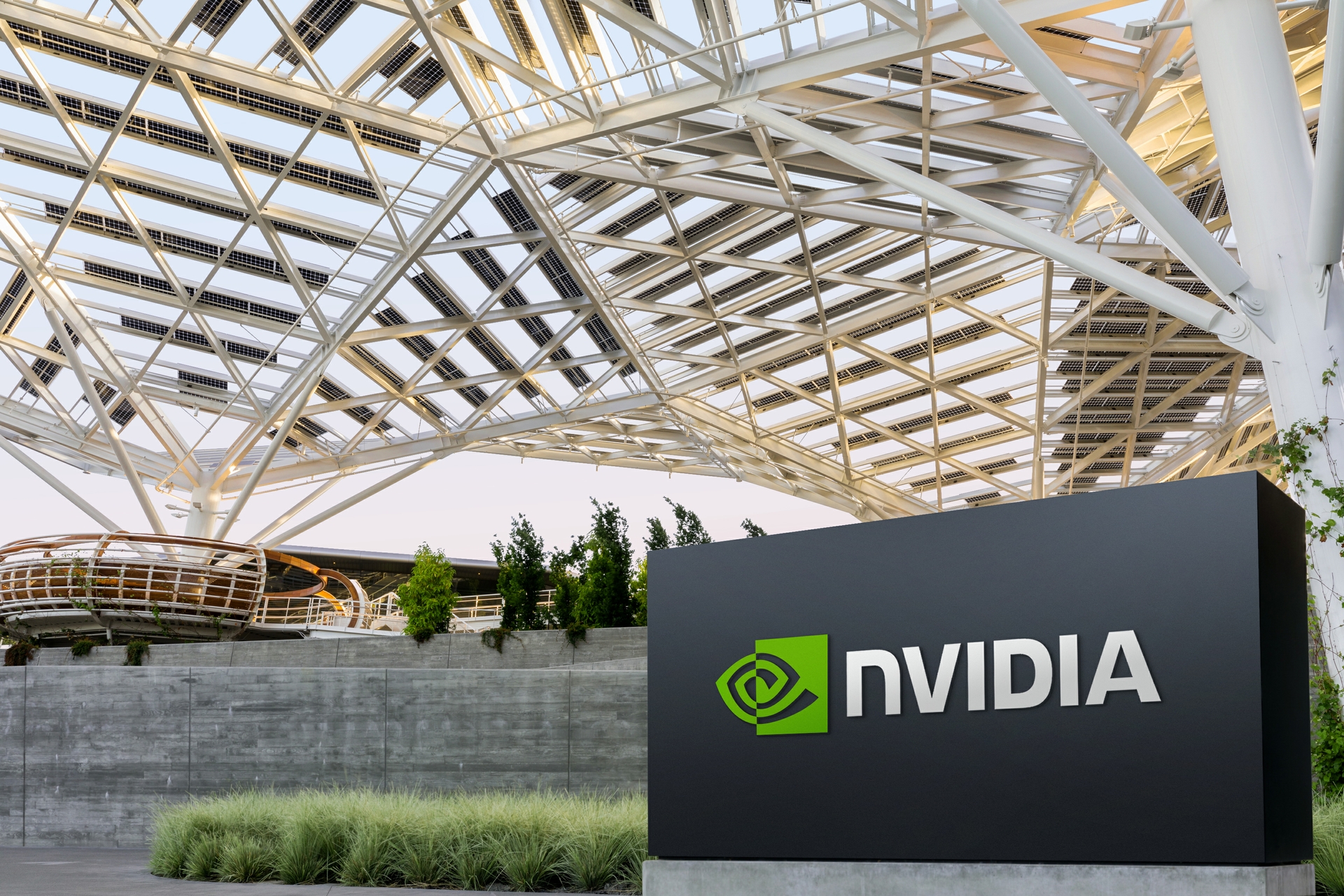
"AI bubble" is the shorthand for a specific worry: that the money pouring into AI companies, chips and data centers has outrun what the technology can realistically earn back, and that a correction is coming. It's not a single event or an official designation — it's a debate, playing out in regulator reports, earnings calls and prediction markets, between people who think AI valuations are stretched like the dot-com era and people, including some of the industry's biggest names, who think this buildout is different.
- The Bank of England's Financial Policy Committee said in July 2026 that AI-related equity valuations have "become more stretched"
- Global AI infrastructure spending is estimated at more than $2.5 trillion for 2026 alone
- Nvidia CEO Jensen Huang has repeatedly rejected bubble comparisons, pointing to sold-out GPU supply
- Prediction markets have priced a 2026 "AI bubble burst" style contract roughly in the high-teens-to-high-20s percent range at various points this year
- Some forecasts tie a possible correction to the period after Anthropic's and OpenAI's planned IPOs
What does "AI bubble" actually mean?
An economic bubble happens when the price of an asset — a stock, a currency, a type of company — rises well beyond what its underlying earnings can justify, usually driven by expectation and momentum rather than fundamentals, and then falls sharply when that expectation breaks. The term is most associated with the dot-com crash of 2000 and the 2008 housing crash, and "AI bubble" borrows that framework directly: the claim is that AI companies, chipmakers and the data centers that serve them are being valued on the assumption of future profits that may not arrive on schedule, or at all.
What makes the AI case distinct from a classic bubble is how concentrated it is. A relatively small number of companies — chipmakers, hyperscale cloud providers and a handful of frontier AI labs — account for an outsized share of recent stock market gains and a historic volume of capital spending. That concentration is exactly what regulators and analysts point to when they say the risk, if it materializes, could ripple well beyond the AI sector itself.
It's also worth being precise about what the term doesn't mean. Calling something an "AI bubble" isn't a claim that AI itself is fake, useless or overhyped as a technology — the underlying argument is narrower than that. It's a claim about price: whether the market value currently assigned to AI-related companies and infrastructure is higher than what those assets can be reasonably expected to earn back, within a reasonable timeframe, given what's known today. A technology can be genuinely transformative and still be the subject of a price bubble at the same time — that's effectively what happened with the internet in 2000.
The signs people cite that a bubble is forming
Several specific, documented concerns come up repeatedly in this debate:
- Circular financing. Chipmakers, cloud providers and AI labs have struck deals that route investment back and forth between the same small set of companies — a chipmaker investing in a lab that then commits to buying that chipmaker's hardware, for instance. Critics argue this kind of circular deal-making can make demand look more organic than it is.
- Spending outpacing revenue. Global AI infrastructure spending is estimated at more than $2.5 trillion in 2026, a figure that outstrips what AI products are currently generating in revenue for most companies involved, even as usage grows quickly.
- Market concentration. The Bank of England's Financial Policy Committee noted in its July 2026 Financial Stability Report that recent equity market gains have been driven in part by a narrow set of AI-related companies, which raises concentration risk in major indices. Governor Andrew Bailey added that even stripping out the largest AI-related stocks, broader valuations are still near their lowest relative level since 2007 — implying the AI segment specifically is carrying an unusual amount of the market's recent gains.
- Uncertain payback timelines. The same Bank of England report said the earnings forecasts underpinning AI company valuations are "highly uncertain," since they depend on successful infrastructure buildout, continued access to financing, and how quickly adoption actually translates into revenue.
- Interest-rate sensitivity. Historically, major asset bubbles have unwound when borrowing costs rise, making it harder to justify valuations built on distant future earnings. AI infrastructure financing, much of it debt-funded, is exposed to the same dynamic.
- Power and supply constraints. Data center buildout at the scale currently planned requires electricity, advanced chips and construction capacity that are all in finite supply, creating a real-world ceiling on how fast the spending can translate into deployed, revenue-generating infrastructure.
Who's saying what
The debate is easiest to follow as a set of named positions, since very few people involved are arguing the extremes — almost no one credible says AI is worthless, and almost no one says there's zero risk at all:
| Voice | Position |
|---|---|
| Bank of England (FPC) | Valuations "more stretched"; system still resilient; not calling a top |
| Nvidia CEO Jensen Huang | Rejects bubble framing; points to sold-out chip supply as proof of real demand |
| Prediction market traders | Split; pricing a downturn at roughly 1-in-10 to 1-in-4 odds depending on resolution wording |
| IMF (October 2025 remarks) | Warned valuations were approaching levels last seen in the dot-com era |
The case against a bubble
The most visible pushback comes from Nvidia, whose chips sit at the center of the AI buildout. In the company's own third-quarter fiscal 2026 earnings release, CEO Jensen Huang said "Blackwell sales are off the charts, and cloud GPUs are sold out," adding that "compute demand keeps accelerating and compounding across training and inference — each growing exponentially." That quarter, Nvidia reported $57.0 billion in total revenue, up 62% year over year, with Data Center revenue alone reaching $51.2 billion. Huang's argument, repeated at industry events through 2026, is that sold-out supply and the price people are willing to pay to rent compute are a more reliable signal than valuation multiples: if demand for the underlying product were fake, he argues, chips wouldn't be selling out.
Other voices make a related but distinct point: that even if some AI company valuations are too high, the technology itself isn't going away, and a correction in stock prices wouldn't erase the underlying capability or the infrastructure already built. On this view, a bubble popping would mean a painful re-pricing of expectations and some companies failing, not a referendum on whether AI works. That's roughly the distinction analysts draw with the dot-com crash: the internet itself turned out to be transformative even though a huge number of individual dot-com stocks went to zero.
What regulators and institutions are actually saying
The clearest institutional warning so far comes from the Bank of England. Its Financial Policy Committee said in its July 2026 Financial Stability Report opening remarks that vulnerabilities in risky asset valuations persist and have, in some cases, intensified since its December 2025 report, with AI-related equities singled out as a driver of stretched valuations and rising market concentration. Crucially, the FPC's judgment was that the UK financial system itself has remained resilient and continued to support the economy — it flagged a risk, not a prediction of imminent collapse. The same report also flagged a less-discussed risk: a "significant increase" in cyber and operational vulnerabilities tied to the rapid rollout of frontier AI systems, separate from the valuation question entirely.
This kind of split verdict — a documented risk worth watching, paired with no call for immediate alarm — is typical of how financial regulators have approached the AI buildout so far: naming the concentration and uncertainty clearly, while stopping short of saying a crash is coming.
What this has to do with the Anthropic and OpenAI IPOs
Some of the sharpest forecasts tie a possible AI correction to a very specific calendar event: the wave of AI company IPOs, including Anthropic's planned public listing. The logic is that once a company like Anthropic is trading on a public market, its valuation is tested continuously by real buyers and sellers rather than set in private funding rounds negotiated between a handful of investors and the company itself. A disappointing debut, or a slide in the months after, would be a far more visible signal than anything that happens in private markets. That's part of why some analysts specifically flag the period after these IPOs, rather than right now, as the more likely window for a correction to show up, if one comes.
What prediction markets say
Separately from analyst commentary, bettors on prediction markets like Polymarket have put real money on the question of whether 2026 ends with some form of AI industry downturn. Contracts asking whether an "AI bubble" will burst, or whether the AI industry will see a downturn, by the end of 2026 have traded at different points this year anywhere from roughly 10% to the high-20s percent range, depending on the exact wording of the resolution criteria — a tighter, multi-event test resolves differently than a looser "industry downturn" test. That spread is itself informative: it shows that even people putting money behind their view don't agree on how likely a correction is, or what would actually count as one.
Prediction markets aggregate the guesses of anyone willing to bet real money, which makes them a useful supplement to analyst commentary and regulator reports, but not a substitute for either — a market price reflects what traders currently believe, not a verified forecast of what will happen. Treat the specific percentage as a rough temperature check on sentiment rather than a probability anyone should take literally.
What happens if it pops, and what to watch
If AI valuations do correct sharply, the most likely shape — based on how past bubbles unwound — is not that AI stops being useful, but that a large number of companies built on thin margins or unproven business models fail or get absorbed, while the infrastructure and capability that survived the shakeout keeps compounding. The dot-com crash wiped out enormous paper wealth and plenty of individual companies, but it also left behind the fiber-optic and data center buildout that the next two decades of the internet ran on.
In the near term, the clearest things to watch are the ones already being tracked by regulators and markets: whether circular financing arrangements between chipmakers and AI labs keep expanding, whether AI company revenue growth starts catching up to infrastructure spending, how AI companies trade once they're public, and whether central banks like the Bank of England escalate their language beyond "stretched" in future Financial Stability Reports. None of those alone would confirm a bubble, but together they're the dashboard analysts, regulators and the companies themselves are actually watching.
Related: for the IPO price range and valuation at the center of the "after the IPOs" theory, see our coverage of Anthropic's IPO pricing, and for the lawsuits adding legal uncertainty to frontier AI's path forward, see our report on nonprofit lawsuits against major AI labs.
Frequently asked questions
What does "AI bubble" mean?
It's the claim that AI company valuations and infrastructure spending have outrun the profits the technology can realistically generate in the near term, similar to how dot-com-era valuations outran actual internet revenue in 2000.
Is there an official declaration that AI is in a bubble?
No single body has declared one. The Bank of England's Financial Policy Committee said in July 2026 that AI-related valuations look "more stretched," but also said the financial system remains resilient — a flagged risk, not a verdict.
Why does Nvidia's CEO disagree that there's a bubble?
Jensen Huang points to Nvidia's sold-out chip supply and accelerating compute demand across training and inference as evidence that real revenue, not just hype, is driving the spending.
How do prediction markets rate the odds of a 2026 AI bubble burst?
Contracts on platforms like Polymarket have traded anywhere from roughly 10% to the high-20s percent range through 2026, depending on how the resolution question is worded.
Would an AI bubble popping mean AI stops working?
No. Most analysts compare it to the dot-com crash, where huge paper wealth and many companies disappeared, but the underlying technology and infrastructure kept compounding afterward.
What's the connection to the Anthropic and OpenAI IPOs?
Some forecasts specifically flag the period after these companies go public as the likelier window for a correction, since public markets test valuations continuously in a way private funding rounds don't.
Sources
- Bank of England – Financial Stability Report Opening Remarks (July 2026)bankofengland.co.uk
- NVIDIA – Q3 Fiscal 2026 Financial Resultsnvidianews.nvidia.com
- Polymarket – AI Bubble Burst in 2026 marketpolymarket.com
- Wikipedia – Economic bubbleen.wikipedia.org
Theo Park runs the AI desk at Pandromeda. He follows model launches from the frontier labs and the open-weight community, tracks the assistants and developer tools built on them, and explains what each release changes on pricing, capability and safety. His reporting leans on primary sources: model cards, technical reports, API documentation and the companies' own announcements.