Claude Marketplace: What It Is and How to Add Plugins
The Claude Marketplace went live September 23, 2026 as one hub for Claude plugins, connectors, paid agents, and service partners.
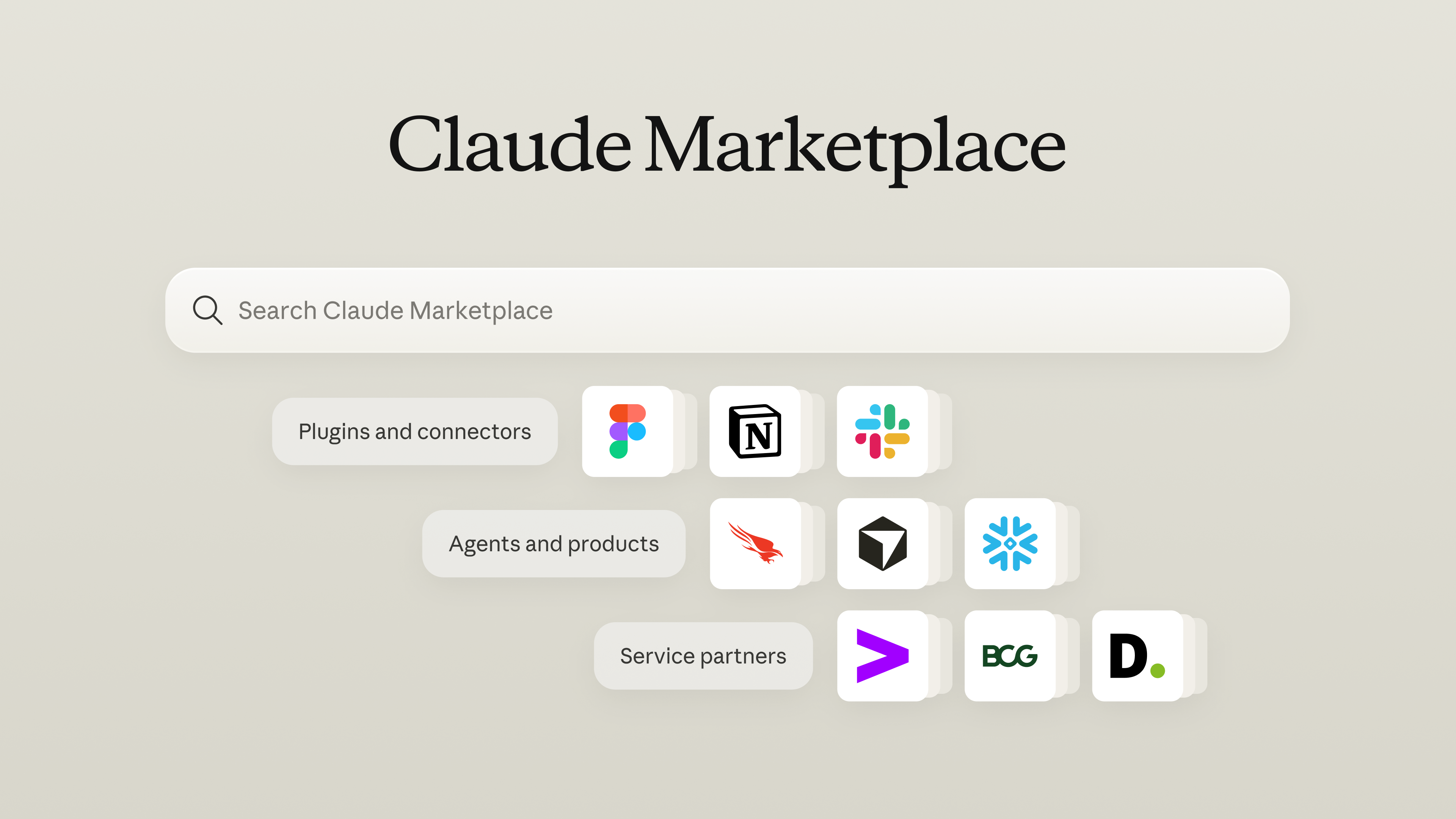
The Claude Marketplace is Anthropic's new storefront for everything that plugs into Claude: it went live on September 23, 2026, at claude.com/marketplace, and it bundles three things into one page — connectors and plugins you add to your own Claude account, Claude-powered agents and products you can buy with spend you already have committed to Anthropic, and vetted service partners who will build with Claude for you. If you've been typing "claude marketplace plugins," "claude marketplace mcp," or "claude marketplace add" into a search box, this is the answer: one URL, three categories, and a developer portal for anyone who wants to list something there.
What is the Claude Marketplace?
The Claude Marketplace is a single discovery and distribution hub that Anthropic built to replace a scattered set of directories, partner pages, and sales conversations. Before it existed, finding a connector meant digging through Claude's settings; finding a Claude-powered vendor meant a web search or a cold email; and finding a systems integrator meant asking around. Anthropic's own announcement describes it as bringing "plugins and connectors, agents and products, and service partners into one place," pitched as a one-stop shop for customers and a shorter path to enterprise teams for builders.
At launch, Anthropic said more than 2,000 connectors and plugins were already listed, alongside a smaller, curated set of paid agents and products from named partners, and a roster of consulting firms from the existing Claude Partner Network. It's effectively three marketplaces stitched into one page, each with its own rules for how money and permissions move.
When did the Claude Marketplace launch?
Anthropic announced the Claude Marketplace on its Claude blog on September 23, 2026, publishing it as a fully public page rather than a waitlist or limited preview. The launch post frames it as the next step after Anthropic's earlier work opening up the Model Context Protocol (MCP) and Agent Skills as open standards — the marketplace is where those standards get a storefront. Anthropic has said it expects the partner roster to keep growing, and the submission portals for connectors, plugins, and paid products were open from day one, so the catalog is designed to expand continuously rather than through scheduled "seasons" or drops.
- Launched: September 23, 2026
- Where: claude.com/marketplace
- What's in it: 2,000+ connectors and plugins, a curated set of paid agents and products, and certified service partners
- Launch categories: Plugins and connectors, Agents and products, Service partners
- Named partners: Atlassian, Google, Microsoft, Notion, Salesforce (connectors); CrowdStrike, Cursor, Harvey, Legora, Lovable, Snowflake (agents and products); Accenture, Boston Consulting Group, Deloitte (service partners)
- Built on: Model Context Protocol (MCP) and Agent Skills, Anthropic's open standards
What's actually in the Claude Marketplace?
The marketplace is organized around three distinct categories, and understanding which one you're looking at matters because each works differently.
Plugins and connectors are the free, self-serve layer. A connector is typically a remote MCP server that gives Claude access to an app's data — Google Drive, Gmail, Calendar, Notion, Slack, Atlassian's Jira and Confluence, Figma, Canva, Asana, and well over a thousand more. A plugin can bundle a connector together with Agent Skills, slash commands, or other extensions, mainly for Claude Code and agentic workflows. You add these yourself, generally for no extra cost beyond your existing Claude plan.
Agents and products are paid, Claude-powered software built by outside companies — CrowdStrike's Charlotte AI, Cursor, Harvey, Legora, Lovable, Snowflake's agents, and others. These aren't free add-ons; they're commercial products that happen to run on Claude, and buying one is closer to a procurement decision than flipping on an integration.
Service partners are consulting and systems-integration firms — Accenture, Boston Consulting Group, Deloitte, and other members of the Claude Partner Network — listed for enterprises that want help building a custom Claude deployment rather than buying an off-the-shelf tool.
| Category | What it is | Who it's for | Examples named at launch |
|---|---|---|---|
| Plugins & connectors | MCP servers and Agent Skill bundles that give Claude access to an app or a workflow | Any Claude user who wants Claude to read/write data in another tool | Atlassian, Google, Microsoft, Notion, Salesforce, Slack, Figma, Canva, Asana |
| Agents & products | Paid, Claude-powered software sold by outside companies | Teams buying a finished solution, paid for with committed Anthropic spend | CrowdStrike, Cursor, Harvey, Legora, Lovable, Snowflake |
| Service partners | Consulting and systems-integration firms certified on Claude | Enterprises that need custom build-out or implementation help | Accenture, Boston Consulting Group, Deloitte, Caylent, Slalom |
How do I add a connector or plugin from the Claude Marketplace?
For the free layer — connectors and plugins — the flow is self-serve: go to claude.com/marketplace, use the search bar or browse the "Plugins and connectors" section, and open a listing you want. Each listing shows what the tool does, what data it reads or writes, what you need before connecting (an account, a plan, specific permissions), and whether it needs OAuth sign-in or works without authentication. Connecting it adds the tool to your Claude account so it's available the next time you start a conversation or an agent session; for Claude Code specifically, plugins add slash commands, Agent Skills, and bundled MCP servers to your local setup rather than your web account.
Many of the most-added listings are the familiar productivity and collaboration apps — Google Drive, Gmail and Calendar for files and scheduling, Slack and Microsoft 365 for team communication, Figma and Canva for design work, and Notion and Asana for project tracking. Anthropic separates "Verified" listings, which have passed a closer review, from "Community" listings, which are scanned automatically for policy compliance but may not have had a human reviewer — worth checking before connecting anything that touches sensitive data.
How do I buy an agent or product?
Buying from the "Agents and products" section works differently from adding a free connector, because it draws on a commercial relationship rather than a simple toggle. Anthropic's own description is that teams can apply a portion of spend they've already committed to Anthropic toward Claude-powered software from partner companies, with Anthropic handling the billing relationship rather than requiring a separate contract with each vendor. In practice that means this path is aimed at organizations that already have an enterprise agreement with Anthropic — a consumer on a personal Claude subscription browsing Cursor or Harvey in the marketplace is looking at a listing, not a one-click purchase.
How do developers submit a plugin, connector, or Agent Skill?
Anthropic built the Claude Marketplace on two standards it has been pushing as open specifications: the Model Context Protocol (MCP) for connecting external tools and data, and Agent Skills for packaging instructions, scripts, and resources Claude can load on demand — the same mechanism behind Agent Skills as a concept. A remote MCP server is submitted as a connector through the developer portal at claude.ai/directory/manage, where a submitter chooses "MCP connector," connects the live server over HTTPS, and works through steps covering tool annotations, authentication method, a public listing description, use cases, company details, a reviewer test account, and a set of compliance acknowledgments. Skills aren't accepted as a standalone submission type — they get bundled into a plugin instead, alongside any local MCP servers or slash commands, and submitted as a plugin rather than a connector. After submission, Anthropic auto-scans for policy compliance and lists most submissions as "Community" immediately; some queue for a human review, and status updates appear back in the same portal.
Companies that want to sell a finished, Claude-powered agent or product rather than give away a free connector apply separately through Anthropic's marketplace-partners application, and firms offering consulting or implementation services apply to join the Claude Partner Network. Both of those listing types involve a commercial relationship with Anthropic that a self-serve connector submission does not.
How does pricing work?
Pricing splits cleanly along the three categories. Plugins and connectors are generally free to add — you're paying for your underlying Claude plan (or your Claude Code / API usage), not for the integration itself, though the third-party service you're connecting to may have its own subscription cost. Agents and products are commercial purchases, and for enterprise customers Anthropic allows a portion of an existing committed-spend agreement to be redirected toward those purchases instead of requiring a brand-new contract with each vendor, with Anthropic consolidating the invoicing. Service partner engagements are negotiated directly with the consulting firm, following whatever commercial terms that partner normally uses, with Claude Marketplace functioning as the referral and discovery layer rather than the billing layer.
Is this the same as the Claude Code plugin marketplace?
Not quite, and the overlap in terminology is a common source of confusion when people search "claude marketplace docs." Claude Code has long supported developer-run plugin marketplaces — a repository or URL anyone can host and point `/plugin marketplace add` at, used mostly for Claude Code add-ons like custom commands and local MCP bundles. The Claude Marketplace announced on September 23, 2026 is a separate, Anthropic-run, centralized storefront that spans the entire Claude product line — web, desktop, mobile, Claude Code, and the API — and includes paid enterprise agents and service partners alongside free plugins. A connector or plugin built for Claude Code can still be submitted into this centralized marketplace through the same developer portal, so the two systems are related rather than competing, but "Claude Marketplace" specifically refers to the September 2026 hub at claude.com/marketplace.
Why does the Claude Marketplace matter?
For individual users and small teams, the practical change is discoverability: instead of hunting for a connector buried in account settings, there's a dedicated, searchable catalog with over 2,000 listings organized by category. For enterprises, the bigger change is procurement — being able to apply existing Anthropic spend toward a partner's product removes a separate negotiation and a separate invoice for every Claude-powered vendor a company wants to adopt, which is the kind of friction that otherwise slows enterprise AI rollouts. For developers and companies building on Claude, the marketplace is a distribution channel that didn't exist in this form before: a connector, a plugin, or a full product can now reach anyone using Claude through one submission process rather than independent outreach to every potential customer. It also puts a number on how far the MCP and Agent Skills ecosystems have grown since Anthropic opened both as standards — a catalog in the thousands is a different scale than the early reference implementations most developers first encountered.
What's next
Anthropic has said it expects the marketplace's partner roster to keep expanding beyond the launch lineup, and both the connector/plugin submission portal and the agent/product application process remain open on an ongoing basis rather than closing after a launch window. Categories that are thin today — specialized vertical agents outside the initial legal, financial, and security examples, for instance — are the most likely areas to fill in first as more companies apply. For teams deciding whether a given integration belongs in the free connector tier or the paid product tier, it's worth comparing what's on offer against the broader assistant landscape; a side-by-side look at how Claude compares to other assistants or at coding-tool pricing across Cursor, Copilot, and Claude Code can help put a marketplace purchase in context before committing spend to it. As the catalog grows, expect Anthropic to publish more detail in its developer documentation on review timelines, verification badges, and the specific requirements for each submission type.
Frequently asked questions
What is the Claude Marketplace?
The Claude Marketplace is Anthropic's centralized hub for Claude add-ons, launched September 23, 2026 at claude.com/marketplace. It combines free plugins and connectors, paid Claude-powered agents and products, and certified consulting service partners in one searchable catalog.
When did the Claude Marketplace launch?
Anthropic launched the Claude Marketplace on September 23, 2026, announcing it as a fully public page rather than a limited preview, with more than 2,000 connectors and plugins listed at launch.
How do I add a plugin or connector from the Claude Marketplace?
Go to claude.com/marketplace, search or browse the Plugins and connectors section, open a listing, and connect it. Most connectors need an account on the third-party service and sign in with OAuth; connected tools become available in your Claude conversations and, for plugins, in Claude Code.
Is the Claude Marketplace free to use?
Adding plugins and connectors is generally free beyond your existing Claude plan. Buying an agent or product from a partner company is a paid, commercial transaction, and enterprise customers can apply committed Anthropic spend toward those purchases.
How do I submit my own plugin, connector, or Agent Skill to the Claude Marketplace?
Remote MCP servers are submitted as connectors through Anthropic's developer portal at claude.ai/directory/manage. Agent Skills aren't submitted on their own — they're bundled into a plugin along with any local MCP servers or slash commands and submitted as a plugin instead.
Is the Claude Marketplace the same as the Claude Code plugin marketplace feature?
No. Claude Code's developer-run plugin marketplaces (added via /plugin marketplace add) are a separate, older mechanism for Claude Code specifically. The Claude Marketplace announced September 23, 2026 is Anthropic's own centralized storefront spanning all of Claude, including paid agents and service partners.
Sources
- Claude Marketplace announcement (Anthropic)claude.com
- Claude Marketplaceclaude.com
- Anthropic docs: Submit a connector to the directoryclaude.com
- Anthropic docs: Submit a pluginclaude.com
Theo Park runs the AI desk at Pandromeda. He follows model launches from the frontier labs and the open-weight community, tracks the assistants and developer tools built on them, and explains what each release changes on pricing, capability and safety. His reporting leans on primary sources: model cards, technical reports, API documentation and the companies' own announcements.