Claude Code vs Cursor: Terminal Agent or AI-Native IDE?
Claude Code runs as an autonomous agent in your terminal; Cursor is an AI-native editor built for interactive, in-editor coding. Here is how the workflows actually differ.
Claude Code and Cursor solve the same problem from opposite directions. Claude Code is a terminal-first coding agent built to work across an entire repository on its own — you hand it a bug, a migration, or a multi-day refactor, and it plans, edits, tests, and opens a pull request while you review the outcome. Cursor is an AI-native code editor built around interactive, in-editor coding — you stay inside the IDE, and an agent sits next to your cursor to search, edit, and run commands across files while you watch the diffs land in real time. Neither is strictly "better"; they assume different defaults for how much of the work you want to supervise moment-to-moment, and that difference shapes almost everything else about them.
Quick verdict
- Claude Code is a terminal-based agent (also usable inside VS Code, JetBrains, a desktop app, and the browser) built for autonomous, repo-wide work: long-running refactors, issue-to-PR automation, and tasks you can hand off and walk away from.
- Cursor is a full IDE — a VS Code-based editor plus a CLI and cloud agents — built around staying in the loop: inline diffs, checkpoints you can roll back, and an "autonomy slider" between quick edits and fully agentic runs.
- Both now support genuinely agentic, multi-file changes with no hard cap on tool calls per task. The real difference is where you sit while that happens and how much you supervise live.
- Claude Code sticks to Anthropic's own model family (Opus, Sonnet, Haiku, Fable) with fine-grained aliasing and fallback rules. Cursor is model-agnostic by design, with a first-party pool (Grok, Cursor's own Composer) plus pay-as-you-go access to Claude, GPT, Gemini, and others.
- Entry-level paid pricing is close on both ($17-20/month individually); the meaningful cost differences show up at scale and in usage pools, not the headline price.
Two different philosophies: agent-first vs. editor-first
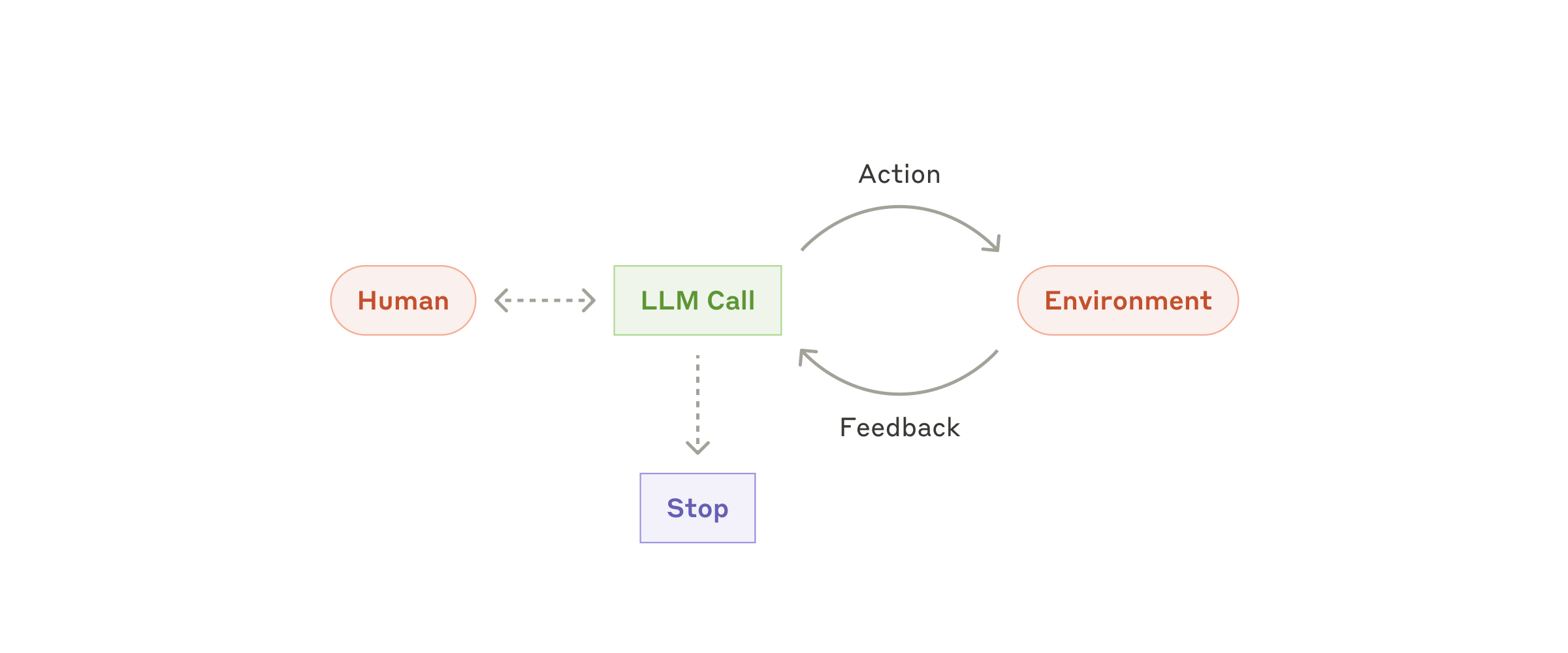
The clearest way to understand the split is to look at where each product assumes you'll spend your attention. Anthropic positions Claude Code as something you run from the terminal "alongside your existing CLI tools," designed so you can "hand Claude a bug fix, test, or multi-day migration" and steer it from wherever you work — the terminal, an IDE extension, a browser tab, or a phone. The product's own documentation describes the interaction model as architect-and-builder: you set direction, Claude Code plans the approach, writes the code across multiple files, runs the tests, and opens the pull request, asking clarifying questions when it hits a decision it can't make alone.
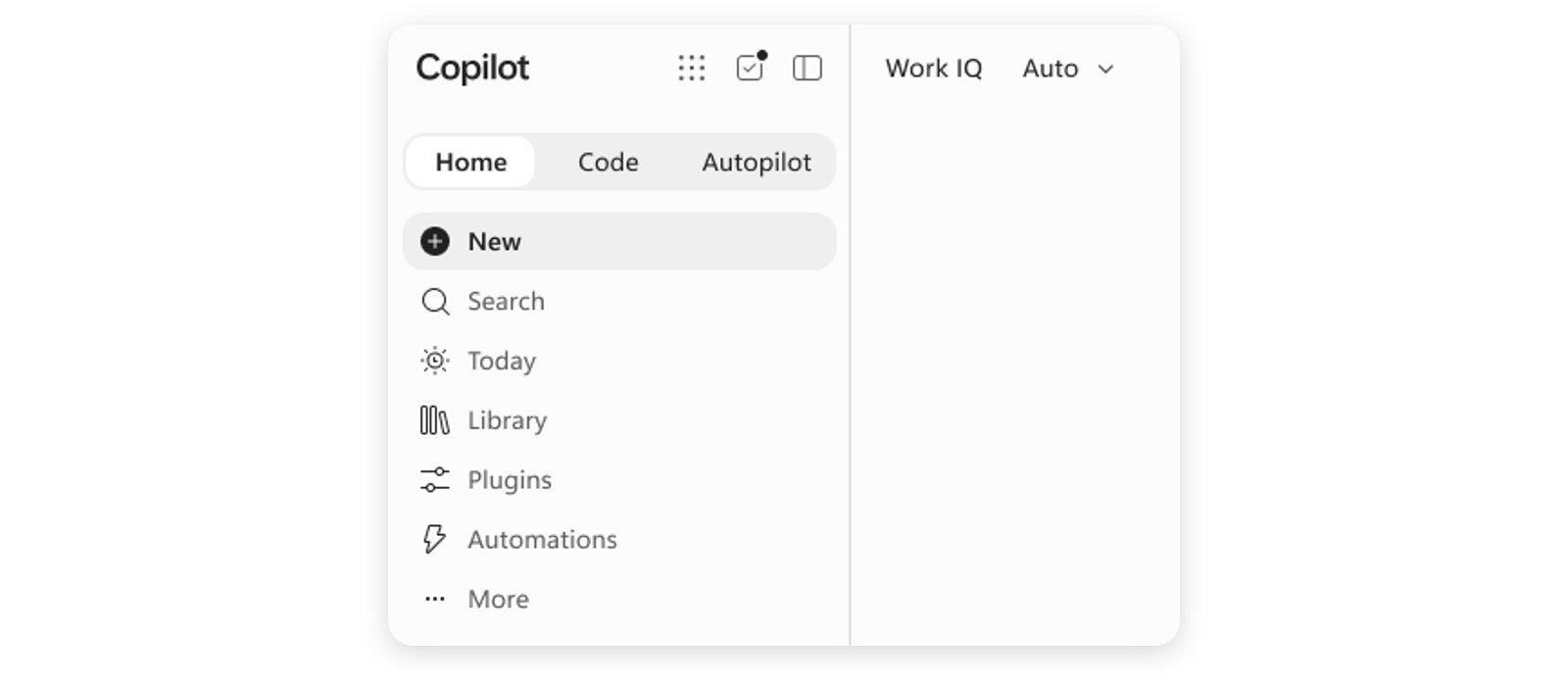
Cursor's own site frames the product differently: as "your coding agent for building ambitious software," built around a desktop editor with an Agent pane, a CLI, and cloud agents, rather than a terminal-native tool that happens to have an editor bolted on. The center of gravity is the editor window — inline diffs, a model picker next to the prompt box, and (per Cursor's own Agent documentation) "checkpoints" that snapshot every modified file before a significant change so you can preview or roll back the agent's work without touching Git. That checkpoint system is the clearest evidence of Cursor's editor-first philosophy: it assumes you're watching, and it wants rollback to be a keystroke away.
Neither company describes the other by name on its official pages, but the design choices speak for themselves: Claude Code optimizes for delegation across a whole codebase with minimal supervision, and Cursor optimizes for a tight loop between an agent's proposal and a developer's judgment, rendered directly in the editor you already live in.
What Claude Code actually is
Claude Code is Anthropic's agentic coding tool. According to its official documentation, it "reads your codebase, edits files, runs commands, and integrates with your development tools," and it's available across six surfaces that all share the same engine and project memory: the terminal CLI (macOS, Linux, Windows), a VS Code extension, a JetBrains plugin, a standalone desktop app, a browser-based version at claude.ai/code, and the Claude mobile app.
What stands out in the docs isn't a single feature but a cluster of them aimed at letting Claude work unattended for longer stretches: a CLAUDE.md memory file (or an existing AGENTS.md) that persists instructions across sessions; auto-generated "auto memory" that captures learnings Claude picks up as it works; sub-agents and "agent teams" that let a lead agent split a task and merge results from several Claude Code instances running in parallel; and scheduled "Routines" that run in the cloud on a timer or in response to GitHub events, so recurring jobs like overnight CI triage or weekly dependency audits don't need a human to kick them off. It also ships a CLI designed to be piped and scripted — the docs show examples like tail -200 app.log | claude -p "Slack me if you see any anomalies" — which is a distinctly terminal-native idea that doesn't map cleanly onto an editor metaphor.
What Cursor actually is
Cursor began as a fork of VS Code and has since grown into what its own documentation calls an agentic IDE with a much wider surface area than a text editor. The Agent runs in a sidepane, combining a system prompt and rules, a set of tools (file search, read, edit, shell commands, browser testing, even image generation), and whichever model you've selected. Cursor's docs note there's "no limit on the number of tool calls Agent can make during a task," and that the agent can ask clarifying questions while continuing other work rather than blocking.
Beyond the editor, Cursor now includes a genuinely independent CLI (interactive and scriptable "print" modes, with the same Agent, Plan, and Ask modes as the editor), Cloud Agents that run tasks in their own remote environment and can be handed off from the terminal with an & prefix, a built-in code-review bot (Bugbot), an xAI-powered review assistant called Grok Bot, and "Origin," Cursor's own Git hosting layer for creating or mirroring repositories, browsing code, and managing pull requests without leaving the product. Integrations reach well beyond coding tools too, with official connectors for Slack, Microsoft Teams, Jira, Linear, Notion, and the major Git hosts. The overall shape is less "editor with AI features" and more "development platform organized around an editor."
How each one handles multi-file changes
Both tools now treat a task as spanning a whole repository by default rather than a single file, but they get there differently.
Claude Code's approach, per Anthropic's docs, leans on agentic search: it maps and explains a codebase without you manually selecting context files, follows imports across the repository to find everything a change touches, edits as many files as the task requires, and then runs your test suite to check its own work. For git-centric work it goes further than editing — it stages changes, writes commit messages, creates branches, and opens pull requests directly, and it's built to keep going through a large refactor or migration even when something breaks partway through, rather than stopping at the first failure.
Cursor's Agent finds relevant code by searching file names, directory structure, keywords, and patterns, then "suggests edits to files and applies them automatically," per its documentation. The distinguishing mechanic is the checkpoint system: before a significant multi-file change, Cursor snapshots every file it's about to touch, independently of Git, so a change that touches a dozen files can be inspected and rolled back as one unit if the result isn't right. For work that's bigger than a single agent session, Cursor's "Projects" feature adds a coordinator agent that plans the work and delegates pieces of it to other agents — a multi-agent structure conceptually similar to Claude Code's sub-agents and agent teams, built for the same reason: letting one task fan out across a large codebase without losing coherence.
Model choice and flexibility
This is where the two products diverge most sharply in design philosophy, not just in feature count.
Claude Code is single-vendor by design: every available model comes from Anthropic. Its model-selection documentation lists aliases rather than raw model names — opus, sonnet, haiku, and fable (Anthropic's model for the hardest, longest-running tasks) — plus a best alias, 1M-token context variants (sonnet[1m], opus[1m]), and an opusplan mode that plans with Opus and executes with Sonnet to balance quality against cost. You can switch models mid-session with /model, pin a model via environment variable or settings, and set a fallback chain (claude --fallback-model sonnet,haiku) that automatically steps down if your primary model is overloaded. Administrators can restrict the available set with availableModels and enforceAvailableModels. It's flexible, but entirely within one company's model lineup.
Cursor takes the opposite stance: it's explicitly model-agnostic. Per its models and pricing documentation, usage is split into a "Cursor Models" pool — first-party and partner models (xAI's Grok line and Cursor's own Composer model) that get a larger included allowance — and an "Other Models" pool covering Anthropic's Claude Sonnet, Opus, and Haiku, OpenAI's GPT-5 family and Codex, Google's Gemini line, and several additional providers, billed at each model's own API rate. An "Auto" mode routes each request by one of three priorities — Cost, Balance, or Intelligence — and Teams/Enterprise accounts get a "Cursor Router" that automates that routing org-wide, with a flat per-token surcharge on third-party models routed this way. In practice, Cursor treats the underlying model as a dial you turn per task, while Claude Code treats the model as a tier within one consistent, deeply integrated product.
Feature-by-feature, side by side
| Category | Claude Code | Cursor |
|---|---|---|
| Core metaphor | Terminal-based coding agent | AI-native code editor / IDE |
| Primary surface | CLI (also VS Code, JetBrains, desktop, web, mobile) | Desktop editor (also CLI, cloud agents, mobile) |
| Multi-file editing | Agentic repo-wide search, edit, test, PR | Agent search + auto-apply edits with checkpoints |
| Rollback mechanism | Git branches/commits the agent manages itself | Checkpoints (snapshot of all touched files, outside Git) |
| Parallel/async work | Sub-agents, agent teams, scheduled Routines | Projects (coordinator + delegated agents), Cloud Agents |
| Model source | Anthropic only (Opus, Sonnet, Haiku, Fable aliases) | Multi-vendor pool (Grok, Composer, Claude, GPT, Gemini, more) |
| Model switching | /model mid-session, fallback chains, admin limits | Manual pick or Auto (Cost/Balance/Intelligence) |
| Extensibility | CLAUDE.md, Skills, Plugins, hooks, MCP, Agent SDK | Rules, Skills, Plugins, hooks, MCP, TypeScript/Python SDK |
| Built-in code review | GitHub/GitLab-integrated PR review via Actions/CI | Bugbot, Grok Bot |
| Own Git hosting | No (integrates with GitHub/GitLab) | Yes ("Origin") |
| Entry paid plan | Pro: ~$17-20/month | Pro: $20/month |
For a deeper breakdown of how Claude Code's plans stack up against a different competitor's pricing, see our earlier piece on Claude Code vs. GitHub Copilot pricing and verdict; for a four-way price comparison that also includes Cursor and Codex, see our pricing-focused roundup of all four tools.
Pricing, briefly
Pricing isn't the point of this piece, but the entry numbers are worth stating plainly. Per Anthropic's pricing page, Claude Code is included in the Pro plan at $17/month billed annually (or $20/month billed monthly), with higher Max 5x ($100/month) and Max 20x ($200/month) tiers adding larger monthly usage credits, plus pay-as-you-go API/Console billing at standard rates. Per Cursor's own models and pricing documentation, Cursor Pro also starts at $20/month, with Pro Plus ($60/month) and Ultra ($200/month) scaling the usage pool rather than unlocking new core features, and Teams starting around $40/user/month. Both companies offer custom Enterprise pricing with pooled usage, SSO/SCIM, and admin controls. If you exceed your included usage on either product, you can pay for additional usage at API rates rather than being blocked outright.
If you want the full pricing breakdown with every tier and overage rule spelled out, our dedicated pricing comparison and the four-tool price roundup cover that ground in depth so this piece doesn't have to repeat it.
Which developer each one suits
Claude Code tends to fit developers and teams who think in terms of outcomes they're willing to delegate: "fix this flaky test suite," "migrate this service off the deprecated SDK," "triage this pile of GitHub issues overnight." Its strongest features — scheduled Routines, sub-agents, scripting it from a Unix pipeline, running it in CI via GitHub Actions or GitLab CI/CD — are built for work that doesn't need a human staring at every diff as it happens. It suits engineers comfortable handing off a well-scoped task and reviewing a pull request afterward, and teams that already live in the terminal or want the same agent to work identically whether it's invoked from a laptop, a CI job, or Slack.
Cursor tends to fit developers who want to stay closer to the code as it's written: reviewing a suggested edit before it lands, nudging an agent mid-task through chat rather than waiting for a finished PR, or sliding between a quick inline fix and a fully autonomous run depending on how well-defined the task is. Its checkpoint system, inline diff review, and the sheer breadth of model choice make it a natural fit for developers who want one tool for both "autocomplete-grade" quick edits and heavier agentic work, without leaving the editor or being locked into one model vendor.
Plenty of teams use both: Claude Code for autonomous, repo-wide jobs and CI-triggered work, Cursor as the daily driver editor for everything that benefits from a human watching the diff land in real time. For more on Claude Code's origins and design, see our explainer on Claude Code.
Can you use both together?
Yes, and the two products don't actively compete for the same slot in your toolchain the way two code editors would. Anthropic's own documentation lists Cursor as a supported install target for the Claude Code VS Code-compatible extension (cursor:extension/anthropic.claude-code), meaning you can run Claude Code's agent inside Cursor's editor window if you want Anthropic's agent and Cursor's editor shell at once. Conversely, nothing stops a Cursor user from also running Claude Code's CLI for scheduled or CI-triggered jobs that don't need an editor open at all. The two are better understood as different points on a spectrum of supervision than as mutually exclusive subscriptions.
What's next
Both companies ship fast, and the gap between "terminal agent" and "AI-native editor" is narrowing in both directions: Claude Code keeps adding editor-shaped surfaces (VS Code and JetBrains extensions, a desktop app with visual diff review), while Cursor keeps adding terminal- and cloud-native surfaces (its own CLI, Cloud Agents, scheduled automations). Expect the practical choice to keep coming down less to "which has agentic features" and more to where you want to sit while reviewing them, how many model vendors you want access to, and whether your workflow leans toward hand-off-and-review or watch-and-steer. Anthropic's and Cursor's own changelogs are the most reliable place to track what moves next.
Frequently asked questions
Is Claude Code a text editor like Cursor?
No. Claude Code is a terminal-based coding agent from Anthropic. It also has a VS Code extension, a JetBrains plugin, a desktop app, and a web version at claude.ai/code, but its primary interface and design center is the command line, not an editor window.
Can Cursor handle autonomous, multi-file changes the way Claude Code does?
Yes. Cursor's Agent can search, edit, and run commands across many files in a task with no hard limit on tool calls, and its Projects feature adds a coordinator agent that delegates larger work to other agents, similar in concept to Claude Code's sub-agents and agent teams.
Does Cursor only work with Claude models?
No. Cursor is model-agnostic: it offers a first-party pool that includes xAI's Grok models and its own Composer model, plus pay-as-you-go access to Anthropic's Claude, OpenAI's GPT family, Google's Gemini models, and several other providers.
Can I run Claude Code inside the Cursor editor?
Yes. Anthropic's documentation lists Cursor as a supported install target for the Claude Code extension, so you can run Claude Code's agent inside Cursor's editor window rather than treating the two as mutually exclusive tools.
Which one is cheaper?
Entry-level paid pricing is close: Claude Code's Pro plan starts at $17/month billed annually (or $20/month billed monthly) and Cursor's Pro plan starts at $20/month, per each company's own pricing pages. Costs diverge more at higher usage tiers than at the entry level.
Which tool should a solo developer pick?
It depends on workflow preference rather than raw capability: developers who want to delegate well-scoped, repo-wide tasks and review a finished pull request tend to prefer Claude Code, while developers who want to watch edits land live in an editor, with checkpoints to roll back, tend to prefer Cursor.
Sources
- Claude Code product pageclaude.com
- Claude Code documentation overviewcode.claude.com
- Claude Code model configuration docscode.claude.com
- Anthropic pricing pageclaude.com
- Cursor Agent documentationcursor.com
- Cursor models and pricing documentationcursor.com
Felix Moreau writes Pandromeda's software coverage and how-to guides. He covers Windows, macOS and Linux updates, the apps people rely on, emulators and developer tools, and turns official documentation into clear, numbered steps that work on the current version.