Zelda: Ocarina of Time Remake vs the Original: What's Different
A side-by-side look at what Nintendo has actually confirmed changed between the November 2026 Switch 2 remake and the original 1998 Ocarina of Time.
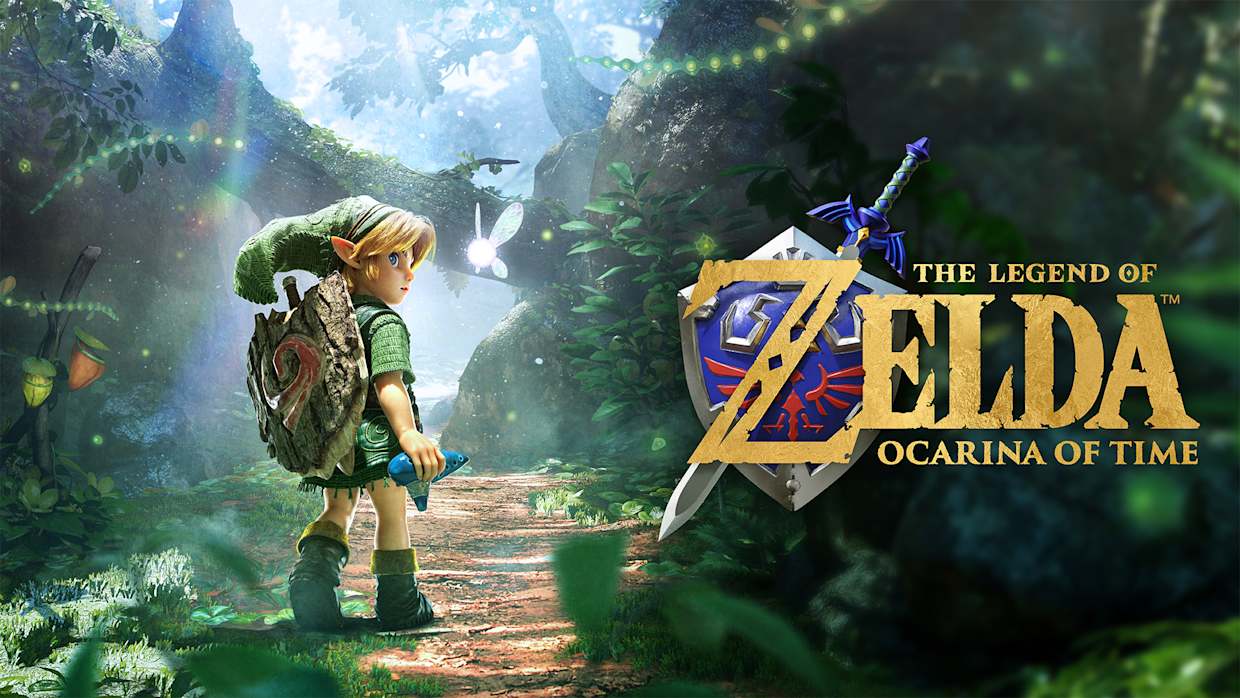
The short answer: Nintendo's Legend of Zelda: Ocarina of Time remake for Switch 2 keeps the same story, the same dungeons, and the same overworld layout as the 1998 original, but it rebuilds nearly everything else — full voice acting and orchestral music replace the N64's MIDI score, a free-roaming camera and a dedicated jump button replace fixed camera angles and context-sensitive rolling, and the ocarina itself can now be played by humming or singing into the Nintendo Switch 2's microphone. It launches November 5, 2026, as a $59.99 Switch 2-exclusive digital and physical release. What follows is a point-by-point look at exactly what Nintendo has confirmed changed, what's stayed the same, and what the company has not yet said anything about.
Quick facts
- Remake release date: November 5, 2026
- Platform: Nintendo Switch 2 (exclusive)
- Price: $59.99 (digital), ESRB rated for Animated Blood and Fantasy Violence
- Original release: November 21, 1998 (Japan) / November 23, 1998 (North America), on a 256-megabit (32MB) N64 cartridge
- This is the second remake: a 2011 Nintendo 3DS version, Ocarina of Time 3D, preceded this one
Release Date, Platform, and Price
Nintendo first revealed the remake during a June 2026 Nintendo Direct, then confirmed the release date — November 5, 2026 — at a dedicated Zelda 40th Anniversary presentation that September. According to Nintendo's official product listing, the remake is a Nintendo Switch 2 exclusive priced at $59.99 for the digital edition, with a download size of roughly 27GB. It supports TV, tabletop, and handheld play, Save Data Cloud backups, and family-group game-share lending.
That exclusivity is the first major practical difference from the original: the 1998 N64 cartridge obviously required N64 hardware, and the game has since been playable on original Wii Virtual Console, Wii U Virtual Console, and — most recently — as part of the Nintendo Switch Online + Expansion Pack library. The new remake does not run on the original Switch; Nintendo's listing and multiple outlets attribute this to the remake's reliance on the Switch 2's microphone and motion hardware for some of its new control options, covered below. For everything Nintendo has said about pricing and pre-order bonuses specifically, see our full breakdown of the remake's release date, price, and pre-order details.
It's also worth being precise about what "remake" means here versus a simple re-release. Nintendo's own listing explicitly frames this as a ground-up rebuild rather than a resolution-bumped port, which puts it in a different category from, say, playing the original on Nintendo Switch Online's N64 library, where the game is unaltered. That framing matters for expectations: a ground-up rebuild can touch systems a simple port never would, which is exactly what the sections below cover one category at a time.
Visuals and Audio: What Actually Changed
Nintendo's official description calls the remake "a classic tale, built from the ground up for the Nintendo Switch 2 system," and the product page confirms it uses completely overhauled visuals rather than simply running the existing assets at a higher resolution. The N64 original shipped with a synthesized MIDI soundtrack composed by Koji Kondo — a landmark score at the time, but limited by the hardware's sound chip. Nintendo confirms the remake replaces it with an orchestral recording, and adds full voice acting and expanded cutscenes; the 1998 game and its 2011 3DS remake were both entirely text-based, with no spoken dialogue at all. The original was produced under Shigeru Miyamoto, alongside a directing team that included Eiji Aonuma, who has since gone on to oversee the Zelda franchise as a whole — part of why Nintendo is treating this particular title with extra weight during the series' 40th-anniversary year.
Nintendo has not published frame-rate, resolution, or technical performance targets for the remake, so any specific numbers circulating online beyond what's on Nintendo's own product page should be treated as unconfirmed until Nintendo states them directly.
Controls, Camera, and Movement
This is where longtime players will likely feel the biggest difference. The N64 original used a fixed and often repositioning camera, Z-targeting for context-sensitive actions, and a dedicated roll button that many players used repeatedly to move faster than Link's default jog — a quirk fans have joked about for nearly three decades. Nintendo's listing for the remake confirms "enhanced controls and modern camera movement, including jumping and dashing," which points to a free or player-adjustable camera and a direct jump input, rather than the original's automatic ledge-hop jumping.
Nintendo also confirms new and expanded character dialogue throughout the remake, beyond the voice-acting pass itself — suggesting some scenes carry more narrative detail than the original's text boxes did, though Nintendo has not detailed which specific scenes were expanded.
The Ocarina: New Ways to Play Songs
The ocarina is the game's signature mechanic, and Nintendo has confirmed multiple ways to play it in the remake. Per the official product page, players can perform ocarina songs using buttons (as in the original), by humming the melody, or by playing an actual instrument into the Nintendo Switch 2's built-in microphone. None of those microphone-based input methods existed in 1998 or in the 2011 3DS remake, which relied entirely on button or touchscreen input for ocarina songs.
Combat, Aiming, and New Lore Additions
Ranged weapons — the bow, slingshot, and hookshot among them — can be aimed with either standard button controls or motion controls, and Nintendo says this is customizable in the options menu. That mirrors (in spirit, not exact implementation) the gyroscope aiming Nintendo added for the 3DS remake in 2011, though Nintendo has not said whether the Switch 2 remake's motion aiming works identically to that version.
Nintendo has also confirmed two features with no equivalent in the 1998 game: a "Hall of Fallen Foes," and a tapestry that tracks player progress through the adventure. Nintendo's own marketing describes these as new lore-presentation features rather than gameplay-altering additions, but exact mechanics (for example, whether the Hall of Fallen Foes functions as a boss-rematch gallery) have not been fully detailed by Nintendo at the time of writing.
Companion App, Amiibo, and Pre-Order Extras
Nintendo confirms the remake connects to a "Zelda Notes" companion service inside the Nintendo Switch App — a feature category that didn't exist for the N64 original or the 2011 3DS remake. Nintendo also confirms new Young Link and Young Zelda amiibo figures, which unlock in-game masks when scanned; per Nintendo's listing, those amiibo are scheduled to release in 2027, after the game itself. Buyers who complete a purchase before November 23, 2026, at 11:59 p.m. PT also receive a digital 40th-anniversary wallpaper, according to Nintendo's product page. None of this — amiibo integration, a companion app, or digital pre-order bonuses — existed in any form for the original 1998 release.
The remake's launch window overlaps with a separate hardware product: a limited-edition Zelda 40th Anniversary Switch 2 console bundle, which is a different purchase from the game itself. If you're also weighing whether Switch 2 hardware pricing in general makes sense right now, we've covered whether the Switch 2's price increase is worth it separately.
What Nintendo Hasn't Confirmed Yet
To be clear about the limits of what's known: Nintendo's official materials, as of this writing, do not confirm or deny whether the remake includes a Master Quest mode (the remixed, harder dungeon layouts added to the 2011 3DS remake) or a dedicated Boss Challenge mode (also introduced in 2011). Nintendo also has not published a resolution or frame-rate target, nor detailed exactly how much new dialogue or how many expanded cutscenes the remake adds relative to the original script. Where Nintendo has not made a claim, this article does not fill in a guess — treat any such claim you see elsewhere as unverified until Nintendo's own channels confirm it.
Ocarina of Time Remake vs. the 1998 Original: Side-by-Side
| Category | 1998 N64 Original | 2026 Switch 2 Remake |
|---|---|---|
| Release date | Nov. 21, 1998 (Japan) / Nov. 23, 1998 (NA) | November 5, 2026 |
| Platform | Nintendo 64 (32MB cartridge) | Nintendo Switch 2 (exclusive) |
| Price at launch | ~$59.99 USD (1998 dollars) | $59.99 USD |
| Developer / Publisher | Nintendo EAD / Nintendo | Nintendo |
| Dialogue | Text only | Full voice acting + expanded text |
| Music | MIDI/synthesized score (Koji Kondo) | Orchestral recording |
| Camera | Fixed/automatic, limited player control | "Modern camera movement" per Nintendo |
| Jumping | Automatic (ledge-triggered) | Dedicated jump button, plus dashing |
| Ocarina input | Buttons only | Buttons, humming, or mic-detected instrument |
| Ranged aiming | Manual/targeted, no motion option | Button or motion aiming, player-selectable |
| Companion app | None | Zelda Notes (Nintendo Switch App) |
| Amiibo support | N/A (didn't exist) | Young Link / Young Zelda amiibo (masks; amiibo ship 2027) |
| Master Quest / Boss Challenge | Not in original; added in 2011 3DS remake | Not confirmed either way by Nintendo |
| Download size | 32MB cartridge | ~27GB (digital) |
Source for original-release specifications: Wikipedia's entry on the 1998 release. Source for remake specifications: Nintendo's official product listing linked above.
A Quick Word on the 2011 3DS Remake
This isn't the first time Nintendo has remade this specific game. Ocarina of Time 3D, developed by Grezzo, released on Nintendo 3DS in June 2011 with updated visuals, stereoscopic 3D, gyroscope-based aiming, a Master Quest mode, and a Boss Challenge mode, according to Wikipedia's entry on that release. The Switch 2 remake goes considerably further in scope — full voice acting and an orchestral score are new even relative to the 3DS version — but as the "What Nintendo Hasn't Confirmed Yet" section above notes, Nintendo has not said whether Master Quest or Boss Challenge, both introduced in 2011, are carrying over into this remake.
Is the Remake Worth It Over Replaying the Original?
Based strictly on what Nintendo has confirmed, the decision breaks down fairly cleanly. If what you value about Ocarina of Time is its place in gaming history — the 32MB cartridge that pushed N64 hardware to its limit, Koji Kondo's original MIDI score, the exact camera and control feel that an entire generation of 3D action-adventure games was built on — the 1998 original (or the N64 app on Nintendo Switch Online + Expansion Pack) still delivers that experience unmodified. If what you want is the same story and dungeons with Nintendo's confirmed modernizations — voice acting, an orchestral soundtrack, a more player-controllable camera, direct jumping, and microphone-based ocarina play — the Switch 2 remake is built specifically to deliver that, at the cost of requiring new hardware and a fresh $59.99 purchase.
One thing worth weighing either way: this remake requires owning a Nintendo Switch 2, since Nintendo has confirmed it isn't available on the original Switch. If you don't already own Switch 2 hardware, that's a larger expense than the $59.99 game price alone.
What's Next
Nintendo's own materials indicate more specifics may still be coming before the November 5, 2026 launch, and the areas flagged above as unconfirmed — Master Quest, Boss Challenge, exact performance targets, and the full scope of new dialogue — are the ones most likely to be clarified in any pre-launch Nintendo Direct segment or on Nintendo's product page as it's updated. We'll update this comparison if Nintendo confirms or denies any of those points, and if you're tracking pricing, bundles, or pre-order specifics rather than feature changes, our companion piece on the remake's release date, price, and pre-order details is the place to check for the latest.
Frequently asked questions
Is the Ocarina of Time remake exclusive to Nintendo Switch 2?
Yes. Nintendo's official product listing lists the remake as a Nintendo Switch 2 exclusive; it does not run on the original Nintendo Switch.
When does the Ocarina of Time remake release, and how much does it cost?
November 5, 2026, at $59.99 for the digital edition, according to Nintendo's official product page.
Does the remake include Master Quest or Boss Challenge mode from the 2011 3DS remake?
Nintendo has not confirmed or denied this. Both modes appeared in the 2011 Ocarina of Time 3D remake, but Nintendo's materials for the Switch 2 version do not mention either one as of this writing.
Can I still play the original 1998 Ocarina of Time?
Yes. The unaltered N64 original is available to Nintendo Switch Online + Expansion Pack subscribers, separate from the new Switch 2 remake purchase.
What's new about how you play the ocarina in the remake?
Nintendo confirms three input methods: buttons (as in the original), humming a melody, or playing an actual instrument into the Nintendo Switch 2's built-in microphone.
Does the remake have voice acting and an orchestral soundtrack?
Yes. Nintendo confirms full voice acting and expanded cutscenes, plus an orchestral recording replacing the original's synthesized MIDI score.
Sources
- Nintendo - The Legend of Zelda: Ocarina of Time (Switch 2 official product page)nintendo.com
- Wikipedia - The Legend of Zelda: Ocarina of Timeen.wikipedia.org
- Wikipedia - The Legend of Zelda: Ocarina of Time 3Den.wikipedia.org
- Nintendo Switch Onlinenintendo.com
Jonah Reyes leads Pandromeda's gaming coverage: console and handheld hardware, release dates, pricing changes, patch notes and the business moves behind the biggest franchises. He sources every date and price from the platform holders and publishers themselves, and says plainly when something is still only a rumour.