Zelda: Ocarina of Time Remake Launches on Switch 2 Nov. 5
Nintendo's Switch 2-exclusive remake of Ocarina of Time arrives November 5, 2026, with a mic-played ocarina, voice acting, a jump button and a new boss-rematch room.
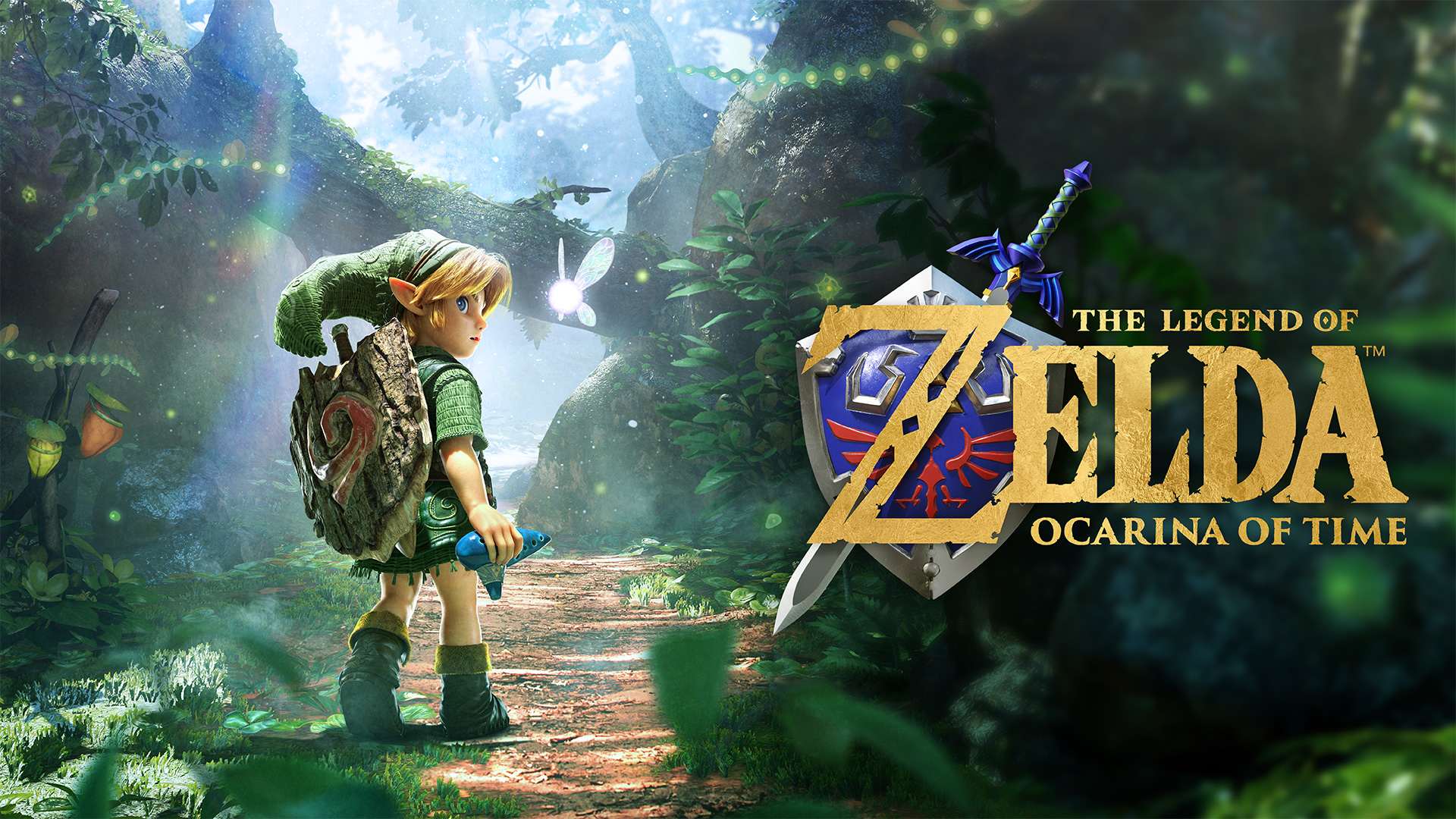
The Legend of Zelda: Ocarina of Time returns in three days. Nintendo's from-the-ground-up remake of the 1998 Nintendo 64 classic launches November 5, 2026, exclusively on Nintendo Switch 2, with fully voiced cutscenes, a free jump button, a new boss-rematch room called the Hall of Fallen Foes, and an ocarina you can play for real using the console's built-in microphone.
- Release date: November 5, 2026
- Platform: Nintendo Switch 2 only (not playable on the original Switch)
- Price: $59.99 digital, confirmed on Nintendo's own store page; a $69.99 physical edition with textured foil cover art has been listed by Nintendo and retailers ahead of launch
- Players: Single player, roughly 27 GB download
- Headline features: Microphone-played ocarina, fully voiced dialogue, overhauled visuals, free jump button, Hall of Fallen Foes rematch room
Release date and platform
Nintendo's own product page for the game lists a release date of November 5, 2026, and states plainly that the remake is "exclusively for Nintendo Switch 2." That exclusivity isn't a marketing flourish — several of the remake's signature features, including its microphone-driven ocarina and its motion-based aiming, depend on hardware the original Switch doesn't have. There is no plan to bring this version to the base Switch console.
The launch date places the remake in a packed week for Nintendo, arriving a little over a week after the separate Zelda 40th Anniversary Edition Switch 2 console bundle began shipping — more on how those two products relate below.
The road to launch played out across several Nintendo broadcasts this year. Nintendo first confirmed the remake at a June 2026 Nintendo Direct, when it showed an early trailer without a firm release date beyond "2026." The November 5 date, along with pricing and the first extended gameplay footage, followed at a dedicated Legend of Zelda 40th Anniversary Direct on September 8, 2026. Nintendo then published a longer overview trailer in mid-October 2026 — the "You have been summoned" post on Nintendo's own What's New page — walking through systems like the Hall of Fallen Foes, Zelda Notes companion app support, and the newly announced amiibo in more detail.
What's new compared to the 1998 original
The original Ocarina of Time launched for the Nintendo 64 in November 1998 and is widely credited with establishing the 3D action-adventure template much of the genre still follows, per its Wikipedia entry. Rather than a straight remaster, Nintendo describes this version as featuring "completely overhauled visuals," a new orchestral score, expanded dialogue, and full voice acting for cutscenes — none of which existed in the N64 original, which relied on text boxes and a handful of grunts and effect sounds for Link and the cast.
Nintendo's listing also calls out a modernized camera and enhanced movement controls, letting Link "jump and dash through the action" more freely than the N64 version allowed. The studio kept some of the original's loading transitions between areas intentionally, according to pre-release previews quoting series producer Eiji Aonuma, as a nod to the pacing of the original game rather than an oversight.
The remake also carries over and expands a handful of systems that grew out of the N64 game's influence on the series as a whole — Z-targeting (the lock-on system Ocarina of Time introduced and that nearly every 3D action game since has borrowed in some form) is still present, now paired with the modernized camera. Nintendo's listing describes a "Threads of Time" tapestry as a lore and collectible feature, which appears to be new framing for the game's item and quest tracking rather than a returning N64 mechanic. Texture work, lighting, and character models have been rebuilt rather than simply upscaled, based on the screenshots and footage Nintendo has published on the game's official store page and in its October overview trailer.
Mic ocarina, voice acting, and other Switch 2-only features
The feature generating the most pre-launch attention is the ocarina itself. According to Nintendo's official store listing, players can perform Link's learned melodies three ways: with traditional button inputs, by humming a tune, or by playing an actual instrument within range of the Nintendo Switch 2 system's built-in microphone, with the game listening and having Link perform the corresponding song in-game. It's the first mainline Zelda release built specifically around the console's microphone hardware.
Nintendo's listing also confirms that ranged weapons — the bow, slingshot, and hookshot among them — can now be aimed with either button controls or motion controls, selectable in the options menu. Pre-release hands-on previews covering the game's October demo sessions have also reported that it targets a smooth 60 frames per second in TV and handheld play, consistent with Nintendo's wider Switch 2 hardware feature specifications, which document a maximum frame rate of 60 fps for 4K TV output.
Taken together, the mic input, motion aiming, and performance target are the core reasons Nintendo positions this as a Switch 2-exclusive release rather than a cross-generation launch.
The jump button and modernized controls
One of the most-discussed changes among longtime fans is control-related rather than audiovisual: Link can now jump on command. The 1998 original had no dedicated jump button — Link only hopped automatically at the edges of ledges the game recognized as jumpable. Pre-release previews of the remake describe a free jump mapped to a face button, closer to the control schemes of modern Zelda titles like Breath of the Wild and Tears of the Kingdom, replacing the N64 game's automatic ledge detection. Nintendo's own listing confirms enhanced jump-and-dash movement without detailing the exact button mapping, so treat the specific control scheme as previewer-reported rather than an official spec until the game is in players' hands.
Hall of Fallen Foes and bonus content
Nintendo's product page confirms a new area called the Hall of Fallen Foes, where players can learn more about enemies and bosses they've already defeated — effectively a boss-rematch and bestiary room not present in the original game. The feature was first shown in detail in an overview trailer Nintendo published in October.
Nintendo is also pairing the launch with two new amiibo figures, Young Link and Young Zelda, which the product listing says will arrive in 2027 and unlock retro-style masks in-game; existing Zelda amiibo also grant in-game rewards. Separately, Nintendo sells an "Electric Ocarina of Time" accessory alongside the game. Digital buyers who purchase before 11:59 p.m. PT on November 23, 2026, also receive a Zelda 40th Anniversary digital wallpaper as an early-purchase bonus, per Nintendo's store listing.
Pre-release previews: what hands-on coverage says
Nintendo invited outlets to hands-on preview sessions in October ahead of launch, running roughly 30 to 90 minutes depending on the outlet. Coverage from those sessions has generally described the mic-ocarina input as working reliably in a quiet room, the motion-aiming option as a welcome alternative to stick aiming for ranged weapons, and the free jump button as a meaningful change to traversal that longtime players notice immediately when revisiting familiar areas like Kokiri Forest and Hyrule Field. Treat these as preview impressions rather than final verdicts — outlets covering the October demo have not published review scores, since those are typically held under embargo until closer to a game's launch, and none of that scored coverage is itself a primary Nintendo source this article relies on.
Price and where to buy
Nintendo's official U.S. store page lists the digital edition at $59.99, purchasable directly through the Nintendo Switch 2 eShop or via the game's page on nintendo.com. A physical cartridge edition with limited textured foil cover art has also been announced; retailers and pre-launch coverage have consistently listed it at a $69.99 MSRP, matching Nintendo's typical $10 premium for physical Switch 2 releases, though Nintendo's own storefront page for the title (checked ahead of publication) surfaces only the digital listing in the U.S. — shoppers wanting the physical cartridge should check Nintendo's store alongside major retailers for current availability.
| Detail | Digital edition | Physical edition |
|---|---|---|
| Price | $59.99 | $69.99 (limited foil cover, reported MSRP) |
| Release date | November 5, 2026 | November 5, 2026 |
| Platform | Nintendo Switch 2 only | Nintendo Switch 2 only |
| Download size | ~27 GB | N/A (cartridge) |
| Early bonus | Zelda 40th Anniversary wallpaper (pre-order/buy before 11/23/26) | Not listed |
How to pre-order or buy on launch day
For the digital edition, the most direct path is Nintendo's own listing: open the game's page on nintendo.com or search for it in the Nintendo Switch 2 eShop, then purchase or pre-purchase with a linked Nintendo Account and payment method. Buying digitally before the November 23, 2026 cutoff also qualifies for the 40th Anniversary wallpaper bonus described above. For the physical cartridge, check major retailers — the limited foil-cover packaging has been a first-print feature rather than a separate SKU, so availability may vary by retailer and region as launch day approaches. As with any high-demand Zelda launch, expect physical stock to be tighter in the first days after release than the always-available digital version.
How it relates to the Zelda 40th Anniversary Switch 2 bundle
It's easy to conflate this remake with the separate Nintendo Switch 2 "The Legend of Zelda 40th Anniversary Edition" console, which Nintendo also announced this year as part of the franchise's 40th-anniversary celebrations. They are different products: the Anniversary Edition is a special-livery Switch 2 hardware bundle, while the Ocarina of Time remake is a game that runs on any standard Switch 2 console, bundle or not. For full pricing and what's included with the console itself, see our breakdown of the Switch 2 Zelda 40th Anniversary Edition. Nintendo's own product listing for the console links back to the Ocarina of Time remake as a related title, but buying one is not required to buy the other.
What's next
With the November 5 release date three days out, the near-term milestones are the launch itself and the November 23 cutoff for the digital early-purchase wallpaper bonus. Beyond that, Nintendo has already confirmed the Young Link and Young Zelda amiibo for 2027, suggesting at least some post-launch support in the form of unlockable content tied to those figures. Nintendo has not announced day-one patch notes, review embargo timing, or any post-launch DLC, so expect additional detail from Nintendo's own newsroom and store listing as launch day approaches.
Frequently asked questions
Is the Ocarina of Time remake playable on the original Nintendo Switch? No. Nintendo's store listing specifies the release is exclusively for Nintendo Switch 2, and features like the microphone-based ocarina and motion aiming rely on hardware the original Switch doesn't have.
Do I need to buy the Zelda 40th Anniversary Switch 2 console to play it? No. The remake runs on any Nintendo Switch 2 console. The 40th Anniversary Edition is a separate, specially decorated hardware bundle; owning it is not a requirement for playing the game, and vice versa.
Does the remake include the Master Quest or any bonus dungeons from past re-releases? Nintendo's current store listing and overview trailer do not mention Master Quest or additional dungeons; the confirmed new content is centered on the Hall of Fallen Foes rematch room, expanded dialogue, and the amiibo-linked masks.
Will there be a physical release outside the limited foil-cover edition? Nintendo and retailers have described the foil-cover art as the first print run's packaging rather than a separate collector's SKU, so early physical copies should all carry it; check Nintendo's store and retailers directly for current stock as launch approaches.
Can I use any microphone, or does it have to be the Switch 2's built-in one? Nintendo's listing describes the feature as working through "the Nintendo Switch 2 system's built-in microphone," picking up either a hummed melody or a real instrument played nearby; it does not describe support for external microphones.
Frequently asked questions
Is the Ocarina of Time remake playable on the original Nintendo Switch?
No. Nintendo's store listing specifies the release is exclusively for Nintendo Switch 2, and features like the microphone-based ocarina and motion aiming rely on hardware the original Switch doesn't have.
Do I need to buy the Zelda 40th Anniversary Switch 2 console to play it?
No. The remake runs on any Nintendo Switch 2 console. The 40th Anniversary Edition is a separate, specially decorated hardware bundle; owning it is not a requirement for playing the game, and vice versa.
Does the remake include the Master Quest or any bonus dungeons from past re-releases?
Nintendo's current store listing and overview trailer do not mention Master Quest or additional dungeons; the confirmed new content is centered on the Hall of Fallen Foes rematch room, expanded dialogue, and the amiibo-linked masks.
Will there be a physical release outside the limited foil-cover edition?
Nintendo and retailers have described the foil-cover art as the first print run's packaging rather than a separate collector's SKU, so early physical copies should all carry it; check Nintendo's store and retailers directly for current stock as launch approaches.
Can I use any microphone, or does it have to be the Switch 2's built-in one?
Nintendo's listing describes the feature as working through "the Nintendo Switch 2 system's built-in microphone," picking up either a hummed melody or a real instrument played nearby; it does not describe support for external microphones.
Sources
- Nintendo: The Legend of Zelda: Ocarina of Time (Nintendo Switch 2) official store pagenintendo.com
- Nintendo What's New: Ocarina of Time overview trailer announcementnintendo.com
- Nintendo: Nintendo Switch 2 hardware features pagenintendo.com
- Wikipedia: The Legend of Zelda: Ocarina of Timeen.wikipedia.org
Jonah Reyes leads Pandromeda's gaming coverage: console and handheld hardware, release dates, pricing changes, patch notes and the business moves behind the biggest franchises. He sources every date and price from the platform holders and publishers themselves, and says plainly when something is still only a rumour.