Metroid Ravenous vs Metroid Dread: What We Know
Nintendo's next 2D Metroid adds a devour-enemies ability and goes Switch 2 only. Here's how Metroid Ravenous compares to Metroid Dread on everything officially confirmed so far.
Nintendo has confirmed that Metroid Ravenous, the next 2D entry in the Metroid series, launches January 28, 2027 exclusively on Nintendo Switch 2, and the short answer to "how does it compare to Metroid Dread" is: it looks like an evolution of the same formula rather than a reinvention. Both games put a wounded, stranded Samus Aran back into a hostile, maze-like world, but Ravenous swaps Dread's stealth-horror E.M.M.I. robots for a new "devour enemies" combat hook, trades Planet ZDR for an unnamed moon, and drops support for the original Switch entirely. Here's everything Nintendo has confirmed so far, lined up against what we already know about Dread — this is a comparison of official reveal material, not a review, since Ravenous hasn't launched yet.
Key facts so far
- Release date: January 28, 2027 (Ravenous) vs. October 8, 2021 (Dread)
- Platform: Ravenous is Nintendo Switch 2 only; Dread runs on both Switch and Switch 2
- Price: $59.99 digital for both; Ravenous adds a $69.99 physical card and a $119.99 Special Edition
- New hook: Nintendo describes "newly awakened Metroid instincts" that let Samus devour enemies
- Status: Unreleased — everything below comes from Nintendo's own reveal materials, not hands-on play
Story and setting: a new moon, a familiar setup
Metroid Dread sent bounty hunter Samus Aran to investigate a mysterious transmission on Planet ZDR, where she was captured by an unknown force and had to escape a planet crawling with hostile creatures and the relentless E.M.M.I. robots, according to Nintendo's own Metroid Dread product page. Metroid Ravenous reuses the beats that made that setup work — Samus ambushed, Samus stranded, Samus hunted — but relocates the action. Per Nintendo's official Metroid Ravenous listing, Samus is "ambushed by unknown attackers" and left stranded on an unfamiliar moon, with the game's tagline bluntly stating, "It's eat or be eaten!"
Nintendo's own product page does not name the attackers, confirm a direct narrative link to Dread, or describe the moon beyond calling it unfamiliar. Outside coverage of the September 9, 2026 Nintendo Direct reveal has speculated about a connection to Dread's ending, but that link has not been confirmed on Nintendo's own materials, so it's worth treating as unconfirmed speculation rather than established lore until Nintendo says otherwise. What is confirmed: like Dread, this is a solo, single-player adventure built around exploration, not a multiplayer or co-op game, and Samus is once again cut off from backup and forced to improvise with whatever she can find on the moon's surface.
Confirmed new mechanic: devouring enemies
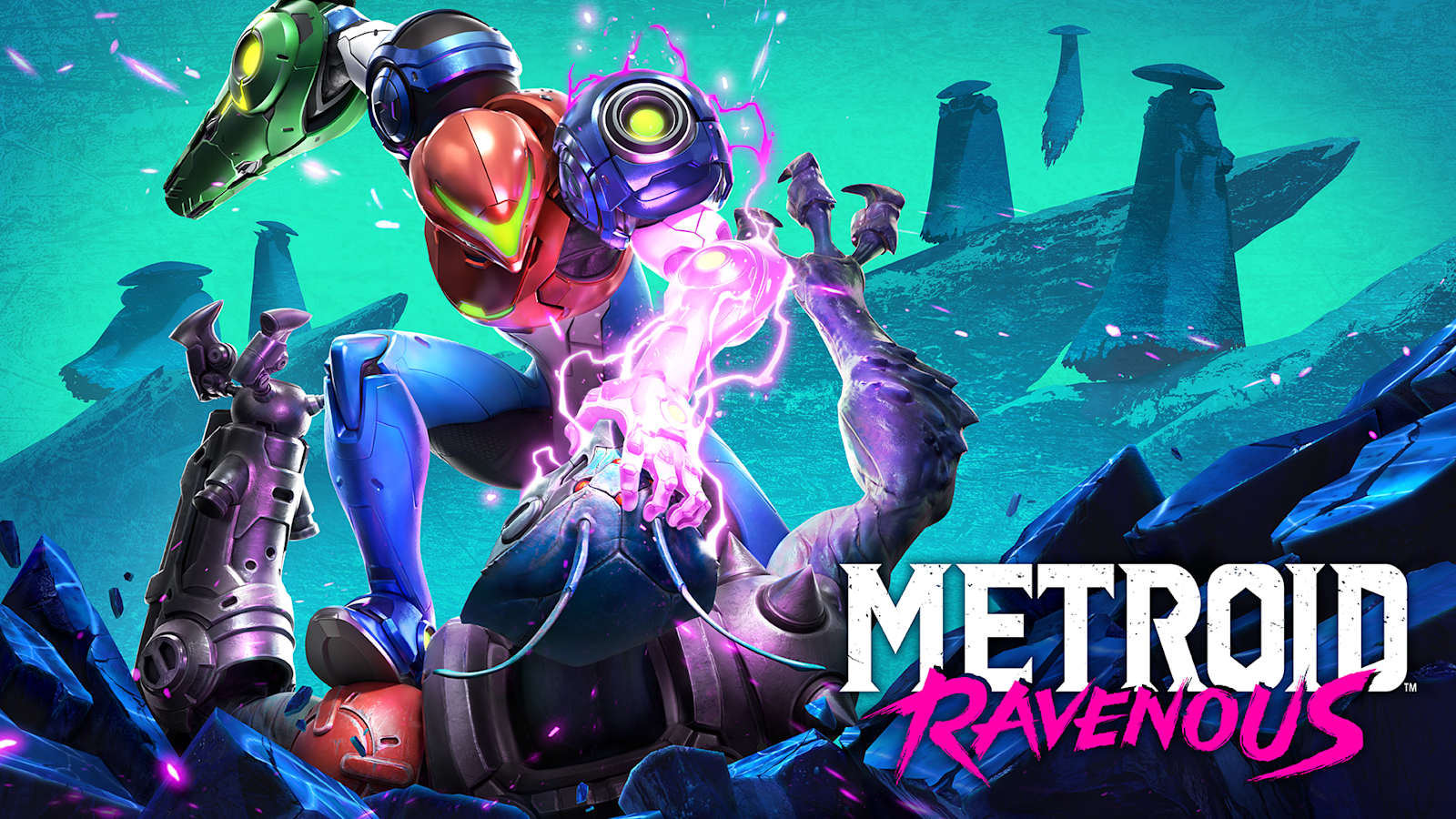
The headline gameplay change Nintendo has actually confirmed is a new survival mechanic. The official product page describes Samus using "newly awakened Metroid instincts to devour enemies" as part of combat that otherwise still revolves around "fast, aggressive attacks with beams, missiles, and other weapons." The game's own key art backs this up directly: it shows Samus gripping an enemy while channeling a visible energy effect between them, consistent with Nintendo's description of an instinct-driven drain or feeding ability layered on top of the standard beam-and-missile loadout.
That is a meaningful departure from Dread's core hook, which was built around evasion and counters — sneaking past or parrying the E.M.M.I. units with a precisely timed melee counter rather than consuming them outright. Nintendo has not yet published a full ability list, an upgrade tree, or details on how the devour mechanic interacts with health, missile capacity, or specific enemy types in Ravenous, so exactly how deep this system runs is still unknown. The core traversal loop Nintendo does confirm — "collect weapons and equipment, explore a maze of corridors, and defeat powerful bosses" — reads as a direct continuation of the Metroidvania structure Dread established, just with a new combat verb layered on top rather than a wholesale redesign.
Art style and presentation
Visually, Ravenous keeps the moody, high-contrast look the 2D Metroid games are known for rather than reinventing it. The official key art leans into saturated teal environments, jagged alien rock formations, and Samus's armor rendered in the same sculpted, semi-realistic style Dread used, pushed further with Switch 2-era lighting and particle effects around the new energy-drain visual. Nintendo's listing also confirms technical presentation upgrades tied to the newer hardware: support for HDR output and 120 Hz output on compatible TVs, plus linear PCM surround sound — features Dread's original Switch listing does not advertise in the same way, since it launched years before Switch 2 existed.
Because Ravenous has not shipped, there is no way to verify how that presentation holds up in actual handheld or docked play; everything here is based on Nintendo's own screenshots, key art, and specification sheet rather than time spent with a finished build. Dread, by contrast, has five years of real-world release behind it, including documented accessibility options like adjustable difficulty, play without motion or touch controls, larger text, and color alternatives, per Nintendo's own listing and corroborated on Metroid Dread's Wikipedia entry. Nintendo hasn't yet detailed an equivalent accessibility feature set for Ravenous.
Platform: Switch 2 only vs. Switch and Switch 2
This is one of the sharpest differences between the two games. Metroid Dread's official Nintendo listing confirms it runs on the original Nintendo Switch, with Switch 2 owners able to play that same Switch edition. Metroid Ravenous, by contrast, is listed by Nintendo under "Only on Nintendo Switch 2" — there is no original Switch version, and nothing in Nintendo's own materials suggests one is coming. That makes Ravenous one of the clearer "you need the new hardware" releases in the Metroid line so far, a bigger ask than Dread's day-one accessibility across both consoles, and it puts Ravenous alongside other software Nintendo has built specifically around the Nintendo Switch 2 system rather than cross-generation play.
Practically, that means anyone who skipped the Switch 2 upgrade can still buy and play Metroid Dread today on either console, but will need the newer hardware to play Ravenous on launch day — there's no fallback version to buy instead. Our sister article on Metroid Ravenous's release date, price and Special Edition breaks down the Switch 2 requirement and pre-order specifics in more detail if you're deciding whether to upgrade before January.
Price and editions
Both games launch at the same baseline digital price. Nintendo's own storefront lists Metroid Dread's digital edition at $59.99, and Metroid Ravenous matches that figure for its digital version. Where Ravenous goes further is on physical and collector options: a $69.99 physical game card and a $119.99 Metroid Ravenous: Special Edition that bundles the physical game, a SteelBook case, and an exclusive Samus (Metroid Suit) amiibo figure, per Nintendo's product listing. Dread did not launch with an equivalent special edition on Nintendo's own US store.
Ravenous also arrives alongside a wider amiibo wave than Dread had: a standalone Samus figure, a larger-than-standard Chozo Statue figure that Nintendo says "offers secrets and powers that Samus can use to upgrade her suit," and the Special Edition-exclusive Samus (Metroid Suit) figure. Nintendo has not yet detailed exactly what each amiibo unlocks in-game. Dread, for comparison, shipped with a simpler two-amiibo system: a Samus figure that grants an extra energy tank and an E.M.M.I. figure that grants extra missile capacity, each usable once per day, sold together as a two-pack.
Metroid Ravenous vs. Metroid Dread: side-by-side
Here's how the two games line up on the specifics Nintendo has actually published, pulled directly from each game's official Nintendo product page:
| Category | Metroid Ravenous | Metroid Dread |
|---|---|---|
| Release date | January 28, 2027 | October 8, 2021 |
| Platform | Nintendo Switch 2 only | Nintendo Switch (also playable on Switch 2) |
| Price — digital | $59.99 | $59.99 |
| Price — physical card | $69.99 | Standard $59.99 retail |
| Special edition | $119.99 — SteelBook + Samus (Metroid Suit) amiibo | None on Nintendo's US store |
| Setting | An unnamed, unfamiliar moon | Planet ZDR |
| Signature threat | Unknown attackers; Samus gains "Metroid instincts" | E.M.M.I. hunter robots |
| Combat hook | Beams, missiles, plus a new devour/drain ability | Beams, missiles, melee counters and stealth evasion |
| File size | ~20.2 GB (Nintendo's estimate, not final) | 4.3 GB |
| ESRB rating | Animated Blood, Violence (rating not final) | Animated Blood, Fantasy Violence |
| amiibo support | Samus, Chozo Statue, Samus (Metroid Suit) — in-game effects TBA | Samus and E.M.M.I. 2-pack (extra energy tank / missile tank) |
| Display features | HDR and 120 Hz output on compatible TVs | Standard Switch output |
| Players | Single player, single system | Single player, single system |
How we got here: the reveal and what's left to confirm
Metroid Ravenous was revealed during Nintendo's September 9, 2026 Direct presentation alongside a standalone announcement trailer, more than five years after Metroid Dread closed out the previous chapter of Samus's 2D adventures in October 2021. Nintendo's own listing still flags that "ratings, download size, and other game information may not be final" ahead of launch — a reminder that several of the Ravenous specifics above, including file size, final ESRB rating, and full amiibo functionality, are subject to change before January 28, 2027.
Dread's own road to launch offers a useful point of reference for how Nintendo tends to fill in these gaps: the company published a series of "Metroid Dread Report" videos in the months before that game's 2021 release, gradually detailing enemies, abilities, and modes rather than revealing everything in one Direct segment. If Nintendo follows a similar cadence for Ravenous, expect additional official detail to arrive in stages rather than all at once between now and launch. For the full breakdown of pricing tiers and what's bundled in each edition, see our full pricing and pre-order rundown. If you're weighing whether to pick up a Switch 2 specifically for this launch window, it's also worth checking what else the platform's online service bundles in at each tier, covered in our Nintendo Switch 2 Online price tiers and games list guide.
What Nintendo hasn't confirmed yet
A genuinely honest comparison has to flag the gaps rather than paper over them with speculation. As of this writing, Nintendo has not confirmed: the game's full ability and item-upgrade list beyond the devour mechanic; whether the "unknown attackers" or the moon setting connect directly to Dread's story or ending; a named developer (Nintendo's own listing leaves the Developer field blank, though outside reports point to Metroid Dread studio MercurySteam — unconfirmed by Nintendo as of publication, so treat it as an unverified report rather than fact); final file size and ESRB rating, both explicitly flagged as "not final" on Nintendo's own page; and exactly what each Ravenous amiibo unlocks in-game. None of that is presented as settled fact here because none of it has been confirmed on Nintendo's own materials.
What's next
Between now and January 28, 2027, expect Nintendo to fill in these gaps gradually — likely through additional trailers, a dedicated Metroid Ravenous Direct segment or report video in the Metroid Dread Report tradition, and a growing screenshot library on the official Metroid franchise hub. Until then, the safest comparison is the one above: a same-price, Switch 2-exclusive sequel-in-spirit that keeps Dread's exploration backbone and stealth-adjacent tension while adding a new devour-based combat wrinkle Nintendo has shown but not yet fully explained. We'll revisit this comparison as Nintendo confirms more ahead of launch.
Frequently asked questions
When does Metroid Ravenous come out?
Metroid Ravenous launches January 28, 2027, exclusively on Nintendo Switch 2, according to Nintendo's own product page.
Will Metroid Ravenous come to the original Nintendo Switch?
No. Nintendo's official listing marks Metroid Ravenous as "Only on Nintendo Switch 2," unlike Metroid Dread, which plays on both the original Switch and Switch 2.
What's the new combat ability in Metroid Ravenous compared to Metroid Dread?
Nintendo's product page describes "newly awakened Metroid instincts" that let Samus devour enemies, on top of the beam-and-missile combat both games share. Dread's signature mechanic was evasion and melee counters against the E.M.M.I. robots; Nintendo has not published a full ability list for Ravenous yet.
How much does Metroid Ravenous cost compared to Metroid Dread?
Both games are $59.99 digitally. Ravenous additionally offers a $69.99 physical game card and a $119.99 Special Edition with a SteelBook case and an exclusive Samus (Metroid Suit) amiibo; Dread did not launch with an equivalent special edition on Nintendo's US store.
Is Metroid Ravenous's story a direct sequel to Metroid Dread?
Nintendo has not confirmed a direct narrative link. Both games open with Samus ambushed and stranded in a hostile location, but Ravenous's official materials don't name the attackers or tie the story explicitly to Dread's ending.
What's included in the Metroid Ravenous Special Edition?
Per Nintendo's listing, the $119.99 Special Edition includes the physical game, a SteelBook case, and the Samus (Metroid Suit) amiibo figure, which is exclusive to that edition.
Sources
- Nintendo — Metroid Ravenous (Nintendo Switch 2) official product pagenintendo.com
- Nintendo — Metroid Dread official product pagenintendo.com
- Wikipedia — Metroid Dreaden.wikipedia.org
- Nintendo — Metroid official franchise hubmetroid.nintendo.com
Jonah Reyes leads Pandromeda's gaming coverage: console and handheld hardware, release dates, pricing changes, patch notes and the business moves behind the biggest franchises. He sources every date and price from the platform holders and publishers themselves, and says plainly when something is still only a rumour.