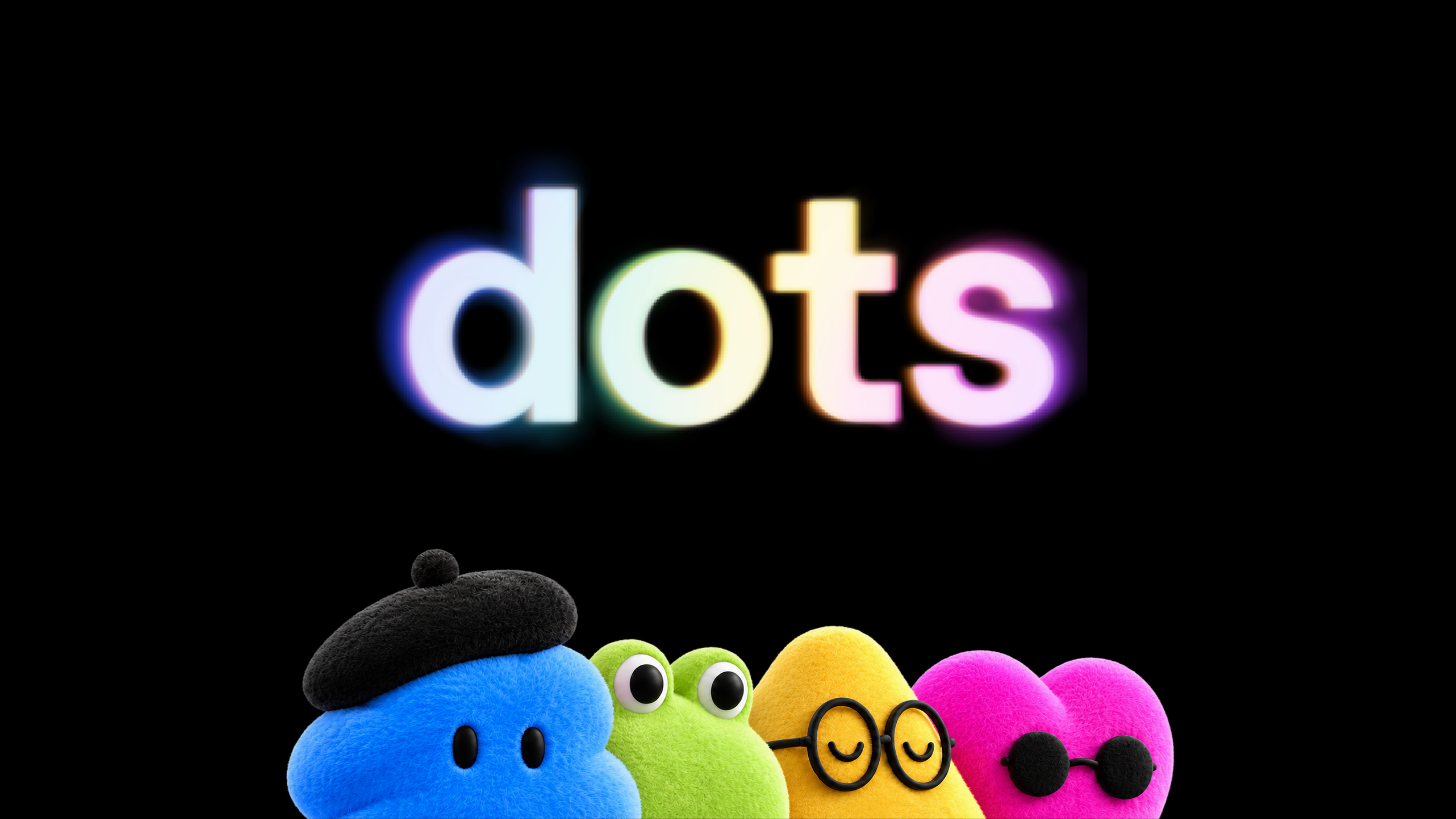
Anthropic Donates Agent Skills to New Agentic AI Foundation
Anthropic hands the SKILL.md format, its GitHub org and agentskills.io to the Linux Foundation project that already holds MCP, following 1M skills published.

- What happened: Anthropic donated its Agent Skills open standard — the SKILL.md format, the name/logo, the GitHub organization, and the agentskills.io domain — to the Agentic AI Foundation (AAIF) on October 22, 2026.
- AAIF: A Linux Foundation project Anthropic co-founded with Block and OpenAI, launched in December 2025 when Anthropic donated the Model Context Protocol (MCP).
- Adoption: 70+ platforms (ChatGPT, Cursor, GitHub Copilot, VS Code) support Agent Skills; roughly 1 million skills published; nearly 280 million installs.
- Maintainers: David Soria Parra and Mahesh Murag lead maintenance, with engineers from Anthropic, Google, OpenAI and other companies contributing as individuals.
Anthropic said on October 22, 2026 that it is donating Agent Skills — the open standard behind the SKILL.md format that gives AI agents reusable, step-by-step workflows — to the Agentic AI Foundation (AAIF), the Linux Foundation project it co-founded with Block and OpenAI. The donation hands over the Agent Skills name and logo, its GitHub organization, and the agentskills.io domain, moving a format that already powers more than 70 agent platforms out of Anthropic's direct control and into neutral, foundation-level governance.
It's the second time in less than a year that Anthropic has handed a widely adopted agent standard to the AAIF. The foundation's first anchor project was the Model Context Protocol, which Anthropic donated when the AAIF launched in December 2025. Agent Skills now joins MCP as the foundation's second Anthropic-originated standard, and Anthropic is explicitly modeling the move on that earlier transfer, down to the language about keeping the project "open, community-driven, and vendor-neutral."
What Anthropic announced
In its official announcement, Anthropic said the donation covers the full package that makes Agent Skills a standard rather than just an Anthropic feature: the specification itself, the public-facing brand (name and logo), the GitHub organization that hosts the spec and reference materials, and the agentskills.io domain where the documentation lives. Anthropic frames the move as a continuation of a commitment it made when it first opened the format up, saying developers and companies don't need to join the AAIF to use or contribute to Agent Skills — the standard stays open to anyone, inside or outside the foundation's membership.
The company says it is putting in place a roadmap for the project that includes versioned releases, a formal proposal process for changes to the specification, and security guidance aimed at both people who write skills and the platforms that install them. Decision-making is meant to stay transparent and community-driven, following the same model Anthropic says it used for MCP. Anyone with feedback on a proposed change to the spec can raise it through the project's Discord community, while day-to-day discussion and contributions happen on GitHub.
From a Claude Code feature to an open standard
Agent Skills started life as an internal mechanism inside Anthropic's own coding agent. The company says it built skills while working on Claude Code, looking for a way to give the agent durable, procedural knowledge about specific business tasks rather than relying only on what fits in a single prompt. Skills shipped for Claude Code in October 2025, and Anthropic says that within weeks, developers were publishing thousands of skills to GitHub on their own and writing loaders so the format would work with other agents, including Codex, Cursor and OpenCode — well before Anthropic had published any formal spec.
Anthropic published Agent Skills as a standalone open standard in December 2025, giving it its own GitHub organization and the agentskills.io domain rather than keeping it folded into Claude's documentation. According to the current spec site, a skill is just a folder containing a SKILL.md file with at minimum a name and description, plus optional bundled scripts, reference material and templates. Agents are meant to load skills through "progressive disclosure": reading only a skill's name and description at startup, pulling in the full instructions only when a task matches, and executing the bundled code or reference files only as needed — a design meant to let an agent hold many skills in reserve without bloating its context window.
That format bears an obvious family resemblance to the plugin-style extensions Anthropic has also been shipping for its own tools, including the mods system for Claude Code, though Agent Skills is pitched as a cross-platform standard rather than a Claude-specific feature.
Adoption: 70+ platforms, a million published skills
Anthropic's announcement lays out adoption figures it says have accumulated since the October 2025 launch and December 2025 standardization:
- More than 70 agent platforms have integrated Agent Skills, among them ChatGPT, Cursor, GitHub Copilot, and VS Code.
- Roughly 1 million skills have been published across the ecosystem.
- Nearly 280 million skills have been installed.
The GitHub organization backing those numbers, agentskills/agentskills, hosts the specification, documentation, a reference directory, and a client showcase pointing to the agents that support the format. The repository's code is released under an Apache 2.0 license, with documentation under CC-BY-4.0, and it directs discussion to its Discussions tab and a Discord server rather than routing every change through Anthropic.
The format's own documentation explains why adoption climbed so quickly: a skill is deliberately low-overhead to write and ship. Because an agent only loads a skill's name and description at startup, and pulls in the full SKILL.md instructions only when a task actually matches, teams have been able to publish narrow, single-purpose skills — a company's legal-review checklist, a specific data-pipeline procedure, a presentation-formatting convention — without worrying that stacking up thousands of them will bloat every agent's context window. That's a different bet than MCP's, which standardizes how an agent reaches external tools and data rather than how it acquires procedural know-how, and the two formats are explicitly meant to be complementary rather than competing.
The rapid, multi-platform adoption — including by a direct Anthropic competitor like OpenAI's ChatGPT, and by Microsoft's GitHub Copilot — is the practical case Anthropic is making for why the format now belongs under neutral foundation governance rather than under one vendor's GitHub account.
Who runs Agent Skills now
Anthropic named David Soria Parra and Mahesh Murag as the project's lead maintainers going forward. Beyond that pair, the company says engineers from Anthropic, Google, OpenAI and other companies will maintain the standard as individual contributors rather than as representatives of their employers — the same cross-company maintainer structure Anthropic used for MCP after that project moved to the AAIF. The arrangement is meant to keep any single company, including Anthropic, from unilaterally steering the spec, while still letting Anthropic's own engineers stay close to a format its products depend on.
What is the Agentic AI Foundation?
The AAIF is a Linux Foundation project that Anthropic, Block and OpenAI co-founded, with the foundation standing up in December 2025 around Anthropic's MCP donation alongside two other founding projects: Block's goose and OpenAI's AGENTS.md. The foundation's own site, aaif.io, describes its mission as "operationalizing agentic AI for enterprise scale" and organizes its work into community working groups covering areas like accuracy and reliability, agentic commerce, identity and trust, observability, and security and privacy for autonomous agents — the kind of cross-cutting standards work that a single vendor's open-source repo isn't well positioned to referee alone.
The foundation's backing goes beyond its three founding contributors. Reporting around the AAIF's December 2025 launch named Amazon Web Services, Anthropic, Block, Bloomberg, Cloudflare, Google, Microsoft and OpenAI as its platinum-level members, with each reportedly committing financially to get a say in the foundation's direction and budget. That lineup is notable mainly because it puts several companies that compete directly with Anthropic — and with each other — inside the same governance body deciding how MCP and now Agent Skills evolve. It's a structure the Linux Foundation has used before for infrastructure that an entire industry depends on, rather than any single vendor: no one company gets to unilaterally change the rules a thousand other products have already built against.
Putting Agent Skills under the same umbrella as MCP gives the AAIF two of the most widely adopted pieces of agent tooling in the current market: one standard for how an agent connects to external tools and data (MCP), and now one for how an agent acquires packaged, reusable expertise (Agent Skills). Anthropic's pitch is that both are foundational enough to the broader agent ecosystem — used well beyond Anthropic's own products — that they shouldn't depend on one company's roadmap or goodwill to stay open.
| Detail | Model Context Protocol (MCP) | Agent Skills |
|---|---|---|
| Originally launched by Anthropic | November 2024 | October 2025 (in Claude Code) |
| Published as open standard | Alongside launch | December 2025 |
| Donated to AAIF | December 2025 (AAIF's launch) | October 2026 |
| What it standardizes | How agents connect to external tools and data sources | How agents acquire packaged, step-by-step procedural knowledge |
| Reported adoption | 10,000+ active public MCP servers; used by ChatGPT, Cursor, Gemini, Microsoft Copilot | 70+ platforms including ChatGPT, Cursor, GitHub Copilot, VS Code; ~1M skills published; ~280M installs |
| Governance | Individual maintainers across companies; community proposal process | Lead maintainers David Soria Parra and Mahesh Murag; same cross-company, individual-contributor model |
Why it matters
For developers already building on Agent Skills, the donation is designed to change very little day to day: the spec stays at agentskills.io, the code stays open-source, and nobody has to join the AAIF to keep using or contributing to the format. What changes is who ultimately controls the brand, the GitHub org and the domain if a dispute ever arose between Anthropic's interests and the wider ecosystem's. Moving that control to a Linux Foundation project — the same governance pattern used for standards like Kubernetes — is meant to reassure the 70-plus platforms that have already built on Agent Skills, several of which are Anthropic's direct competitors, that the format won't be quietly reshaped to favor Claude over everyone else.
It also continues a pattern of Anthropic deliberately giving up direct ownership of standards that have become load-bearing infrastructure for the agent ecosystem rather than keeping them as proprietary advantages. After MCP effectively became the default way agents reach external tools, and after Agent Skills raced to roughly a million published skills and 280 million installs in about a year, Anthropic's calculation appears to be that broad, foundation-backed trust is worth more to the format's long-term adoption than retaining sole control.
What's next
Anthropic says the near-term priorities are the items on the proposed roadmap: shipping versioned releases of the spec instead of ad hoc changes, standing up the formal proposal process for community-submitted changes, and publishing security guidance for both skill authors and the platforms that install skills — an area that matters more as installs climb toward the hundreds of millions and skills increasingly bundle executable scripts, not just instructions. Developers who want a voice in that roadmap can raise feedback on the project's Discord server, follow discussion on the agentskills/agentskills GitHub repository, and watch the AAIF's own channels for how it folds Agent Skills' working process in alongside MCP, goose and AGENTS.md. Whether other companies now donate their own emerging agent standards to the same foundation, rather than Anthropic continuing to be the one supplying them, is the bigger open question the move raises.
Frequently asked questions
What exactly did Anthropic donate to the Agentic AI Foundation?
Anthropic donated the Agent Skills open standard — the SKILL.md specification — along with the Agent Skills name and logo, its GitHub organization, and the agentskills.io domain, to the Agentic AI Foundation on October 22, 2026.
What is the Agentic AI Foundation (AAIF)?
The AAIF is a Linux Foundation project that Anthropic co-founded with Block and OpenAI. It launched in December 2025 when Anthropic donated the Model Context Protocol (MCP), alongside Block's goose and OpenAI's AGENTS.md as founding projects.
Do developers need to join the AAIF to use Agent Skills?
No. Anthropic says Agent Skills remains open to anyone to use or contribute to without joining the Agentic AI Foundation as a member.
How widely adopted is Agent Skills?
Anthropic says more than 70 agent platforms, including ChatGPT, Cursor, GitHub Copilot, and VS Code, have integrated Agent Skills, with roughly 1 million skills published and nearly 280 million installed.
Who maintains the Agent Skills standard now?
David Soria Parra and Mahesh Murag are the lead maintainers, with engineers from Anthropic, Google, OpenAI and other companies maintaining the project as individual contributors.
How does this relate to Anthropic's earlier MCP donation?
Agent Skills is the second major Anthropic standard donated to the AAIF after the Model Context Protocol, which Anthropic donated when the foundation launched in December 2025. Anthropic says it is following the same open, community-driven governance model for both.
Sources
- Anthropic Newsroom: Donating Agent Skills to the Agentic AI Foundationanthropic.com
- Anthropic Newsroom: Donating the Model Context Protocol and Establishing of the Agentic AI Foundationanthropic.com
- Agent Skills specification (agentskills.io)agentskills.io
- Agent Skills GitHub organizationgithub.com
- Agentic AI Foundation (aaif.io)aaif.io
Theo Park runs the AI desk at Pandromeda. He follows model launches from the frontier labs and the open-weight community, tracks the assistants and developer tools built on them, and explains what each release changes on pricing, capability and safety. His reporting leans on primary sources: model cards, technical reports, API documentation and the companies' own announcements.